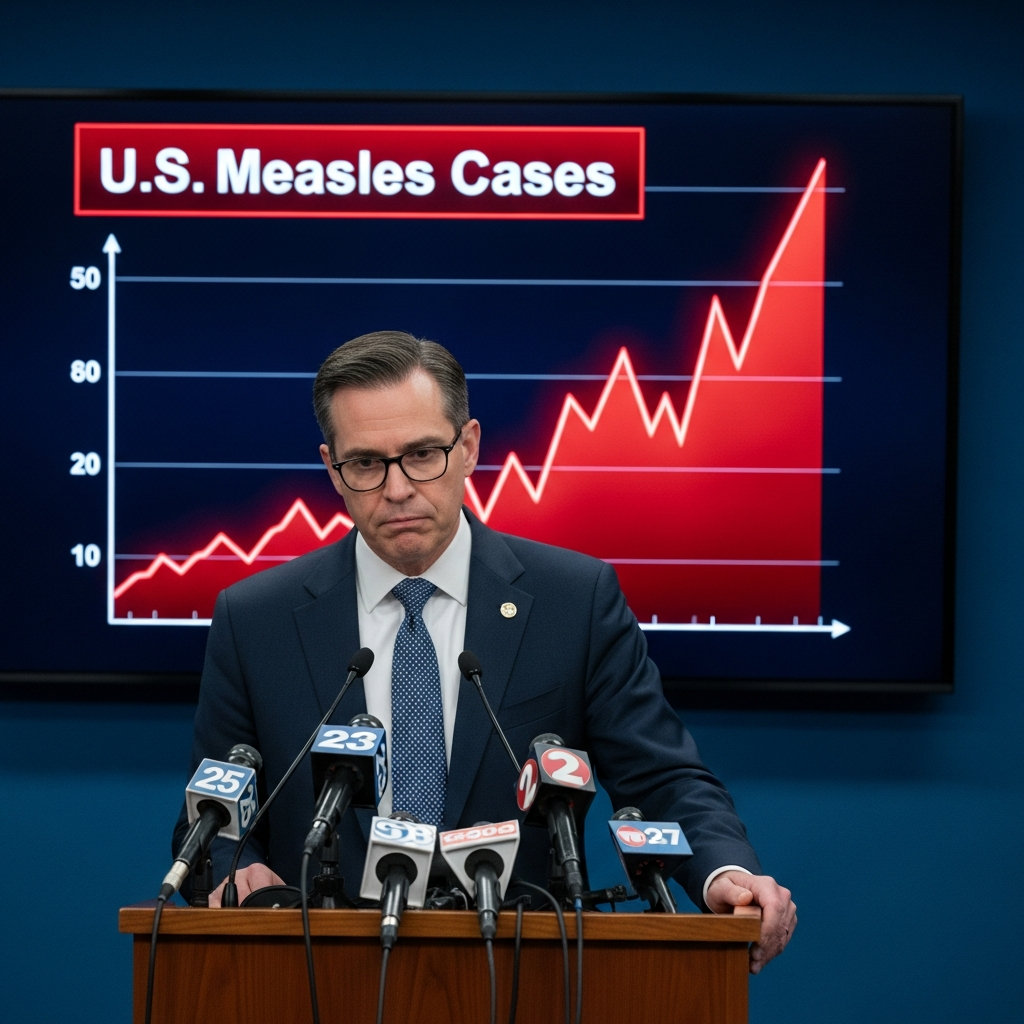
The United States is currently grappling with a severe and rapidly escalating measles crisis, as confirmed cases have surged past 1,100 in the initial two months of 2026. This alarming figure represents a six-fold increase compared to the typical number of cases seen throughout an entire year, signaling a dangerous trajectory for public health. Health experts are sounding a dire warning: without immediate and widespread action, including bolstering vaccination rates, the nation faces the grim prospect of more preventable hospitalizations, severe complications, and even deaths. This resurgence highlights the critical vulnerability of communities with low immunization coverage and underscores the urgent need for a renewed focus on vaccine education and access.
The Alarming Rise in US Measles Cases
The Centers for Disease Control and Prevention (CDC) reported on February 26, 2026, a staggering 1,136 confirmed measles cases across the U.S. within just the first eight weeks of the year. This unprecedented acceleration has many public health officials bracing for what could become another record-breaking year, following 2025 which saw nearly 2,300 cases—the highest annual total since 1991. The Johns Hopkins University Center for Outbreak Response Innovation has even tracked a slightly higher number, emphasizing the rapid spread.
More than half of U.S. states, including 28 jurisdictions ranging from Arizona to Wisconsin, have reported measles infections. This widespread distribution underscores the national scope of the current outbreak. Alarmingly, over 80% of these cases are among children and teenagers, with about one in four affecting children under five years old.
The Critical Role of Vaccination
A predominant factor in the current surge is the vaccination status of those affected. Approximately 96% of all reported measles cases in 2026 are among individuals who have either not received the measles-mumps-rubella (MMR) vaccine or have not completed both recommended doses. This stark statistic underscores the vaccine’s effectiveness as a shield against this highly contagious disease.
Dr. William Schaffner, an infectious disease expert at Vanderbilt University Medical Center, described the current trajectory as “disappointing and depressing and ominous.” He stressed that measles is a “fierce infection” that should be prevented, especially when a safe and highly effective vaccine is readily available. The MMR vaccine offers about 97% protection after two doses, making it a cornerstone of public health defense.
Severe Risks and Complications of Measles
Measles is far more than a simple childhood rash; it carries substantial risks for severe complications. The CDC warns that for every 1,000 children infected, one may develop encephalitis, a dangerous swelling of the brain that can lead to convulsions, permanent deafness, or intellectual impairment. Up to three out of every 1,000 infected children may die from respiratory and neurological complications. Pneumonia is particularly dangerous, identified as the leading cause of death from measles in young children.
Last year, the U.S. tragically recorded three measles-related deaths: two unvaccinated children in Texas and one unvaccinated adult in New Mexico. Dr. Paul Offit, an infectious disease physician at the Children’s Hospital of Philadelphia, highlighted this grim reality. He cautioned, “Can we expect another death? Yes, I think we’re getting there where we can expect another death. And it is unconscionable.” Vulnerable populations, including infants too young to be vaccinated, pregnant individuals, and those with weakened immune systems, rely entirely on herd immunity for protection.
Ongoing Outbreaks Across the Nation
The U.S. is currently battling multiple large, active measles outbreaks, with several states serving as hotspots for ongoing transmission.
Deep Dive: South Carolina’s Battle
The largest and most prolonged outbreak is centered in upstate South Carolina, particularly in Spartanburg County, an area known for its particularly low vaccination rates. Since October, the South Carolina Department of Public Health has documented at least 985 cases. While no deaths have been reported there, the state has seen severe complications, including pneumonia and encephalitis. Several exposed pregnant women required immunoglobulin treatment to mitigate high risks.
In response, state health officials have mobilized significant resources. Dr. Linda Bell, South Carolina State Epidemiologist, emphasized controlling the spread and protecting people as the primary objective. The state administered nearly 17,000 MMR vaccines in January, marking one of its most successful vaccination months in years. Roughly 90 state health department staff are dedicated to the outbreak, with a third focused on contact tracing. The CDC Foundation and a CDC field team are also providing additional support for case investigation and epidemiological analysis.
Emerging Hotspots: Florida & Beyond
Beyond South Carolina, other significant outbreaks persist. An outbreak along the Utah-Arizona border continues to simmer, with both states reporting hundreds of cases. In Florida, Collier County has experienced a rapid surge, with at least 83 cases tied to an outbreak centered around Ave Maria University, a private Catholic college. Maine also reported five cases linked to an adult who traveled from another state with active measles. Cases linked to the South Carolina outbreak have spread to other states, including North Carolina, Washington, and California, with North Carolina reporting 23 cases since December, five times its total for the entire past decade.
Understanding the Causes of Resurgence
The return of measles to the U.S., which was declared eliminated in 2000 (meaning continuous transmission had ceased), is a multi-faceted public health challenge. Several key factors contribute to this concerning resurgence:
Declining Vaccination Rates and Hesitancy
A significant driver is the decline in routine childhood vaccinations. This trend is partly attributed to disruptions caused by the COVID-19 pandemic and, critically, growing vaccine hesitancy. Misinformation, particularly amplified online, has eroded trust in vaccines despite overwhelming scientific evidence of the MMR vaccine’s safety and efficacy. Dr. Offit lamented, “Children are dying from a vaccine-preventable disease because their parents are choosing not to vaccinate them, and they’re choosing not to vaccinate them because they fear the vaccine more than they fear the disease.”
International Travel and Reintroduction
While measles was eliminated in the U.S., it was never eradicated globally. Increased international travel facilitates the reintroduction of the virus from regions where it remains endemic. The Maine cases, for instance, originated from an adult traveler, illustrating how easily the virus can cross borders and ignite new outbreaks in undervaccinated communities.
Weakened Public Health Infrastructure
Underfunding of local public health infrastructure in some areas has hindered robust response efforts, making it harder to conduct rapid contact tracing, case investigation, and data management at the scale needed to contain multi-state outbreaks effectively.
Protecting Your Family: What You Need to Know
Given the current measles surge, understanding how to protect yourself and your loved ones is paramount. Vaccination remains the most effective defense.
Consult Your Doctor
Dr. Schaffner urges parents to “speak to your own doctor—the doctor that is caring for your child day in and day out—please have these discussions with that doctor and listen very carefully.” Pediatricians can provide personalized advice and address any concerns about the MMR vaccine.
Ensure Full Vaccination
Ensure that all eligible family members, especially children, have received both recommended doses of the MMR vaccine. This is crucial for individual protection and for contributing to herd immunity, which safeguards those who cannot be vaccinated, such as infants, pregnant women, and immunocompromised individuals.
Be Aware of Symptoms and Seek Care
Measles symptoms typically appear 7 to 14 days after exposure and include a high fever (over 104°F), persistent cough, runny nose, and red, watery eyes, followed by a characteristic rash. If you suspect measles, contact a healthcare provider immediately.
Threat to Measles Elimination Status
The ongoing widespread transmission in the U.S. poses a significant threat to its official measles elimination status, declared in 2000. The Pan American Health Organization (PAHO) is scheduled to meet in April to formally assess whether the U.S. will retain this designation. This global context highlights that measles is an early warning sign, indicating broader vulnerabilities in vaccination systems that could affect other preventable diseases. The World Health Organization (WHO) also reports global increases due to pandemic-era disruptions to immunization campaigns.
Frequently Asked Questions
What are the latest statistics on US measles cases in 2026 and why are they so concerning?
As of February 26, 2026, the U.S. has recorded over 1,100 measles cases, specifically 1,136 cases, in just the first two months of the year. This figure is exceptionally concerning because it represents six times the number of cases typically seen throughout an entire year. This rapid accumulation of infections, widespread across more than half of U.S. states, indicates an accelerated public health challenge that threatens the nation’s measles elimination status.
Which states are currently experiencing major measles outbreaks in the US?
Several states are grappling with significant measles outbreaks. The largest active outbreak is in upstate South Carolina, particularly Spartanburg County, which has reported over 985 cases since October. Other major hotspots include the Utah-Arizona border region, and Collier County, Florida, where at least 83 cases have emerged around Ave Maria University. Additionally, Maine has reported cases linked to travel, and the South Carolina outbreak has led to cases in North Carolina, Washington, and California.
What are the most effective ways to prevent measles, especially given the current outbreaks?
The most effective way to prevent measles is through vaccination with the MMR (measles-mumps-rubella) vaccine. Experts urge parents to consult their children’s doctors to ensure they receive both recommended doses, which provide about 97% protection. This not only protects individuals but also contributes to “herd immunity,” safeguarding vulnerable populations who cannot be vaccinated, such as young infants, pregnant women, and those with weakened immune systems. Addressing vaccine hesitancy and countering misinformation are also critical preventive measures.
Conclusion
The resurgence of measles in the U.S. is a stark and urgent reminder of the fragility of public health achievements when vaccination rates decline. With over 1,100 cases reported in just two months of 2026, the nation faces a severe public health crisis that carries the risk of serious complications and preventable deaths. The overwhelming majority of these cases are among unvaccinated individuals, underscoring the critical importance of the MMR vaccine. Public health officials are working tirelessly to contain outbreaks and boost immunization efforts, but sustained community engagement and a renewed commitment to vaccination are essential to reverse this dangerous trend. Protect your family and community: speak with your doctor about vaccination today.