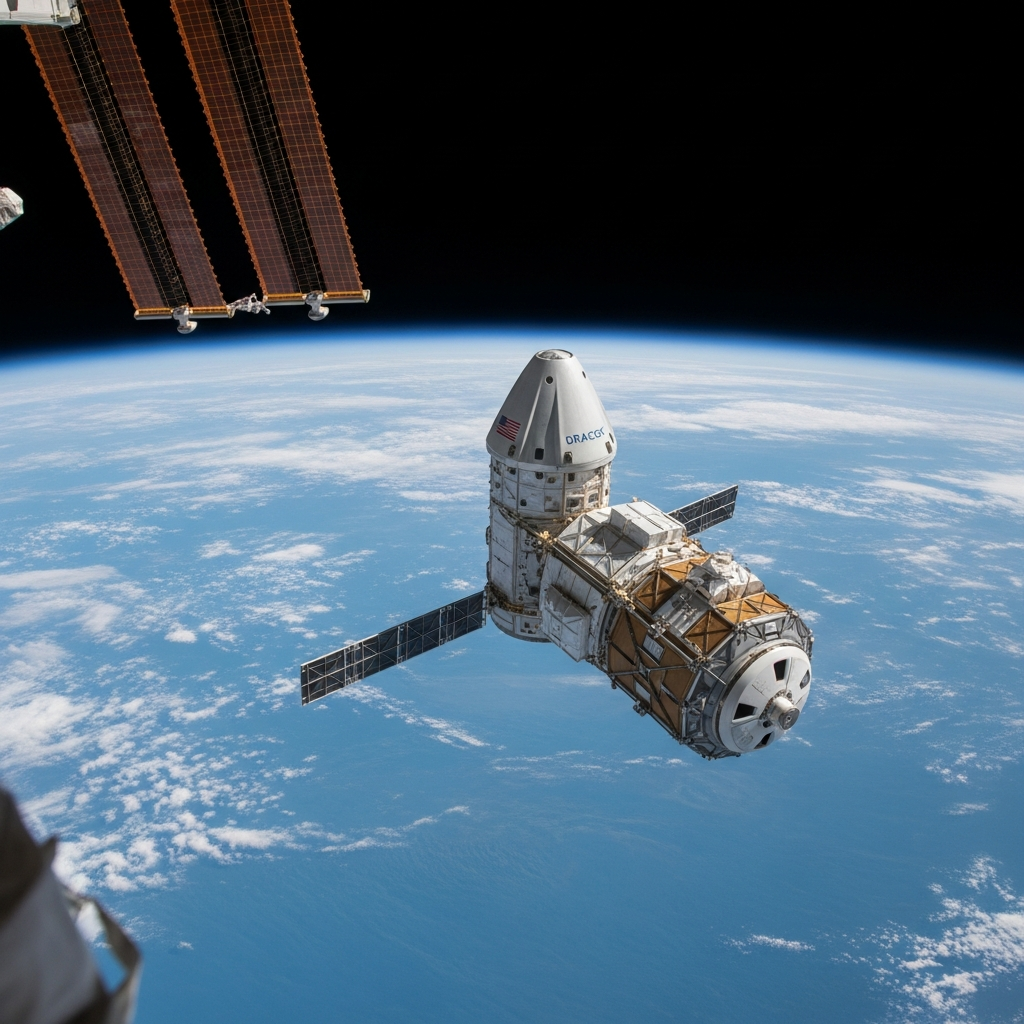
The SpaceX Dragon cargo spacecraft made a landmark departure from the International Space Station (ISS) on Thursday, February 26, marking a pivotal moment in commercial space operations. This specific mission, designated Dragon 33, didn’t just deliver crucial supplies and then return; it also achieved a significant first: an orbital reboost of the ISS. The event, meticulously documented by NASA astronaut Jessica Meir, underscores the growing capabilities of private sector spaceflight and promises to reshape how we support our orbiting laboratory.
A New Chapter in Space Logistics Unfolds
The Dragon 33 capsule gracefully undocked from the International Space Station on February 26, embarking on its journey back to Earth. Stunning images captured by NASA astronaut Jessica Meir provided a unique perspective as the spacecraft drifted away. Meir, reflecting on the departure, remarked, “Goodbye Dragon! Thanks for your hefty delivery to the ISS, you served us well!”
This particular Dragon mission achieved a groundbreaking feat: it became the first Dragon spacecraft ever to reboost the ISS’s orbit. This capability is a game-changer for the space station’s maintenance. Historically, such orbital maneuvers relied heavily on Russian spacecraft. Dragon’s new reboost function significantly reduces this reliance, showcasing a major advancement for commercial space exploration. It paves the way for greater operational independence and flexibility for the ISS.
Dragon’s Dual Role: Critical Delivery and Vital Return
The Dragon 33 mission was a testament to the spacecraft’s versatility, performing both a crucial delivery and a vital return. Its journey to the ISS began on August 25, when it arrived packed with thousands of pounds of essential cargo. This payload included a diverse array of science experiments, critical equipment, and a wealth of crew supplies. Among the more intriguing provisions were 1,500 tortillas, serving as a practical, crumb-free bread substitute for astronauts dining in microgravity.
Upon its departure, the Dragon 33 was far from empty. It was meticulously packed with valuable research samples, used hardware, and other items destined for Earth-bound laboratories. Astronaut Jessica Meir confirmed the diligent packing, noting, “We’ve been busy packing it full of experiment samples, hardware, and items that need to be returned to Earth.” These returned samples are indispensable for scientists on Earth, providing data and physical specimens that further our understanding of space’s effects on biology and materials. Past Dragon missions have similarly returned significant cargo, including equipment for plant growth experiments, hardware from “bioprospecting” studies, and even experimental radiation-shielding vests like the Astrorad, demonstrating the breadth of scientific investigations supported.
Why SpaceX Dragon is Crucial for the ISS
The SpaceX Dragon stands out among the fleet of spacecraft supporting the International Space Station due to a unique and critical capability: its ability to return significant amounts of cargo to Earth. Unlike other active freighters, such as Northrop Grumman’s Cygnus spacecraft and Russia’s Progress vehicles, which are designed to burn up harmlessly in Earth’s atmosphere after their missions, the Dragon performs a precise parachute-assisted splashdown. This enables the safe retrieval of sensitive scientific experiments, crucial equipment, and even personal items belonging to the crew.
This distinguishing feature makes Dragon an indispensable asset for NASA’s commercial resupply services missions. These frequent flights, like previous CRS-26 and CRS-31 missions, ensure a continuous flow of supplies and scientific investigations to and from the orbiting laboratory. The capacity to return delicate samples is paramount for completing long-duration experiments and advancing research that simply cannot be analyzed in space. This unique capability solidifies Dragon’s role in the ongoing success and scientific output of the ISS.
Behind the Scenes: Precision in Space Operations
The intricate dance of undocking and return is a marvel of modern engineering and ground control expertise. The Dragon 33’s departure was commanded remotely by ground controllers at SpaceX, highlighting the sophisticated automation involved in these missions. Launching atop a powerful Falcon 9 rocket, as seen in many SpaceX missions, the Dragon spacecraft represents the pinnacle of reusable space technology.
Following its successful undocking, Dragon 33 was scheduled for a parachute-assisted splashdown off the California coast on Friday morning, UK time. This precision landing ensures the safe retrieval of its valuable contents. These meticulously planned operations, from launch to undocking to splashdown, demonstrate the reliability and safety protocols underpinning commercial spaceflight today. Each mission builds confidence and refines the processes for future, more ambitious endeavors.
The Future of Commercial Spaceflight
The Dragon 33 mission’s success, particularly its orbital reboost, signifies more than just another resupply run; it marks a significant step forward for commercial spaceflight. By providing new capabilities like ISS reboosting and reliable cargo return, SpaceX is playing an increasingly vital role in maintaining the International Space Station and reducing international dependencies. This evolution of commercial partnerships opens new avenues for space exploration, making access to space more efficient and flexible.
As NASA looks towards future human missions to the Moon and Mars through programs like Artemis, the lessons learned and technologies proven by Dragon missions become invaluable. Experiments returned by Dragon, such as those refining radiation shielding, directly inform the development of equipment crucial for protecting astronauts on deep-space journeys. The ongoing innovation from companies like SpaceX is not just supporting current operations but actively shaping the future of humanity’s presence beyond Earth.
Frequently Asked Questions
What is the significance of the SpaceX Dragon 33 mission’s reboost capability?
The SpaceX Dragon 33 mission made history by becoming the first Dragon spacecraft to reboost the International Space Station’s (ISS) orbit. This is significant because it provides a new, commercially operated method for maintaining the ISS’s altitude, reducing the station’s reliance on Russian spacecraft for such critical maneuvers. It underscores the growing capabilities of commercial spaceflight and enhances operational independence for the ISS.
What kind of cargo does the SpaceX Dragon carry to and from the ISS?
The SpaceX Dragon is designed for dual-purpose cargo transport, both delivering and returning. It delivers thousands of pounds of essential items to the ISS, including science experiments, critical equipment, and various crew supplies (like 1,500 tortillas on the Dragon 33 mission). For its return journey, the Dragon carries valuable research samples, used hardware, and other items that require analysis back on Earth, making it an indispensable tool for microgravity research.
How does the SpaceX Dragon’s cargo return capability differ from other ISS resupply spacecraft?
The SpaceX Dragon possesses a unique and critical capability among currently operational ISS cargo craft: it is the only one that can safely return significant amounts of gear to Earth. In contrast, other resupply vehicles like Northrop Grumman’s Cygnus and Russia’s Progress spacecraft are designed to burn up in Earth’s atmosphere upon mission completion. Dragon’s ability to perform a parachute-assisted splashdown allows for the retrieval of sensitive scientific experiments and equipment for post-mission analysis.