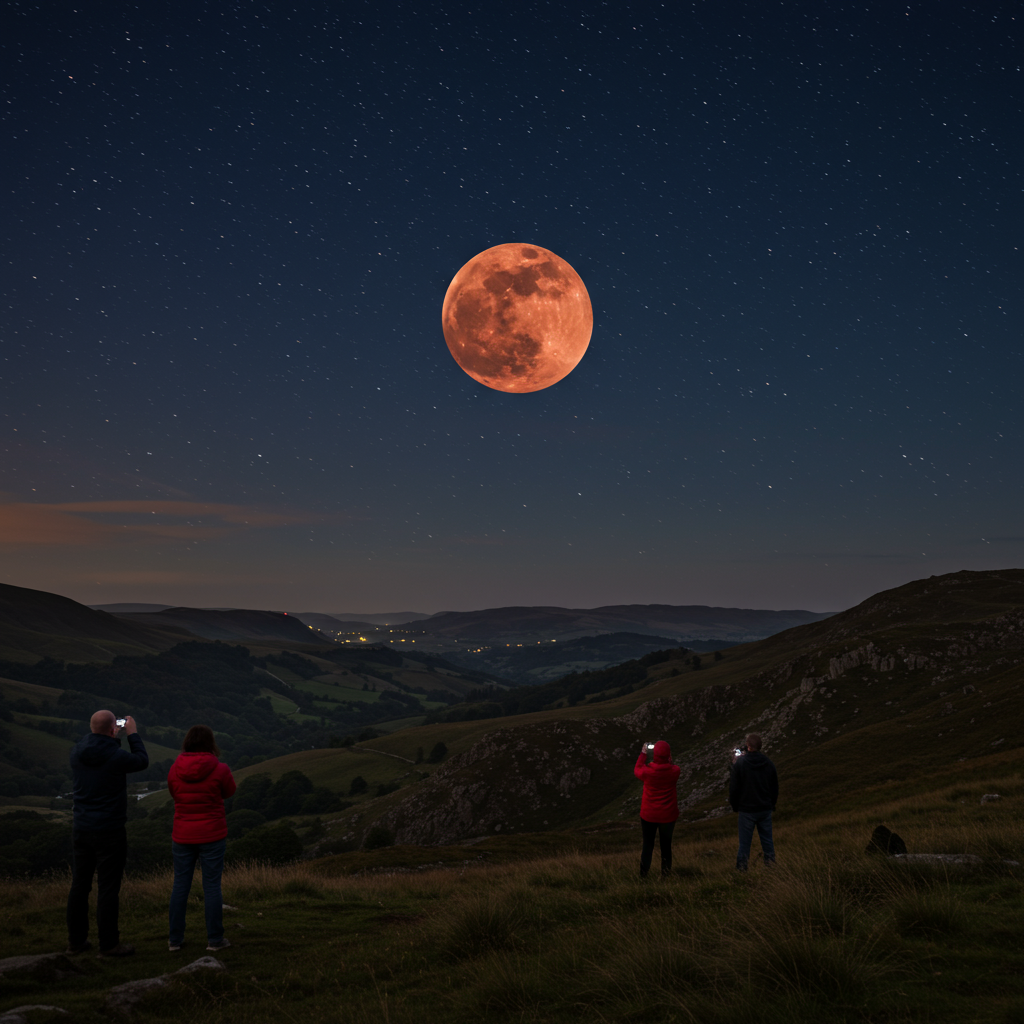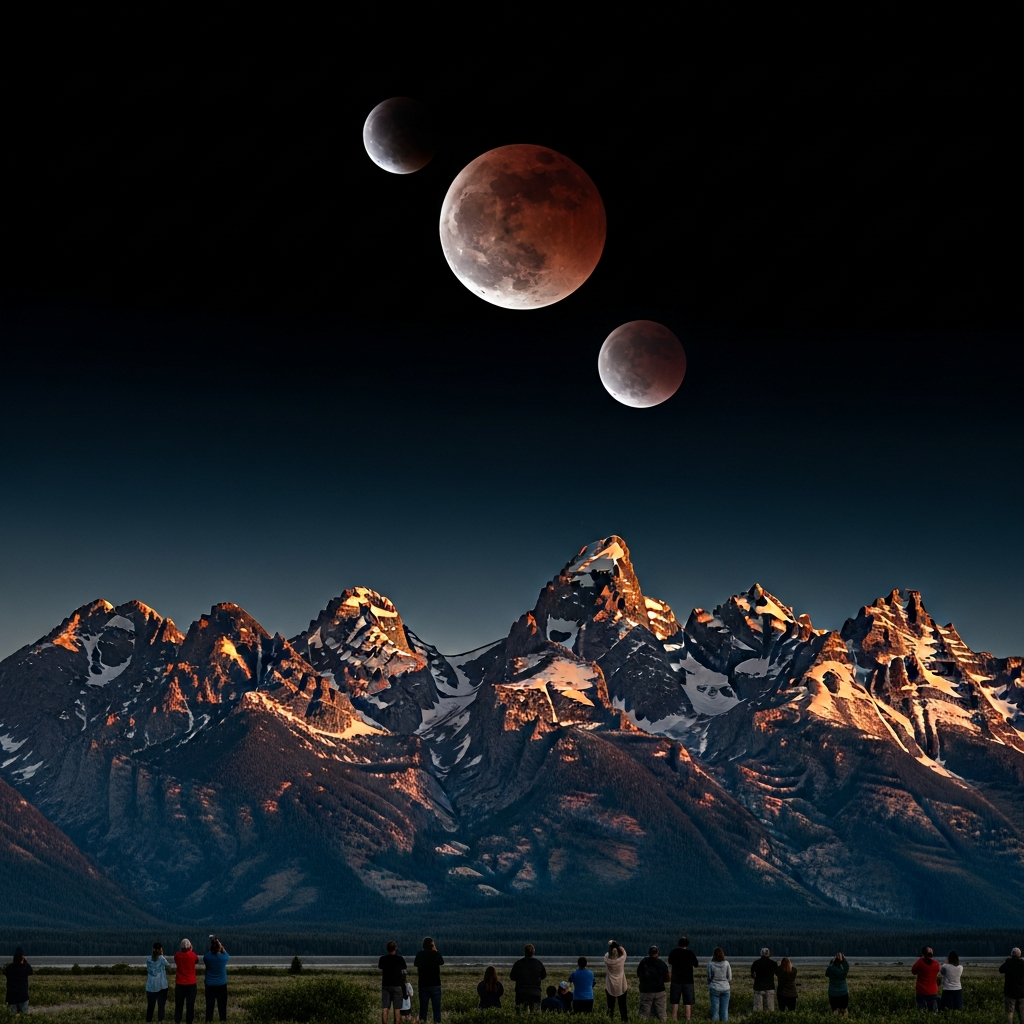
Get ready for a stunning celestial show! A highly anticipated total lunar eclipse, famously known as a “Blood Moon,” will soon grace skies across multiple continents. This event is particularly special as it marks the final total lunar eclipse that many will witness until late 2028, making it a must-see spectacle for stargazers worldwide. Offering a mesmerizing reddish glow, this rare astronomical phenomenon requires no special equipment—just a clear view of the night sky—and promises to be an unforgettable display of our solar system’s precise mechanics.
Witness the “Blood Moon”: A Rare Celestial Spectacle
On March 3, 2026, the Moon will undergo a dramatic transformation, turning a captivating shade of red during a total lunar eclipse. This event is not only beautiful but also significant due to its rarity. After this date, a “lunar lull” means no further total lunar eclipses will occur until New Year’s Eve 2028-2029. This upcoming total lunar eclipse presents a prime opportunity for millions to experience one of nature’s most accessible astronomical wonders.
The eclipse will unfold over several hours, with the period of totality—when the Moon is fully immersed in Earth’s shadow—lasting for approximately 58 minutes. During this time, the Moon will take on its distinctive reddish-copper hue, a sight that has captivated humanity for millennia. Unlike solar eclipses, which demand specialized eye protection, a lunar eclipse is safe to view directly, inviting everyone to look up and enjoy.
Who Will See the Blood Moon? Visibility Across Continents
The visibility of this total lunar eclipse will span vast regions, offering diverse viewing times for different parts of the globe. Knowing your specific location’s timing is crucial for catching the peak of the event.
Here’s a breakdown of where and when to look:
North America, Central America, and Western South America: Observers in these regions will witness the total phase of the lunar eclipse during the early morning hours of Tuesday, March 3, 2026. Western parts of the United States, including Alaska, California, Hawaii, Oregon, and Washington, are highlighted for optimal totality viewing.
Australia and Eastern Asia: The celestial event will be observable during Tuesday night, offering a dramatic view after sunset.
Central Asia and Much of South America: These areas will experience partial stages of the eclipse, where Earth’s shadow will appear to take “bites” out of the Moon.
Africa and Europe: Unfortunately, these continents will not have a view of this specific total lunar eclipse.
This wide-ranging visibility means that approximately 176 million people, representing 2% of the global population, are expected to witness the complete phases of the eclipse. Checking local celestial calendars or forecasting apps will provide precise timings for your exact location.
Understanding the “Blood Moon” Phenomenon
The dramatic crimson color of a Blood Moon isn’t mystical; it’s a fascinating display of atmospheric physics. A total lunar eclipse occurs when the Earth positions itself directly between the Sun and a full Moon. This precise alignment causes Earth to cast a shadow that completely covers the lunar surface.
The Science Behind the Red Hue
During totality, direct sunlight is blocked from reaching the Moon. However, some sunlight manages to filter through Earth’s atmosphere. Think of all the sunrises and sunsets happening around the world at that exact moment, projected onto the lunar surface.
Here’s how it works:
Atmospheric Scattering: Earth’s atmosphere scatters shorter, bluer wavelengths of sunlight more efficiently. This is why our sky appears blue during the day.
Red Light Penetration: Longer wavelengths, such as red and orange light, are less scattered and are instead bent or refracted around Earth’s edges.
Lunar Illumination: This filtered, reddish light travels through our atmosphere and reaches the Moon, illuminating it with a spectacular coppery-red glow.
The exact shade of red can vary based on factors like dust, clouds, and volcanic ash in Earth’s atmosphere. A cleaner atmosphere might result in a brighter, more coppery red, while more atmospheric particles could lead to a darker, duller crimson.
Total, Partial, and Penumbral: Types of Lunar Eclipses
Not all lunar eclipses are created equal. The Moon’s interaction with Earth’s shadow determines the type of eclipse:
Total Lunar Eclipse: The entire Moon passes through Earth’s darkest, central shadow (the umbra). This is when the “Blood Moon” effect is visible. The March 3, 2026, event is a total lunar eclipse.
Partial Lunar Eclipse: Only a portion of the Moon enters the umbra, making that part appear noticeably darkened or “bitten.” The upcoming August 28, 2026, eclipse will be a deep partial lunar eclipse.
Penumbral Lunar Eclipse: The Moon passes only through Earth’s lighter, outer shadow (the penumbra). This results in a very subtle dimming of the Moon’s brightness, often hard to detect without keen observation.
This March 2026 total lunar eclipse is significant because the Moon will spend a substantial 58 minutes and 18 seconds fully within Earth’s umbra, providing ample time to appreciate its striking transformation.
The “Worm Moon” Connection: A Cultural Touch
Adding another layer of interest to this celestial event, March’s full moon is traditionally known as the “Worm Moon.” This name, popularized by The Old Farmer’s Almanac in the 1930s, originates from Native American traditions. It signifies the time when the ground thaws from winter, prompting earthworms to emerge. These signs symbolize the arrival of spring and renewed life.
The convergence of a total lunar eclipse with the “Worm Moon” makes the March 2026 event particularly special, blending astronomical wonder with rich cultural history. It’s a reminder of how closely ancient cultures observed and named celestial cycles based on their connection to natural seasonal changes.
A Lunar Lull: No More Total Eclipses Until 2028
The March 3, 2026, Blood Moon is noteworthy as it marks the beginning of a “lunar lull.” Following this event, observers will not witness another total lunar eclipse until late 2028. This 34-month gap is due to the precise orbital alignments required for a total eclipse. The Moon’s orbit is tilted by about five degrees relative to Earth’s orbit around the Sun. Most full moons pass either above or below Earth’s shadow.
While there will be other lunar eclipses during this period, they will be less dramatic:
August 28, 2026: A deep partial lunar eclipse (93% of the Moon in umbra).
February 20, 2027: A penumbral lunar eclipse.
July 18, 2027: A penumbral lunar eclipse.
August 17, 2027: A penumbral lunar eclipse.
January 12, 2028: A shallow partial lunar eclipse.
July 6, 2028: A partial lunar eclipse (39% of the Moon in umbra).
This “drought” of total lunar eclipses will finally end with a spectacular return of three “Blood Moon” events in 2029, starting with a total lunar eclipse on December 31, 2028. So, make sure to mark your calendars for this upcoming March 2026 event!
How to Best Observe the Total Lunar Eclipse
Observing a total lunar eclipse is a relaxed and rewarding experience, quite different from the intensity of a solar eclipse. You don’t need any specialized equipment, but a few simple tips can enhance your viewing:
Find a Clear Sky: The most important requirement is an unobstructed, cloudless view of the Moon. Light pollution can dim the view, so heading away from bright city lights, if possible, will offer a more vibrant spectacle.
Check Local Timings: Use a reliable astronomy app or online celestial calendar to pinpoint the exact start and end times for the partial and total phases in your area.
Be Patient: The event unfolds over several hours. You don’t need to watch continuously. Venture outside a few times to observe Earth’s shadow gradually darken the Moon, eventually revealing its reddish-orange orb.
Consider Binoculars or a Telescope (Optional): While not essential, binoculars can magnify the view, allowing you to appreciate the Moon’s surface features and the nuances of the red coloration more closely. A telescope will offer an even more detailed observation.
- Dress Warmly: Depending on your location and the time of day, nighttime temperatures can drop. Dress in layers to stay comfortable during your observation.
- www.nbcnews.com
- www.pbs.org
- www.space.com
- www.usatoday.com
- abcnews.com
Astronomers often describe lunar eclipses as having a “more relaxed pace” compared to solar eclipses. This allows for comfortable viewing and photography without the pressure of a quickly passing event or the need for protective gear.
Frequently Asked Questions
What makes the March 2026 total lunar eclipse so significant?
The March 3, 2026, total lunar eclipse is significant because it will be the last total lunar eclipse visible to many until New Year’s Eve 2028-2029. This creates a “lunar lull” of almost three years without a full “Blood Moon,” making this upcoming event a rare viewing opportunity. It also coincides with the “Worm Moon,” adding a cultural layer to its astronomical importance.
Why does the Moon turn “blood red” during a total lunar eclipse?
During a total lunar eclipse, the Earth is perfectly aligned between the Sun and Moon, casting its shadow on the Moon. The Moon appears red because sunlight filtering through Earth’s atmosphere is refracted and scattered. Blue light is scattered away, allowing longer red and orange wavelengths to pass through and illuminate the Moon. This effect is often described as seeing all of Earth’s sunrises and sunsets projected onto the Moon.
Where and when is the best place to view the March 2026 Blood Moon?
The total lunar eclipse will be visible on Tuesday morning, March 3, 2026, for observers in North America, Central America, and western South America (especially Alaska, California, Hawaii, Oregon, and Washington). Later that day, on Tuesday night, it will be visible from Australia and eastern Asia. Africa and Europe will not have a view. Check local celestial calendars for precise timings in your area, and seek a clear, cloudless sky for the best viewing experience.
Don’t Miss This Celestial Event
The upcoming March 3, 2026, total lunar eclipse promises to be a memorable event, offering a breathtaking view of our solar system’s intricate dance. As the last Blood Moon for nearly three years, it’s a prime opportunity for anyone with a clear sky to witness the Moon’s dramatic transformation. Mark your calendars, check your local timings, and prepare to look up at a sky graced by this rare and stunning celestial event.