Our smartphones hold an immense amount of personal information. From banking apps and passwords to private messages and sensitive photos, digital privacy is more critical than ever. Yet, viewing your screen in public often exposes this data to prying eyes. This common vulnerability leads many to rely on physical privacy screen protectors.
The Samsung Galaxy S26 Ultra, however, introduces a groundbreaking solution: Privacy Display. This revolutionary feature isn’t just an accessory; it’s a native, pixel-level innovation redefining smartphone screen security. Hailed by Mashable as “the coolest innovation by far” from Samsung’s Unpacked event, Privacy Display offers dynamic, sophisticated protection far superior to traditional methods.
The New Standard for Digital Privacy
Imagine checking your bank balance on a crowded train, or sharing a confidential document in a cafe. The risk of “shoulder-surfing” is constant. For years, users have turned to third-party privacy screen protectors. These add-ons use micro-louver technology to restrict the viewing angle, making it difficult for bystanders to see your content from the sides. Light emits in a controlled, forward-facing direction.
While effective, these physical solutions come with compromises. They often dim the screen, alter color accuracy, reduce touch responsiveness, and even add thickness to your device. Samsung’s Privacy Display eliminates these drawbacks entirely. It integrates advanced privacy directly into the display itself, ensuring your sensitive content remains private without sacrificing user experience. This innovation sets a new benchmark for digital privacy.
Beyond Basic Protection: The Pixel-Level Revolution
So, how does Samsung achieve this? Unlike a simple filter, the Samsung Privacy Display is engineered at the pixel level. Traditional smartphone displays use “wide pixels” that scatter light outward in multiple directions. This allows for broad viewing angles, perfect for sharing content with friends or group viewing.
Samsung’s breakthrough, dubbed “Black Matrix” technology, fundamentally changes this. The Galaxy S26 Ultra is the first smartphone to integrate both wide and narrow pixels. When Privacy Display activates, it narrows a pixel’s light path using a tiny ring. This directs more light forward, creating “narrow pixels” that restrict outward light scattering.
When the feature is on, these narrow pixels become the primary light source. This drastically reduces visibility from an angle, making it nearly impossible for others to view your screen. Turn it off, and both pixel types work together, restoring the normal wide light emission. This dynamic pixel control is described as a “mind-blowing” advancement, providing pixel-level privacy that was previously impossible in mobile devices.
Unrivaled Flexibility and Control
One of the greatest strengths of Samsung Privacy Display is its adaptability. Unlike a permanent physical protector, this feature is neither universal nor fixed. You maintain complete control over when and where your screen becomes private.
Users can toggle Privacy Display on or off globally. Simply access it via the Quick Panel (Samsung’s equivalent of Control Center) or program it using daily schedules and routines. For example, your screen could behave normally at home but automatically switch to private mode when you step out. This dynamic control enhances both convenience and screen security.
Tailored Privacy for Every Scenario
The customization options extend far beyond simple on/off toggling. Samsung has designed Privacy Display to cater to specific privacy needs, as highlighted by Mashable:
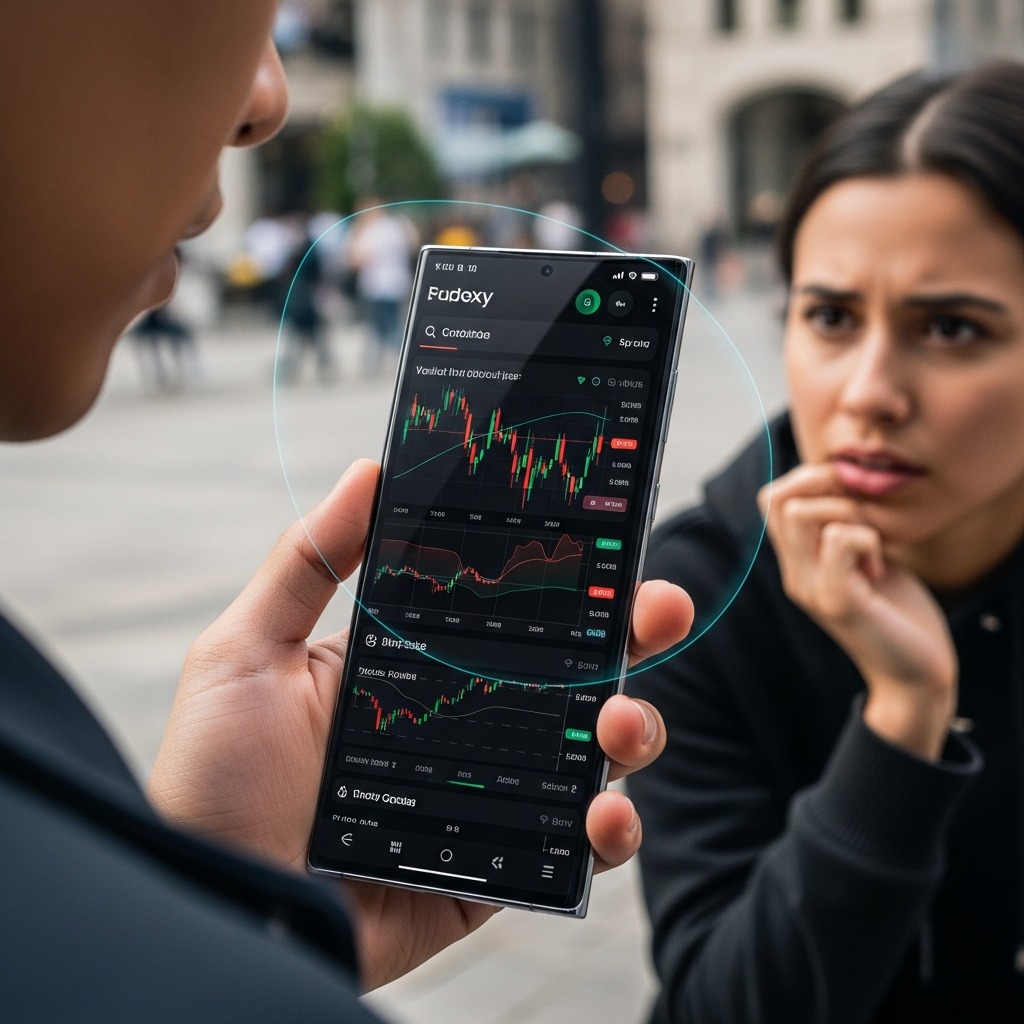
Hiding Specific Apps: You can designate particular applications to always operate in Privacy Display mode. This is ideal for sensitive apps like mobile banking or investment platforms. Check your accounts in public with total confidence, knowing your financial data is shielded from curious onlookers.
Obscuring Unexpected Notifications: Prevent sensitive pop-up notifications from being seen by others. Privacy Display can obscure these alerts, ensuring a message about a surprise party doesn’t accidentally spoil it for your passenger, for instance.
One-Button Activation: For instant privacy, the feature can be quickly activated or deactivated by simply pressing the power button twice. This quick toggle is perfect for immediate discretion, such as when a sensitive text conversation is interrupted.
Maximum Privacy Mode: For the highest level of screen security, Samsung includes a “Maximum mode.” When activated, this setting significantly restricts screen visibility, making content viewable only head-on. ZDNet noted this mode can make the screen appear “almost as if the phone had been shut down” to anyone not directly in front of it. There are also Partial Screen Privacy and Maximum Privacy Protection intensity settings, catering to varying levels of discretion.
Why Samsung’s Approach Outshines Traditional Methods
Traditional privacy screen protectors, while functional, introduce several compromises. They make the screen thicker, often dim its brightness, and can subtly alter color accuracy. Crucially, they may reduce touch responsiveness and even interfere with some phone features like fingerprint readers.
Samsung’s Privacy Display bypasses these caveats entirely. Because it’s integrated at the pixel level, it maintains the phone’s original image quality, vibrant colors, and full touch responsiveness. There’s no added thickness or interference with functionality. This native implementation provides superior smartphone privacy features without any trade-offs, making physical protectors feel obsolete by comparison. While there might be “slight color and brightness differences” when active, these are far less drastic than with external filters.
The Innovation Race: Where Does Apple Stand?
As an admitted iPhone enthusiast, the author of the original Macworld article candidly noted Apple’s product launches have become “mundane.” Despite its prowess in silicon performance, Apple has reportedly lagged behind competitors in “breakthrough technology and features.” The Samsung Privacy Display stands as a prime example of a truly “transformative screen innovation,” far surpassing incremental updates seen elsewhere.
It’s crucial to understand that Privacy Display is fundamentally a hardware feature. It requires a “special display” currently unique to the Galaxy S26 Ultra. This means, as confirmed by Samsung and noted by TechRadar and ZDNet, this sophisticated pixel-level privacy cannot be rolled out to older Samsung devices or, significantly, to iPhones. This exclusivity further highlights Samsung’s innovative leap in digital privacy.
The Galaxy S26 Ultra: More Than Just Privacy
While Privacy Display is a standout feature, the Galaxy S26 Ultra is a powerhouse device in its own right. It boasts a refined, slimmer design, making it more comfortable to hold than previous Ultra models. Under the hood, the Qualcomm Snapdragon 8 Elite Gen 5 for Galaxy chipset delivers significant performance boosts in NPU, GPU, and CPU, supported by a new vapor cooling chamber.
Samsung positions the S26 Ultra as an “AI phone,” with enhanced agentic AI capabilities deeply integrated into the user interface. Features like “Now Nudge,” an upgraded Bixby capable of direct settings control, “Circle to Search” with multi-object recognition, and “AI Call Screening” underscore Samsung’s commitment to truly useful daily AI applications. Even with these advancements, the Samsung Privacy Display remains the most anticipated and unique experiential feature of the S26 Ultra, offering unmatched screen security.
Frequently Asked Questions
What is the core technology behind Samsung’s Privacy Display?
Samsung’s Privacy Display utilizes “Black Matrix” technology, an innovation at the pixel level. Unlike regular “wide pixels” that scatter light broadly, the S26 Ultra integrates “narrow pixels” that direct light predominantly forward. When activated, these narrow pixels become the primary light source, drastically restricting viewing angles for anyone not directly in front of the screen. This dynamic system offers superior screen security by controlling light emission directly from the display itself.
How does Samsung Privacy Display offer better screen security than physical protectors?
The Samsung Privacy Display provides significant advantages over traditional physical privacy screen protectors. Being integrated directly into the display hardware, it avoids common drawbacks like reduced brightness, altered color accuracy, decreased touch responsiveness, and added screen thickness. Furthermore, it offers dynamic control, allowing users to toggle privacy on/off, apply it to specific apps, or even obscure only select notifications, delivering highly flexible and comprehensive smartphone privacy features without compromising user experience.
Is Samsung’s Privacy Display available on all Galaxy phones or iPhones?
No, Samsung’s Privacy Display is a unique, hardware-dependent feature exclusive to the Samsung Galaxy S26 Ultra at launch. It requires a specialized display capable of both wide and narrow pixel light emission, making it impossible to roll out to older Galaxy models through a software update. Similarly, it is not available on iPhones, highlighting Samsung’s lead in this specific pixel-level privacy innovation. Users must acquire the Galaxy S26 Ultra to experience this advanced screen security feature.
Conclusion
The Samsung Galaxy S26 Ultra’s Privacy Display represents a significant leap forward in smartphone screen security. In an age where our digital lives are increasingly exposed, this pixel-level innovation offers unprecedented control and protection. By dynamically adapting viewing angles and allowing for selective content hiding, it provides a truly superior solution to the pervasive problem of shoulder-surfing. For anyone prioritizing digital privacy without compromising device functionality, Samsung has delivered a truly transformative feature that sets a new standard for the industry.