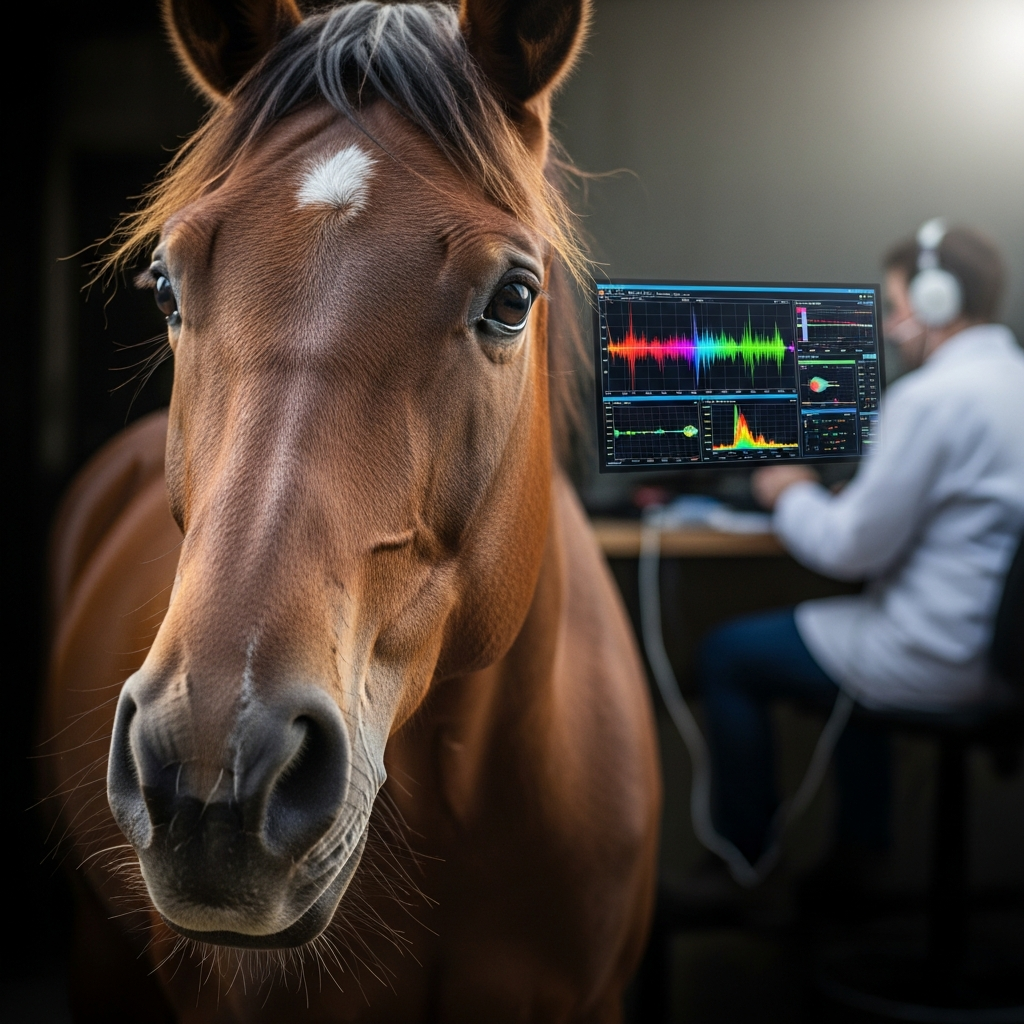
New scientific discoveries are revolutionizing our understanding of horses, revealing a hidden world of complex vocalizations, nuanced facial expressions, and exceptional genetic adaptations. These groundbreaking insights fundamentally change how we perceive equine communication and athleticism. From decoding the unique two-toned whinny to mapping an extensive range of facial cues, researchers are uncovering the profound intelligence and emotional depth of these magnificent animals. This comprehensive look explores the latest scientific revelations, offering vital takeaways for horse enthusiasts, owners, and anyone fascinated by the animal kingdom.
The Mysterious Whinny: A Whistle from Within
For years, the distinctive horse whinny, a crucial part of equine communication, posed a scientific puzzle. While the low-pitched elements of this social call were easily explained by vibrating vocal tissues, much like human speech, the high-pitched component remained an enigma. Large animals typically possess larger vocal systems, which generally produce lower-frequency sounds. The horse’s ability to generate such high frequencies therefore defied conventional understanding, baffling researchers worldwide.
Decoding the Unique Horse Whistle
A recent study, published in Current Biology, finally cracked the code. Scientists discovered that the high-pitched sounds within a horse’s whinny are actually a form of whistling. This isn’t mouth whistling like humans, but rather an intricate process occurring within the horse’s voice box itself. Researchers used innovative techniques to uncover this mechanism. They employed tiny cameras, slid through horses’ noses, to film their vocal cords in action. Detailed scans and experiments involving blowing air through the isolated voice boxes of deceased horses further confirmed their findings.
The mechanism involves air vibrating the vocal tissues. Simultaneously, an area located just above these tissues contracts to create a small opening. Through this opening, the distinct whistle escapes. This complex interplay allows horses to produce both high and low fundamental frequencies at once. This discovery places horses in an incredibly unique category within the animal kingdom, highlighting their sophisticated vocal capabilities for equine communication.
Beyond the Neigh: Two-Toned Communication
This newfound understanding means the horse whinny is far more complex than a simple “neigh.” It is a sophisticated, two-toned vocalization composed of two distinct fundamental frequencies, each created by different mechanisms. This is a remarkable feat. While some small rodents, like rats and mice, exhibit similar whistling capabilities, horses are the first large mammals identified with this unique skill. Furthermore, they are the only known animals capable of whistling through their voice boxes simultaneously with other vocalizations.
This dual-frequency capability could allow horses to convey multiple messages at once. Researchers suggest this enables a more nuanced and complex expression of emotions during social interactions. As one study author, Elodie Mandel-Briefer from the University of Copenhagen, explained, horses can express emotions “in these two dimensions.” This adds a layer of sophistication to their social signals, offering richer emotional expression than previously imagined.
Evolutionary Puzzle: Why Such Complex Calls?
The precise evolutionary pathway for these complex, two-toned calls remains an intriguing question. Scientists observed that wild Przewalski’s horses and elks can produce similar sounds. However, more distantly related equines, such as donkeys and zebras, lack the ability to generate the high-pitched elements. This suggests an evolutionary development tied to specific equine lineages. The intricacy of the horse whinny likely served a significant purpose in the survival and social cohesion of ancestral horses, allowing them to communicate vital information efficiently. Understanding this unique form of equine communication is key to appreciating their social structures.
A Deeper Look: The Power of Equine Facial Expressions
Beyond their unique vocalizations, new research also reveals horses possess a remarkably extensive range of facial expressions. This discovery challenges long-held assumptions about animal communication, positioning horses as surprisingly emotive creatures. Their capacity for intricate facial signaling offers profound insights into their emotional world and social dynamics.
EquiFACS: Unlocking 17 Horse Emotions
Scientists at the University of Sussex, led by Jennifer Watham, developed the Equine Facial Action Coding System (EquiFACS). This comprehensive “directory” maps horse facial movements, leading to a startling revelation: horses exhibit 17 distinct facial expressions. This number is quite significant when compared to other highly social animals. Humans possess 27 facial expressions. However, chimpanzees have at least three fewer recognizable expressions than horses, and dogs have one fewer. Many equine expressions, particularly those involving the lips and eyes, bear striking similarities to human facial movements.
This high level of expressiveness, while surprising, makes sense when considering horses are highly visual creatures. They possess superior eyesight compared to domestic dogs or cats. To understand the emotional significance of the eye, researchers even conducted detailed dissections of horse heads, meticulously photographing the muscular design. For instance, both horses and humans can raise the skin above their eyes, which often seems to indicate negative emotional states. Retraction of lip corners in horses also appears to be part of a submissive gesture.
Spotting Disappointment and Frustration
Further studies have delved into specific equine emotions. Research from the University of Lincoln, led by Dr. Claire Ricci-Bonot, found that horses exhibit distinct facial expressions corresponding to feelings of disappointment and frustration. The study involved 30 horses trained in a food-reward task. Researchers carefully designed two trial conditions to elicit specific emotional responses.
In “frustration” trials, horses could see a food reward but were prevented from accessing it. In “disappointment” trials, they learned to expect food, but then encountered an opaque panel suggesting no food was present. The horses’ behaviors and facial cues were meticulously video-recorded.
Key observations included:
Disappointment: Horses frequently blinked, lifted their nostrils, stuck their tongues out, and made subtle chewing movements.
Frustration: Horses primarily showed more of the whites of their eyes and rotated their ears backwards.
These distinct cues highlight the horses’ rich inner emotional lives. They provide valuable markers for understanding their needs.
Practical Benefits for Horse Welfare and Safety
The findings on horse facial expressions offer significant practical benefits. Recognizing these distinct cues can vastly improve equine welfare. Horse riders and handlers can better interpret their animals’ emotional states, identifying and removing situations that provoke negative emotions. For example, understanding a horse’s frustration might prompt a change in training methods or environment.
Moreover, being able to interpret a horse’s facial cues, particularly those indicating fear, can enhance rider safety. Preempting and avoiding potentially dangerous situations becomes much easier when we can read our equine partners more effectively. This deepens the human-horse bond, fostering greater empathy and more effective care. Improved equine communication leads to a healthier and safer environment for both horse and human.
The Athletic Horse: A Genetic Marvel
Beyond their complex communication, horses possess an unparalleled athletic prowess that has long fascinated scientists. New research offers a detailed genetic explanation for their extraordinary endurance and speed. This ancient genetic advantage is not just key to their athletic abilities but may also hold profound implications for human health.
Unpacking the Genes Behind Unrivaled Endurance
A groundbreaking study published in Science pinpointed a unique and ancient series of genetic mutations fundamental to the evolution of horses’ exceptional aerobic fitness. These mutations enable their muscles to utilize oxygen with remarkable speed and efficiency, all without incurring typical cellular damage. This genetic advantage translates into several key physical traits:
High Muscle Proportion: Horses maintain a high ratio of muscle relative to their body mass.
Mitochondrial Concentration: Their muscle cells boast a high concentration of mitochondria, the cellular powerhouses.
Exceptional VO2 Max: Horses achieve a maximum oxygen uptake and utilization (VO2 max) that is more than double that of an elite human athlete.
This allows horses to optimize energy use while minimizing negative byproducts, essentially giving them “their cake and eat it too,” as described by researcher Gianni Castiglione of Vanderbilt University.
NRF2 & KEAP1: A Unique Genetic Recoding
The core of this genetic adaptation revolves around two critical proteins: NRF2 and KEAP1. NRF2 plays crucial antioxidant roles and is vital for producing ATP (adenosine triphosphate), the primary energy currency of cells. KEAP1 acts as a regulatory protein, keeping NRF2 in check to prevent harmful overactivity. In horses, scientists discovered a single nucleotide change early in the KEAP1 gene. This change would typically halt protein production. However, a phenomenon called “recoding” allows this “stop sign” sequence to be translated into an amino acid, enabling the full protein to be built.
The resulting equine KEAP1 protein is uniquely sensitive to stress and more responsive to free radicals than its counterparts in other vertebrates. This offers significant athletic benefits without obvious major downsides, a testament to intense evolutionary pressures. These changes likely occurred between 4 to 4.5 million years ago, around the origin of the genus Equus. This unique genetic “recoding” has only previously been observed in bacteriophages, making its discovery in a vertebrate mammal a truly unique genetic phenomenon.
Human Health Implications: Lessons from Equine Genetics
The implications of these genetic findings extend far beyond equine athleticism. By understanding the genetic underpinnings of horse fitness, scientists could potentially discover new treatments for neurodegenerative diseases like Alzheimer’s. They might also develop therapies to slow the processes of normal aging. The horse’s ability to “recode” a premature stop codon to produce a functional protein offers a compelling model for developing gene therapies for human diseases, as premature stop codons are implicated in 10-15% of human genetic disorders. Continued investment in this fundamental research is critical for these future biomedical advancements to materialize.
The Future of Understanding Horses
These scientific breakthroughs paint a vibrant, complex picture of horses. We now understand that their whinnies are not mere sounds but intricate, multi-layered messages. Their faces convey a rich tapestry of emotions, offering clear signals of their mental state. Furthermore, their bodies are powered by unique genetic adaptations, enabling incredible athletic feats. The study of equine communication and biology is an ongoing journey of discovery. Each new insight deepens our appreciation for these incredible animals.
Bridging the Communication Gap
Bridging the communication gap between humans and horses enhances our shared experiences. It fosters greater empathy and promotes better animal welfare. From safeguarding their mental well-being to improving rider safety, these findings have practical, actionable value. As we continue to unravel the secrets of equine communication, we gain a more profound connection with creatures who have shared our journey for millennia.
Frequently Asked Questions
How do horses create their unique whinny sound?
Horses produce their unique whinny through a sophisticated dual mechanism involving their voice box. The familiar low-pitched sound originates from air vibrating tissue bands, similar to human speech. However, the high-pitched component is actually a form of whistling. This whistle is created when air vibrates the vocal tissues, and simultaneously, an area just above these tissues contracts to form a small opening, allowing the whistle to escape. This groundbreaking discovery, published in Current Biology*, reveals that horses are the only known large mammals capable of such simultaneous, two-toned vocalization from their voice box.
How can understanding horse facial expressions benefit horse owners and riders?
Understanding horse facial expressions, mapped through systems like EquiFACS and studies on specific emotions, significantly improves equine welfare and rider safety. By recognizing distinct cues for emotions like disappointment (e.g., blinking, lifted nostrils, chewing movements) and frustration (e.g., more whites of eyes, ears rotated backwards), owners and riders can better interpret their horse’s mental state. This allows for improved management practices, helps identify and alleviate stressful situations, and can enhance rider safety by enabling early detection of fear or discomfort, preventing potentially dangerous situations before they escalate.
What breakthroughs for human health could come from studying horse genetics?
Studying the unique genetic adaptations of horses, particularly those related to their extraordinary aerobic fitness and oxygen utilization, holds immense promise for human health. Research has identified unique genetic “recoding” involving the NRF2 and KEAP1 proteins that enables horses to optimize energy use and minimize cellular damage. Understanding this mechanism could lead to new treatments for neurodegenerative diseases like Alzheimer’s, develop therapies to slow the processes of normal aging, and provide models for gene therapies. Specifically, the horse’s ability to recode a premature stop codon offers a compelling model for addressing a significant percentage of human genetic disorders.
Conclusion
The latest scientific breakthroughs fundamentally reshape our understanding of horses, from their intricate vocalizations to their impressive genetic makeup. We now know that horse whinnies are complex, two-toned signals conveying nuanced emotions, and their faces display an astonishing 17 distinct expressions. Furthermore, their incredible athleticism is rooted in unique genetic adaptations that could even unlock new treatments for human diseases. These discoveries highlight the rich emotional lives and biological marvels of horses. By embracing this deeper understanding, we can foster stronger bonds, enhance equine welfare, and continue to marvel at these truly exceptional animals.