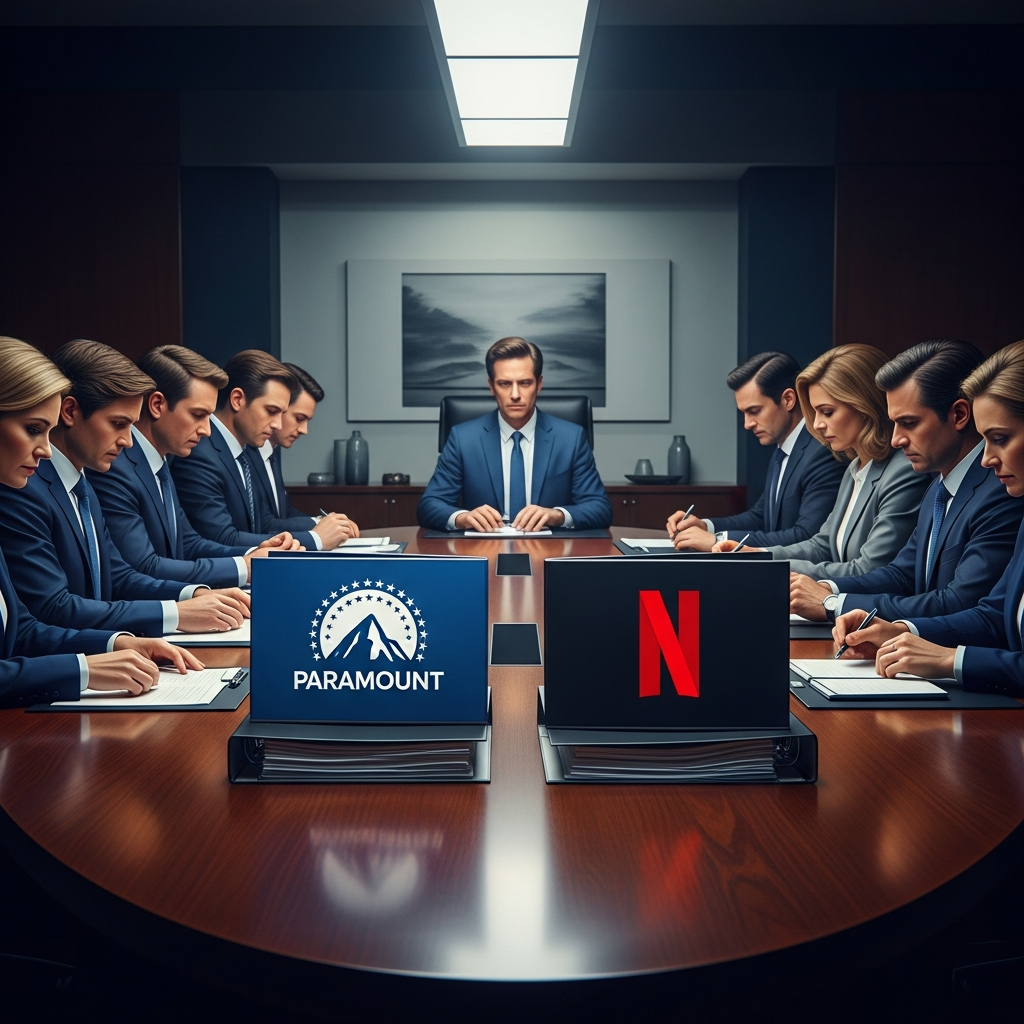
The media landscape is ablaze as Warner Bros. Discovery (WBD) finds itself at the epicenter of an intense bidding war, with the company’s future hanging in the balance. As shareholders gear up for a pivotal vote, the WBD board is meticulously reviewing a revised, compelling takeover proposal from Paramount. This high-stakes drama unfolds against an existing, board-recommended merger agreement with streaming giant Netflix, creating a complex and urgent scenario for one of the world’s leading entertainment conglomerates. Understanding the nuances of each offer, the strategic implications, and the regulatory hurdles is crucial for anyone following the future of media.
The Core Conflict: Netflix vs. Paramount for WBD
At the heart of this unfolding saga are two distinct and aggressive acquisition offers, each vying for control or a significant portion of Warner Bros. Discovery. The competition isn’t just about price; it’s about strategic vision, market dominance, and the very structure of WBD’s vast empire.
Netflix’s Strategic Play
Netflix initially set the stage with its all-cash offer, an $82.7 billion deal (amended from an earlier $72 billion valuation). This proposal, officially recommended by the WBD board, strategically targets specific, high-value assets within the WBD portfolio. Netflix aims to acquire Warner Bros. studio, the iconic HBO business, and its associated streaming assets. Crucially, this offer does not encompass WBD’s entire portfolio of traditional cable channels. Under Netflix’s plan, these cable channels would be spun off into a separate, independent company, effectively streamlining WBD into a more focused, streaming-centric entity complementing Netflix’s existing business model.
Paramount’s Aggressive Counter-Offer
Paramount, often identified with David Ellison’s Paramount Skydance, has pursued a more comprehensive and increasingly aggressive strategy. From its initial hostile tender offer of $30 per share, Paramount’s objective has consistently been to acquire the entire Warner Bros. Discovery company. The latest revised proposal, submitted after a seven-day limited waiver period, is currently under review by the WBD board. While the precise financial terms of this most recent offer remain undisclosed, prior iterations indicate a significantly sweetened bid. Key elements that have emerged include:
Higher Valuation: Market observers anticipate Paramount might need to offer $31 or even $32 per share or more to secure the deal, up from previous reports.
Termination Fee Coverage: Paramount has committed to covering the substantial $2.8 billion termination fee WBD would owe Netflix if the existing deal were to be dissolved.
Refinancing Backstop: A pledge to backstop a refinancing effort for WBD, potentially cutting its costs by an impressive $1.5 billion.
Ticking Fee: A commitment to pay either $650 million in cash per quarter or 25 cents per share for every quarter the deal closure is delayed past January 1st, offering shareholders compensation for prolonged uncertainty.
Paramount has also actively engaged in a direct appeal to WBD shareholders, describing the Netflix merger agreement as “inferior” and pushing for a full company takeover.
Behind the Bids: What’s at Stake for WBD?
For Warner Bros. Discovery, this bidding war presents both immense opportunities and significant challenges. The outcome will redefine its market position, financial structure, and future strategic direction in a rapidly evolving entertainment landscape.
The Board’s Deliberation and Fiduciary Duty
The WBD Board of Directors is now tasked with a critical decision, guided by its fiduciary duty to maximize shareholder value. This involves a rigorous evaluation of Paramount’s revised proposal against the existing, board-recommended Netflix agreement. The board confirmed receipt of Paramount’s new offer, following a negotiation window that concluded on February 23rd. Despite this review, WBD has repeatedly affirmed that the Netflix merger agreement remains in effect, and the board continues to recommend it to shareholders. If the board ultimately determines Paramount’s latest offer constitutes a “Company Superior Proposal” under its agreement with Netflix, it would trigger a specific process. This process grants Netflix a four-business-day window to submit an improved counter-bid, allowing them to “match” or exceed Paramount’s offer.
Shareholder Implications and Market Volatility
For WBD shareholders, the situation is fraught with uncertainty. They have been advised not to take any action regarding Paramount’s amended tender offer at this time, awaiting the board’s comprehensive review. The ongoing competition has also introduced market volatility, particularly impacting Netflix’s stock performance. Analysts from Guggenheim Securities and MoffettNathanson have noted that the “path to conclusion on the WBD bid will remain a primary sentiment driver and likely share appreciation limiter” for Netflix, as long as the bidding war continues. The final decision will significantly impact shareholder returns and the strategic trajectory of both WBD and the acquiring entity.
Regulatory Hurdles and the Road Ahead
Beyond the financial intricacies and strategic alignments, regulatory scrutiny casts a long shadow over these potential mergers, particularly the proposed Netflix-WBD deal.
DOJ Scrutiny on the Netflix-WBD Deal
The U.S. Department of Justice (DOJ) has reportedly launched an antitrust investigation into the proposed Netflix-WBD merger. Concerns center on the potential for the combined entity to “create a monopoly” within the entertainment industry. The DOJ is actively seeking detailed information from producers and filmmakers regarding Netflix’s market leverage and the competitive landscape. Any merger of this scale faces rigorous antitrust review, and regulatory approval is a non-negotiable step before any deal can be finalized. This adds another layer of complexity and potential delay to the already intricate process.
The March 20th Deadline: Awaiting Resolution
The climax of this high-stakes corporate drama appears imminent, with a critical deadline fast approaching. Warner Bros. Discovery has scheduled a special meeting for March 20th, where stockholders will cast their votes on the existing Netflix merger agreement. This date injects a sense of urgency into the WBD board’s review of Paramount’s revised proposal. The outcome of this review, and potentially Netflix’s response if given a matching window, will undoubtedly influence the tenor of that shareholder meeting. The entertainment world watches closely as one of its giants prepares for a transformative decision that will ripple across streaming, content production, and media consolidation for years to come.
Frequently Asked Questions
What is the core difference between Netflix’s and Paramount’s acquisition offers for Warner Bros. Discovery?
The primary difference lies in the scope of their acquisition targets. Netflix’s $82.7 billion all-cash offer focuses on acquiring specific, high-value assets of Warner Bros. Discovery, namely its film and television studios (Warner Bros. studio), HBO, and HBO Max streaming business. Under this plan, WBD’s traditional cable channels would be spun off into a separate company. In contrast, Paramount’s revised proposal aims to acquire the entire Warner Bros. Discovery company, seeking a complete takeover of all its assets, including the studios, streaming, and traditional cable channels.
How will the Warner Bros. Discovery board evaluate Paramount’s revised proposal against the Netflix agreement?
The WBD board is meticulously reviewing Paramount’s revised offer, consulting with financial and legal advisors. If the board determines that Paramount’s proposal constitutes a “Company Superior Proposal” under its existing merger agreement with Netflix (meaning it offers demonstrably better value to shareholders), it will trigger a specific process. This process grants Netflix a four-business-day window to submit an improved counter-bid, allowing them the opportunity to match or exceed Paramount’s offer. The board’s fiduciary duty requires them to consider all offers that maximize shareholder value.
What are the next critical steps for Warner Bros. Discovery shareholders regarding the ongoing acquisition battle?
WBD shareholders are currently advised not to take any action regarding Paramount’s amended tender offer until the board completes its review and provides an update. The most critical upcoming event is a special meeting scheduled for March 20th, where stockholders will vote on the existing, board-recommended merger agreement with Netflix. The board’s findings on Paramount’s latest bid, and any potential counter-offer from Netflix, will inform shareholders before this pivotal vote.
The battle for Warner Bros. Discovery is a testament to the dynamic forces shaping the modern entertainment industry. The outcome will not only determine the future direction of a major media player but also send powerful signals about the ongoing consolidation trends, the value of traditional versus streaming assets, and the strategic maneuvers employed in today’s cutthroat market. As the March 20th deadline looms, all eyes remain fixed on WBD’s board and shareholders, awaiting the resolution of this defining moment.