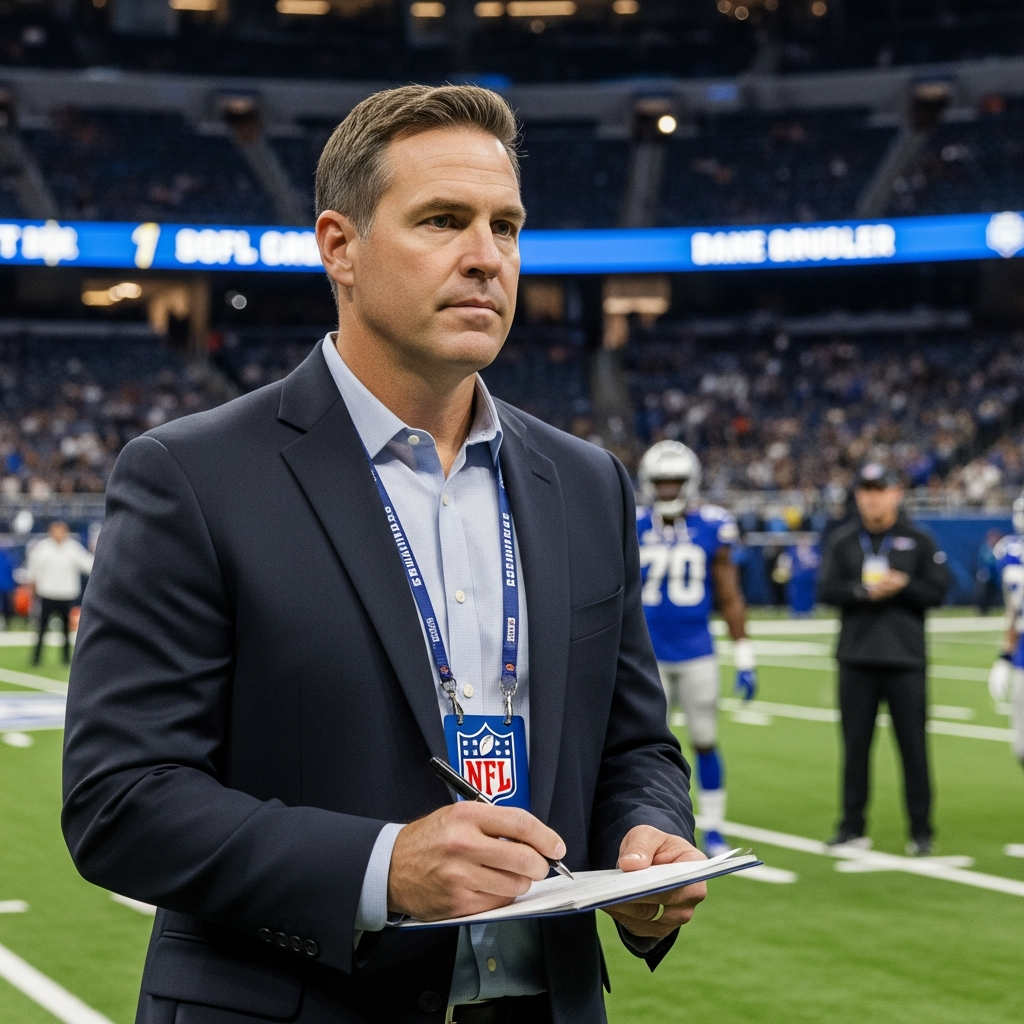
The NFL Scouting Combine: often derided as the “underwear Olympics,” yet undeniably a cornerstone of player evaluation. As legendary scout C.O. Brocato famously quipped, “Those who don’t value the combine don’t know how to properly use it.” For veteran NFL Draft experts like Dane Brugler, who is making his 16th consecutive trip, the combine is a vital information hub. It provides invaluable context through athletic testing, critical medical feedback, and crucial interviews, offering insights unmatched by any other period of the year.
This week in Indianapolis, 318 aspiring NFL prospects will converge, each driven to prove their worth. While every participant has something significant to gain, our expert spotlight falls on 21 NFL Combine prospects whose performances could dramatically shift their 2026 NFL Draft stock. These are the athletes drawing intense scrutiny from scouts and analysts alike, each with unique questions surrounding their game.
The Combine’s Unmatched Value in Player Evaluation
Understanding a prospect’s full potential extends far beyond game film. The scouting combine fills in critical gaps, offering a standardized platform for athletic measurement and medical assessment. Teams gain crucial data on speed, agility, strength, and durability, all of which are essential for projecting success at the professional level. This comprehensive data helps evaluators confirm what they see on tape, or sometimes, challenge preconceived notions, making it an indispensable part of the 2026 NFL Draft process.
Speed Demons: Who Will Blaze the 40-Yard Dash?
Speed sells in the NFL, and the 40-yard dash remains the combine’s marquee event. Several NFL Combine prospects are poised to put on a show:
Brenen Thompson (WR, Mississippi State): Our expert’s top pick for the fastest 40-yard dash, Thompson is small (around 5’9″, 170 pounds) but undeniably electric. His high school 100-meter dash time of 10.18 seconds translates directly to the field, where he led the FBS with five catches over 50 yards last season. A sub-4.28 second 40 time is certainly within reach for this explosive receiver.
Zachariah Branch (WR, Georgia): Another projected speedster, Branch should comfortably run in the 4.3s. However, scouts will keenly watch his route running and ability to track deep balls. After primarily excelling on screen passes last season, Branch needs to demonstrate he’s more than just a gadget player.
Brandon Cisse (CB, South Carolina): Despite some inconsistent tape, Cisse possesses high athletic upside. He plays with quick-twitch athleticism and effortless speed, suggesting a 40-yard dash in the 4.3s and a vertical jump exceeding 40 inches. NFL Media analyst Daniel Jeremiah even projects Cisse to the Seahawks as the #32 overall pick, highlighting his potential.
Kendrick Law (WR, Kentucky): Reminiscent of dynamic playmakers like Kadarius Toney, Law is explosive with the ball in his hands. His on-field speed should easily translate to a 40-time in the 4.3s, captivating evaluators despite lingering questions about his overall game.
D’Angelo Ponds (CB, Indiana): While his size (reportedly 5’8″, 174 pounds) is a known factor, Ponds’ state championship speed in the 100 meters (10.37 seconds) indicates he’ll excel in on-field drills. Scouts will focus on his precise movements during positional work.
Keep an eye on other potential sub-4.35 contenders like Barion Brown (LSU), Chris Hilton (LSU), Deion Burks (Oklahoma), Eric Rivers (Georgia Tech), Desmond Reid (Pittsburgh), and Malik Benson (Oregon).
Defensive Game-Changers: Measuring Up in Indy
The combine is equally crucial for defensive prospects looking to cement their status or climb draft boards. The physical and mental tests are paramount for these impact players.
Arvell Reese (Edge, Ohio State): A “physical freak” at 6’4″, 240 pounds, Reese was a standout last season with 10 tackles for loss and 6.5 sacks. His versatility as a pass-rusher and linebacker has drawn significant attention. Daniel Jeremiah projects Reese as the #2 overall pick to the New York Jets, emphasizing his athleticism and potential as a full-time edge rusher.
Rueben Bain Jr. (Edge, Miami): Bain showed dominant moments last season but remains a polarizing NFL Combine prospect. His non-traditional body type and shorter arms lead some teams to view him as a better fit inside as a three-technique. His verified measurements and athletic testing will be vital in clarifying his optimal NFL role. Notably, Daniel Jeremiah has him going to the Chiefs at #9 overall, citing his “junkyard-dog mentality.”
Akheem Mesidor (Edge, Miami): Often overshadowed, Mesidor played his way into first-round discussions with his tape last season. However, scouts eagerly await his testing numbers and a critical medical evaluation due to a history of foot injuries.
Dillon Thieneman (S, Oregon): Thieneman offers exceptional scheme versatility, capable of excelling in deep coverage or as a downhill run defender. His speed and athleticism will be on full display, and a strong performance could solidify his position as a potential top-25 selection. Daniel Jeremiah has him as a first-round pick (#25 to the Bears), highlighting the league’s need for versatile safeties.
Caleb Downs (S, Ohio State): Considered an “all-around impressive player” and an “ultimate chess piece,” Downs’ versatility shines, playing deep, in the box, and even near the line of scrimmage. Daniel Jeremiah projects him to the Dolphins at #11 overall, comparing his intelligence and leadership to Minkah Fitzpatrick.
Sonny Styles (LB, Ohio State): While often overshadowed by other Buckeyes, Styles is considered a potentially “better pure linebacker” at the next level. His high football IQ, athleticism, and adept tackling abilities make him a reliable presence. He is projected to the Commanders at #7 overall by Daniel Jeremiah, who links him to GM Adam Peters’ prior success with versatile linebackers.
Jack Kelly (LB, BYU): A former national champion BMX racer, Kelly brings a fearless competitive streak and explosive speed (projected 4.4s 40, 40+ inch vertical at 245 pounds). Scouts will pay close attention to his three-cone drill to evaluate his change-of-direction skills, a noted concern on tape.
Treydan Stukes (CB, Arizona): As one of the top nickel corners, Stukes, a former walk-on, possesses excellent playmaking instincts. While his 40-yard dash will be fast, evaluators are more focused on his three-cone and shuttle times to assess his fluidity, as hints of stiffness have appeared on his film.
Genesis Smith (S, Arizona): Smith’s true centerfield coverage skills are exceptional, but concerns about his finesse tackling exist. While he can’t prove his physicality in Indy, a standout athletic performance could shift the focus to his strengths, potentially making him this year’s version of Calen Bullock.
Domani Jackson (CB, Alabama): A former record-setting high school sprinter, Jackson’s trajectory was impacted by a major knee injury. The key questions revolve around the NFL team doctors’ assessment of his health and how much of his world-class speed remains.
Pivotal Moments for Key Offensive Talents
Beyond the speedsters and defensive stalwarts, several offensive NFL Combine prospects face critical evaluations that could define their 2026 NFL Draft trajectory.
Carnell Tate (WR, Ohio State): Currently favored to be the first wide receiver drafted, Tate’s smooth, long strides make him deceptively fast. His 40-yard dash could surprise, landing closer to 4.4 than 4.5 seconds. Daniel Jeremiah lists Tate as a first-round pick (#16 to the Jets), emphasizing his reliability and deep-ball threat capabilities, which were evident in his breakout 2025 season.
Ty Simpson (QB, Alabama): Simpson’s draft stock is volatile, potentially ranging from a top-15 pick to a Day 2 selection. The combine is absolutely pivotal for him, starting with verified measurements, passing his medicals (especially concerning a late-season injury), and showcasing his throwing mechanics during position drills. As a coach’s son, he’s expected to excel in team interviews.
Cole Payton (QB, North Dakota State): With only one season of starting experience, Payton isn’t NFL-ready, making him a fascinating long-term project in what’s considered a weaker quarterback class. At around 230 pounds, he should run in the 4.5s and impress with his overall athletic testing. If he combines this with quiet mechanics and accurate throws, his draft stock could skyrocket.
Jaren Kanak (TE, Oklahoma): After transitioning from linebacker to offense last season, Kanak (44 catches, 533 yards) could separate himself in a loaded tight end class. His speed at 230-plus pounds truly pops, highlighted by a 10.37-second 100-meter dash in high school. He’s poised to impress with his explosiveness.
Jeremiyah Love (RB, Notre Dame): Love is projected as a rare early running back selection, appearing in the top 10 of some mock drafts. Daniel Jeremiah calls him the “most electric playmaker” in the draft, projecting him to the Saints at #8 overall. His combine performance will be crucial to solidify his elite status.
Mike Washington (RB, Arkansas): Once an undrafted free agent prospect, Washington earned draftable grades last season and performed well at the Senior Bowl. His combine testing could further elevate his player evaluations and turn heads among NFL decision-makers.
Keylan Rutledge (G, Georgia Tech): An old-school, physical blocker, Rutledge’s combine is critical for medical evaluations. A serious 2023 car accident led to multiple foot/toe surgeries, and while he became an All-American despite it, team doctors’ approval is paramount. His athletic testing will also be scrutinized to ensure his numbers match his physical play.
Jake Golday (LB, Cincinnati): A top-50 prospect for some, Golday’s combine performance is highly anticipated after he pulled out of the East-West Shrine Bowl. If this 6’4″, 240-pound linebacker comes close to the incredible “Freaks List” numbers attributed to him (e.g., 1.54-second 10-yard split, 10-7 broad jump), the buzz will become deafening.
Medical Scrutiny and Injury Returns
The medical checks at the scouting combine are often as important as the drills. For some players, the combine represents a critical checkpoint in their recovery.
Jermod McCoy (CB, Tennessee): More than a year removed from an ACL injury in January 2025, McCoy’s health is the paramount concern. The combine will reveal if he’s ready to participate in drills or if his pro day will be the stage for his athletic showcase. He’s still considered a contender for CB1 in his class.
- Rutledge (mentioned above) also faces crucial medical evaluations.
- www.nytimes.com
- www.usatoday.com
- www.landgrantholyland.com
- caneswarning.com
- www.nfl.com
These NFL Combine prospects represent just a fraction of the talent descending upon Indianapolis. For each, this week is an opportunity to provide context, answer lingering questions, and significantly impact their draft stock ahead of the 2026 NFL Draft.
Frequently Asked Questions
What is the true value of the NFL Scouting Combine for prospective players and teams?
The NFL Scouting Combine provides crucial context beyond game film, serving as a standardized platform for player evaluation. For prospects, it’s an opportunity to showcase athletic abilities (speed, strength, agility), demonstrate football skills in position drills, and ace team interviews. For NFL teams, the combine offers vital medical feedback, confirmed physical measurements, and direct interaction with players, allowing them to gather comprehensive data and answer questions that game tape alone cannot. This holistic assessment is essential for making informed decisions in the 2026 NFL Draft.
Which specific drills are most impactful for evaluating NFL Combine prospects?
While all drills offer insight, some are particularly impactful. The 40-yard dash is critical for assessing raw speed, especially for skill position players like wide receivers and cornerbacks. The three-cone drill and short shuttle are crucial for evaluating change-of-direction ability, agility, and quickness, which are vital for defensive backs, linebackers, and offensive linemen. Position-specific drills also allow scouts to see a player’s fluidity, technique, and ability to perform under pressure, confirming or challenging their on-field tape.
How might a strong or weak combine performance influence a prospect’s 2026 NFL Draft stock?
A strong combine performance can significantly boost a player’s draft stock by confirming elite athleticism, addressing perceived weaknesses, or demonstrating a faster-than-expected recovery from injury. Players like Brenen Thompson, known for speed, could solidify their high projections with a blazing 40-yard dash. Conversely, a poor performance in athletic testing or medical evaluations can raise red flags, causing a player’s stock to fall, regardless of impressive game tape. The combine acts as a critical filter, providing a final layer of scrutiny before teams finalize their draft boards.
Final Thoughts on the 2026 NFL Draft Horizon
The NFL Scouting Combine is far more than an athletic competition; it’s a crucible where dreams are forged and futures are shaped. For these 21 NFL Combine prospects and hundreds more, the week in Indianapolis will provide essential “context,” separating hype from legitimate talent. As the countdown to the 2026 NFL Draft continues, the insights gleaned from these intense evaluations will be paramount for every team building their roster. Stay tuned as these athletes chase their NFL aspirations.