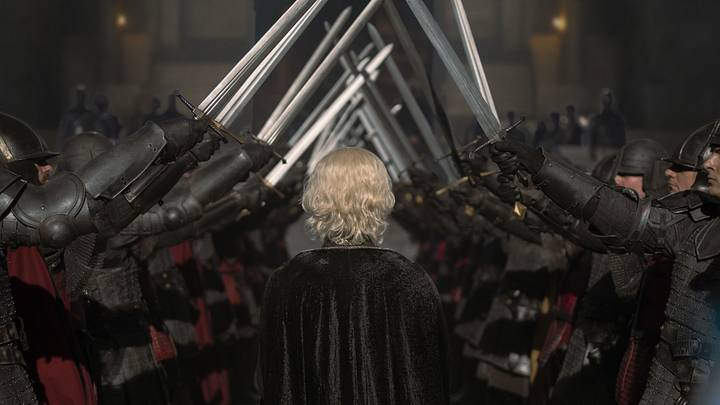
The announcement of a new Game of thrones movie has officially set a high-stakes trajectory for the franchise’s cinematic future, with a theatrical release date slated for June 1, 2029.
Key Takeaways
- Official Release Date: Game of Thrones: Aegon’s Conquest is scheduled to hit theaters on June 1, 2029, according to reports from Deadline.
- Creative Leadership: The film will be directed by Owen Harris and written by Oscar-nominated screenwriter Beau Willimon.
- Core Narrative: The film centers on Aegon I Targaryen and his conquest of the Seven Kingdoms, utilizing the massive dragons Balerion, Vhagar, and Meraxes.
- Source Material: The story is an expansion of the lore found in George R.R. Martin’s Fire & Blood.
- Industry Context: The release comes amidst the complex, ongoing merger process between Warner Bros. Discovery and Paramount.
- Franchise Expansion: This project represents a major leap for the “Westeros screen universe,” moving the property from television to the big screen.
- 2026-2027: Watch for updates regarding the commencement of principal photography. Any announcement of a casting list—particularly for the roles of Aegon, Visenya, and Rhaenys—will be a major catalyst for fan engagement.
- 2028: The conclusion of House of the Dragon Season 4 will be a critical moment. The reception of the television series will likely influence the marketing tone and perhaps even the creative direction of the upcoming film.
- Ongoing Merger Developments: The resolution of the Paramount and Warner Bros. Discovery merger and any associated legal rulings will determine the ultimate distribution home for the film.
- winteriscoming.net
- deadline.com
What Happened
In a significant move for the fantasy genre, Warner Bros. has dated its upcoming tentpole feature, Game of Thrones: Aegon’s Conquest, for a summer 2029 release. As first reported by Deadline, the film is set to arrive in theaters on June 1, 2029. This date places the film at the start of a major summer window, a strategic move for a production of this scale.
While specific casting details and the official production start date have not yet been disclosed, the creative foundation of the film is already firmly established. The project has attached Owen Harris to direct, a filmmaker who has already demonstrated a deep understanding of the franchise’s aesthetic through his work on the series A Knight of the Seven Kingdoms. Harris is noted for directing the first, second, and fifth episodes of that series, including the high-profile “Dunk’s spectacular trial of seven” sequence.
Adding further prestige to the production is screenwriter Beau Willimon. Willimon, an Oscar-nominated writer, brings a heavy-hitting pedigree to the project, having created the Netflix original series House of Cards and contributed significantly to the Star Wars series Andor, specifically the acclaimed “prison break” episode.

Why the Aegon’s Conquest Movie Matters
This film is not merely another entry in a long-running franchise; it represents a fundamental shift in how George R.R. Martin’s intellectual property is being utilized. For years, the Game of Thrones brand has been synonymous with high-budget, prestige television on HBO. By transitioning the story of the Targaryen dynasty’s rise to the silver screen, the studio is attempting to capture the “epic” visual scale that television budgets often struggle to sustain.
According to analysis from Westeros.org, the film is positioned as a cornerstone of the “Westeros screen universe.” This strategy aims to bridge the gaps between the conclusion of existing television spinoffs and the continued expansion of Martin’s lore. The move to cinema allows for the depiction of massive historical events—such as the burning of Harrenhal or the Battle of the Field of Fire—with a level of spectacle that can only be achieved through theatrical production values.
Furthermore, the timing of the release is critical. The 2029 date follows a period of heavy content output for the franchise. By 2028, viewers are expected to have seen the fourth and final season of House of the Dragon, alongside potential third seasons of A Knight of the Seven Kingdoms. The movie serves as a strategic anchor to maintain fan engagement once the current television cycles conclude.
The Lore: Unifying the Seven Kingdoms
The narrative of Aegon’s Conquest focuses on one of the most pivotal eras in Westerosi history: the rise of the Targaryen dynasty. The film will depict the journey of Aegon I Targaryen, the first Lord of the Seven Kingdoms, as he seeks to unite the disparate and warring kingdoms under a single rule.
Central to this conquest are Aegon’s two sister-wives, Visenya and Rhaenys Targaryen. Together, they utilized the overwhelming power of their three massive dragons to achieve dominance across the continent. The film is expected to draw heavily from the “fake history book” Fire & Blood, which serves as the primary source material for this era of the timeline.
To understand the scale of the characters and forces involved, the following table outlines the primary historical elements that will likely drive the film’s narrative:
| Key Figure/Element | Role/Description | Historical Significance |
|---|---|---|
| Aegon I Targaryen | The Conqueror | Founder of the Targaryen dynasty and first King of the Seven Kingdoms |
| Visenya Targaryen | Sister-wife to Aegon I | Co-conqueror and wielder of the sword Dark Sister |
| Rhaenys Targaryen | Sister-wife to Aegon I | Co-conqueror and rider of the dragon Meraxes |
| Balerion | The Black Dread | The largest and most feared dragon used by Aegon I |
| Vhagar | Dragon of Visenya | A massive dragon central to the conquest’s military success |
| Meraxes | Dragon of Rhaenys | A key dragon used to establish Targaryen dominance |
| The Iron Throne | The Seat of Power | The ultimate symbol of Aegon’s unification of the kingdoms |

Creative Pedigree and Production Continuity
The attachment of Harris and Willimon suggests a concerted effort to maintain the high standard of storytelling established by the original series. In the entertainment industry, the pairing of a director who understands the specific “language” of a franchise with a writer known for political complexity is often seen as a move toward quality assurance.
Owen Harris brings a continuity of vision. Having already worked within the production ecosystem of A Knight of the Seven Kingdoms, he is intimately familiar with the visual requirements and tone of the Westeros setting. This reduces the “creative friction” that often occurs when a new director takes over a massive, established IP.
Beau Willimon provides the narrative weight. The Game of Thrones universe is built on the foundation of political maneuvering, shifting alliances, and the consequences of power. Willimon’s work on House of Cards proved his ability to navigate complex power dynamics, while his work on Andor demonstrated his capacity for high-stakes, cinematic world-building. This combination is essential for a story that must balance massive dragon battles with the intricate politics of the Targaryen family.
The Corporate Landscape: Mergers and Stability
While the creative news is focused on dragons and kings, the business news surrounding this film is focused on mergers and acquisitions. The announcement comes at a time of significant volatility for Warner Bros. Discovery. The company is currently navigating a pending mega-merger with Paramount, a process that is reportedly approaching its final stages but remains subject to ongoing antitrust litigation.
This merger has massive implications for the distribution and management of the Game of Thrones library. As part of the restructuring, Paramount is expected to inherit at least 40 Warner Bros. theatrical releases scheduled between October 2 of this year and into 2029. This represents approximately 56% of what will be a combined output of 71 features.
In this context, Aegon’s Conquest acts as a stabilizer. For investors and industry analysts, the scheduling of a major, hard-dated theatrical release years in advance serves as a signal of confidence. It suggests that despite the complexities of the Paramount-Warner merger and the legal challenges associated with it, the Game of Thrones intellectual property remains a top-tier asset that the combined entity intends to prioritize.
What It Means for You
The implications of this announcement vary depending on who you are within the ecosystem of this franchise:
For Fans
If you are a follower of the series, you can expect a period of high content density leading up to 2029. The timeline suggests a “hand-off” from television to cinema. You should prepare for a heavy concentration of Westeros-related content in 2028, followed by a transition to the big screen in mid-2029. The move to cinema also promises a scale of visual effects—particularly regarding dragon flight and large-scale warfare—that may exceed what is possible on a standard television schedule.
For Industry Professionals and Investors
If you are tracking the media landscape, this release is a bellwether for the stability of the Warner Bros. Discovery/Paramount merger. The ability to maintain long-term theatrical schedules during a period of corporate restructuring is a key indicator of institutional strength. The Game of Thrones IP is a proven revenue generator, and its continued expansion serves as a hedge against the uncertainty of the merger’s final terms.

Counterpoints and Open Questions
Despite the excitement, several risks and unanswered questions remain.
First, there is the issue of long lead times. A release date set for 2029 carries the inherent risk of production delays, shifts in director or writer availability, or changes in corporate strategy due to the merger. In the film industry, a date set five years in advance is often viewed as a placeholder rather than a certainty.
Second, the merger uncertainty cannot be ignored. While the film signals stability, the outcome of antitrust litigation and the final structure of the Paramount-Warner Bros. Discovery entity could alter how these films are marketed, distributed, or even produced.
Finally, there is the creative challenge of the source material. Fire & Blood is written as a historical text, which lacks the traditional character-driven narrative structure of the original A Song of Ice and Fire novels. Translating a “history book” into a cohesive, cinematic screenplay is a task that will test even a writer of Willimon’s caliber.
What Happens Next
As the industry looks toward the next several years, several key milestones will serve as indicators for the film’s progress:
Frequently Asked Questions
When will the Game of Thrones movie be released?
Game of Thrones: Aegon’s Conquest is officially scheduled for a theatrical release on June 1, 2029. This date has been reported by Deadline and is intended to anchor the summer movie season for the studio.
Who is directing the Aegon’s Conquest film?
The film will be directed by Owen Harris. Harris is already familiar with the franchise, having directed multiple episodes of the spinoff series A Knight of the Seven Kingdoms.
What is the story about?
The movie focuses on the historical era of the Conquest of Westeros. It will depict Aegon I Targaryen and his sister-wives, Visenya and Rhaenys, as they use their three dragons—Balerion, Vhagar, and Meraxes—to unify the Seven Kingdoms and establish the Targaryen dynasty.
Is the movie based on a book?
Yes. The film is an expansion of the lore created by George R.R. Martin, specifically drawing from the events and history detailed in his book Fire & Blood.
Summary
The announcement of Game of Thrones: Aegon’s Conquest marks a bold expansion of the Westeros screen universe. By pairing director Owen Harris with screenwriter Beau Willimon and targeting a June 2029 release, Warner Bros. is signaling a long-term commitment to the franchise that transcends the television medium. While corporate mergers and long production timelines present potential hurdles, the film stands as a major pillar in the studio’s future theatrical slate.
References
Featured image: Image via Winter is Coming