Understanding the Complex Reality of Europe Air Conditioning
Europe air conditioning is quickly transitioning from a perceived luxury into an absolute necessity as the continent experiences increasingly severe heat waves that challenge traditional ways of life. Historically, European homes were constructed with materials like heavy stone and brick, designed to keep interiors stable throughout the year, but these legacy structures now struggle to cope with the rapid warming trends seen over the last decade. As someone who has spent significant time in older apartments in cities like Paris and Rome, I have observed the palpable difference between the cooling strategies of the past and the desperate, modern search for relief when temperatures consistently exceed thirty degrees Celsius for weeks on end.
Quick Summary
Rapid Warming: Europe is currently the fastest-warming continent, with temperature increases outpacing the global average, making summer cooling a critical public health priority.
Infrastructure Gap: Only about 20% of European households have air conditioning, creating a significant disparity compared to the 90% saturation found in the United States.
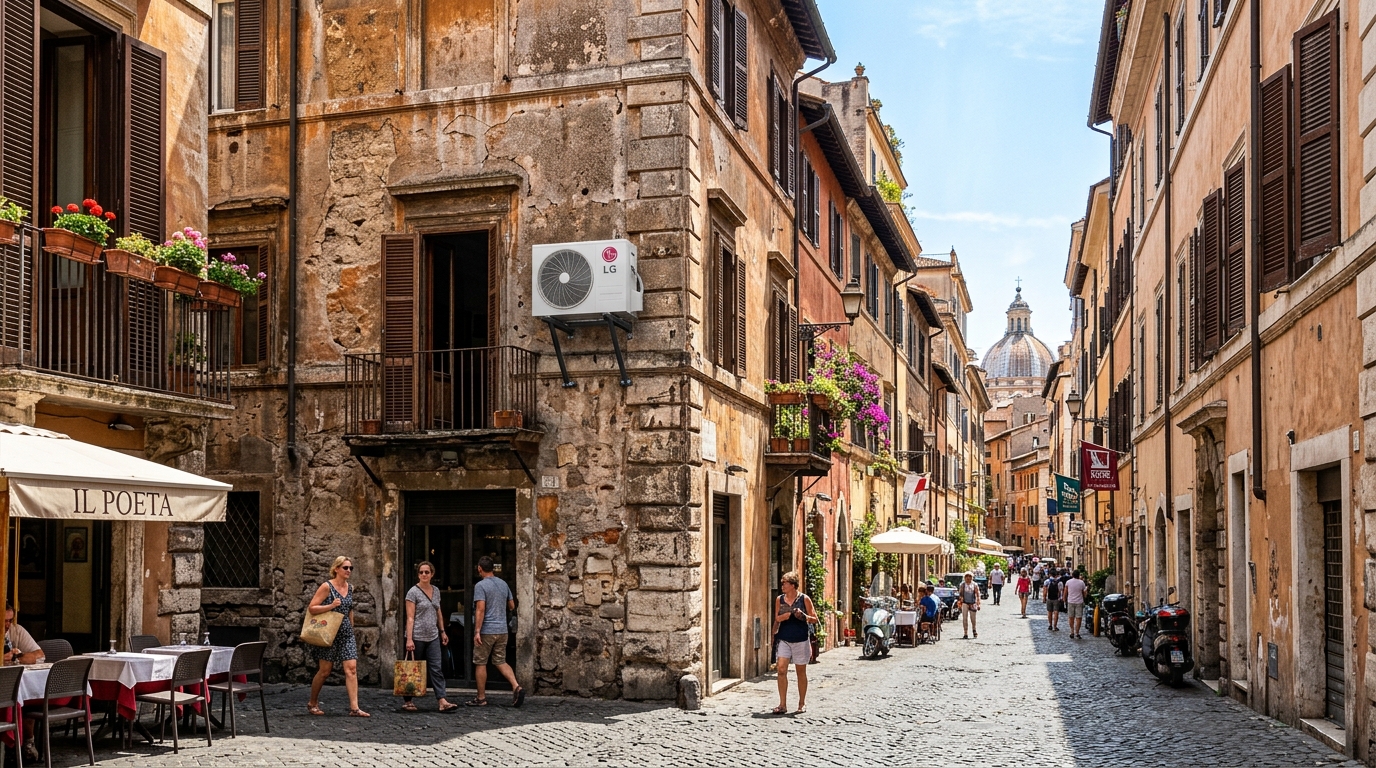
Architectural Barriers: Many historic buildings prevent the installation of standard external units, forcing residents to rely on less efficient portable or internal-only cooling solutions.
Health Implications: Excessive heat is a leading cause of mortality among the elderly, emphasizing the need for targeted, reliable cooling access during peak summer months.
Economic Tension: High electricity costs make widespread AC usage a financial burden for many families, leading to a complex debate about state-funded subsidies versus energy-efficiency goals.
The Direct Answer: What Should You Do?
If you are currently living in Europe and finding your living space unbearable during the summer, the first step is to audit your environment before committing to an expensive installation. If you reside in a modern building with adequate electrical capacity and permission from your building management or local municipality, investing in a high-efficiency split-system unit is the gold standard. However, for most residents in historic city centers, permanent installation is either physically impossible or prohibitively expensive due to strict aesthetic regulations. In those cases, you should prioritize a dual-hose portable unit over cheaper, single-hose models, and combine this with passive cooling techniques like heavy blackout curtains, exterior shutters, and nocturnal ventilation. Cooling is not just about the device you buy; it is about how you manage your thermal envelope throughout the day.
The Cultural and Economic Divide
When I visited the United States during the 2026 FIFA World Cup, I was struck by the ubiquity of climate control in public spaces. In places like Dallas or New York, the indoor air is kept at a constant, refreshing temperature regardless of the outside conditions. For many European visitors, this was a complete revelation. Contrast this with the atmosphere back home in places like London or Berlin, where installing a cooling unit is still often viewed as an ‘un-British’ or ‘un-European’ indulgence, or at the very least, a massive hit to your monthly budget.
Electricity prices in Europe are significantly higher than in North America, which acts as a major psychological and financial deterrent for the average homeowner. When a standard cooling unit can add hundreds of euros to your energy bill over a single summer, it forces a decision: pay for comfort or prioritize savings. This economic reality is fueling political debate across the continent. Some leaders are calling for massive loan programs to help residents install energy-efficient systems, arguing that cooling is a health right, while others fear the grid strain that would inevitably follow a mass adoption of power-hungry appliances.
The Impact of Urban Design
One of the most persistent issues I have encountered while researching this topic is the urban heat island effect. In dense European cities, buildings act as massive thermal batteries, absorbing heat all day and radiating it back into the street all night. This means that even when the sun goes down, the city doesn’t cool off. When you add individual air conditioning units to these already stressed buildings, you are essentially pumping the heat from inside your apartment directly into the public alleyway, which raises the temperature for your neighbors. It is a vicious cycle that planners are trying to address by encouraging more green roofs and tree canopy coverage, but these solutions take decades to mature while the heat waves are happening now.
Navigating Architectural Barriers
I remember trying to help a friend in a pre-war building in Vienna navigate the local permit process to get a simple wall-mounted unit. It was a nightmare of bureaucracy. Many historic districts have strict ordinances protecting the exterior appearance of buildings. You cannot simply mount a compressor box on the side of a building that has been standing for two centuries. This cultural preservation is essential for the identity of these cities, but it creates a massive structural bottleneck for modern comfort.
If you find yourself in this situation, do not lose hope. There are specialized solutions that avoid facade modification. For example, some units use internal, water-cooled heat exchangers or specialized venting that can fit through existing structural gaps or custom window inserts. However, these systems often require expert installation and can be twice as expensive as a standard split-system unit. Before you spend a single euro, talk to a specialized contractor who has experience in historic building modifications. Do not risk a fine by ignoring local ordinances.
Who Should Prioritize Cooling (And Who Should Not)
Deciding to invest in a cooling system is a highly personal choice that depends on your health, your home, and your budget.
You Should Invest If:
You belong to a vulnerable group: If you are elderly, have respiratory issues, or suffer from cardiovascular conditions, the heat is not just an annoyance; it is a clinical risk. Do not wait for the heat wave to hit.
You live in a top-floor apartment: Heat rises, and in many old European walk-ups, the top floor acts like an oven. If your ceiling is directly under the roof with poor insulation, you need active cooling.
You work from home: If you spend your entire day in your apartment, your productivity and health rely on a stable indoor environment. A cool office space is a professional necessity.
You Might Want to Skip This If:
You live in a cool, coastal climate: If your region rarely sees temperatures above 28 degrees Celsius, you are better off investing in high-quality exterior shutters, fans, and a disciplined ventilation routine.
You are a short-term renter: Installing a permanent unit in a space you will move out of in a year is rarely worth the return on investment. Focus on high-quality, quiet portable fans or evaporative coolers.
The Economics of Cooling: What to Expect
When you decide to move forward with a purchase, you have to account for both the upfront purchase price and the long-term operational costs. An entry-level split-system unit, including the professional installation required for efficiency, usually starts around 1,200 euros. However, the operational cost is the real wildcard. If you choose an older, less efficient unit, you could be looking at an additional 200 euros on your monthly electricity bill during peak summer months.
I always recommend prioritizing units with modern inverter technology. Unlike traditional systems that constantly switch on and off—which is a massive energy drain—inverter units adjust their motor speed to maintain a steady temperature. This keeps your home at a consistent comfort level while using significantly less electricity. While the initial investment for an inverter-based system might be 20-30% higher, the pay-off in operational savings over three to five years is undeniable.
Understanding Efficiency Metrics
Always look at the CEER (Combined Energy Efficiency Ratio). The higher the number, the more efficient the unit. Do not be tempted by the cheapest unit on the shelf. In Europe, where energy prices are high, a budget unit with a low CEER will end up costing you more in electricity within just two summers than if you had bought the more expensive, efficient model from the start. Look for the Energy Star equivalent labels that certify that the unit has been tested for actual performance rather than just marketing claims.
Common Mistakes to Avoid
1. The Single-Hose Portable Trap
This is the biggest mistake I see. Many people buy a cheap, single-hose portable unit and wonder why their room doesn’t get cold. The reason is simple physics: the single hose pushes air out, which creates negative pressure in your room. That negative pressure then pulls hot, humid air in from the hallway or through cracks in your window seals to replace it. You are effectively trying to cool a room while constantly sucking in hot air from the outside. If you must use a portable unit, insist on a dual-hose system that uses one pipe to pull in outside air for cooling and another to vent the heat, keeping the room pressure balanced.
2. Neglecting the ‘Bunker’ Routine
Many Europeans try to treat their homes like American ones, leaving windows open while running the AC. This is a massive waste of energy. The most successful strategy I have observed is the bunker method: keep all windows, doors, and heavy curtains closed from 9:00 AM until 8:00 PM. This keeps the sun from heating your interior. Only open your windows during the early morning hours when the temperature is at its lowest to flush out the stale air. Use the mechanical cooling only as a tool to maintain this ‘cool bank’ rather than trying to overcome the heat of the midday sun.
Frequently Asked Questions
Is air conditioning actually a major cause of global warming?
It is a significant contributor, yes. Air conditioning impacts the climate in two distinct ways. First, the electricity used to power millions of units often comes from carbon-intensive sources, though this is improving as the grid shifts to renewables. Second, the refrigerants used in older units have a global warming potential thousands of times higher than CO2. If a unit leaks, it is environmentally catastrophic. However, modern, high-efficiency units use much safer refrigerants and vastly less energy. The aggregate problem is massive, but for the individual, choosing a modern, efficient unit is the best way to minimize your footprint.
Can I install an AC unit in a historic building without losing my permit?
It is rarely a simple ‘yes’ or ‘no.’ You must check your local municipal codes regarding exterior facades. In many cities, you are strictly forbidden from placing a compressor on the street-facing side. However, many buildings allow units to be placed on a private interior courtyard or the roof, provided there is a path for the refrigerant lines. I once saw a clever solution where a resident used a specialized, slimline unit that was hidden behind a decorative metal grate that matched the building’s original design, which satisfied the building inspector. Always ask for a list of approved local contractors who specialize in historic renovations, as they will know the ‘workarounds’ that are legal and acceptable.
How effective are cooling stations in preventing deaths?
Public cooling stations, often set up in museums, libraries, or community centers, are excellent for people who are mobile and can leave their homes. However, they fail to solve the primary problem: the elderly or immobile residents who are stuck in their apartments. These stations should be considered a temporary, emergency stopgap rather than a long-term solution. The data from recent European heat waves shows that mortality is most common in residents who remain in their own homes, which is why public health officials are now shifting toward the idea that every home needs a ‘cool room’—a designated space with climate control that allows for sleeping and recovery during the hottest parts of the week.
Conclusion: Moving Toward a New Climate Standard
Europe is clearly at a critical crossroads regarding how it handles the rising heat. The old model—relying solely on thick walls and natural ventilation—is failing in the face of modern climate extremes. We can no longer treat air conditioning as a luxury or a purely American import. It is a necessary tool for survival, especially for our most vulnerable neighbors. However, we must be careful not to replicate the inefficient, power-hungry models of the past. The path forward involves a blend of passive architectural updates—better insulation, reflective roofing, and smart glazing—combined with the strategic use of high-efficiency, inverter-based cooling systems. As you plan for the coming summers, remember that the best cooling strategy is a layered one. Start by sealing your home, blocking the sun, and managing your airflow. Then, invest in the right cooling technology for your specific structural constraints, focusing on efficiency and quiet operation. By taking a thoughtful, informed approach, you can ensure that your home remains a safe haven rather than a source of stress, while contributing to a more sustainable way of managing our changing European climate.