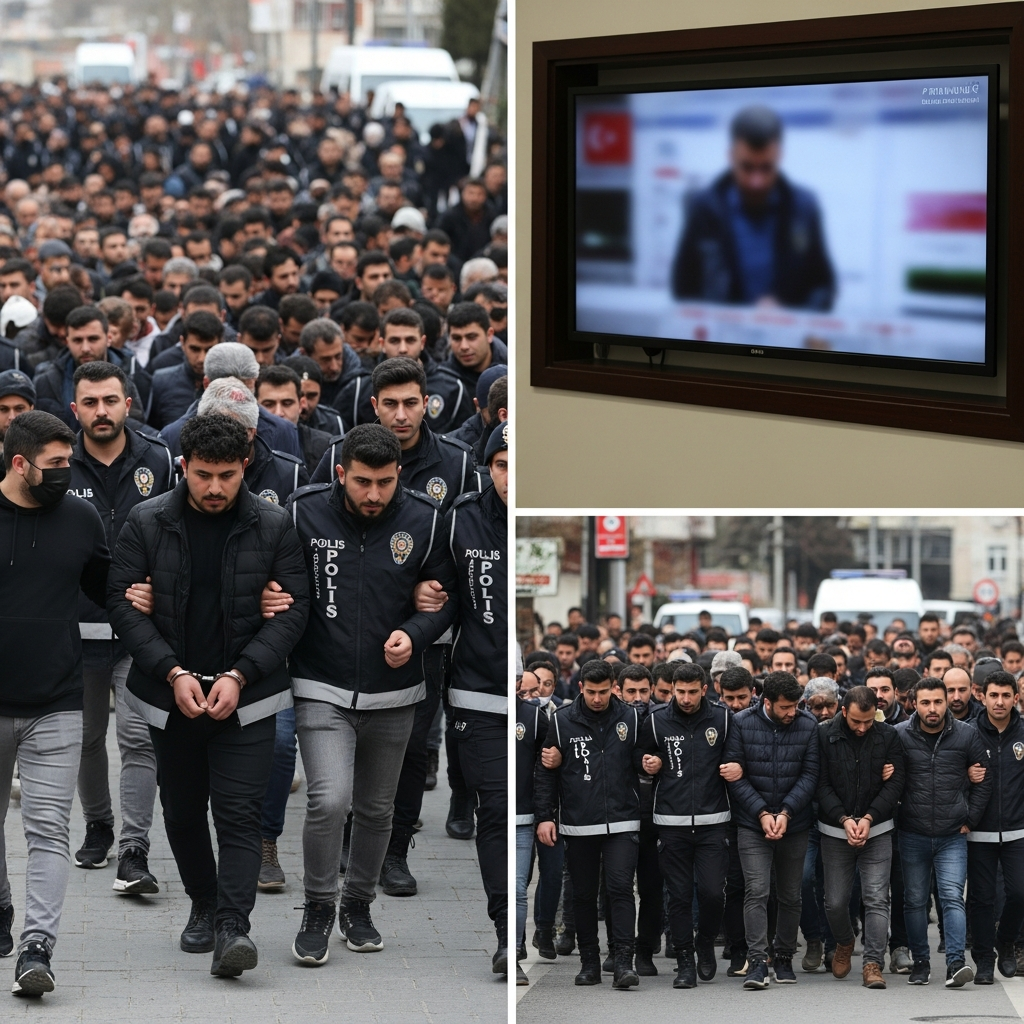
An unprecedented wave of mass arrests has swept across Turkey following two tragic school shootings in a single week. Turkish authorities have launched a wide-reaching crackdown, targeting individuals accused of either praising or spreading misleading information about these devastating events online. This swift and firm response highlights the government’s resolve to maintain public order and curb content deemed to glorify violence. The incidents have not only led to a significant number of detentions but have also sparked widespread public outrage and calls for enhanced safety in educational institutions.
A Nation Gripped by School Violence: Two Deadly Attacks
The nation was rocked by two separate, deadly school attacks within days. The first tragic event unfolded on Tuesday, April 15, 2026, at the Ahmet Koyuncu Vocational and Technical Anatolian High School in the Siverek district, located in Turkey’s southeast. An ex-student, reportedly in his late teens, opened fire indiscriminately with a shotgun. The attack resulted in 16 people, including students, sustaining injuries. The perpetrator subsequently took his own life, leaving a community in shock and grief.
Just a day later, on Wednesday, April 16, 2026, an even more devastating incident occurred at the Ayser Calik Secondary School in Kahramanmaras. In this horrific attack, nine individuals lost their lives – eight young students and one dedicated teacher. An additional 13 people were injured, with six reportedly in critical condition. Authorities later confirmed the perpetrator was a 14-year-old student, who was also killed during the incident. Local prosecutors revealed that this young attacker had meticulously planned the assault. Digital forensics uncovered a document on his computer, dated April 11, 2026, explicitly stating his intention to carry out a “major operation in the near future.” Police further noted the suspect had referenced the US mass killer Elliot Rodger on his WhatsApp profile, a chilling detail. Reports indicated the young assailant entered two classrooms armed with an alarming arsenal of five guns and seven magazines.
Turkey’s Unprecedented Online Crackdown
In the immediate aftermath of these deeply disturbing events, Turkish Justice Minister Akin Gurlek announced a sweeping government response. Authorities have detained over 160 individuals as part of a broad investigation into online activities. These detentions target those accused of various offenses related to their social media posts, primarily focusing on individuals who allegedly praised the school violence or disseminated misleading information.
Minister Gurlek confirmed that 95 people were initially taken into custody. Additionally, investigators are actively pursuing arrest warrants for 35 more suspects. The scope of this digital surveillance and enforcement is significant: access to an astounding 1,104 social media accounts has been blocked. This extensive measure underscores the government’s commitment to controlling the narrative surrounding such sensitive events and preventing the spread of content deemed harmful or destabilizing.
A critical aspect of the investigation specifically targets online users who suggested potential attacks on other schools. Justice Minister Gurlek stated that 67 such users have been detained. Their posts were reportedly directed at 54 different schools across the country. The charges leveled against those detained are wide-ranging. They include sharing footage of the incidents despite existing broadcast bans, disseminating content capable of instilling fear in the public, praising crime and criminals, actively encouraging criminal acts, and circulating misleading misinformation designed to discredit official statements. Furthermore, police have issued arrest warrants for 83 individuals specifically accused of glorifying crime and criminals. Beyond social media account blocks, authorities have also closed down 93 Telegram groups identified as being involved in these controversial activities, indicating a multi-platform approach to content regulation.
Public Outcry and Calls for Action
The dual tragedies have triggered profound public grief and strong demands for action. Funerals for the young victims of the Kahramanmaras shooting were held on Thursday near the city’s main mosque, drawing hundreds of mourners. The raw emotion was palpable. Among the identified victims was 10-year-old Zeynep. Her uncle, Mahmut, expressed profound sorrow, describing his niece as a “clever girl who respected others” and now “an angel.” He also voiced a powerful desire for enhanced protection in schools following the attacks, a sentiment shared by many. The aunt of another 10-year-old victim, Shura, recounted the devastating moment she learned of her niece’s death through a news report, highlighting the sudden and brutal impact on families. Three Turkish government ministers were expected to attend the funerals, underscoring the gravity of the events and the state’s recognition of the public’s sorrow.
Beyond the immediate grief, the incidents provoked significant professional outcry. On Wednesday evening, dozens of members from Turkey’s main teachers’ unions convened outside the education ministry in Ankara. They protested under a banner that powerfully declared: “We will not surrender our schools to violence.” The unions collectively called for a two-day national strike across Turkey, aiming to highlight the severity of the situation and demand concrete measures against school violence. This united front from educators emphasizes the deep concern within the academic community regarding student and teacher safety.
President Recep Tayyip Erdogan addressed the nation, expressing his deep sorrow over the “tragic attack” that occurred on Wednesday. He pledged a thorough investigation, promising that the events would be “shed light in all its aspects.” The combination of mass arrests for online content, extensive digital platform blocking, and the presidential promise of a full investigation underscores the government’s firm stance against both violent acts and any online expression perceived to condone or glorify such behavior, particularly in a manner that could destabilize public order.
The Broader Implications of Digital Surveillance
This expansive crackdown on online content following the Turkey school shootings raises critical questions about freedom of expression and the government’s increasing oversight of digital spaces. While the intent is to prevent the glorification of violence and the spread of misinformation, such widespread arrests and account blocks invariably spark debates about the boundaries of online speech in a democracy. The swiftness and scale of the response demonstrate Turkey’s capacity and willingness to implement robust digital regulations in times of crisis.
The incidents also bring to the forefront the pressing issue of school safety. The calls from teachers’ unions for a national strike and improved protection measures indicate a societal demand for proactive strategies to safeguard educational environments. These tragedies serve as a stark reminder of the complex challenges faced by nations grappling with violence, its digital dissemination, and the balance between security and civil liberties. As the investigations continue and the country mourns, the focus remains on understanding the root causes of such violence and implementing effective solutions to prevent future occurrences.
Frequently Asked Questions
What prompted the mass arrests in Turkey following the recent school shootings?
The mass arrests were prompted by two deadly school shootings within a week in Turkey. Justice Minister Akin Gurlek announced a widespread crackdown on individuals accused of either praising these violent acts or spreading misleading information about them online. Authorities identified posts and accounts that glorified crime, instilled fear, or suggested further attacks on schools, leading to the detentions.
How extensive was the Turkish government’s online crackdown after the school shootings?
The Turkish government’s online crackdown was extensive. Over 160 individuals have been detained, with 95 taken into custody and 35 more suspects being sought. Authorities blocked access to 1,104 social media accounts. Specifically, 67 users who posted content suggesting potential attacks on 54 different schools were detained. Additionally, police issued arrest warrants for 83 individuals and closed 93 Telegram groups deemed to be involved in glorifying crime.
What measures are being taken to address school violence and ensure student safety in Turkey?
In response to the school violence, President Recep Tayyip Erdogan pledged a thorough investigation into the “tragic attack,” promising to “shed light in all its aspects.” Simultaneously, Turkey’s main teachers’ unions called for a two-day national strike across the country to protest school violence and demand enhanced safety measures. Their protest, held outside the education ministry in Ankara, underscored a collective demand for greater protection within educational institutions to safeguard students and staff.
The incidents highlight the critical need for robust safety protocols and a comprehensive approach to prevent such tragedies in the future.