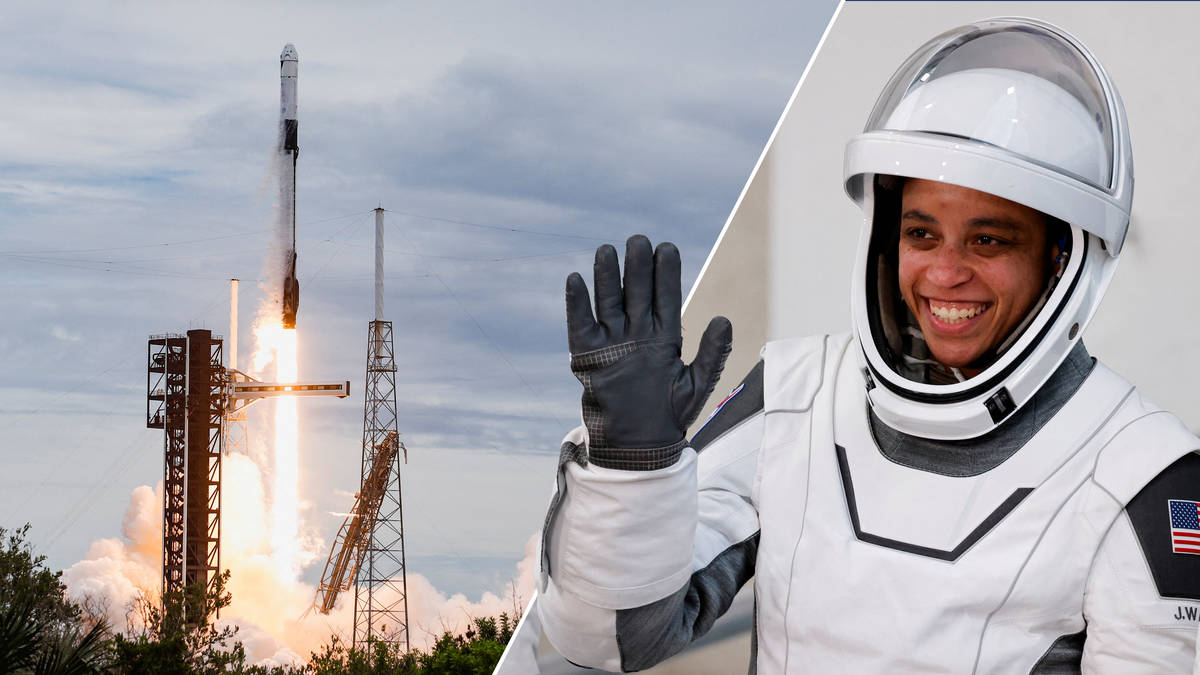
The SpaceX crew-13 mission achieved a historic milestone on Thursday, October 1, 2026, by completing the fastest transit from Earth to the International space Station (ISS) ever recorded by a United States entity. After a period of technical delays and uncertain weather conditions, the SpaceX Dragon “Grace” capsule successfully docked with the orbiting laboratory just 7 hours and 55 minutes after liftoff, shattering previous American transit records that often exceeded 30 hours.
Key Takeaways
- Record-Breaking Speed: The mission completed its journey to the ISS in 7 hours and 55 minutes, a new U.S. record for orbital rendezvous.
- Historic Leadership: Commander Jessica Watkins became the first Black woman to lead a crew to orbit.
- Technical Resilience: The launch followed a three-week delay required to repair a leaking fuel system in the Dragon capsule.
- International Collaboration: The four-person crew includes representatives from the United States, Canada, and Russia.
- Human Interest Milestone: Canadian astronaut Joshua Kutryk will be away from Earth during the birth of his third child in late November.
- SpaceX Operational Tempo: The mission occurred during a massive launch week for SpaceX, including the recent successful orbital flight of Starship.
- Microgravity and Blood Physiology: Studying how circulation and clotting mechanisms change in weightlessness.
- Physiological Data Collection: Gathering comprehensive health data to inform the safety and design of future spacecraft.
- Human Performance: Investigating how the body and mind adapt to the stressors of long-duration orbital life.
- For Investors and Industry Analysts: The mission is a clear indicator of SpaceX’s operational maturity. The ability to execute three separate launches in a single day—ranging from crewed missions to classified National Reconnaissance Office (NRO) satellite deployments—demonstates a level of logistical dominance that is reshaping the aerospace economy.
- For Future Astronauts and Researchers: The focus on biomedical research provides the foundational data needed to make deep-space travel safer. The successes and challenges of this mission will directly influence the design of habitats and life-support systems for the next generation of explorers.
- For the General Public: The mission reinforces the idea that space is no longer the exclusive domain of government agencies. The integration of commercial providers like SpaceX with international partners like the Canadian Space Agency shows a new, collaborative model of exploration.
- Late October 2026: Continued biomedical research and data collection on the ISS.
- Late November 2026: The expected birth of Joshua Kutryk’s child, which will test the communication protocols established by NASA and the CSA.
- Ongoing SpaceX Launches: The industry will watch for the continued rollout of the Starship program and subsequent Falcon 9 satellite deployments.
- Long-term ISS Operations: NASA has stated its commitment to maintaining the ISS through the year 2030, providing a stable platform for missions like Crew-13.
- www.theguardian.com
- stratnewsglobal.com
- www.lbc.co.uk
- weather.com
What Happened: A Record-Breaking Ascent
On the morning of Thursday, October 1, 2026, the SpaceX Crew-13 mission departed from the Cape Canaveral Space Force Station in Florida. Despite thick cloud cover that threatened to scrub the countdown, the skies cleared sufficiently to allow for a successful liftoff at 11:10 AM (15:10 GMT). The mission utilized a Falcon 9 rocket to propel the Dragon “Grace” capsule toward its destination at an orbital velocity of approximately 17,500 mph.
The speed of the mission was made possible by the optimal orbital positioning of the International Space Station at the time of launch, allowing for a rapid rendezvous. According to data reported by The Guardian, this 7-hour, 55-minute transit represents a massive leap in efficiency compared to previous American missions, which have historically required upwards of 30 hours to reach the station.
The mission was not without its hurdles. The launch had been delayed for three weeks to address a technical issue involving a leaking fuel system within the Dragon capsule. This delay, while necessary for safety, added tension to the mission’s timeline. Once in orbit, Commander Jessica Watkins radioed to mission control, stating, “Thanks for an amazing ride,” following the successful liftoff.
Why It Matters: The New Era of Orbital Efficiency
The significance of this mission extends beyond the stopwatch. The rapid transit capability demonstrated by the SpaceX Crew-13 mission signals a maturing of commercial spaceflight logistics. By reducing the time astronauts spend in the high-stress environment of the initial launch and transit phase, SpaceX and NASA are refining the protocols for human spaceflight.
Furthermore, the mission underscores the increasing dominance of SpaceX in the global launch market. On the very same day as the Crew-13 launch, SpaceX maintained an intense operational tempo, launching a separate Falcon rocket from California carrying more than 100 mini-satellites just three hours later. This high cadence, combined with the recent successful orbital flight of the massive Starship vehicle, suggests a shift toward a more frequent and reliable access to space.
The Crew of Crew-13
The mission features a diverse, international roster of specialists tasked with a six-month residency aboard the ISS. This crew is replacing four astronauts who have been stationed at the laboratory since February 2026.
| Name | Role | Background | Nationality |
|---|---|---|---|
| Jessica Watkins | Commander | Geologist; NASA Astronaut | USA |
| Luke Delaney | Pilot | Retired Marine | USA |
| Joshua Kutryk | Mission Specialist | Colonel, Royal Canadian Air Force | Canada |
| Sergey Teteryatnikov | Mission Specialist | Former Submariner | Russia |
Deep Dive: Leadership and Symbolism
A Historic Command
At the center of the mission is Commander Jessica Watkins, a geologist who has previously worked with NASA’s Mars rover Curiosity a decade ago. Her appointment as commander is a watershed moment for representation in space exploration, as she becomes the first Black woman to lead a crew to orbit. This is Watkins’ second trip to the ISS, following a mission in 2022.

The “Lucky 13” Theme
The mission’s designation, “Crew-13,” is a deliberate nod to the 1970 Apollo 13 mission. While the Apollo mission is remembered for its harrowing near-disaster, the Crew-13 team has chosen to reframe the number 13 through a lens of optimism and luck.
To navigate the superstitions often associated with the number, the crew adopted a “Lucky 13” theme. This included traveling to the launch pad in black Teslas bearing “Lucky 13” plates and carrying a small, handmade crocheted golden dragon named “Lucky,” adorned with a four-leaf clover. “We figured it wouldn’t hurt to bring a little of our own luck just in case, but clearly we don’t need it,” Watkins remarked from orbit, adding that the crew felt like “four of the luckiest humans on or off planet Earth.”
The Human Element: Space, Family, and Connectivity
One of the most poignant aspects of the SpaceX Crew-13 mission is the personal challenge facing Canadian astronaut Joshua Kutryk. His wife, Heather, is expected to give birth to their third child in late November, while Kutryk is stationed 250 miles above the Earth.
This situation highlights the evolving relationship between long-duration spaceflight and the personal lives of astronauts. NASA and the Canadian Space Agency have both pledged to support the Kutryk family, with NASA manager Dana Weigel noting on the eve of liftoff that the agency would do its best to keep Kutryk connected to his family during this life-changing period.
Historical precedents for such connectivity exist. In 2004, NASA facilitated a radio link for astronaut Mike Fincke to connect with his wife’s delivery room. In 2011, Randy Bresnik, the commander of the upcoming Artemis III mission, similarly dialed into his wife’s hospital from orbit. However, the mission also serves as a reminder of the limitations of current technology; in 1991, Austrian astronaut Franz Viehböck was not informed of his daughter’s birth until a day after she was born, due to the communication constraints of the Soviet-era Mir space station.
Scientific Objectives: Preparing for Deep Space
While the transit speed and leadership milestones grab headlines, the primary purpose of the six-month mission is rigorous scientific research. The Crew-13 team will focus heavily on biomedical and human performance studies, which are critical for the success of future long-term missions to the Moon and Mars.
Key research areas include:
What It Means for You
The implications of the SpaceX Crew-13 mission vary depending on your perspective:
Counterpoints and Open Questions
Despite the mission’s success, several risks and unanswered questions remain. The three-week delay caused by the Dragon capsule’s fuel leak serves as a reminder of the inherent mechanical vulnerabilities in rocket technology. As missions become faster and more frequent, the pressure on maintenance and safety protocols increases significantly.
There are also psychological and social questions regarding long-duration missions. How will agencies manage the mental health and family connectivity of astronauts like Joshua Kutryk during major life milestones? While communication technology has improved since the 1990s, the gap between Earth and the ISS remains a significant barrier to true real-time human connection.
Furthermore, the increasing frequency of classified launches, such as the Falcon rocket scheduled for late Thursday night to carry an NRO satellite, raises questions about the balance between commercial transparency and national security interests in the burgeoning space economy.
What Happens Next
As the Crew-13 astronauts begin their six-month residency on the International Space Station, several key events are on the horizon:
Frequently Asked Questions
How long did the SpaceX Crew-13 mission take to reach the ISS?
The mission set a new U.S. speed record by reaching the International Space Station in just 7 hours and 55 minutes. Previously, American missions typically took more than 30 hours to complete the transit.
Who is the commander of the Crew-13 mission?
The mission is led by Commander Jessica Watkins, a NASA geologist and the first Black woman to command a crew to orbit. This is her second mission to the space station.
Why is the mission referred to as “Crew-13”?
The name is a symbolic tribute to the 1970 Apollo 13 mission. To avoid the negative superstitions associated with the number 13, the crew adopted a “Lucky 13” theme, including a mascot named “Lucky.”
What is the primary goal of the Crew-13 mission?
The crew will spend six months on the ISS conducting essential biomedical research, specifically studying the effects of microgravity on human blood and physiology to prepare for future deep-space exploration.