
Key takeaways
- General Sir Rob Magowan confirmed that Britain is conducting offensive cyber operations against Russia, China, Iran, and North Korea.
- Recent cyberattacks on French supermarkets caused massive food destruction and fires, which authorities attributed to an Iranian unit.
- Experts are divided on whether publicizing these capabilities serves as a deterrent or risks accelerating global cyber warfare.
- Civilian infrastructure, including hospitals and financial institutions, is increasingly being caught in the crossfire of hybrid warfare.
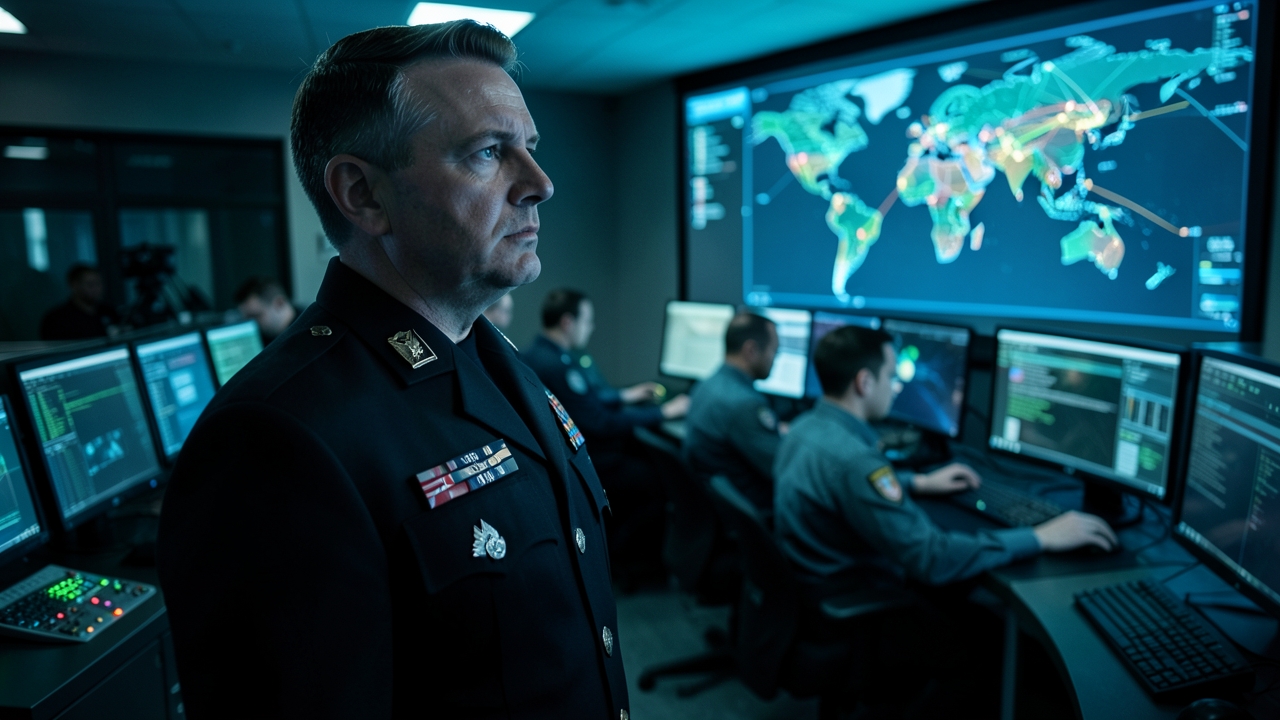
Britain’s offensive cyber operations have moved from the realm of classified speculation into public acknowledgment following a significant admission by a top military commander. General Sir Rob Magowan, who commands Britain’s Cyber and Specialist Operations Command, confirmed that the United Kingdom is actively carrying out offensive digital strikes against adversaries including Russia, China, Iran, and North Korea. The revelation, made during an interview with Sky News, marks a pivotal moment in the transparency of modern conflict, as the line between peace and digital warfare continues to blur.
What happened
For years, the extent of Western cyber capabilities remained a closely guarded secret. However, the opening of the National Cyber Force’s new headquarters in Samlesbury, Lancashire, which was officially opened by King Charles III on Monday, provided a backdrop for this unprecedented disclosure. General Magowan stated that while the UK is not officially at war, it is certainly “not at peace either.”
Magowan was explicit in his response when asked if the National Cyber Force was conducting offensive operations, replying, “Absolutely—and we’ve been clear about that.” He emphasized that the mission of the cyber force is to ensure that hostile states face a “cost” for their own operations in the cyber domain. The National Cyber Force, established in 2020, serves as a collaborative hub for military personnel and intelligence officers from agencies such as GCHQ and MI6.
This admission comes at a time of heightened digital tension across Europe. On November 9, 2026, French cybersecurity authorities publicly attributed a series of devastating attacks on retail sites to Shahid Kaveh, a unit linked to Iran’s Islamic Revolutionary Guard Corps. These attacks, which occurred on October 11 and 12, targeted the refrigeration systems of more than 700 supermarkets in France, causing fires at 15 locations and destroying tens of millions of euros worth of food.

Why it matters
The shift toward acknowledging offensive capabilities signals a change in how nations view digital sovereignty and deterrence. By naming specific adversaries, the UK is attempting to establish a new set of rules for engagement in a domain where traditional boundaries of warfare do not exist.
This matters because the theater of conflict has shifted from remote battlefields to the digital infrastructure that supports daily civilian life. As seen in the French supermarket incident, the manipulation of industrial controls can result in physical destruction and economic loss without a single soldier crossing a border. The ability of hackers to cause damage remotely through the internet-connected equipment used in hospitals, factories, and power stations represents a fundamental shift in the risk profile for modern societies.
The mechanics of Britain’s offensive cyber operations
While the specific details of British operations remain classified, the scope of the National Cyber Force is significant. The agency is tasked with penetrating foreign networks to interfere with hostile communications, disrupt criminal networks, and undermine the capabilities of adversaries.
Unlike defensive cybersecurity, which focuses on building walls and patching vulnerabilities, offensive operations are designed to actively disrupt or degrade an opponent’s ability to function. This can include:
- Disrupting communications: Intercepting or jamming the digital channels used by hostile governments or terrorist organizations.
- System interference: Gaining access to internal networks to manipulate or shut down specific functionalities.
- Counter-espionage: Identifying and dismantling the digital infrastructure used by state-sponsored actors to conduct intelligence gathering.
According to Michael Clarke, the former Director-General of the Royal United Services Institute (RUSI), the UK’s high-quality cyber ability is well-known within the Five Eyes intelligence alliance. Clarke noted that acknowledging these capabilities puts the cyber competition in a similar category to nuclear deterrence, where the goal is to make the cost of an attack so high that the adversary chooses not to proceed.
A growing wave of civilian-targeted attacks
Recent weeks have demonstrated that the “shadow war” has tangible, non-military consequences. The vulnerability of the private sector has been laid bare by a series of high-profile breaches and sabotages.
Retail and Infrastructure Sabotage
Following the initial attack in France, a second wave of strikes hit more than 100 retail locations across at least 10 other European countries in early November. Researchers at Palo Alto Networks identified affected nations including Belgium, Luxembourg, the Netherlands, Sweden, Ireland, Estonia, Germany, Italy, and Portugal. While it is unclear if the same Iranian-affiliated group was responsible, the pattern showed a coordinated attempt to exploit the interconnected nature of European supply chains.
Financial and Software Vulnerabilities
In the financial sector, JPMorgan Chase, Visa, and Mastercard all confirmed that third-party service providers had been compromised. While all three companies stated their primary payment networks remained secure, the attacks exposed sensitive marketing data, including names and email addresses.
Simultaneously, security researchers at Report URI discovered malicious code embedded in software provided by Optimizely. This code was designed to intercept payment information and redirect cryptocurrency transactions. The breach potentially affected 178 organizations, including major media, technology, and financial services companies, by exploiting the software used on their websites to target visitors directly.

Healthcare and Education Disruptions
The human cost of cyber conflict is perhaps most evident in the healthcare sector. On November 14, a cyber extortion attack targeted the Greiz-Ronneburg District Hospital in Germany, forcing the facility to temporarily suspend emergency admissions. In Denmark, the University of Copenhagen revealed that an October attack had exposed the personal information of approximately 525,000 students and employees, though the perpetrator remains unknown.
| Target Sector | Incident Description | Reported Impact |
|---|---|---|
| Retail (France) | Refrigeration system sabotage | Tens of millions of euros in damage; fires |
| Financial Services | Third-party provider breach | Exposure of customer marketing data |
| Healthcare (Germany) | Cyber extortion at hospital | Suspension of emergency admissions |
| Education (Denmark) | University data breach | 525,000 records exposed |
| Tech (Optimizely) | Malicious script distribution | Interception of payments/crypto |
Global precedents and the Five Eyes alliance
Britain is not acting in isolation. The trend toward formalizing offensive cyber doctrine is being seen across the Western alliance. France formally integrated offensive cyber operations into its military doctrine in 2019, and its National Cybersecurity Strategy, published in January 2026, identifies these capabilities as essential for imposing costs on hostile states.
The United States has a long history of publicizing its cyber campaigns. In 2016, the American military conducted Operation Glowing Symphony, a campaign specifically designed to disrupt the communications and propaganda networks of ISIS. More recently, in September 2024, U.S. Cyber Command announced that its Cyber Flag military exercises would incorporate offensive operations for the first time, involving personnel from the Five Eyes alliance: the US, Britain, Canada, Australia, and New Zealand.
The strategic debate: Deterrence or escalation?
While some experts argue that transparency is a tool of strength, others warn that it may be counterproductive. The core of the debate lies in whether an adversary can be intimidated by a capability they cannot fully quantify.
Jason Healey, a former White House director of cyber policy, expressed skepticism regarding the effectiveness of intimidation. He noted that after the U.S. and Israel disrupted Iranian nuclear enrichment efforts 15 years ago, and following the revelations by Edward Snowden, the prowess of Western cyber capabilities was well-established, yet this did not lead to a reduction in attacks. Instead, Healey suggested it may have “emboldened those states to quickly match the U.S.”
He also suggested that the recent openness from governments might be driven by internal bureaucratic needs, noting that public acknowledgment allows commands to secure larger budgets and provides politicians with visible actions to report to the public.
Conversely, Dray Agha, a senior manager at the cybersecurity firm Huntress, argues that transparency is a vital component of a modern defense strategy. He believes that being open about capabilities acts as a “powerful deterrent” by sending a clear message that attacks will carry a cost. Agha also noted that public acknowledgment helps build domestic trust and establishes much-needed rules of engagement on the global stage.

What It Means for You
As the line between state-level cyber warfare and criminal activity continues to blur, the implications for individuals and businesses are significant:
- For Consumers: Expect increased scrutiny of third-party service providers. Even if your bank’s primary network is secure, your data may be at risk through the smaller vendors they use for marketing or logistics.
- For Business Owners: Cybersecurity must move beyond simple data protection to “operational resilience.” This means planning for scenarios where your core systems—like refrigeration, heating, or IT infrastructure—are manipulated to cause physical or functional disruption.
- For Healthcare and Essential Service Providers: The threat of “hybrid warfare” means that digital attacks can have immediate physical consequences. Prioritizing the security of interconnected medical and industrial equipment is no longer optional.
Counterpoints and open questions
Despite the confidence expressed by military leaders, several critical questions remain unanswered:
- The Escalation Risk: Does the move toward offensive operations increase the likelihood of a full-scale “cyberwar” that could spiral out of control?
- The Effectiveness of Deterrence: If previous displays of cyber strength have not reduced attacks, is the UK’s current strategy based on an untested assumption?
- The Attribution Problem: As seen in the French supermarket attacks, attribution can be complex. How does the UK ensure it targets the correct actor before launching a retaliatory strike?
- The Civilian Fallout: How can governments guarantee that offensive operations will remain “highly calibrated” and not inadvertently cause the same kind of chaos they are trying to prevent?
What Happens Next
In the coming months, several factors will determine if this new era of transparency achieves its goals:
- Adversary Response: Watch for retaliatory cyber activities from Russia, China, Iran, or North Korea in response to the UK’s admission.
- Policy Shifts: Monitor whether other Five Eyes nations follow the UK’s lead in more explicitly naming the countries they are targeting.
- Legislative Action: Expect increased government spending and new regulations aimed at protecting critical infrastructure from the types of sabotage seen in France.
- Technological Evolution: The development of more sophisticated malware designed to target industrial control systems (ICS) will likely accelerate as states seek new ways to bypass traditional defenses.
As the world moves further into a digital age, the admission by the UK military confirms that the shadows of cyber warfare are being illuminated. Whether this transparency will act as a shield or a catalyst for further conflict remains one of the most significant questions in modern international security.
Frequently asked questions
What countries is Britain targeting with cyber operations?
General Sir Rob Magowan has explicitly named Russia, China, Iran, and North Korea as the primary adversaries that the UK’s cyber forces are confronting. He stated that these nations pose significant threats and are currently conducting their own cyber operations against the UK.
How did the French supermarket attacks work?
The attacks involved hackers gaining access to the digital controls used to manage commercial refrigeration and freezers. By manipulating these controls to defrost the units, the attackers caused massive food spoilage and, in at least 15 locations, triggered fires, resulting in tens of millions of euros in damage.
Are financial networks safe from these cyberattacks?
While major institutions like JPMorgan Chase, Visa, and Mastercard reported that their primary payment networks were not compromised, they did confirm that third-party service providers were breached. This resulted in the exposure of customer marketing data, such as names and email addresses, rather than direct access to banking funds.
What is the National Cyber Force?
The National Cyber Force is a specialized unit established in 2020 that integrates military personnel with intelligence officers from agencies like GCHQ and MI6. Its primary role is to conduct offensive cyber operations to disrupt hostile communications, dismantle criminal digital infrastructure, and undermine the capabilities of adversary states.
References
- The Secret Cyber Attack War Is Coming Into The Open — newsweek.com
Featured image: AI-generated image