Key takeaways
- Astronomers have witnessed the red giant star WNTR23bzdiq consuming a smaller companion star in the “Bao” binary system.
- The event, located 2.5 million light-years away, provides the first direct observational evidence of a long-theorized stellar merger.
- Observations from NASA’s James Webb Space Telescope (JWST) were critical in characterizing the eruption that occurred in late 2025.
- While current evidence suggests a merger, scientists are still investigating if the two stars survived in a much tighter orbit.
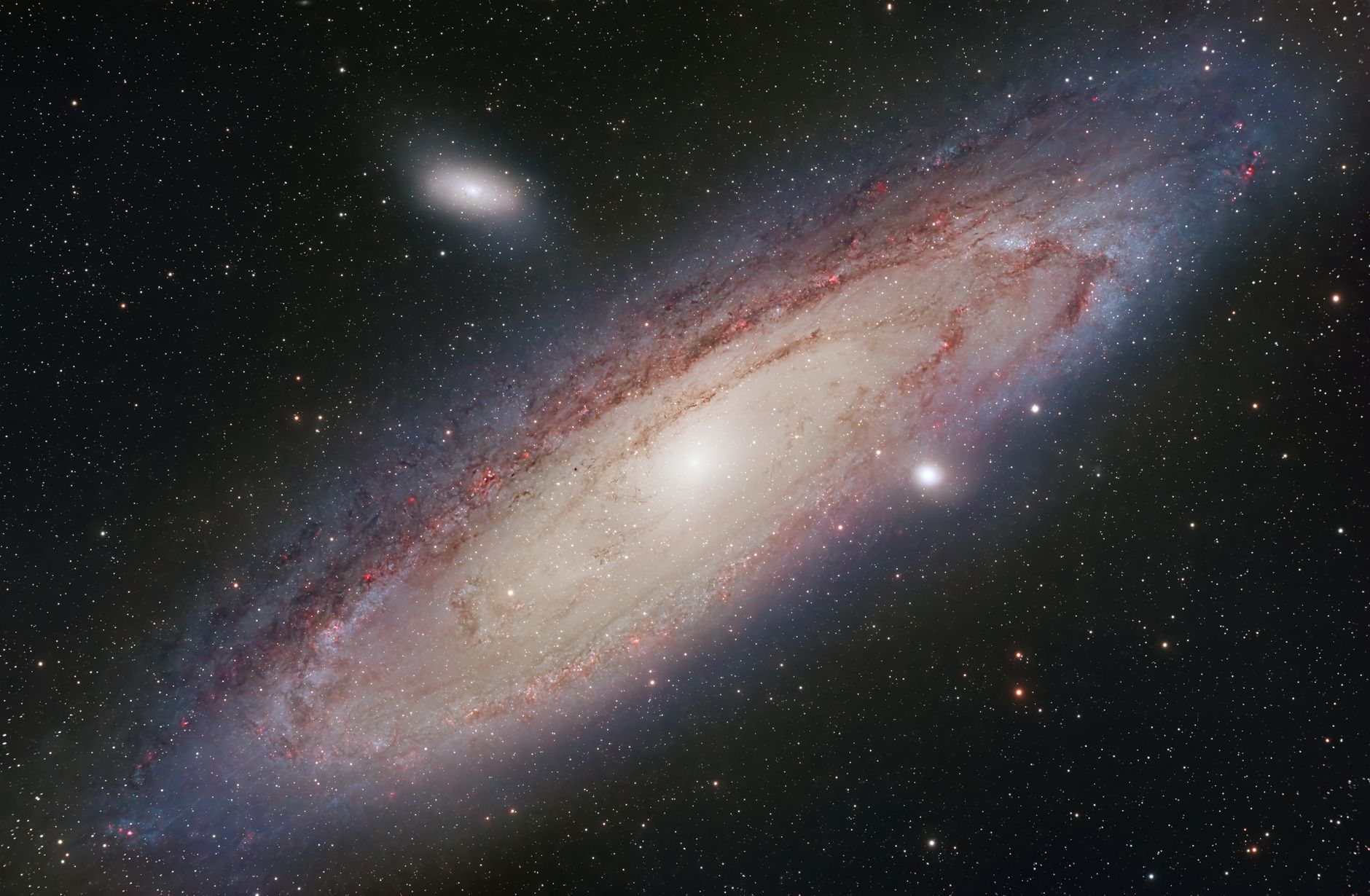
A star engulfing its companion has been directly observed for the first time, providing astronomers with a rare, real-time look at a massive cosmic merger unfolding in the Andromeda galaxy.
For decades, the concept of a dying star expanding to swallow its neighboring celestial partner has been a staple of astrophysical theory, yet direct visual confirmation remained elusive. That changed in late 2025 when a massive eruption of light signaled a violent transition in a distant binary system. On November 18, 2026, researchers published their findings in the journal Nature, detailing the unprecedented observation of the “Bao” system, where a red giant star appears to have consumed its smaller companion.
What happened
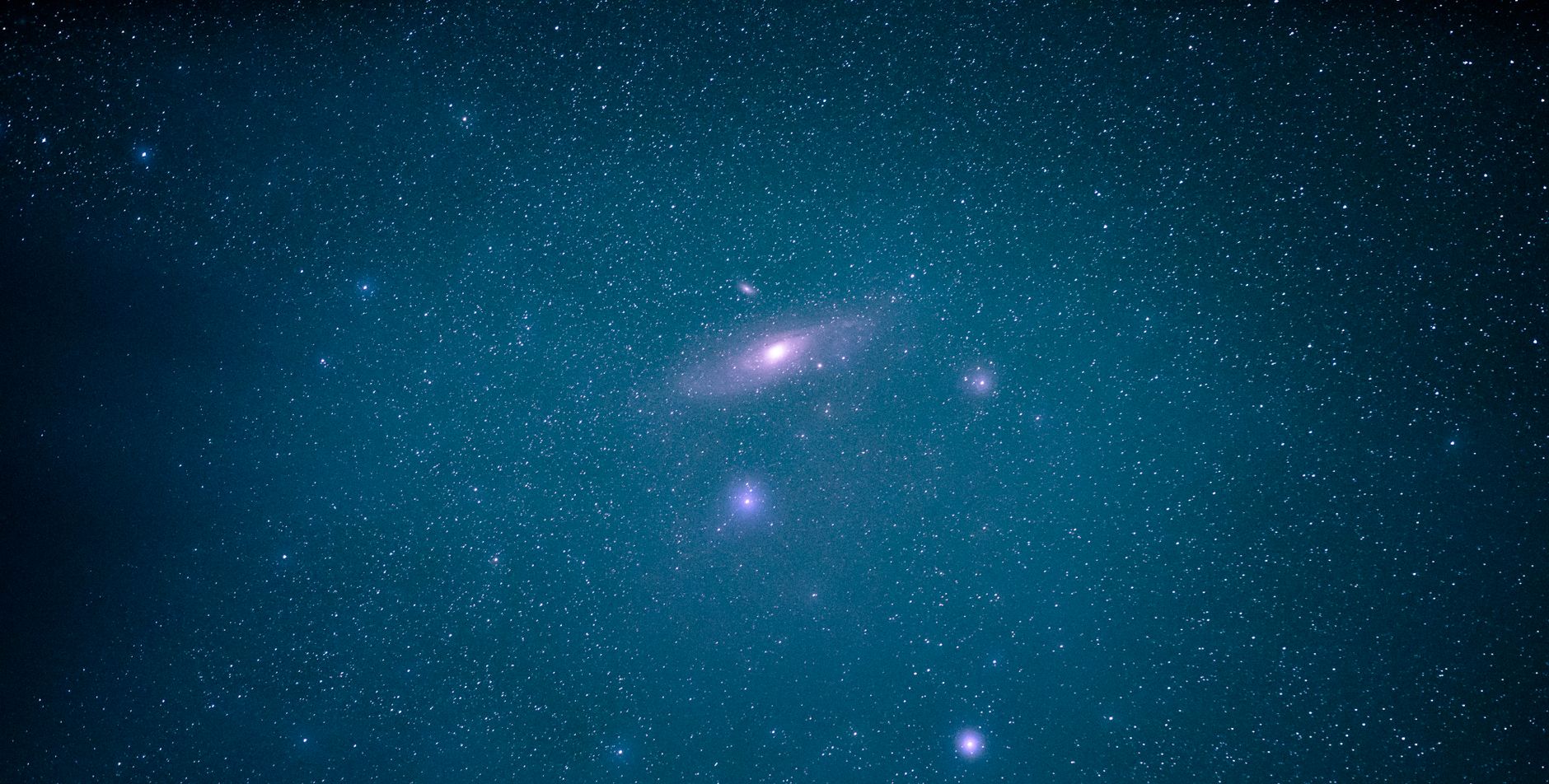
The phenomenon centers on a red giant star designated WNTR23bzdiq, a massive celestial body located approximately 2.5 million light-years away in the Andromeda galaxy. This star is significantly larger than our own Sun, possessing roughly seven times the mass and a width approximately 350 times greater. The system, nicknamed “Bao,” consists of this red giant and a smaller companion star that possesses about 70% of the Sun’s mass.
The timeline of the event began much earlier than the final eruption. According to the study led by Viraj Karambelkar, an astrophysicist at Columbia University, the red giant began a gradual increase in luminosity as early as 2018. In 2023, astronomers utilizing the NEOWISE space telescope and the WINTER telescope at the Palomar Observatory in California identified this brightening.
Researchers initially hypothesized that the increasing brightness was caused by the companion star spiraling toward the red giant’s core. As the companion moved closer, the resulting friction, heat, and light generated an increase in the system’s overall luminosity. This progression culminated in a massive eruption of light near the end of 2025. NASA’s James Webb Space Telescope was able to observe the star just 47 days after this eruption, providing the high-resolution data necessary to reconstruct the event’s mechanics.
Why it matters
This discovery is a landmark moment for astrophysics because it moves the concept of stellar engulfment from the realm of mathematical modeling into the realm of observed reality. While scientists have long predicted that stars in binary systems would eventually merge as one star expands during its death throes, catching the process “in the act” is notoriously difficult due to the subtle nature of the changes.
“Catching a star engulfing its companion in the act is very difficult,” Karambelkar told Space.com. He compared the subtle effects of the merger to “throwing a bucket of water in a large ocean,” noting that it requires extremely sensitive telescopes and long-term monitoring to detect the impact on the surrounding environment.
By observing the Bao system, astronomers can now study the exact physical processes that occur during a merger, including the amount of material expelled into space and the specific light signatures produced by the friction of the two stars. The researchers estimated that the 2025 eruption expelled a mass of material equivalent to between 0.1 and 0.2 times the mass of our Sun.
The mechanics of a stellar merger
To understand why the Bao system behaved this way, one must look at the lifecycle of a red giant. As a star exhausts the hydrogen fuel in its core, it begins to fuse heavier elements, causing its outer layers to expand significantly. In a binary system, this expansion is not a peaceful process. The gravitational pull of the red giant begins to exert a dominant influence on its companion.
As the companion star enters the outer atmosphere of the red giant, it experiences intense tidal forces. These forces cause the companion’s orbit to decay, spiraling it inward toward the larger star’s center. This process is characterized by several key physical stages:
- Orbital Decay: The companion star loses orbital energy due to drag and tidal friction within the red giant’s envelope.
- Luminosity Increase: The friction and heat generated by the companion’s movement through the red giant’s gas cause the system to brighten, as observed starting in 2018.
- The Eruption: As the companion reaches the deeper, denser layers of the red giant, the energy release becomes catastrophic, resulting in a massive eruption of light and expelled matter.
| Property | Bao System Value |
|---|---|
| Primary Star Designation | WNTR23bzdiq |
| System Nickname | Bao |
| Location | Andromeda Galaxy |
| Distance from Earth | ~2.5 million light-years |
| Primary Star Mass | ~7x Sun |
| Primary Star Width | ~350x Sun |
| Companion Star Mass | ~70% Sun |
| Expelled Mass | 0.1–0.2 solar masses |
Deep-dive: The role of advanced telescopes
The reconstruction of the Bao merger was only possible through the coordinated use of multiple generations of space and ground-based technology. The discovery highlights how multi-wavelength astronomy allows scientists to piece together a timeline that no single instrument could capture alone.
NEOWISE, NASA’s infrared-focused space telescope, was instrumental in detecting the initial, subtle changes in the star’s heat signature. Because red giants are relatively cool and emit much of their energy in the infrared spectrum, NEOWISE provided the early warning that something was changing in the Andromeda galaxy.
Following this, the WINTER telescope at the Palomar Observatory provided ground-based verification of the brightening. However, it was the James Webb Space Telescope (JWST) that provided the “smoking gun.” The JWST’s ability to observe in the mid-infrared allowed it to peer through the thick dust clouds expelled during the 2025 eruption, providing a clear look at the star’s state just weeks after the explosion. This allowed the team to characterize the event’s scale and the mass of the material thrown into the interstellar medium.
What it means for you
While the merger of a star in the Andromeda galaxy may seem distant from daily life, such discoveries are fundamental to our understanding of the universe’s evolution. For students of science, educators, and space enthusiasts, this event serves as a primary case study in stellar dynamics.
If you are a follower of space exploration, this event underscores the immense value of the current era of “Great Observatories.” The success of the JWST in this mission validates the billions of dollars in investment and the decades of engineering required to build instruments capable of seeing such subtle cosmic dramas. Furthermore, for those interested in the future of astronomy, this discovery sets the stage for upcoming missions. The ability to detect these events will become much more common as new tools come online, turning what was once a “once-in-a-lifetime” observation into a regular part of astronomical surveying.
Counterpoints and open questions
Despite the compelling evidence for a merger, the scientific community remains cautious. While the most likely scenario is that the two stars have merged into a single entity, it is not the only mathematical possibility.
As Karambelkar noted, there is a possibility that both stars survived the encounter. In this alternative scenario, the companion star would not have been consumed but would instead have been forced into a much tighter, much faster orbit around the red giant. This would result in a system that looks significantly different from a single star but still exhibits high luminosity due to the extreme proximity of the two bodies.
To conclusively determine whether the Bao system is now a single star or a very tight binary, astronomers must continue to monitor the system. They need to observe how the luminosity stabilizes and whether any periodic fluctuations—indicative of a surviving companion’s orbit—emerge once the initial chaos of the eruption settles. Until then, the distinction between a “merger” and a “tightening orbit” remains an open question in the study of WNTR23bzdiq.
What happens next
The study of the Bao system is far from over. The immediate next step for the research team is long-term monitoring of the system’s light curve to see if it settles into a steady state or shows signs of orbital periodicity.
Looking toward the broader field of astronomy, the discovery has increased anticipation for the next generation of observatories. The Nancy Grace Roman Space Telescope and the Vera Rubin Observatory are expected to be revolutionary in this regard. These instruments will have the wide-field survey capabilities necessary to scan much larger portions of the sky, potentially identifying hundreds of other candidate merger events that were previously missed by the narrower focus of telescopes like the JWST. This will allow astronomers to move from studying individual “miracles” to understanding the statistical frequency of stellar cannibalism across the cosmos.
In summary, the observation of the Bao system marks a turning point in our ability to witness the violent lifecycle of stars. By providing the first direct evidence of a star engulfing its companion, the study of WNTR23bzdiq opens a new chapter in our understanding of how binary systems evolve and eventually transform the landscape of their host galaxies.
Frequently asked questions
What is the Bao system?
The Bao system is a binary star system located in the Andromeda galaxy, approximately 2.5 million light-years from Earth. It consists of a massive red giant star, known as WNTR23bzdiq, and a smaller companion star that is about 70% the mass of our Sun.
How did astronomers know the star was eating its companion?
Astronomers noticed the red giant star began brightening gradually in 2018, a process that continued until a massive eruption of light occurred in late 2025. By analyzing the data from telescopes like NEOWISE and the James Webb Space Telescope, they determined the brightening was caused by the companion star spiraling into the red giant’s atmosphere.
What is the significance of the James Webb Space Telescope in this discovery?
The James Webb Space Telescope provided the critical data needed to characterize the eruption. Because it observed the star just 47 days after the light eruption, it was able to see through the dust and provide the detailed evidence required to reconstruct the merger process.
Could the stars have survived the encounter?
It is a possibility that the stars survived. While the current evidence suggests a merger, scientists have not yet ruled out the possibility that the companion star was simply pushed into a much shorter, faster orbit around the red giant rather than being completely consumed.