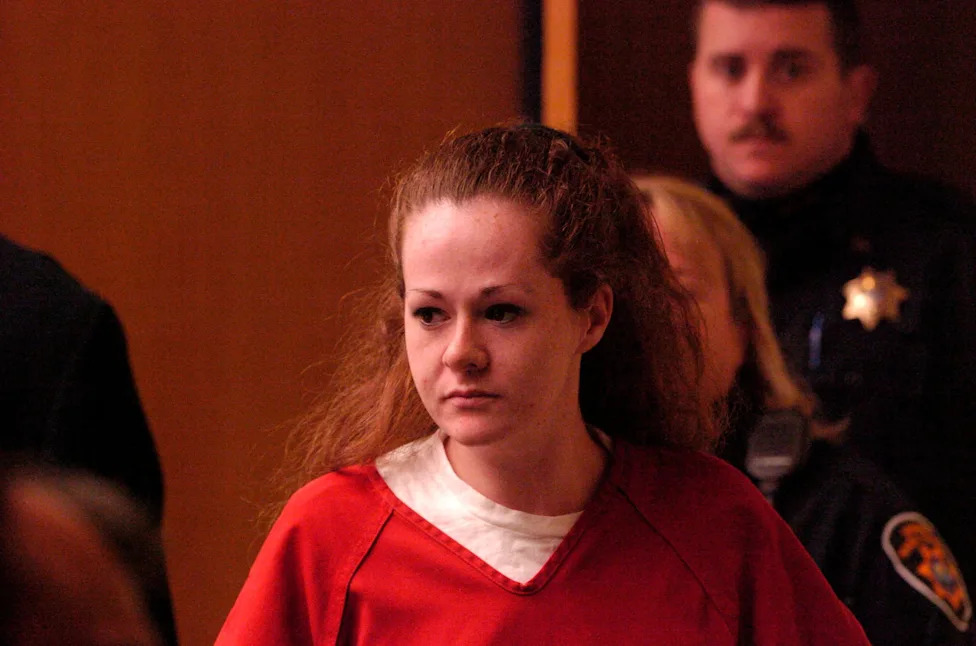
The Christa Pike execution attempt on Wednesday night has left the Tennessee death row inmate in critical condition after she survived two lethal doses of pentobarbital. Following the failed procedure, Tennessee Governor Bill Lee ordered an immediate pause on all state executions and called for a comprehensive third-party investigation into the botched process.
Key Takeaways
- Survival of Lethal Doses: Christa Pike survived the administration of two doses of pentobarbital, the maximum amount permitted under Tennessee’s current execution protocol.
- Medical Crisis: Pike is currently in critical condition and receiving “life-saving care” at a hospital, according to her legal team.
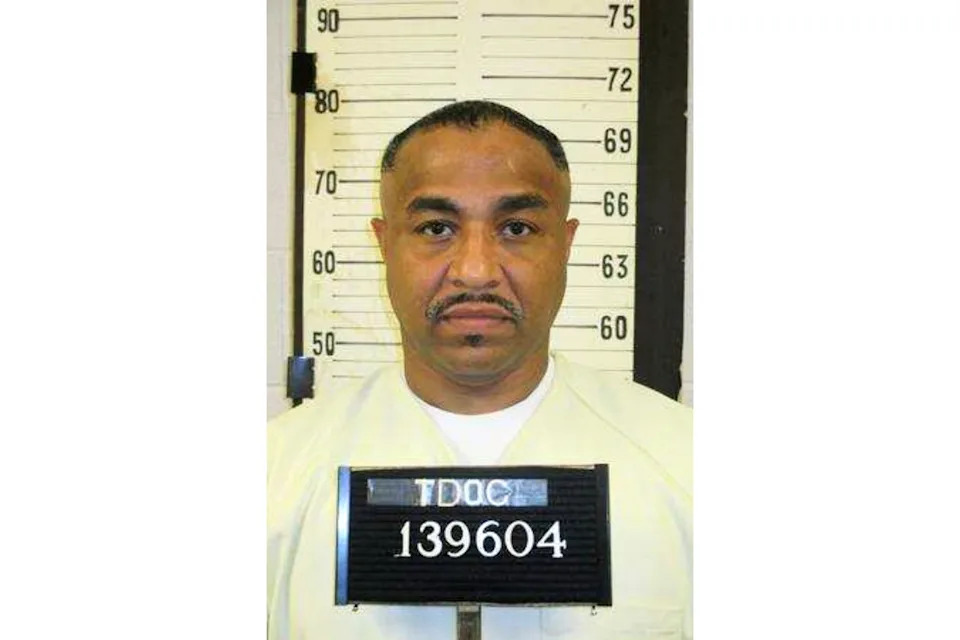
- Statewide Moratorium: Governor Bill Lee has halted all scheduled executions in Tennessee, including the December 3 execution of Gary Sutton, pending an investigation.
- Systemic Concerns: This marks the second failed execution attempt in Tennessee within a four-month period, following the abandoned execution of Tony Carruthers in May 2026.
- Legal Challenges: Pike’s attorneys are alleging “cruel and unusual punishment” and are formally requesting that the Governor commute her death sentence.
- If you are a Tennessee voter: Expect the debate over the death penalty to dominate the upcoming gubernatorial election. The choice between Marsha Blackburn’s call for the electric chair and Jerri Green’s call for a moratorium represents two fundamentally different paths for the state’s criminal justice system.
- If you are a legal professional: This case will likely set new precedents regarding the “cruel and unusual punishment” clause, particularly concerning the medical screening of inmates prior to execution.
- If you are a human rights advocate: The survival of Pike after two doses of pentobarbital provides significant data for arguments regarding the inherent fallibility and inhumanity of lethal injection.
- Was the pentobarbital degraded? The defense alleges the drugs were ineffective, but the TDOC maintains the protocol is effective.
- Who will conduct the review? Governor Lee has ordered an independent review but has not yet named the agency or individual responsible for the investigation.
- What was the specific medical oversight? It remains unclear whether the state’s medical team adequately accounted for Pike’s thrombocytosis before proceeding.
- The Governor’s Investigation: The results of the third-party review will determine whether the TDOC’s protocols are fundamentally flawed.
- The Commutation Petition: The decision of whether Governor Lee will commute Pike’s sentence based on the “cruel and unusual” nature of her attempt.
- The Status of Gary Sutton: The execution of convicted murderer Gary Sutton, originally scheduled for December 3, 2026, remains paused. His fate depends on the outcome of the state’s investigation.
- Potential Legislative Action: If the investigation finds systemic failures, the Tennessee legislature may face pressure to either reform lethal injection or return to older methods like the electric chair.
- www.yahoo.com
- www.wsmv.com
- www.bbc.com
What Happened: A Timeline of the Failed Execution
On Wednesday, the state of Tennessee attempted to carry out the death sentence of Christa Pike, the only woman currently on the state’s death row. The process, intended to be a swift application of lethal injection, instead devolved into a medical and legal crisis that lasted several hours.
According to court filings and witness accounts, the day began with significant legal volatility. An appeals court had issued a stay to stop the execution just one hour before the scheduled 10:00 a.m. commencement on Wednesday. However, the U.S. Supreme Court subsequently overturned that stay in the final hour, allowing the Tennessee Department of Correction (TDOC) to proceed.
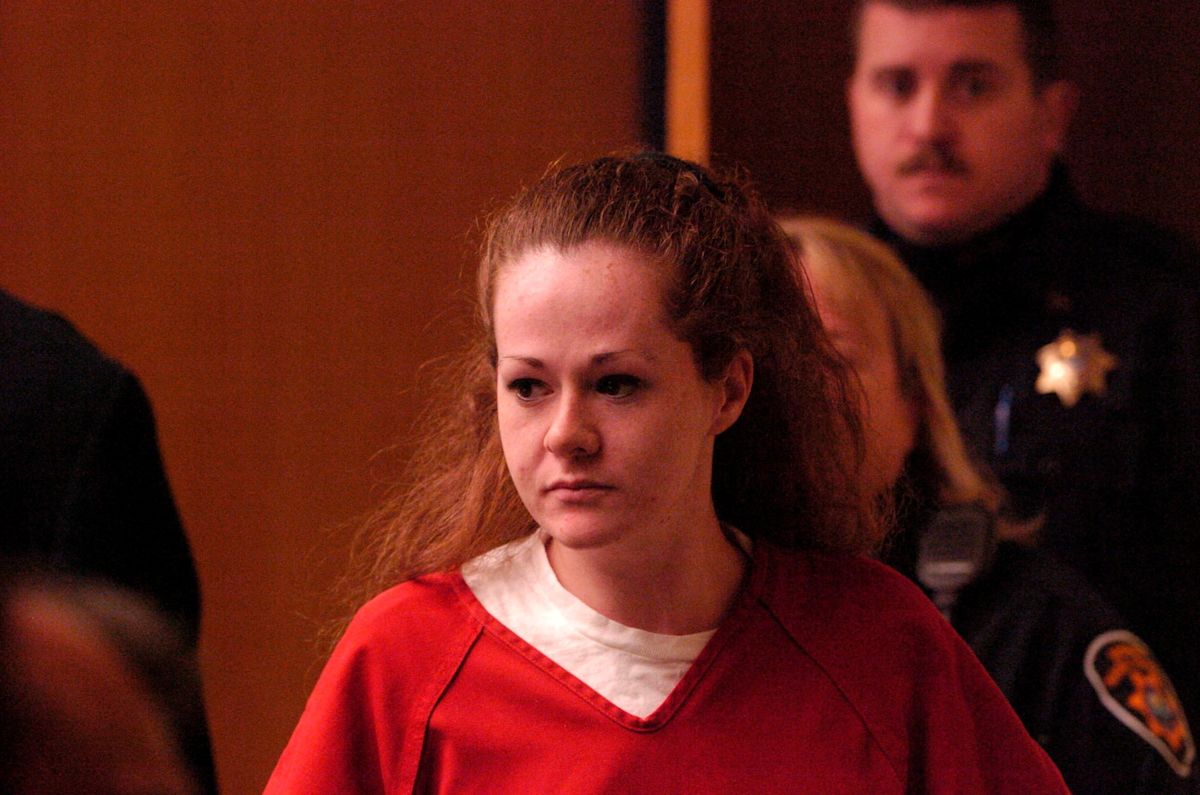
At approximately 7:27 p.m. on Wednesday, the execution chamber curtains were raised. Witnesses reported seeing Pike strapped to a gurney. The technical difficulties began almost immediately. At 7:54 p.m., Pike was observed lifting her head from the gurney and questioning the physical sensations she was experiencing in her arm. Reports indicate that the execution team spent over an hour attempting to establish a stable intravenous (IV) line.
By 8:26 p.m., the state administered a second dose of pentobarbital, as per the state’s protocol when a first attempt fails to result in death. Despite this second administration, Pike remained alive. At 8:53 p.m., media witnesses were escorted from the room after Pike was heard snoring, at which point the microphones were cut off.
By Thursday afternoon, Pike’s attorney, Randy Spivey, informed reporters that the inmate was alive but in critical condition. “We don’t have a sense of her prognosis or much update on her health at the moment,” Spivey said. “But we do know that she is alive right now.”
Why It Matters: Legal and Political Implications
This incident is more than a procedural error; it is a catalyst for a massive debate over the constitutionality of capital punishment in the United States. The failure of the Christa Pike execution raises immediate questions regarding the Eighth Amendment, which prohibits “cruel and unusual punishment.”
For the Tennessee Department of Correction, the failure is a significant administrative blow. While the TDOC issued a statement defending its actions—claiming they “followed every step of the State’s lawful, established execution protocol”—the fact that an inmate required “life-saving measures” following a state-mandated execution suggests a profound breakdown in the system.
Politically, the event has become a flashpoint in Tennessee. U.S. Senator Marsha Blackburn, a Republican running for governor, described the situation as “tragic” but suggested a specific solution: “the answer is simple: bring back the electric chair.”
Conversely, Democrat Jerri Green, Blackburn’s opponent, criticized the call for more violent methods. “As governor, I would put a moratorium on all future executions,” Green stated on X.
Deep-Dive: The Medical and Technical Failures
To understand why the execution failed, one must look at the intersection of Pike’s medical history and the technical requirements of lethal injection. Pike’s legal team, including attorney Stephen Ferrell, has alleged that the state ignored critical warnings regarding her medical condition.
The Issue of Thrombocytosis
According to Pike’s lawyers, the inmate suffers from thrombocytosis, a condition characterized by an abnormally high number of platelets in the blood. This condition can make establishing intravenous access exceptionally difficult and increases the risk of “blown veins” or clotting, which can lead to an agonizing and protracted death.
Legal filings suggest that the execution team used as many as seven needles in Pike’s left arm alone in an attempt to find a viable vein. This struggle for access, combined with what the defense calls “degraded pentobarbital,” turned a procedure meant to be painless into what they described as “cruel and torturous.”
Comparative Execution Failure Data
The failure in Tennessee is not an isolated incident in the broader context of American capital punishment. Data from the Death Penalty Information Center (DPI) highlights a recurring issue with lethal injection protocols.
| Metric | Statistic/Detail | Source |
|---|---|---|
| Lethal Injection Botched Rate | 7.2% | Death Penalty Information Center (DPI) |
| All Execution Methods Botched Rate | 3.15% | Death Penalty Information Center (DPI) |
| Total US Botched Attempts (1982-2026) | ~64 | Death Penalty Information Center (DPI) |
| Successful Botched Attempts | 7 | Death Penalty Information Center (DPI) |
| Total Executions in 2025 | 47 | Death Penalty Information Center (DPI) |
While some experts, such as Professor Michael Conklin of Texas A&M University–Central Texas, suggest that some “botched” classifications may be due to prisoner resistance or procedural errors (like the premature opening of curtains), the survival of an inmate after two maximum doses of pentobarbital is a statistical anomaly that demands scrutiny.
Stakeholders and Reactions
The fallout from the botched execution has divided those involved in the justice system, from victims’ families to high-ranking politicians.
The Victims’ Families
May Martinez, the mother of Colleen Slemmer (the 19-year-old murdered by Pike in 1995), was present to witness the execution. Her reaction was one of confusion and frustration. “It was a mess,” Martinez told NBC News, noting that the lack of communication from officials during the failed attempt added to the emotional trauma. “Every time I think about it, I think about Colleen feeling that pain and trying to get up and run.”
The Legal Defense
For Pike’s attorneys, the failed execution provides a new and potent legal argument. They are not merely seeking to delay the sentence but are arguing that the state has already violated Pike’s constitutional rights. “Last night was not just inefficient, it was cruel, and it was torturous,” Randy Spivey stated. The defense’s primary goal now is to convince Governor Lee to commute Pike’s sentence to life in prison without parole.
The State Government
Governor Bill Lee has taken a procedural approach, emphasizing the need for accountability. “The people of our state deserve to have those questions answered,” Lee said. While he expressed disappointment, he also noted that carrying out a lawful sentence is a “serious responsibility” that must be done effectively and legally.
What It Means for You
The implications of this event vary depending on your role in society:

Counterpoints and Open Questions
While the defense and many activists view this as a clear case of state-sponsored torture, there are competing perspectives. Some legal scholars argue that “botched” is a subjective term. As Professor Michael Conklin has noted, procedural errors or the physical resistance of an inmate can sometimes be mischaracterized as a failure of the drug or the protocol itself.
Several critical questions remain unanswered:
What Happens Next
The immediate future of the Tennessee death penalty is in a state of suspension. Several key developments to watch include:
Frequently Asked Questions
Why did the execution attempt fail?
While an official investigation is pending, preliminary reports from Pike’s legal team suggest the failure was due to difficulty establishing intravenous access because of the inmate’s thrombocytosis (a blood clotting disorder). They also allege that the pentobarbital used may have been degraded and that the execution team struggled to find viable veins, requiring multiple needle insertions.
What is the current condition of Christa Pike?
As of Thursday afternoon, Pike is in critical condition and receiving life-saving medical care at a hospital. Her attorneys have confirmed she is alive, but her long-term prognosis has not been released by medical professionals.
Is the death penalty being abolished in Tennessee?
No. Governor Bill Lee has ordered a pause on all executions to allow for an investigation, but he has not issued a permanent moratorium. The debate between proponents of the electric chair and those seeking a moratorium is currently a central part of the state’s political discourse.
What was the crime Christa Pike was convicted of?
Christa Pike was convicted in 1996 for the 1995 murder of 19-year-old Colleen Slemmer. Pike and her then-boyfriend, Tadaryl Shipp, were involved in the beating, torture, and killing of Slemmer on the University of Tennessee Agricultural campus. Pike was 18 at the time of the crime.
Conclusion
The failed Christa Pike execution has placed the state of Tennessee at the center of a national conversation regarding the ethics and efficacy of capital punishment
References
Featured image: Image via Yahoo News