The enceladus life search has entered a transformative phase following two new studies published in the journal Science Advances that suggest the moon’s subsurface ocean is both habitable and uniquely “user-friendly” for scientific detection.
Key Takeaways
- Microbial Success: Earth-based microbes were found to flourish in laboratory simulations that mimic the high-alkalinity, low-oxygen conditions of Enceladus’s ocean.
- Natural Sample Prep: New research indicates that Enceladus’s plumes act as a natural laboratory, separating and concentrating chemical compounds into individual ice grains.
- Enhanced Detectability: The “shattering mechanism” of plume droplets means future spacecraft may find concentrated biosignatures in single particles rather than dilute mixtures.
- Chemical Profile: The moon’s ocean is characterized by a high pH (between 10 and 11), abundant carbonates, and hydrothermal activity.
- Strategic Roadmap: These findings provide a blueprint for upcoming missions, such as the European Space Agency’s (ESA) L4 mission, to focus on grain-by-grain analysis.
- For Science Enthusiasts: The possibility of finding life is no longer just a theoretical exercise. The “user-friendly” nature of Enceladus means that the first discovery of extraterrestrial life could happen much sooner and more easily than we previously imagined.
- For Future Space Explorers: The data gathered from Enceladus provides essential context for planetary protection. Understanding how microbes survive in extreme environments helps scientists prepare for the challenges of human-led exploration on other worlds, like Mars.
- For the Tech Industry: The need to analyze microscopic, high-speed particles in space will drive innovation in sensor technology, micro-fluidics, and autonomous analytical instrumentation.
- Refinement of ESA L4 Mission Concepts: Engineers will use the new data on plume mechanics to optimize sensor suites for particle interception.
- Continued Analysis of Cassini Data: Researchers will likely continue to sift through the massive archives of JPL-Caltech and NASA data to find more evidence of the chemical segregation process.
- New Laboratory Simulations: Scientists plan to run more complex simulations, perhaps including different combinations of minerals and varying levels of radiation, to further narrow down the potential metabolic pathways available to potential Enceladus microbes.
- www.space.com
- www.thebrighterside.news
- science.nasa.gov
- www.sciencedaily.com
- gizmodo.com
What Happened
In a dual breakthrough that addresses both the biological and physical aspects of extraterrestrial exploration, researchers have published findings that significantly elevate Saturn’s moon, Enceladus, as a primary target for astrobiology. The research, appearing in Science Advances, combines laboratory microbial experiments with a re-analysis of data from NASA’s Cassini spacecraft.
One study, led by Frank Postberg, a planetary scientist at Freie Universität Berlin, investigated the mechanics of the massive plumes that erupt from the moon’s south pole. The team discovered that the way these plumes freeze and shatter actually organizes the ocean’s constituents, making them easier to find.
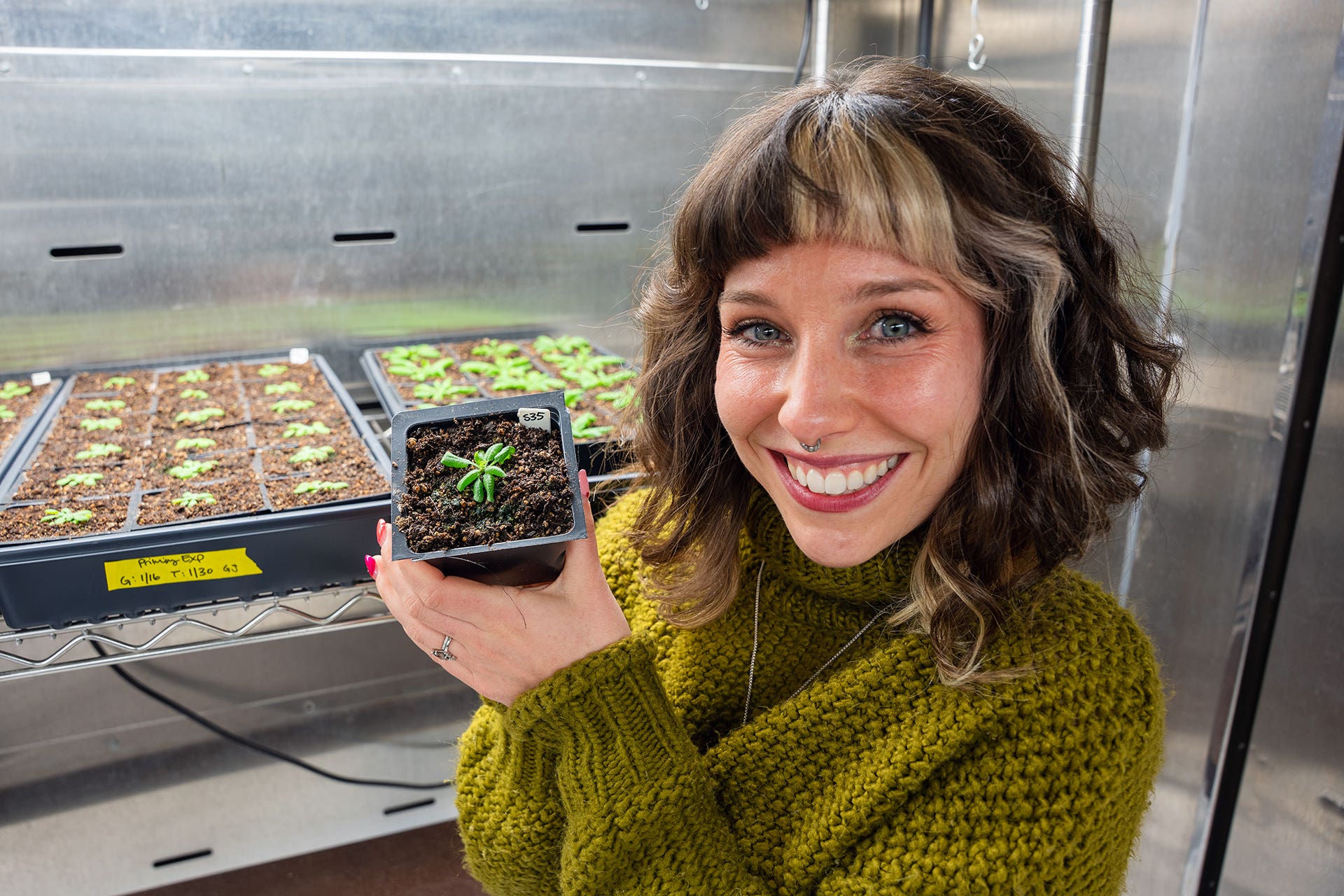
Simultaneously, a second study focused on the biological viability of the environment. Researchers recreated the harsh, alkaline conditions of the Enceladus ocean in a controlled laboratory setting and introduced Methanothermococcus okinawensis, a microscopic organism from Earth. To the researchers’ surprise, the microbes did not just survive; they successfully adapted their metabolism to thrive in the simulated alien environment.
Why It Matters: Habitability vs. Detectability
In the field of astrobiology, scientists often face two distinct hurdles: determining if a world is habitable (can life exist there?) and determining if that life is detectable (can we find it?). For decades, Enceladus has been a top candidate because it possesses the chemical ingredients for life, but the difficulty of sampling a deep, subsurface ocean has always been a major barrier.
These new findings suggest that Enceladus excels at both. By proving that Earth-like metabolic systems can function in the moon’s specific geochemical conditions, the research addresses the habitability question. By demonstrating that the plumes “pre-package” chemical and biological signatures into concentrated ice particles, the research addresses the detectability problem.
According to Frank Postberg, this phenomenon essentially means that “Enceladus actually does a lot of the work for us in preparing samples for analysis that usually take a lot of effort in chemical labs on Earth.” This shift in understanding allows space agencies to design missions that are more efficient and technically feasible, moving away from the need to capture massive volumes of liquid and toward the analysis of individual, highly informative ice grains.
Deep-Dive: The Biology of Survival
To test the limits of life, researchers constructed a “faux Enceladus ocean.” This was not a simple saltwater mixture; it was a complex chemical environment engineered to match the data gathered by the Cassini mission. The simulated ocean featured a highly basic (alkaline) pH level of 10 to 11, extremely low levels of dissolved carbon dioxide, and evidence of hydrothermal activity through the addition of powdered rock.
At the center of this experiment was Methanothermococcus okinawensis, a tiny methanogen found near deep-sea hydrothermal vents in the Okinawa trough between Japan and Taiwan. Methanogens are particularly important to the Enceladus life search because they do not require sunlight or oxygen. Instead, they derive energy by converting hydrogen and carbon dioxide into methane gas—a process that could theoretically occur on the seafloor of Enceladus.
Nozair Khawaja, a planetary scientist at Freie Universität Berlin and contributor to the study, noted that the microbes’ ability to adapt was unexpected. “This was really a surprise to us,” Khawaja said in a statement. “This was an experiment for which we did not expect such a successful outcome.” The microbes were able to maintain their growth and methane production despite the scarcity of carbon dioxide, suggesting that the water-rock chemistry of Enceladus might provide enough support for life to flourish.
Deep-Dive: The Physics of the Plume
While the biological study looked at the potential for life, the second study looked at the mechanics of how we might find it. By analyzing 961 salt-rich ice grain spectra collected by the Cassini Cosmic Dust Analyzer, researchers identified a specific pattern of chemical segregation.
Previously, it was assumed that as water droplets were ejected into space, they would freeze almost instantaneously into a uniform mixture of salts and organics. However, the new research suggests that the freezing process is much slower than previously believed. As these droplets—some potentially hundreds of micrometers wide—blast into space at speeds reaching up to 621 miles per hour (1,000 kilometers per hour), they undergo a process of chemical separation.
The Precipitation Sequence
As the droplets cool, different minerals precipitate out of the liquid at different stages. This creates a hierarchy of concentration:
| Precipitation Stage | Mineral/Compound | Environmental Context |
|---|---|---|
| First | Phosphates | Occurs at relatively warmer temperatures during initial cooling |
| Second | Carbonates | Precipitates as the brine becomes more concentrated |
| Final | Sodium and Potassium Chlorides | Forms as the remaining brine reaches extreme concentration |
Following this chemical separation, a “shattering mechanism” is proposed. As these large, partially frozen droplets are ejected, they collide with the icy cracks and ridges on the moon’s surface. These collisions cause the droplets to shatter into tiny fragments, only a few micrometers in size. This results in a population of ice grains where certain particles are highly concentrated with specific components, such as phosphates or organic molecules, rather than being part of a dilute, hard-to-detect mixture.
Stakeholders and Scientific Implications
The implications of these studies reach far beyond the halls of Freie Universität Berlin. For organizations like NASA and the European Space Agency (ESA), the research provides a strategic roadmap for future exploration.
Space Agencies and Mission Design
The ESA’s L4 mission, currently in development, stands to benefit significantly from these findings. Instead of designing instruments that attempt to capture and process large, complex volumes of liquid, engineers can focus on highly specialized sensors optimized for “grain-by-grain” analysis. If a spacecraft can intercept even a small number of these “informative particles,” it could identify biosignatures using existing technology.
The Astrobiology Community
For astrobiologists, the research shifts the focus toward looking for specific chemical patterns. The presence of abundant phosphates, as confirmed by the analysis of E-ring particles, combined with the potential for concentrated organic molecules, makes Enceladus a premier laboratory for studying the origins of life. The studies suggest that the geochemical conditions on Enceladus might allow for one of the oldest known metabolic systems on Earth to function, even in extremely alkaline environments.
What It Means for You
While these findings are primarily of interest to the scientific community, they have broader implications for how humanity views its place in the cosmos:
Counterpoints and Open Questions
Despite the optimism surrounding these studies, several critical questions and risks remain.
First and foremost, these findings do not confirm the existence of life on Enceladus. The laboratory experiments only prove that life could survive there, not that it does. There is a massive leap between demonstrating habitability and discovering an actual biological entity.
Second, there is the technical challenge of sampling efficiency. While the plumes concentrate chemicals, the particles are tiny and moving at incredibly high speeds. A spacecraft must be able to successfully intercept and analyze these specific, “informative” grains among a vast sea of less useful ice fragments. The probability of a mission capturing enough of these concentrated samples to draw a definitive conclusion remains an open question.
Finally, there is the question of chemical complexity. While we know phosphates and carbonates are present, the exact concentration and distribution of more complex organic molecules—the building blocks of life—have yet to be fully mapped. The ability to find life will depend heavily on whether the “shattering mechanism” preserves these delicate organic structures without destroying them.
What Happens Next
The scientific community will now look toward the next generation of dedicated missions. Key milestones to watch include:
Frequently Asked Questions
Does this mean life has been found on Enceladus?
No. The research specifically clarifies that while the moon has the necessary chemical ingredients and the environment can support microbial life, no actual extraterrestrial life has been detected. The studies focus on habitability (the ability to support life) and detectability (the ability to find life if it exists).
How do the plumes help scientists find life?
The plumes act as a natural sampling system. As water droplets are ejected from the moon’s ocean, they freeze and separate into different chemical components (like salts and organics). These droplets then shatter into tiny ice grains. This process concentrates the interesting biological and chemical materials into individual particles, making them much easier for a spacecraft to identify than a large, diluted liquid sample.
What kind of microbes were used in the study?
The researchers used Methanothermococcus okinawensis, a microscopic organism (specifically an archaeon) found near hydrothermal vents on Earth. This microbe was chosen because it is a methanogen, meaning it can survive without oxygen by using hydrogen and carbon dioxide to produce methane—a process that could occur in Enceladus’s ocean.
Why is the pH of Enceladus’s ocean important?
The high alkalinity (a pH between 10 and 11) is a significant environmental constraint. Many Earth-based organisms cannot survive in such basic conditions. By proving that certain microbes can thrive in a high-pH, low-oxygen environment, researchers have shown that the specific, harsh conditions of Enceladus are not a barrier to life.
As the Enceladus life search continues, the convergence of these two studies—one biological and one physical—provides a much clearer roadmap for the future
References
Featured image: Image via The Brighter Side of News