The Centers for Disease Control and Prevention (CDC) is facing intense scrutiny over its decision to exclude four Pennsylvania measles <a href="https://news.quantosei.com/2026/09/23/pennsylvania-measles-outbreak-why-cdc-death-counts-differ/" title="Pennsylvania <a href="https://news.quantosei.com/2026/09/15/the-essential-measles-outbreak-guide-risks-and-prevention/" title="The Essential measles outbreak Guide: Risks and Prevention”>measles outbreak: Why CDC Death Counts Differ”>deaths from its official national tally, even as state health officials warn that the outbreak is accelerating and presenting new, rare clinical challenges.
Key Takeaways
- Data Discrepancy: The Pennsylvania Department of Health has reported four measles-associated deaths, but the CDC has refused to include them in the national mortality count.
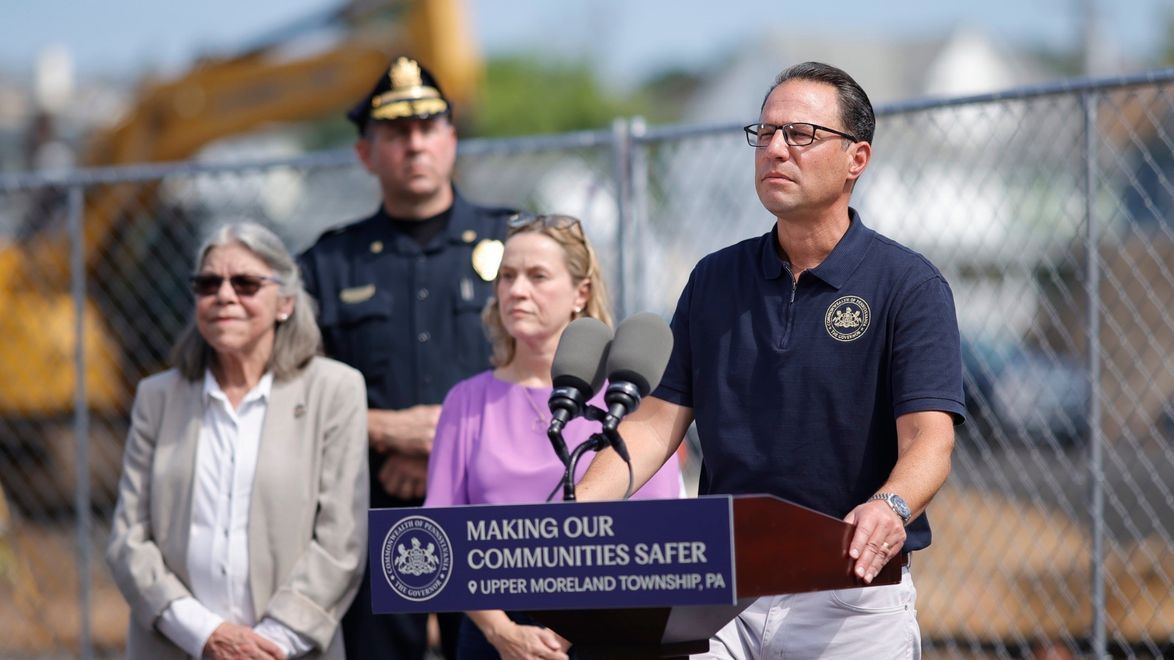
- Political Conflict: A standoff has emerged between Pennsylvania Governor Josh Shapiro and U.S. Health and Human Services (HHS) Secretary Robert F. Kennedy Jr. over the validity of the reported deaths.
- Clinical Evolution: Physicians, including Dr. John Goldman of UPMC, report seeing “new forms” of the disease, such as congenital measles in newborns.
- Outbreak Scale: Pennsylvania has confirmed 731 cases and 141 hospitalizations, with Lancaster County serving as the primary epicenter.
- Conditional Aid: Pennsylvania has requested federal “Epi-Aid” assistance, but has conditioned the request on the CDC’s public recognition of the state’s reported deaths.
- Delayed Response: If the severity of an outbreak is masked by low death counts, the urgency for vaccination surges and resource deployment may be diminished.
- Contact Tracing Failures: Undercounting cases makes it difficult for health officials to perform effective contact tracing, allowing the virus to spread undetected through communities.
- Erosion of Public Trust: Discrepancies between what residents see in their local hospitals and what they read on federal dashboards can lead to skepticism regarding official health guidance.
- Verify Vaccination Status: Ensure that you and your children are up to date on the two-dose MMR vaccine, which provides approximately 97% lifetime protection.
- Consult Before Visiting Clinics: If you or a family member exhibit symptoms of measles—such as fever, cough, runny nose, red eyes, or a spreading rash—call your healthcare provider before arriving at a clinic or hospital. Because measles is highly airborne and can remain infectious in a room for up to two hours, calling ahead allows providers to take precautions to prevent exposing other patients.
- Monitor High-Risk Groups: Pregnant individuals, infants too young for the first dose, and immunocompromised people are at the highest risk for severe complications and should follow strict avoidance protocols during the outbreak.
- Accessing Care: For those without insurance, the federal “Vaccines for Children” program and Pennsylvania’s pop-up clinics offer ways to access immunization at little to no cost.
- Will the CDC eventually adopt Pennsylvania’s specific epidemiological definition for measles deaths?
- How much of the current outbreak is driven by declining vaccination rates in specific counties?
- Will the political tension between the HHS Secretary and state leadership impede the deployment of federal epidemiologists?
- Is the appearance of congenital measles a sign of a more virulent strain or simply a result of low population immunity?
- The CDC’s Review: The agency is currently reviewing additional information regarding the circumstances of the reported deaths. Their decision to either include or exclude these cases will likely dictate whether the Epi-Aid request is fulfilled.
- Continued Case Monitoring: With Dr. Goldman predicting that the outbreak could continue for another three to six months, the number of hospitalizations and potential deaths is expected to rise if vaccination rates do not increase.
- Congressional Oversight: The request for an “immediate briefing” suggests that lawmakers may launch inquiries into the CDC’s reporting protocols and the influence of political appointees on scientific data.
- www.medicaldaily.com
- www.nbcphiladelphia.com
- local21news.com
- www.theguardian.com
What Happened: A Growing Divide in Mortality Reporting
As of late September 2026, a significant rift has opened between state and federal health authorities in Pennsylvania. While the Pennsylvania Department of Health (DOH) has officially linked four deaths to the ongoing measles outbreak, the CDC has maintained its refusal to add these figures to its weekly national mortality dashboard. This decision has triggered a formal request for an “immediate briefing” from members of Congress, who are seeking clarity on why the federal agency is diverging from state-level findings during an active crisis.
The conflict reached a boiling point in mid-September when Pennsylvania officials submitted a conditional request for an “Epi-Aid”—a deployment of federal epidemiologists to assist with the outbreak. According to reports from MedicalDaily.com, the state’s request was contingent upon the CDC publicly acknowledging the four deaths. The CDC has pushed back against this demand, with agency officials stating they “will not submit to political blackmail” regarding how deaths are classified.
Historically, the CDC collects data from states and relies on the National Center for Health Statistics (NCHS) to identify the underlying cause of death. However, the current outbreak has complicated this process. The agency is currently working with the Council of State and Territorial Epidemiologists to establish a standardized definition for measles deaths, a step that was unnecessary during the decade prior to 2026 when measles deaths in the United States were extremely rare.
Why It Matters: The Stakes of Accurate Data
In public health, the accuracy of mortality data is not merely a matter of statistical bookkeeping; it is a critical tool for resource allocation, public awareness, and trust. When state and federal numbers diverge, it creates a vacuum often filled by misinformation and political maneuvering.
Dr. Debra Houry, the former chief medical officer of the CDC, has described the delay in death reporting as “curious.” She noted that because Pennsylvania had already concluded its investigations into the first two deaths, the CDC should have had those records available through the NCHS by now. Houry further argued that the current hospital admissions and deaths in Pennsylvania are “definitely not proportional to what would be expected,” suggesting that the official numbers are likely a significant undercount.
Under-reporting poses several systemic risks:
Deep-Dive: The Clinical Reality and the “New Forms” of Measles
Beyond the statistical dispute, clinicians on the ground are reporting a shift in how the virus is manifesting in patients. Dr. John Goldman, an infectious disease specialist at the University of Pittsburgh Medical Center (UPMC), has noted that the outbreak appears to be accelerating and is presenting clinical profiles that were previously rare in the American medical landscape.
One of the most concerning developments is the rise of congenital measles. These are newborns who contract the virus in utero or during birth. Previously, such cases were exceedingly rare because most pregnant individuals were either protected by childhood vaccination or had acquired natural immunity from surviving the disease earlier in life. “Because of this, we’re literally seeing new forms of measles,” Goldman told the Guardian, adding that medical professionals currently lack comprehensive information on the long-term outcomes of these specific cases.
Outbreak Statistics by Region
The following data, compiled from the Pennsylvania Department of Health and MedicalDaily.com as of mid-September 2026, illustrates the geographic concentration of the outbreak:
| County | Confirmed Cases | Reported Deaths | Status |
|---|---|---|---|
| Lancaster | 308 | 2 | Epicenter |
| Mifflin | 83 | 1 | High Burden |
| Jefferson | Unknown | 1 | High Burden |
| Statewide Total | 731 | 4 | Accelerating |
While the total case count stands at 731, Dr. Goldman suggests this is likely an undercount. He noted that patients often mention sick family members who have not been tested, meaning the true scale of transmission may be much larger. The mortality rate for measles is estimated at one to three deaths per 1,000 cases, and one in five infected individuals will require hospitalization.
Stakeholders and the Political Standoff
The measles crisis has become a flashpoint for a broader political conflict involving the highest levels of state and federal government.
The Federal Perspective: Verification and Protocol
CDC Director Erica Schwartz has defended the agency’s decision to withhold the deaths from the national tally, citing the need for rigorous verification. In an interview, Schwartz compared the scrutiny of measles deaths to the controversial counting of COVID-19 deaths, suggesting that the agency must ensure a death is caused by the virus rather than an unrelated factor. “If someone got hit by a bus, and they happened to have Covid, often that was called a Covid-related death,” Schwartz said.
However, this analogy has been sharply criticized. Dr. Houry argued that Pennsylvania’s definition of a measles death specifically excludes unrelated causes, making the “bus scenario” an inaccurate comparison. Furthermore, HHS Secretary Robert F. Kennedy Jr. has reportedly instructed the CDC not to include the Pennsylvania deaths in the national tally, casting doubt on their existence and accusing Governor Josh Shapiro of “fearmongering.”
The State Perspective: Urgency and Prevention
Governor Josh Shapiro has taken a more aggressive stance, framing the outbreak as a preventable tragedy. He has emphasized that the deaths were “completely preventable” had the individuals been vaccinated. The state has responded by establishing more than 140 pop-up clinics to administer MMR (Measles, Mumps, and Rubella) doses, with providers administering over 46,000 doses in August alone.
The Local Discrepancy: The Lancaster Case
Adding complexity to the debate is a specific finding from the Lancaster County Coroner’s Office. While the Pennsylvania Department of Health initially reported two deaths in the county, the coroner clarified that one of those deaths—an infant—was actually caused by a lacerated spleen rather than the measles virus. This distinction is at the heart of the CDC’s refusal to update its count: the agency is waiting to determine if the remaining deaths were caused by measles or if the virus was merely a co-occurring factor.
What It Means for You
If you live in or travel to Pennsylvania, or if you are a caregiver, the current outbreak necessitates several immediate precautions:

Counterpoints and Open Questions
The current standoff highlights a fundamental disagreement in epidemiological philosophy. On one side, the CDC prioritizes data integrity, ensuring that national statistics are beyond reproach by requiring definitive proof that the virus was the primary cause of death. On the other side, state officials prioritize public health communication, arguing that even “measles-associated” deaths are vital to report to convey the true severity of the outbreak to the public.
Several questions remain unanswered:
What Happens Next
In the coming weeks, several catalysts will determine the trajectory of both the outbreak and the political dispute:
Frequently Asked Questions
Why is the CDC not counting the deaths reported by Pennsylvania?
The CDC is currently reviewing the medical circumstances of the deaths to determine if measles was the actual cause or a contributing factor. In some cases, such as in Lancaster County, local coroners have found that other medical issues (like a ruptured spleen) were the primary cause of death. The CDC maintains a strict protocol to ensure national mortality data only includes deaths where the virus is established as the underlying cause.
How contagious is measles?
Measles is one of the most contagious diseases known to medicine. The virus can remain suspended in the air for up to two hours after an infected person has left the area. It spreads through respiratory droplets and can easily infect individuals who are not immune.
What are the symptoms of a measles infection?
Symptoms typically begin with a high fever, cough, runny nose, and red, watery eyes (conjunctivitis). Several days after these initial symptoms appear, a characteristic rash typically develops, starting on the face and moving downward toward the rest of the body. The incubation period—the time from exposure to the appearance of symptoms—is generally between 7 and 21 days.
Is the MMR vaccine effective?
Yes. According to state health officials and medical research, a standard two-dose schedule of the MMR vaccine provides approximately 97% lifetime protection against measles. While “breakthrough cases” can occur (less than 1% of cases in the current outbreak), vaccinated individuals are significantly less likely to require hospitalization or experience fatal outcomes.
Closing
The measles outbreak in Pennsylvania serves as a stark reminder of the fragility of public health when vaccination coverage wanes. As the dispute between the CDC and state officials continues, the immediate priority remains the containment of the virus and the protection of vulnerable populations through rapid vaccination and transparent, accurate communication of the risks involved.
References
Featured image: Image via WHP