
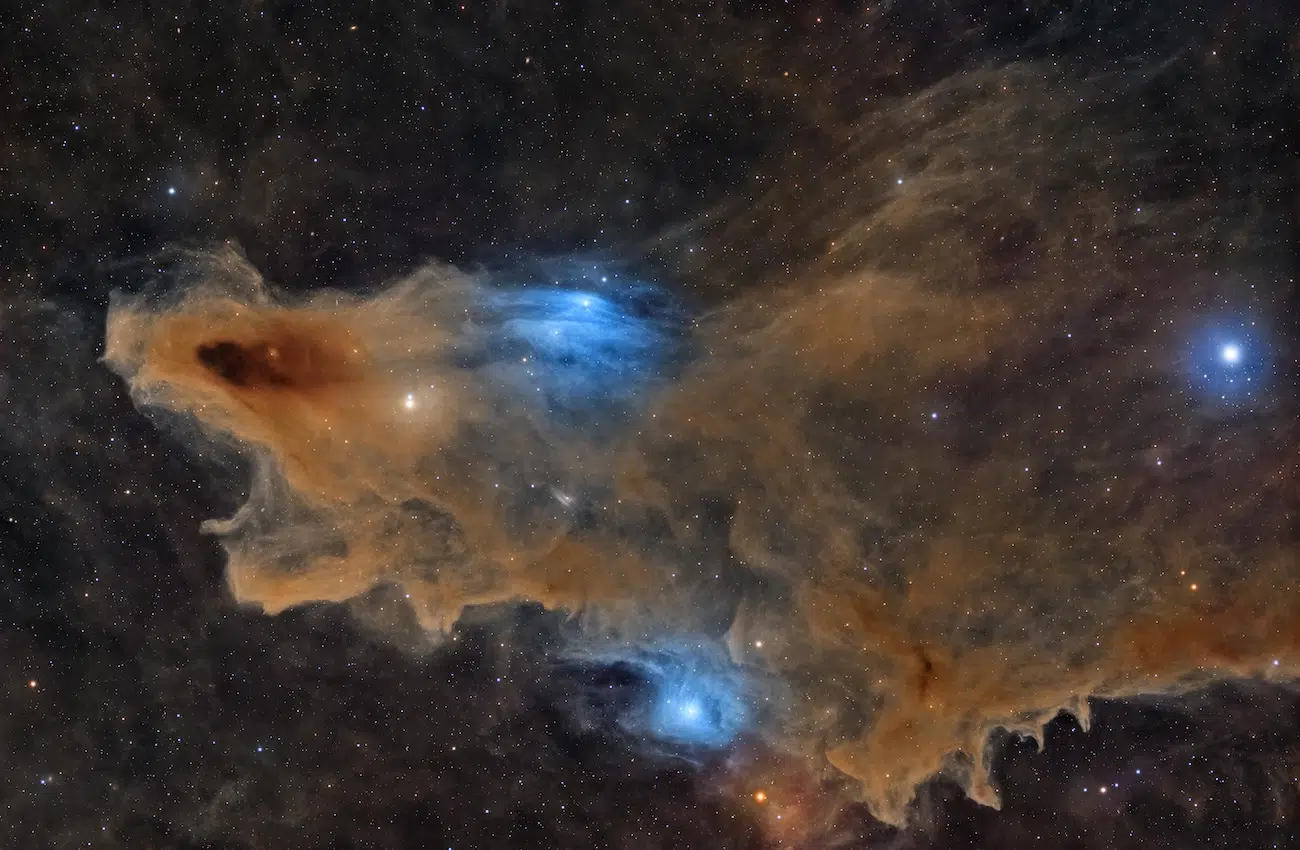
The astronomy Photographer of the Year 2026 competition has officially concluded, crowning Ali Alobaidly as the overall winner for his ethereal and technically masterful depiction of the Shark Nebula. Announced during an online awards ceremony on Thursday, September 17, 2026, the 18th annual event celebrated a global community of photographers who have captured the most profound and visually striking phenomena in the cosmos. Sponsored by the astronomy equipment manufacturer ZWO and hosted by the Royal Observatory Greenwich, the competition drew nearly 4,000 entries from 66 different countries, highlighting the increasing accessibility and growing sophistication of modern astrophotography.
Key Takeaways
- Ali Alobaidly of Kuwait secured the overall winner title and a £10,000 prize for his image, The Quiet Predator, which captures the Shark Nebula.
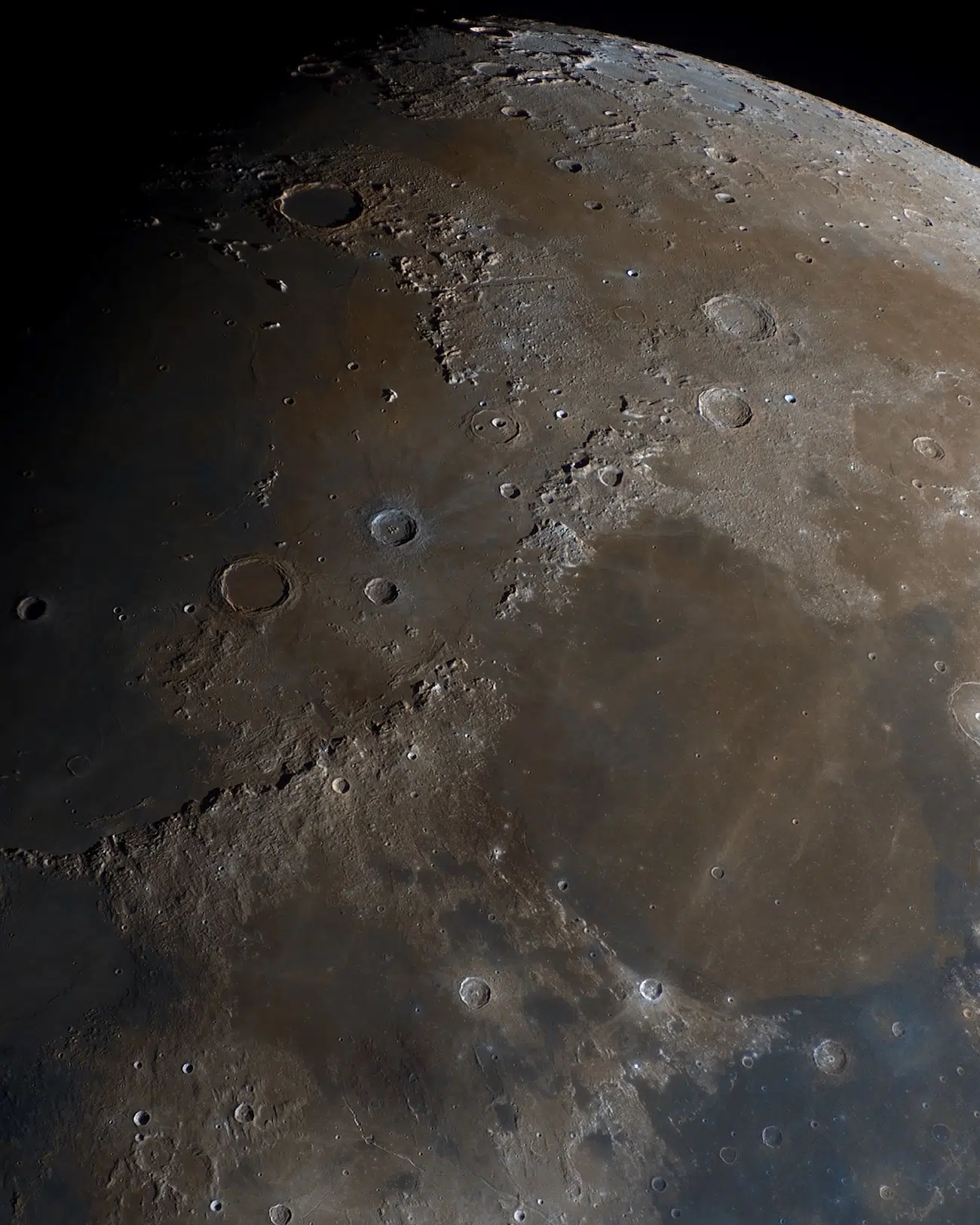
- Nikolaos Strimpoulis, a 15-year-old from Greece, was named the ZWO Young Astronomy Photographer of the Year for his detailed lunar study, Mineral Moon.
- The competition saw a massive surge in global participation, with nearly 4,000 submissions representing 66 nations.
- A public exhibition featuring 100 winning photographs will open on September 18, 2026, at the National Maritime Museum in London.
- The 2026 winners showcase a blend of high-end digital mastery and experimental analogue techniques, including solar radiation captured directly on photographic film.
- Increased Accessibility: Advanced imaging technology is becoming more affordable and user-friendly, allowing for “smart” telescopes to automate complex tasks like tracking and integration.
- Educational Opportunities: The competition and its associated exhibitions provide a roadmap for what can be achieved with modern consumer equipment.
- Community Integration: The rise of global competitions encourages a shared sense of wonder and a collaborative approach to scientific discovery through imagery.
- New Visual Tools: The high-fidelity images produced by these photographers provide unprecedented visual data that can be used to illustrate complex astrophysical concepts to the public.
- September 18, 2026: The official exhibition opens at the National Maritime Museum in London. The display will feature 100 photographs presented on specialized lightbox displays to maximize color depth and detail.
- September 18, 2026: The official competition book becomes available for purchase exclusively through Royal Museums Greenwich.
- October 2, 2026: The official competition book will be released for wider distribution in bookstores globally.
- www.rmg.co.uk
- mymodernmet.com
- www.smithsonianmag.com
- amateurphotographer.com
- petapixel.com
What Happened: A Global Celebration of the Cosmos
On September 17, 2026, the Royal Observatory Greenwich and BBC Sky at Night Magazine revealed the winners of the 18th ZWO Astronomy Photographer of the Year competition. The announcement follows a rigorous judging process that evaluated entries across nine specialized categories, two special awards, and a grand prize. The competition, which has become a cornerstone of the international astrophotography community, serves as both a showcase for artistic vision and a testament to the technical evolution of astronomical imaging.
According to the Royal Observatory Greenwich, the 2026 cohort of winners demonstrates the incredible growth of a community whose passion for the universe knows few bounds. The awards ceremony highlighted a diverse range of subjects, from the microscopic details of solar convection cells to the vast, sweeping structures of distant galaxies. The sheer scale of the competition—nearly 4,000 entries—underscores the impact of technological advancements that allow both professional and amateur astronomers to capture high-fidelity images of the night sky.
The Technical Mastery Behind the Shark Nebula
At the heart of this year’s awards is Ali Alobaidly’s winning photograph, The Quiet Predator. The image captures the Shark Nebula (LDN 1235), a dark nebula located approximately 650 light-years away in the constellation Cepheus. The nebula’s striking shape is created by dense, starlight-blocking dust clouds that mimic the silhouette of an oceanic predator.
Alobaidly’s achievement is not merely artistic; it is a feat of extreme technical endurance. To produce the level of detail seen in the image, the photographer utilized an Askar 140 APO telescope paired with a ZWO ASI2600MM Pro camera. The final image is the result of a staggering 28 hours and 30 minutes of total integration time, allowing for the resolution of detail-rich distant galaxies visible even through the nebula’s dark dust.
Steve Marsh, Art Editor at BBC Sky at Night Magazine and a competition judge, praised the work for its “flawless presentation, pin-sharp details and dynamic contrast of light and dark.” Marsh further noted that the image represents the “very forefront of modern astrophotography,” specifically citing the ability to see distant galaxies through the nebula’s structure.
For Alobaidly, the victory is deeply personal. “The juxtaposition of an oceanic predator prowling the skies above the Kuwaiti desert is something I find deeply poetic,” he said in a statement. “To me, it represents perfectly my love for both the Universe and the deserts of my ancestors.”
A New Generation: The Rise of Young Astrophotographers
One of the most significant highlights of the 2026 awards was the recognition of Nikolaos Strimpoulis, a 15-year-old from Greece, who won the ZWO Young Astronomy Photographer of the Year award. His winning image, Mineral Moon, offers a stunningly colorful close-up of the lunar surface.
Unlike many lunar photographs that focus on large-scale topography, Strimpoulis’ work delves into the subtle color variations of mineral deposits. Using a Sky-Watcher Dobsonian 6″ telescope and a Player One Astronomy Ares-C Pro camera at a focal length of 1,200 mm, he successfully captured the distinction between the dark maria and the bright, mineral-rich highlands.
“Many of us start our astrophotography journey with the Moon—some of us stay there forever!” remarked judge Steve Marsh. He noted that the young photographer had achieved “perfectly developed coloring” that many seasoned veterans struggle to master. This win underscores a growing trend in the community: younger enthusiasts are leveraging advanced consumer-grade equipment to produce work that rivals professional standards.
2026 Category Winners and Technical Specifications
The diversity of the 2026 winners reflects the breadth of astronomical study. Below is a summary of the primary category winners and the scientific or technical significance of their work.
| Category | Winner(s) | Subject / Image Title | Key Technical/Scientific Detail |
|---|---|---|---|
| Stars & Nebulae | Ali Alobaidly | The Quiet Predator | Shark Nebula (LDN 1235); 28.5h integration |
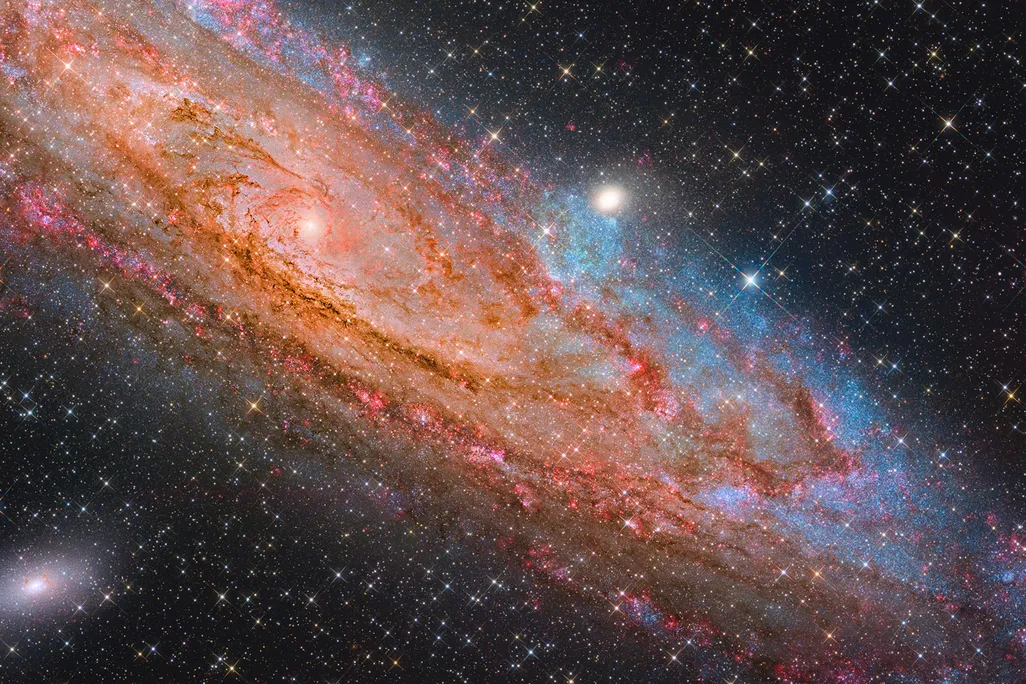
| Galaxies | 智鹏 严 & Xinran Li | NGC 4753 | Lenticular galaxy 60m ly away; 10h exposure |
| Our Sun | Miguel Claro | Active Region 4122 | Solar convection cells and sunspots |
| Our Moon | Petr Horalek | Venusian Pearl on the Moon | Lunar occultation of Venus |
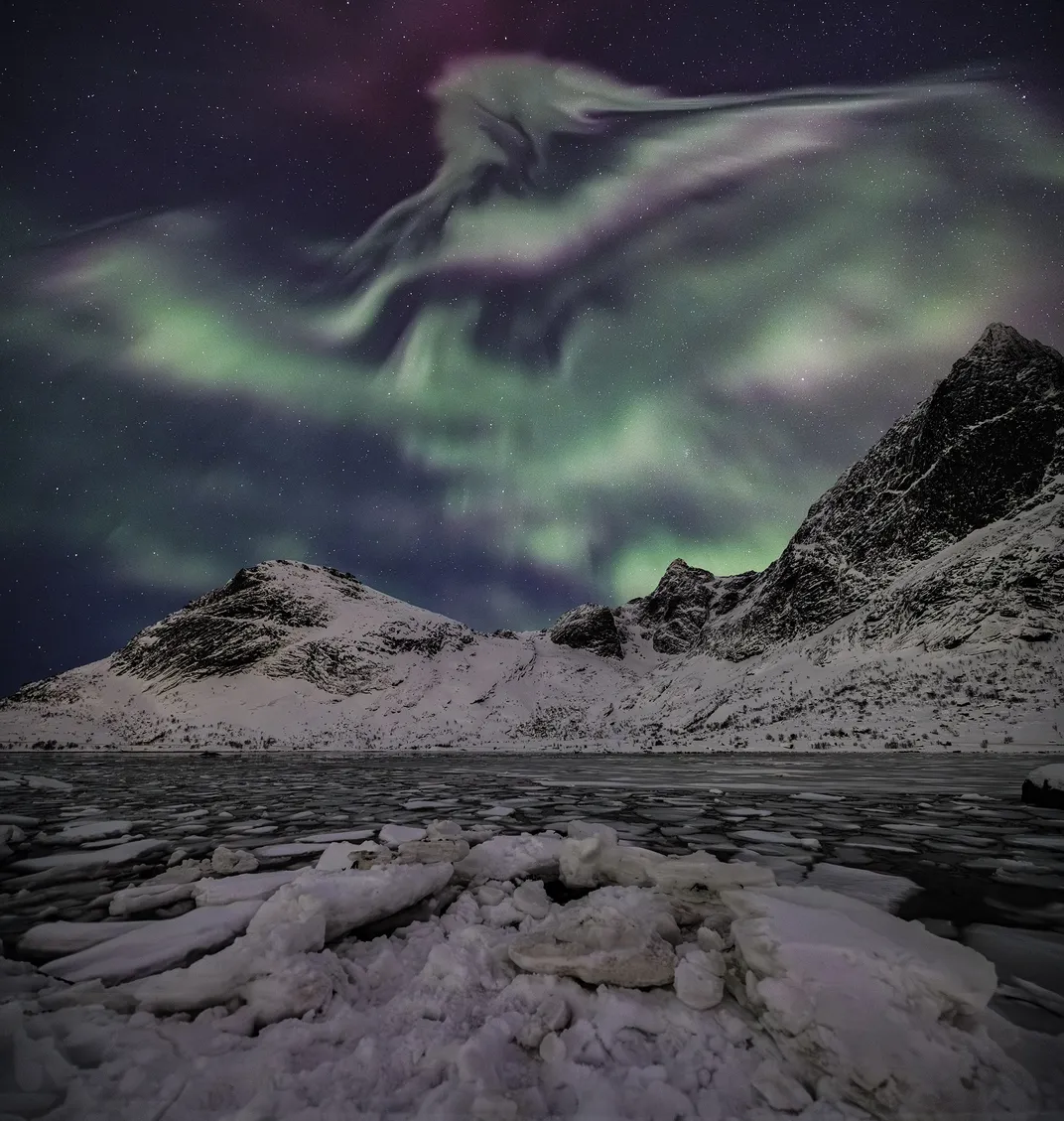
| Aurorae | Radoslav Sviretsov | The Crown | Aurora Borealis over an Icelandic church |
| Planets, Comets & Asteroids | Tom Williams | Saturnian Equinox | Saturn’s ring-plane crossing |
| Skyscapes | Stefano Pellegrini | Botswana Star Trail | Long-exposure star trails in Botswana |
| People and Space | Max Inwood | A Message from the Ancients | Petroglyphs and the Milky Way |
Deep-Dive: The Complexity of Deep-Space Imaging
The winning entries in the Galaxies and Aurorae categories demonstrate the extreme patience required for high-level astrophotography. For instance, the winning galaxy image, NGC 4753: A Symphony of Dust Lanes in Virgo, by 智鹏 严 and Xinran Li, required 10 hours of total exposure at a massive 6,800 mm focal length. Judge Joe DePasquale described the work as “subtle and masterful,” noting how the photographers captured the “cosmological dynamism” of the galaxy’s dust lanes.
In contrast, the Aurorae category winner, Radoslav Sviretsov, captured The Crown, which utilized a geomagnetic storm to bathe a remote chapel in a magnificent green glow. This highlights the dual nature of the craft: the precision of long-exposure deep-space imaging versus the opportunistic timing required to capture transient atmospheric events.
The Intersection of Science and Experimental Art
A unique standout this year was the Annie Maunder Open Category, won by Paweł Paweł for Reverse Astronomy: Mother. This entry represents a departure from traditional digital sensors, using analogue, large-format photography to capture the physical impact of solar radiation directly on photographic film.
Judge Katherine Gazzard described the resulting image—which shows the flaking, distorted effects of sunlight and chemicals on the film—as “eerily beautiful.” This category highlights how astrophotography can serve as a visceral, scientific record of the Sun’s physical power, bridging the gap between traditional chemistry and modern astronomical observation.
What It Means for You: The Future of Amateur Astronomy
For the casual observer or the aspiring photographer, the 2026 competition signals a major shift in how the cosmos is documented. Sam Wen, Founder and CEO of ZWO, emphasized that the company’s goal is to “lower the barrier to entry” through innovations like the Seestar Smart Telescopes.
If you are an amateur enthusiast, expect:
If you are a science communicator or educator, expect:
Counterpoints and Open Questions
While the competition celebrates technical and artistic excellence, it also raises questions about the evolving nature of astronomical truth. As digital processing and AI-driven enhancement become more prevalent in astrophotography, the line between a “photograph” and a “digital reconstruction” can become blurred.
Some purists argue that the heavy use of color manipulation and composite stacking—while necessary to see detail—can sometimes detract from the scientific reality of how the human eye perceives the sky. There is an ongoing debate within the community about how much post-processing is acceptable before an image ceases to be a record of a celestial event and becomes a piece of digital art.
Furthermore, the impact of light pollution remains a significant hurdle. While winners like Stefano Pellegrini utilized the dark skies of Botswana to achieve perfection, many photographers in more populated regions struggle to capture anything beyond the brightest lunar or planetary details. This creates a geographic divide in the ability to participate in high-level astrophotography.
What Happens Next
For those looking to experience these “out-of-this-world” images in person, the following dates and events are critical:
Frequently Asked Questions
What is the top prize for the Astronomy Photographer of the Year?
The overall winner of the competition receives a prize of £10,000 (approximately $13,400). Category winners receive £1,500, while runners-up and highly commended entries receive smaller amounts ranging from £250 to £500.
Where can I see the winning photographs?
The winning images are being exhibited at the National Maritime Museum in London, starting on September 18, 2026. The exhibition features 100 photographs on lightbox displays. You can also purchase the official competition book through Royal Museums Greenwich or general bookstores starting in October.
What is the Shark Nebula?
The Shark Nebula (LDN 1235) is a dark nebula located about 650 light-years away in the constellation Cepheus. It is composed of dense, starlight-blocking dust that gives it its distinctive, predator-like shape when viewed through high-powered telescopes.
How many people enter this competition?
The 2026 competition received nearly 4,000 entries from 66 different countries, demonstrating the massive global scale and interest in the field of astrophotography.
Closing
The 2026 ZWO Astronomy Photographer of the Year awards serve as a powerful reminder of the intersection between human curiosity and the vast, silent beauty of the universe
References
Featured image: Image via My Modern Met
One thought on “Astronomy Photographer of the Year 2026: Top Winners Revealed”