
The T. rex body temperature has been directly estimated for the first time, providing definitive evidence that this iconic predator was a warm-blooded organism capable of maintaining a high metabolism.
Key Takeaways
- Direct Temperature Reading: Researchers determined the Tyrannosaurus rex maintained a body temperature of approximately 97°F (36.3°C).
- Innovative Methodology: The study utilized “clumped-isotope analysis” on fossilized tooth enamel to act as a prehistoric thermometer.
- Climatic Versatility: The finding suggests T. rex could inhabit diverse environments ranging from modern-day Mexico to the frigid regions of Alaska.
- Metabolic Implications: As a warm-blooded predator, the T. rex likely required significantly more food to sustain its energy levels compared to cold-blooded reptiles.
- Scientific Breakthrough: The refined technique requires only a few milligrams of fossil material, preserving rare specimens for future study.
- www.bgnes.com
- www.ksl.com
What Happened
On Wednesday, a groundbreaking study published in the journal Science Advances provided the first direct measurement of the internal temperature of the Tyrannosaurus rex. For decades, paleontologists have debated whether these massive predators were ectothermic (cold-blooded), relying on external heat, or endothermic (warm-blooded), generating their own internal heat.
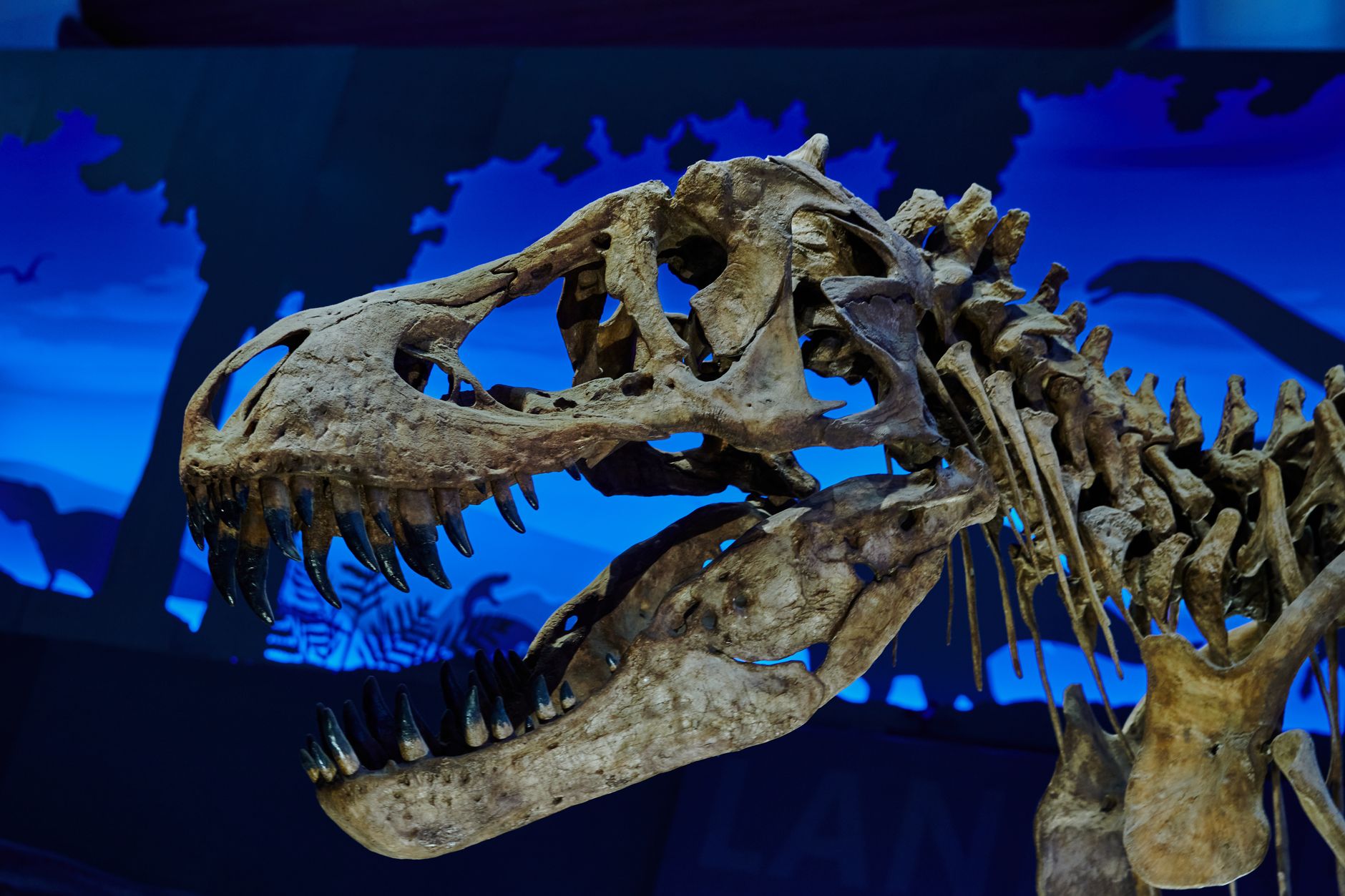
By analyzing the chemical signatures preserved in fossilized teeth, a team of scientists led by researchers from the University of California, Los Angeles (UCLA) has moved the conversation from speculation to empirical fact. The study focused on enamel samples taken from the specimen known as “Thomas,” an approximately 70% complete T. rex skeleton housed at the Natural History Museum of Los Angeles County.
According to Robert Eagle, a geobiologist and associate professor at UCLA and study co-author, this measurement represents the most direct constraint on the actual body temperature of a T. rex ever achieved. The research team, which included senior author Aradhna Tripati, a professor of geochemistry at UCLA, spent over a decade perfecting the specialized technique required to extract this data from such ancient biological material.
Why It Matters
The discovery of the T. rex body temperature fundamentally alters our understanding of dinosaur physiology and ecological roles. If the T. rex were cold-blooded, its activity levels would be strictly dictated by the ambient temperature of its environment, likely rendering it sluggish in cooler climates. However, a regulated temperature of 97°F suggests a highly active predator with the stamina to hunt and move across vast, varied landscapes.
This physiological trait has massive implications for how we reconstruct the late Cretaceous period. The ability to maintain a high internal temperature allowed T. rex to expand its territory far beyond the tropical zones typically associated with large reptiles. Paleoclimate models used by the researchers suggest that this predator could have successfully inhabited a massive stretch of North America, stretching from the heat of modern-day Mexico to the sub-arctic conditions of Alaska.
Furthermore, the biological cost of being warm-blooded is high. A high metabolism necessitates a constant and significant intake of calories. This suggests that T. rex was not merely an opportunistic scavenger but a high-energy predator that had to consume massive amounts of prey to fuel its internal furnace.
The Science: How Clumped-Isotope Analysis Works
The researchers utilized a sophisticated method known as clumped-isotope analysis. This technique relies on the chemical bonds formed between different isotopes of carbon and oxygen within the tooth enamel. Because these isotopes bond at specific rates that are highly sensitive to temperature, the enamel serves as a permanent, microscopic record of the animal’s internal state at the moment the teeth formed.
In warmer environments, fewer chemical bonds form between these isotopes, whereas cooler temperatures result in more frequent bonding. By drilling out just a few milligrams of enamel from the “Thomas” specimen, the team was able to read these bonds to calculate the temperature with high precision.
One of the most significant aspects of this research was the efficiency of the method. Previously, such analyses might have required much larger portions of fossilized material, which is often impossible for museums to provide due to the rarity and value of the specimens. The UCLA team successfully reduced the required material by roughly 90%, allowing for the study of tiny samples that do not compromise the integrity of the display fossils.
| Organism / Group | Estimated Body Temperature | Metabolic Classification |
|---|---|---|
| Tyrannosaurus rex | 36.3°C (97°F) | Warm-blooded (Endothermic) |
| Modern Humans | ~36.3°C (97°F) | Warm-blooded (Endothermic) |
| Modern Birds | 40–43°C (104–109°F) | Warm-blooded (Endothermic) |
| Modern Reptiles | 28–30°C (82–86°F) | Cold-blooded (Ectothermic) |
Deep-Dive: Evolutionary Links and Behavioral Constraints
While the T. rex is biologically classified as a reptile, its temperature profile places it in a unique evolutionary middle ground. As Robert Eagle noted, the temperature reveals that the T. rex sits between modern reptiles and modern birds—the latter being the direct descendants of dinosaur lineages.
This “intermediate” temperature suggests a complex evolutionary trajectory. While birds have evolved even higher temperatures to support the extreme metabolic demands of flight, the T. rex possessed a level of thermoregulation that was far superior to the crocodiles and clams living in the same ecosystems.
This distinction in temperature directly correlates to energy expenditure. Modern cold-blooded reptiles are often characterized by long periods of idleness, requiring sunlight to reach an optimal operating temperature. In contrast, the high body temperature of the T. rex suggests it could maintain energetic performance over much longer durations. While it may not have been a high-speed sprinter in the way modern cheetahs are, it likely possessed the endurance to pursue prey over significant distances, a feat nearly impossible for a purely ectothermic organism.
What It Means for the Scientific Community
For paleontologists and evolutionary biologists, this study provides a new toolkit for answering some of the oldest questions in the field. The debate over dinosaur endothermy has persisted since Richard Owen first introduced the name Dinosauria in 1842, suggesting they may have possessed warm-blooded characteristics.
Thomas Holtz Jr., a vertebrate paleontologist at the University of Maryland who was not involved in the study, noted that comparing the T. rex temperature to contemporary cold-blooded species provides “high confidence” in these findings. The methodology offers a way to move past biomechanical guesswork—such as bone density and muscle attachment sites—and into direct chemical measurement.
For museum curators and collectors, the ability to perform high-level science using only milligrams of material is a significant development. It means that “sacrificing” a piece of a world-class specimen for research is no longer a prohibitive cost, opening the door to studying the most famous fossils on Earth without damaging their educational or aesthetic value.
Counterpoints and Open Questions
Despite the clarity provided by the T. rex study, several questions remain regarding the broader dinosaur family tree. The most pressing question is whether this trait was universal among dinosaurs or limited to specific lineages.
While the T. rex shows clear signs of endothermy, other dinosaur groups such as Triceratops, Stegosaurus, and Brachiosaurus have historically been viewed as potentially “cooler-blooded.” It is currently unknown if these herbivores maintained temperatures closer to modern reptiles or if they also possessed high metabolic rates.
Additionally, the high metabolic demand of a 97°F body temperature presents a biological paradox: how did these animals find enough calories to sustain such a massive, warm body? The competition for resources in the late Cretaceous must have been intense, and the need for constant feeding would have made T. rex highly vulnerable to fluctuations in prey populations or environmental shifts.

What Happens Next
The immediate next step for the research team is to apply the clumped-isotope analysis to other major dinosaur genera. By testing the enamel of herbivores like Triceratops, scientists hope to map the evolutionary timeline of how and when warm-bloodedness emerged in the dinosaur lineage.
Beyond dinosaurs, Robert Eagle expressed interest in looking even further back into evolutionary history. The researchers aim to apply these techniques to the ancestors of mammals. Determining when warm-bloodedness first appeared in the mammalian lineage remains one of the great challenges of evolutionary biology, and this new chemical “thermometer” may provide the key.
Frequently Asked Questions
How did scientists measure the temperature of a dinosaur that died millions of years ago?
Scientists used a technique called clumped-isotope analysis on fossilized tooth enamel. Enamel contains isotopes of carbon and oxygen that form chemical bonds at specific rates depending on the temperature. By measuring the density of these bonds in the fossil, researchers can calculate the temperature at which the enamel originally formed, effectively using the tooth as a prehistoric thermometer.
Was the T. rex a fast runner?
While the study does not definitively prove the T. rex was a sprinter, the high body temperature suggests it had much higher stamina than a cold-blooded animal. While a crocodile can run short distances, it tires quickly. The T. rex likely could maintain physical activity and hunting behaviors for much longer periods due to its regulated internal temperature.
Does this mean all dinosaurs were warm-blooded?
Not necessarily. This study specifically examined the Tyrannosaurus rex. Scientists still need to test other species, such as Stegosaurus or Brachiosaurus, to see if they shared this high metabolic rate or if they were closer to the temperature of modern reptiles.
Why was tooth enamel used instead of bone?
Tooth enamel is one of the hardest and most durable substances in the vertebrate body. Because it is so highly mineralized, it is much less likely to undergo chemical changes or degradation over tens of millions of years compared to bone, making it a more reliable record of ancient temperatures.
Closing
The determination of the T. rex body temperature marks a pivotal shift in paleontology, transitioning the study of dinosaur metabolism from theoretical models to direct chemical observation
References
Featured image: Photo, via BGNES: Breaking News, Latest News and Videos, CC BY-NC-SA 4.0