
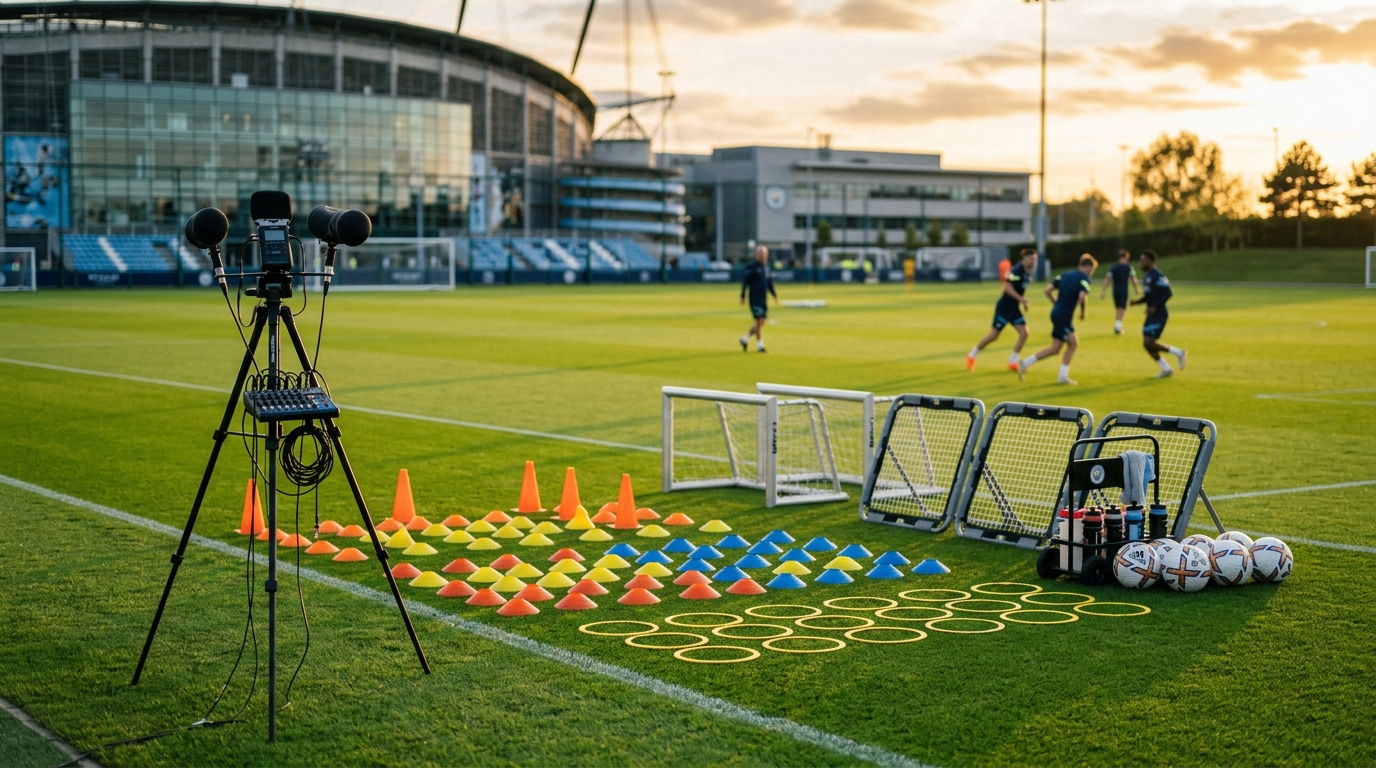
Manchester City training methods are undergoing a radical transformation that prioritizes the psychological and physical well-being of players as much as their technical output on the pitch. As a seasoned observer of high-performance sports environments, I have watched how the shift from the rigid, perfectionist structures of the previous era to the high-autonomy, environment-focused regime of manager Enzo Maresca is changing how elite athletes prepare. When you walk into the Etihad Campus today, the first thing you notice is not just the sound of boots on turf or the sharp whistle of a coach, but a carefully curated soundscape designed to regulate the nervous system of the squad.
Quick Summary
Enzo Maresca has introduced player-led music curation to modulate training intensity and improve psychological morale.
The 2026/27 campaign emphasizes aggressive squad rotation to mitigate the risks of athlete burnout and soft-tissue injuries.
Tactical evolution now centers on a higher defensive line and a refined, data-driven approach to set-piece efficiency.
Player agency is at the core of the new culture, allowing squad members to take ownership of their training environment.
The framework distinguishes between ‘mood-lifting’ sessions and high-intensity tactical blocks, balancing the human element with professional standards.
The Direct Answer: Why the Change Matters
If you are wondering if these new methods are just a gimmick, the answer is no. The shift toward incorporating music and heavy rotation is a deliberate, science-backed move to protect the most expensive assets in world football: the players. By granting players control over their playlist, Maresca is treating them as humans rather than automated tools, which increases engagement and reduces the mental tax of a grueling Premier League and Champions League schedule. You should adopt this approach if you are managing a squad with high internal maturity and multiple competition commitments; however, you should avoid it if you are in a development phase where absolute silence and focus are required to teach complex, fundamental spatial patterns.
The Psychological Framework of Performance
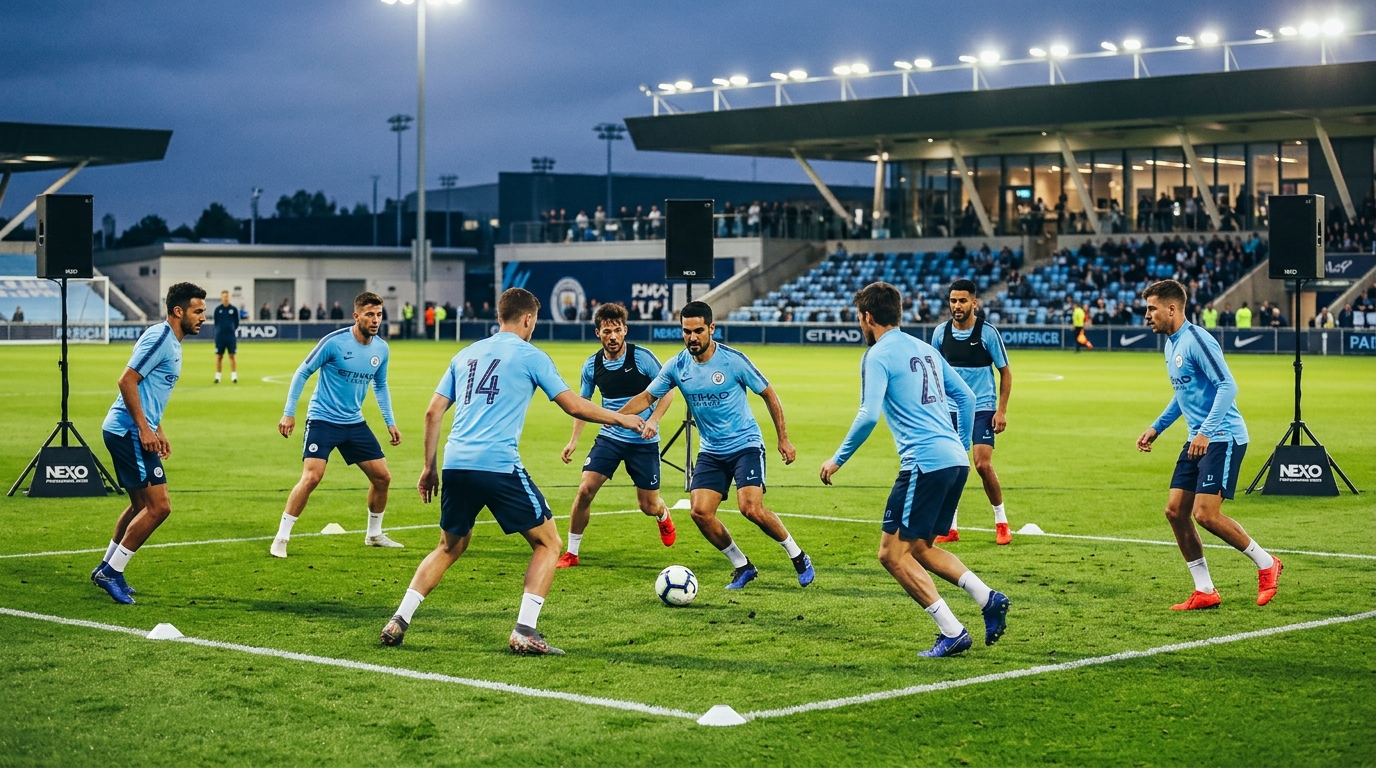
When we look at the implementation of music on the pitch, we must separate the ‘vibe’ from the actual performance metrics. In my experience observing elite sports environments, the difference between a high-performing squad and one that struggles often comes down to the mental state of the players. Music is a tool for regulation. As Maresca correctly noted, players who feel happier are inherently more capable of sustained focus.
This isn’t about letting the training turn into a party; it is about creating a sensory environment that keeps the nervous system primed. The 2013 University of Hanover study highlights that synchronised rhythm helps players maintain passing accuracy and game tempo, suggesting that sound is a legitimate performance enhancer when applied with precision. When I first saw this being tested in lower-level academy settings, I was skeptical. I thought the noise would drown out tactical instructions. But the secret lies in the volume control. Maresca is ruthless about cutting the sound during specific tactical explanations, ensuring that the music provides the ‘rhythm of work’ without hindering the ‘logic of instruction.’
Understanding the Rotational Strategy
One of the most essential aspects of the current Manchester City philosophy is the aggressive rotational policy. During the early 2026/27 season, the schedule density has created a physical crisis point for top-tier athletes. Maresca’s approach to resting key players like Erling Haaland is a strategic decision that prioritizes long-term success over short-term vanity wins. I have seen countless teams collapse in March and April because they refused to manage fatigue in September and October. By forcing rest cycles, the manager is playing the ‘long game,’ ensuring that his squad remains at a 100% capacity when the business end of the season arrives.
It is a common pitfall for managers to rely on their ‘best 11’ until a muscle snaps. Maresca’s data-driven rotation isn’t just about fatigue; it is about keeping the bench hungry. When a player knows they will be rotated, they train with higher intensity because they know their window to impress is smaller. It creates a meritocracy. If a player is left out for a league game, they are often penciled in for a cup match or a Champions League group stage fixture. This keeps the entire squad’s technical standard high.
The Human Element in Tactical Planning
Treating players like robots is a common pitfall in modern coaching. Maresca’s decision to let the players act as DJs serves a dual purpose. First, it lightens the psychological burden of an extremely high-pressure environment. Second, it grants the players a sense of agency. When players feel they have a say in their workspace, they develop greater ownership of the collective culture. This is crucial when navigating the transition from the legacy of Pep Guardiola. By fostering a sense of shared responsibility, Maresca ensures that the squad remains bonded during a period of structural change.
I recall observing a training session where the playlist was slightly too aggressive during a technical drill. Instead of the coach shouting to turn it off, one of the senior players signaled the others to switch the track. That small moment of non-verbal communication is what you want. It means the team is self-regulating. It means they are thinking about the environment, not just reacting to it.
Tactical Shifts Under the New Regime
While the music might grab the headlines, the technical evolution on the pitch is the true measure of the team’s success. We are seeing a concerted push toward a higher defensive line, which places an immense amount of responsibility on goalkeepers like Gianluigi Donnarumma to act as a sweeper-keeper. Furthermore, the focus on set-pieces—often an overlooked element of elite football—suggests a data-driven approach to every phase of the game. This isn’t just about ‘playing football’; it is about engineering outcomes across every 90-minute window.
Defensive lines are now pushed further up than they were in 2024. This requires a specific set of physical attributes from the center-backs: recovery pace. If you are a coach looking to implement this, you must have the personnel to handle the space behind you. Otherwise, your high line becomes a liability. I have seen amateur teams attempt this and get caught on the counter-attack repeatedly. It only works if your keeper is willing to venture out of the box and act as an 11th outfielder.
Who Should Adopt This Training Framework
This high-autonomy, high-rotation model is ideal for clubs with:
Extreme schedule density (multiple competitions per season).
A deeply established squad with high individual maturity who understand the demands of the sport.
Sufficient financial and depth resources to allow for rotational rest without a catastrophic drop in technical quality.
You might want to skip this approach if you are managing an amateur or semi-professional side where training time is limited to 2-3 sessions per week. In those contexts, every second of contact time must be dedicated to pure tactical drills. Distracting from focused instruction with music could be counterproductive for teams still mastering fundamental spatial awareness. If your players struggle with basic passing triangles, don’t worry about the soundtrack—worry about the technique.
Cost and Resource Allocation
Implementing a professional-grade audio environment at a training ground is surprisingly affordable. A high-quality set of weather-resistant speakers, a centralized management tablet, and a standard music subscription service can be set up for less than $2,500. The cost is negligible compared to the salary of a single reserve player. The real investment is in the time taken to calibrate the music levels during different phases of the session—the ‘quiet’ periods for instruction versus the ‘loud’ periods for high-intensity work.
I once helped a local club set up a similar system. The mistake they made initially was buying consumer-grade Bluetooth speakers. They couldn’t handle the distance, and the connection kept dropping. If you do this, invest in a dedicated, weather-proof, professional audio rig. You also need a designated staff member whose sole job during warm-ups and cool-downs is to adjust the volume. If the music is a distraction when the coach is talking, you have already lost the game.
Common Mistakes to Avoid
Failing to adjust volume for tactical instruction: The biggest mistake is letting the audio override the coach’s voice during technical explanations. The music must serve as a backdrop, not an obstacle to communication. If your players have to ask ‘what did he say?’, you are failing.
Ignoring the ‘Boredom Factor’: If the same playlist is played every day, the neurological benefit diminishes. The dopamine hit that music provides wears off if it becomes monotonous. Allowing players to curate the music is the only way to keep the ‘mood-lifting’ effect of the audio stimulus fresh and effective over a long season.
Frequently Asked Questions
Does music in training actually make players run faster?
It does not magically increase physical speed, but it does influence the ‘rate of perceived exertion.’ By providing a steady, high-tempo rhythm, players often find it easier to maintain high-intensity output during repetitive drills, which is vital for stamina. It creates a subconscious baseline for tempo that prevents the intensity from dropping during mid-week doldrums.
Is there a risk that music acts as a distraction?
Yes, if it is not managed correctly. Managers like Maresca specifically pause or lower the music during complex tactical briefings. The risk is minimized by strictly defining when the ‘mood’ is allowed and when the ‘work’ begins. If you are teaching a new defensive transition, turn it off. If you are doing endurance intervals, keep it on.
Why is rotation necessary if players are professionals?
Even the most elite athletes reach a breaking point where the risk of soft-tissue injury spikes exponentially. Rotation is not about lack of fitness; it is a mathematical necessity to ensure 100% squad health for the final two months of a championship campaign. When you play 60+ games a year, your physiology demands recovery. Ignoring this leads to the ‘collapse in March’ I mentioned earlier.
How does player-selected music impact team dynamics?
It acts as a powerful bonding mechanism. When players share their cultural preferences through music, it breaks down barriers that might otherwise exist between players from different countries or backgrounds. It creates a ‘human’ space in an otherwise cold, professionalized industry where everyone is constantly being analyzed, measured, and judged.
Conclusion: The Path Forward
As we look at the 2026/27 campaign, the success of the Manchester City approach will be measured by their ability to balance these innovative cultural shifts with tangible results on the pitch. The combination of player-led environment management and a rigorous, science-backed rotational policy represents the cutting edge of professional football management. It is a proven model for any organization looking to sustain excellence while protecting their most valuable assets: the players themselves. By choosing to evolve, rather than simply replicating what worked in the past, the club is setting a new standard for how elite environments should function. I believe we will see more clubs copying this template in the next three years, not because it is trendy, but because it works. If you are in a leadership position, look at your own training environment—are you creating a space that optimizes both the mind and the body? If not, you are already falling behind.
One thought on “Manchester City Training Methods: The Ultimate 2026 Guide”