Managing the Da’Shawn Hand injury Impact
The Da’Shawn Hand injury serves as a brutal reminder of how quickly an NFL season’s trajectory can shift after a single snap. When a veteran of Hand’s caliber goes down in the season opener against the Pittsburgh Steelers, it creates an immediate ripple effect that cascades through the entire Atlanta Falcons defensive architecture. As I have watched these types of injuries unfold over my career observing roster logistics, it is never just about the loss of one player‘s statistical output; it is about the fundamental erosion of a team’s rotational identity.
Quick Summary
Immediate Status: Da’Shawn Hand’s potential season-ending quadriceps injury forces the Falcons to immediately pivot their defensive interior rotation.
Strategic Threat: Losing a foundational veteran risks forcing defensive coordinator Jeff Ulbrich to abandon a successful four-man pass rush for riskier blitzing.
Developmental Test: Young prospects like Gervon Dexter and Maason Smith now face the high-pressure environment of regular-season interior trench play.
Management Approach: The organization is currently conducting deep-dive medical evaluations to determine if immediate surgery or conservative rehab is required.
The Immediate Strategic Response
To give you a direct answer: if the diagnosis confirms a significant quadriceps tear, you should expect the Falcons to avoid a high-profile free agent signing and instead lean heavily into internal elevation. Panicking and throwing money at a replacement player who has not spent the training camp cycle in the system is almost always a mistake. Instead, Atlanta will prioritize the ‘next-man-up’ philosophy, relying on the depth they spent the entire offseason cultivating. You must understand that in the NFL, consistency in gap integrity is infinitely more valuable than raw athleticism in a backup defensive lineman.
Understanding the Quad Injury Reality
A quadriceps injury is uniquely devastating for a defensive lineman. In my time studying biomechanics in football, I have learned that the quad is the primary engine for the ‘get-off’—the explosive push out of a three-point stance that defines a player’s initial leverage. If this muscle is compromised, the player loses the ability to generate force from the ground. Even when they return, they are often playing at 50% of their actual power for several weeks. When I have seen players attempt to play through this too early, the result is almost always a compensatory injury to the calf or the opposite hip.
The Philosophy of the Four-Man Rush
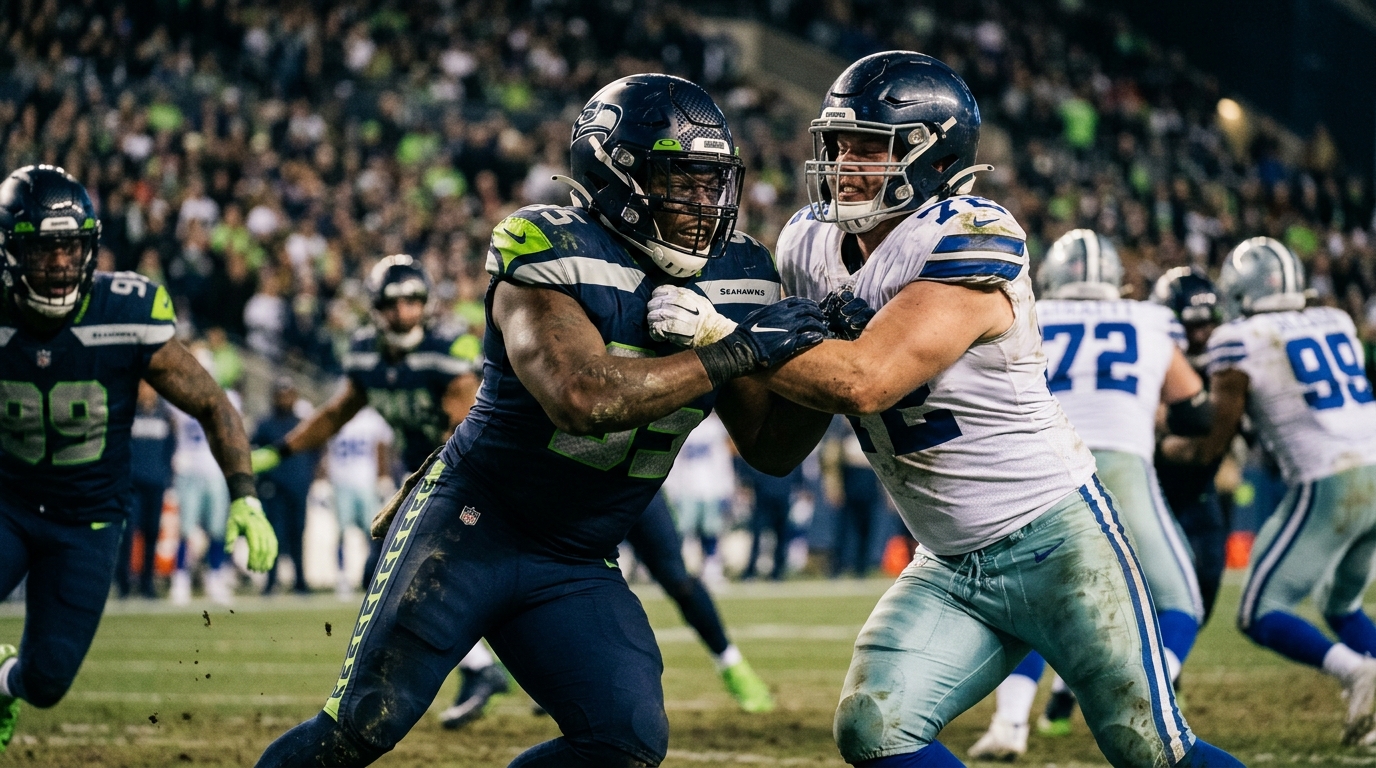
The Falcons’ 2026 defensive identity hinges on the four-man rush. It is the gold standard because it allows for maximum coverage in the secondary. When Hand went down, the team didn’t just lose a player; they lost a ‘Kingpin’ figure. A Kingpin is not necessarily the fastest guy on the field, but they are the one who makes the pre-snap adjustments and knows exactly how to manipulate the offensive line’s sliding protections. Younger players, while physically capable of filling the gap, often miss these subtle ‘tells’ in the offensive formation. If you cannot stop the run or collapse the pocket with four, your defensive coordinator is forced to send five or six, which leaves your secondary vulnerable to explosive plays.
Evaluating Tactical Alternatives
When a player like Hand exits the rotation, the coaching staff effectively has three paths to navigate. First, there is internal promotion. This is the path of least resistance. It rewards players who have worked for their spots, but it requires the defensive line coach to simplify the playbook to accommodate less experienced players. If I were the defensive coordinator, I would focus on ‘two-gap’ techniques rather than ‘penetrating’ techniques, as it is much easier for a young player to hold their ground than to correctly time a gap-shooting maneuver.
Second, there is the free agent market. This is often an illusion of security. The players available in September are usually unsigned for a reason—they either lack the conditioning to compete or they struggled to learn complex defensive schemes in previous stops. I have rarely seen a mid-season veteran signing significantly improve a defense within the first month.
Third, there is the trade market. This is the most expensive route. It requires surrendering future draft capital, which is the lifeblood of a sustainable franchise. Unless the Falcons feel they are a true Super Bowl contender in 2026, I would argue against trading away late-round picks. You need those picks to replace veteran attrition in the following year’s draft.
Who Should Monitor Roster Depth (And Who Should Not)
This injury is a case study in roster management for everyone, including fantasy owners and sports administrators. You should prioritize deep roster construction if your entire schematic philosophy is predicated on ‘winning the trenches.’ If you are building a team where the front four is the engine, you simply cannot afford to have a ‘drop-off’ at the second or third tier of your depth chart. Conversely, you might want to skip this level of investment if you favor a high-variance, blitz-heavy approach. If you are playing ‘chaos ball’—using a chaotic, unpredictable secondary to hide your flaws—you can afford to take more risks with your interior line depth.
The Fiscal Cost of Attrition
We often focus on the physical side of football, but the fiscal side is just as brutal. An injured veteran sitting on the bench still counts against the salary cap in many configurations. If the team places Hand on Injured Reserve (IR), they free up a roster spot, but they lose his leadership. The cost of an replacement—whether that is a practice squad elevation at roughly $900,000 or a vet minimum signing—must be weighed against the long-term impact on the secondary’s performance. If the defensive line performs poorly, the defensive backfield gives up more big plays. When big plays increase, the perceived value of your secondary players drops. It is a domino effect that impacts the entire team’s valuation.
Common Mistakes to Avoid
The most frequent error I see teams make is the ‘Gap Integrity Fallacy.’ Coaches often assume that if a replacement player is faster than the injured starter, they will automatically be as good or better. This is completely wrong. Defensive interior play is about discipline. If a faster, younger player abandons his assigned gap in an attempt to make a highlight-reel play, he creates a massive lane for the running back. This is a net negative for the defense every single time. Discipline wins games, not speed.
Another major error is ‘Panic Signing.’ I have seen GMs sign the first ‘big name’ veteran who hits the waiver wire, only to realize the player is a terrible fit for the scheme. It is better to have a slightly less talented player who knows the terminology than a ‘star’ who has to spend three weeks unlearning his old team’s playbook. If your defensive line coach is having to teach basic techniques to a new signing in week three, you have already lost the battle.
Deep Dive: Tactical Adjustments in the Trench
When a team like the Falcons loses a key rotational piece, they must adjust their ‘Personnel Packages.’ You might see them moving to more ‘Big Nickel’ looks, which essentially uses an extra safety who plays like a linebacker. This is a common way to compensate for an interior line that is struggling to generate pressure on its own. By bringing the safety closer to the line of scrimmage, you can disguise where your pressure is coming from. However, this is a dangerous game. If the opposing offensive line is smart, they will identify the safety and ‘hot read’ the blitz, throwing the ball right into the space he just vacated.
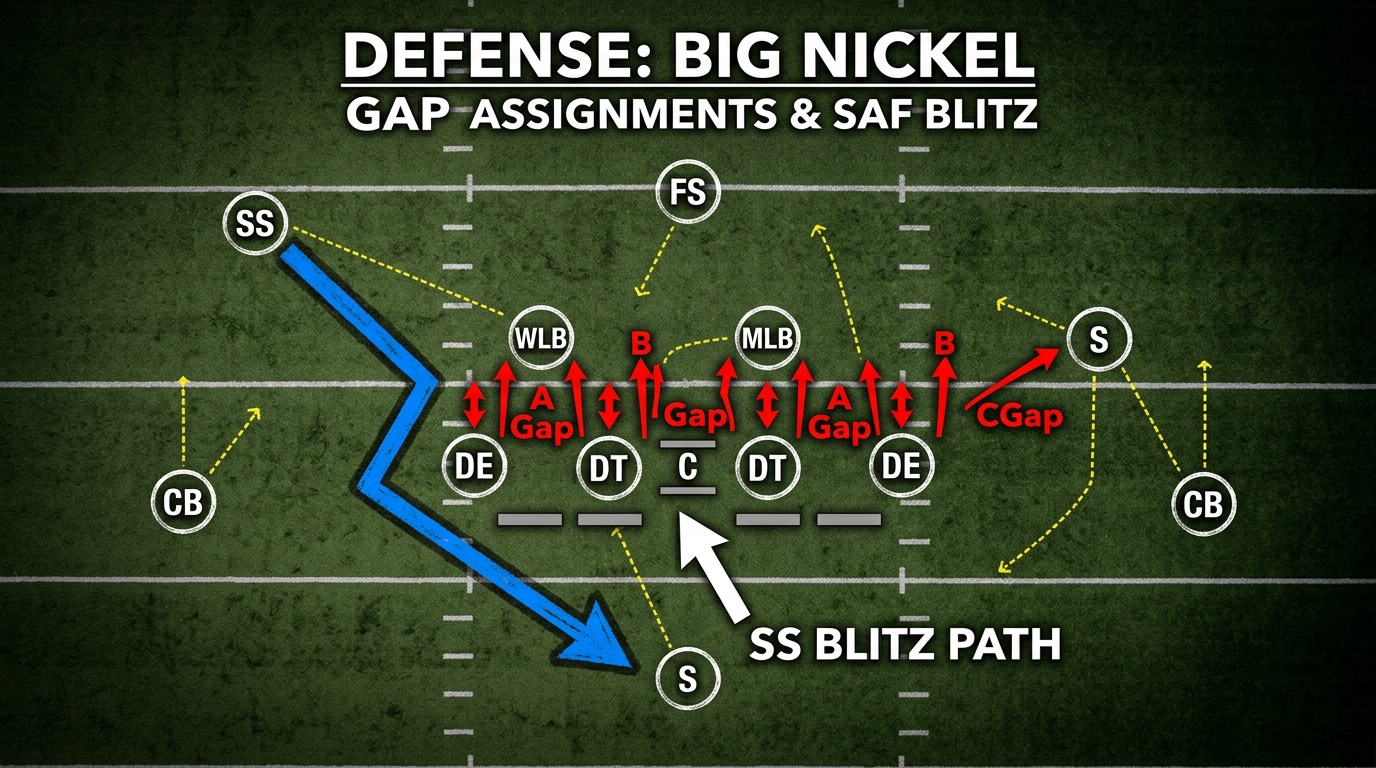
I’ve personally watched teams attempt this in crunch time, and it is electrifying when it works, but it is disastrous when it fails. It requires an elite level of communication between the line and the secondary. If there is even a second of hesitation between the defensive end and the safety, the entire play collapses. This is where veteran presence is usually missing the most—not in the physical play, but in the communication on the field.
Frequently Asked Questions
How does a quad injury specifically hinder defensive line play?
A quad injury limits the ‘drive’ a player can generate from their stance. Defensive line play is essentially a physics battle; whoever gets lower and generates more upward force wins. If your quad is failing, you cannot drive through the offensive lineman’s chest. You essentially become a ‘pushover’ at the point of attack, allowing the offensive line to dictate the movement of the play.
Why does the Falcons’ defense prioritize a four-man rush over blitzing?
The goal is to maximize coverage potential. By keeping seven men in coverage, the team can defend the entire width of the field, effectively preventing explosive deep passing plays. Blitzing is an admission that your line cannot win one-on-one, and it forces your defensive backs into man-to-man coverage, which is a much higher-risk proposition.
What is the ‘Return to Play’ protocol after an IR stint?
In 2026, the league’s rules require a minimum four-game absence for any player placed on Injured Reserve. Once that period ends, there is a 21-day window where the player can return to practice without counting against the 53-man roster. This is a critical tactical window. Teams often wait until the last possible moment to activate a player to get as much practice time as possible while keeping the roster spot flexible.
Can young players bridge the ‘experience gap’ through film study?
They absolutely can. While they cannot replace the muscle memory of an eight-year veteran, they can use ‘mental reps’ to study the blocking patterns of upcoming opponents. By understanding whether an opposing team prefers zone-blocking or gap-blocking, a younger player can anticipate the movement of the offensive line before the ball is even snapped. This allows them to ‘play fast’ even when they are physically outmatched.
The Path Forward: Trusting the System
The loss of Da’Shawn Hand is undeniably a setback for the Atlanta Falcons, but it is also a defining moment for the organization’s culture. In the NFL, you are rarely defined by the players you have when things are going well. You are defined by how you respond when your best-laid plans are destroyed by a freak injury in the first seven snaps of the season.
If the coaching staff can successfully bridge this gap, they will prove that their philosophy of investing in depth was not just a luxury, but a core component of their competitive success. I believe the Falcons have the talent to absorb this blow, provided they do not succumb to the temptation of ‘quick fixes’ that violate their core defensive principles. By staying true to their system, relying on their development staff, and keeping their gap integrity, they can weather this storm and remain a contender in the NFC South. The season is a marathon, and the teams that win are rarely the ones that have the fewest injuries—they are the ones that manage the injuries they have with the most poise.