Apple’s highly anticipated foldable device, widely speculated as the “iPhone Ultra,” is poised to redefine the premium smartphone landscape. Recent dummy models and leaked specifications offer a compelling glimpse into its innovative book-style form factor and how it will stack up against Apple’s current lineup. This groundbreaking device aims to blend the versatility of an iPad mini with the portability of an iPhone, potentially setting a new benchmark for mobile technology.
Apple’s Foldable Vision: A First Look at the iPhone Ultra
Excitement is building around Apple’s rumored entrance into the foldable market. Industry experts and leakers suggest a September launch for the iPhone Ultra, possibly alongside the iPhone 18 Pro and Pro Max models. This device is not just a new phone; it’s Apple’s answer to a growing segment, promising enhanced durability and screen quality that addresses current foldable challenges. Its projected price tag, potentially exceeding $2,000, positions it firmly in the ultra-premium category.
Max Tech’s Vadim Yuryev recently showcased dummy units, providing a tangible sense of the iPhone Ultra‘s design. This “book-style” foldable phone hints at a user experience previously confined to Android competitors. Apple’s meticulous approach to product development suggests it’s waiting for the right moment to deliver a polished, high-performance foldable.
Display Dynamics: Unfolding the Visual Experience
The iPhone Ultra is expected to feature a captivating dual-screen setup. Its inner, main display is rumored to boast a 4:3 aspect ratio, reminiscent of an iPad. When fully opened, it’s projected to be an iPad mini-sized OLED screen, measuring approximately 7.8 inches diagonally. This makes it slightly smaller than the 8.3-inch iPad mini, yet considerably larger than a standard iPhone display.
This expansive internal screen offers significant advantages for media consumption and productivity. Yuryev suggests the wider display will provide a more immersive 16:9 video experience. For mobile gamers, the extra real estate promises “awesome” gameplay, especially when using on-screen controls. The transition from a compact phone to a mini-tablet offers unparalleled flexibility.
When closed, the device is largely rumored to feature a 5.5-inch outer display. However, one outlier report from The Information suggests an even smaller 5.3-inch screen, which would be tinier than the 5.4-inch display on the iPhone 13 mini. While a smaller external screen enhances portability, it might require some getting used to for users with larger hands.
Design & Dimensions: A Closer Look at Form Factor
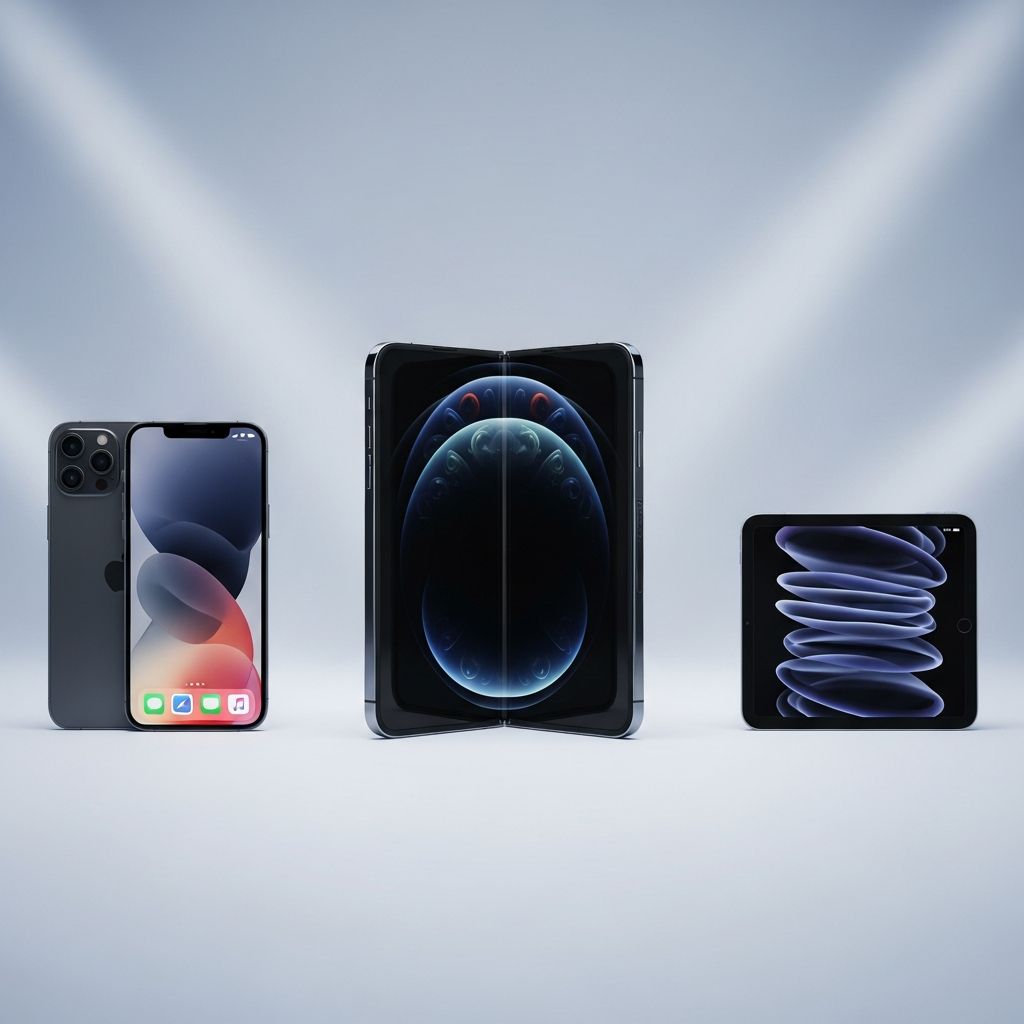
Comparing the iPhone Ultra to existing devices provides valuable context. In landscape orientation, its width is said to be similar to an iPhone 17 Pro Max. Yet, its inner display stands 56.9% taller, a significant difference (111.5 mm vs. 71 mm). This design choice prioritizes vertical screen space, potentially for better multitasking or content viewing.
Thickness is a critical aspect for foldables. Yuryev’s dummy unit measures 11mm when closed, contrasting with other rumors pointing to a slimmer 9mm to 9.5mm. Should Apple achieve the rumored 4.5mm thickness when open, the iPhone Ultra would become Apple’s thinnest device to date. This thin profile is an engineering marvel, considering the intricate folding mechanism. Apple’s track record with devices like the iPhone Air shows its ability to optimize battery life even in ultra-thin designs, managing to deliver endurance comparable to previous Pro models despite smaller battery capacities.
Controls, Cameras, and Key Features
Beyond its folding display, the iPhone Ultra introduces some distinct hardware features. Dummy models show a Touch ID-integrated power button, mirroring the iPad mini’s design. A dedicated Camera Control button is also prominent on the right side. Volume buttons are positioned along the top, similar to an iPad mini. This ergonomic layout aims for intuitive single-handed operation, particularly for photography.
Notably, Face ID is not expected to be included due to potential space constraints within the folding mechanism. Instead, Apple seems to be leaning into Touch ID for biometric authentication. The device will feature a raised camera “plateau” that doesn’t span the entire back. This houses a two-lens camera system, diverging from the triple-lens setups found on current iPhone Pro Max models. This suggests a strategic choice by Apple, possibly focusing on core camera excellence rather than sheer lens count. While the iPhone 17 Pro Max boasts three 48-megapixel cameras, the iPhone Ultra may target a different photographic experience.
The iPhone Ultra in a Competitive Ecosystem
Apple’s entry into the foldable market marks a pivotal moment. Android manufacturers have dominated this space for years, offering diverse options like the Samsung Galaxy Z Fold series. Apple’s meticulous approach could bring a level of refinement and ecosystem integration that might sway users. The choice between Android and iPhone is increasingly about ecosystem investment rather than just hardware. For new users, it boils down to the seamless experience of Apple versus the customization and AI innovation of Android.
The iPhone Ultra is rumored to launch alongside the iPhone 18 Pro and Pro Max models. These conventional flagships are expected to retain similar dimensions to the iPhone 17 Pro series, but with potential refinements like a smaller Dynamic Island and more protruding camera lenses. This simultaneous launch underscores the Ultra’s position as a premium, distinct offering within Apple’s diverse smartphone portfolio. It will likely solve key problems associated with current foldables: improved screen quality and overall durability.
The expected $2,000+ price tag places the iPhone Ultra in an exclusive category. This high price point signals Apple’s confidence in its design, engineering, and the value it believes a truly refined foldable experience offers. It will cater to early adopters and users seeking the pinnacle of mobile innovation, willing to invest in Apple’s vision for the future of smartphones. This also puts it at a higher starting price than even the iPhone 17 Pro Max ($1,199) or Samsung Galaxy S25 Ultra ($1,049.99), highlighting its unique market position.
Frequently Asked Questions
What are the key design and display features rumored for the iPhone Ultra?
The rumored iPhone Ultra is expected to adopt a “book-style” foldable form factor. When opened, it will likely reveal a 7.8-inch iPad mini-sized OLED inner display with a 4:3 aspect ratio, ideal for immersive video and gaming. When closed, most rumors suggest a 5.5-inch outer screen, though some reports point to a slightly smaller 5.3-inch display. Other key features include a Touch ID-integrated power button, a dedicated Camera Control button, and a two-lens camera system with a raised “plateau” bump.
How does the iPhone Ultra’s expected thickness compare to other Apple devices and foldable rivals?
Initial dummy models of the iPhone Ultra suggest a thickness of around 11mm when closed. This contrasts with other rumors indicating a slimmer profile of 9mm to 9.5mm. If the device achieves the rumored 4.5mm thickness when open, it would become Apple’s thinnest device to date. While specific comparisons to current Android foldables were not detailed, Apple’s focus on a slim design and efficient components implies a competitive offering against devices like the iPhone 17 (3,692 mAh battery) or iPhone 16 Pro (3,582 mAh battery), potentially achieving comparable endurance.
What might the “iPhone Ultra” price point of over $2,000 signal for Apple’s foldable strategy?
The anticipated price tag exceeding $2,000 for the iPhone Ultra positions it as an ultra-premium device. This signals Apple’s intent to target a high-end market, emphasizing cutting-edge technology, superior design, and a refined user experience. It suggests Apple isn’t aiming for mass-market adoption initially but rather to establish a new category leader that solves existing foldable challenges like durability and screen quality. This premium pricing strategy is typical for new, innovative Apple products, distinguishing the foldable from its standard iPhone lineup.
The Future Unfolds
The rumored iPhone Ultra stands as a testament to Apple’s ambition to innovate in the evolving smartphone market. By merging the screen real estate of a small tablet with the convenience of a phone, it promises a truly versatile device. While details remain speculative, the circulating dummy models and leaker reports paint a compelling picture of a device that could set a new standard for foldables. As its rumored September launch approaches, the tech world eagerly awaits Apple’s definitive statement on the future of mobile technology. The iPhone Ultra is more than just a new iPhone; it’s a bold step into a folding future, demanding attention and perhaps redefining user expectations.