
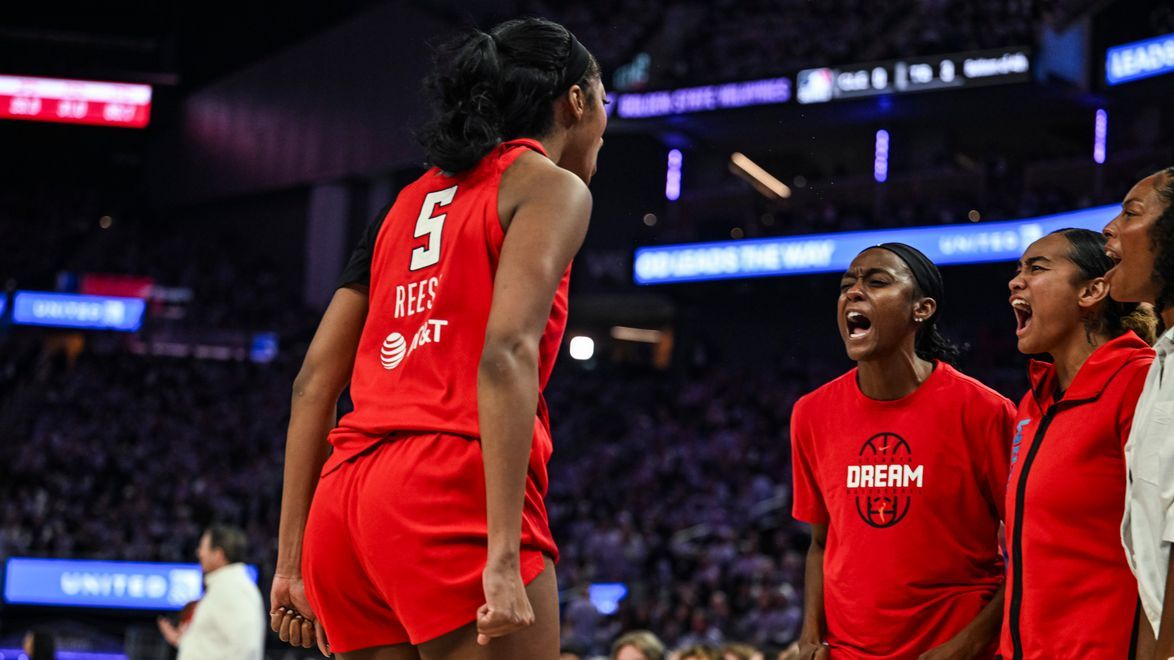
The atlanta dream WNBA Finals campaign reached a fever pitch on Wednesday night as the team secured a commanding 97-71 victory over the Golden state Valkyries to take a 2-1 lead in the best-of-seven championship series. Led by a historic performance from forward Angel Reese, the Dream utilized a combination of efficient shooting and aggressive defensive pressure to dismantle the Valkyries at State Farm Arena in Atlanta.
Key Takeaways
- Series Lead: The Atlanta Dream currently hold a 2-1 advantage in the best-of-seven WNBA Finals.
- Reese’s History: Angel Reese became the first player in WNBA history to record a double-double in each of her first three career Finals games.
- Defensive Dominance: Atlanta converted 17 Golden State turnovers into 22 points, contributing to a massive 26-point margin of victory.
- Efficiency Gap: The Dream shot 49% from the field, while the Valkyries struggled with a 35% field goal percentage.
- Venue Shift: Due to unprecedented fan demand, the series has moved from smaller venues to the 17,000-seat State Farm Arena.
- The Double-Double Streak: She is the first player in WNBA history to record a double-double in each of her first three career Finals games.
- The 20/10 Club: By posting consecutive 20-point, 10-rebound games, she joins A’ja Wilson as the only players to achieve this feat within a single WNBA Finals series.
- The Three-Point Correlation: Data from the WNBA indicates that the Atlanta Dream have remained undefeated throughout the 2026 season—including regular season and playoff contests—whenever Reese successfully makes a three-pointer.
- Game 5 (If necessary): To be determined.
- wjla.com
- sports.yahoo.com
- bleacherreport.com
What Happened: A Dominant Game 3
On Wednesday night, the Atlanta Dream proved why they are the current momentum leaders in the championship race. After dropping Game 1 to the Golden State Valkyries (68-64) and bouncing back with a gritty 79-65 win in Game 2, the Dream entered Game 3 looking to seize control of the series. They did exactly that, outclassing the Valkyries in nearly every statistical category.
According to reports from ClutchPoints, the Dream’s 97-71 blowout was fueled by a balanced offensive attack and a suffocating defense that prevented Golden State from finding any rhythm. The Valkyries, who entered the series as the league’s No. 2 seed during only their second year as an expansion franchise, appeared unable to handle the physical and tactical adjustments made by Atlanta’s coaching staff, led by Karl Smesko.
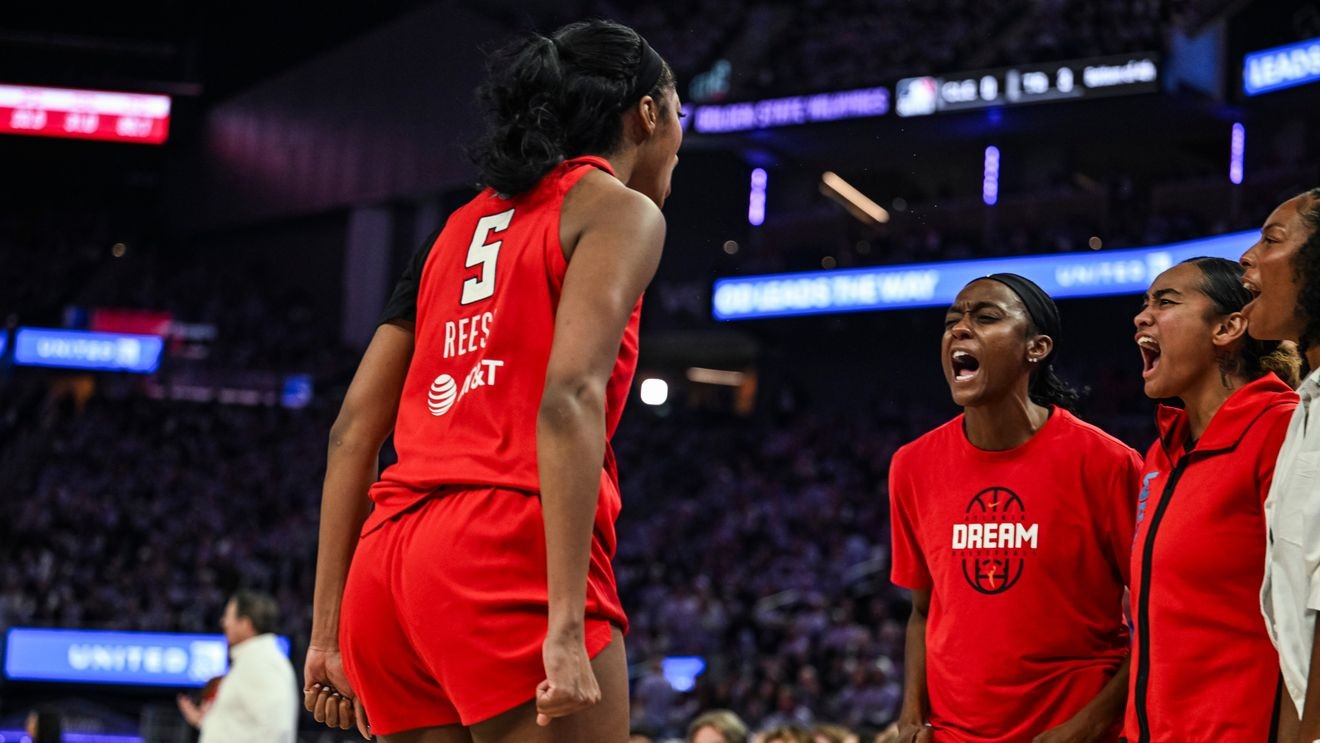
Angel Reese was the centerpiece of the victory. Playing 34 minutes, Reese recorded 21 points, 12 rebounds, 3 assists, and 3 steals. While her scoring was vital, it was her expanded offensive range that caught the Valkyries off guard; Reese successfully connected on two three-pointers, including a crucial shot late in the first quarter that helped Atlanta establish an early 22-12 lead.
Why It Matters: The Statistical Weight of the Moment
This victory is not merely about a single win; it is about the historic trajectory of the players involved and the franchise itself. For the Atlanta Dream, this series represents a chance to break a long-standing drought. Historically, the Dream have reached the WNBA Finals on three previous occasions but finished with a combined 0-10 record. Winning Game 2 and now Game 3 marks a significant departure from their past postseason struggles.
For Angel Reese, the performance solidified her status as one of the most impactful postseason players in league history. According to ESPN Insights, Reese has achieved several “ultra-rare” milestones during this series:
Game 3 Player Performance Comparison
| Player | Team | Points | Rebounds | Assists | Steals | FG% | |
|---|---|---|---|---|---|---|---|
| Angel Reese | Atlanta Dream | 21 | 12 | 3 | 3 | N/A | 58% (7-of-12) |
| Rhyne Howard | Atlanta Dream | 16 | N/A | N/A | N/A | N/A | |
| Naz Hillmon | Atlanta Dream | 15 | N/A | N/A | N/A | N/A | |
| Isobel Borlase | Atlanta Dream | 12 | N/A | N/A | N/A | N/A | |
| Gabby Williams | Golden State Valkyries | 15 | N/A | N/A | N/A | N/A | |
| Cecilia Zandalasini | Golden State Valkyries | 13 | N/A | N/A | N/A | N/A |
Deep-Dive: Defensive Pressure and Team Synergy
While Reese’s individual brilliance often captures the headlines, the Dream’s success in Game 3 was a product of collective defensive effort. The team’s ability to force turnovers and convert them into high-value transition points was the deciding factor. The Dream forced 17 turnovers from the Valkyries, which they turned into 22 points.
Rhyne Howard continued her defensive masterclass that began in Game 2. After setting a WNBA Finals single-game record with six steals in the previous matchup, Howard’s ability to disrupt passing lanes remained a constant threat. This defensive pressure forced Golden State into a dismal 35% field goal shooting performance.
Jordin Canada also played a pivotal role in maintaining the Dream’s tempo. Canada recorded 13 points, 10 assists, and 7 rebounds, acting as the primary floor general. Her ability to distribute the ball allowed Atlanta to finish the game with 26 total assists, ensuring that the Valkyries’ defense could never settle on a single primary threat.
The Valkyries’ Struggle: An Expansion Team’s Growing Pains
The Golden State Valkyries have had a remarkable second year in the league, securing the No. 2 seed and reaching the Finals. However, the intensity of the WNBA Finals has exposed vulnerabilities in their ball security and shooting consistency.
Following the loss, Valkyries head coach Natalie Nakase acknowledged the team’s errors, specifically regarding their inability to protect the ball. “It’s controllable, it’s definitely controllable,” Nakase said in a post-game assessment. “Just credit to them their effort, their hustle, their fight. I thought they did an excellent job getting into those lanes and creating those turnovers.”
Guard Veronica Burton also took accountability for the team’s struggles, stating, “It starts with me,” in reference to the high turnover rate. For an expansion franchise, these high-stakes lessons are often part of the developmental process, but the margin for error in a best-of-seven series is razor-thin.
What It Means for Fans and the WNBA
For fans in Atlanta, the atmosphere surrounding the Finals has reached unprecedented levels. The demand for tickets has necessitated a significant logistical shift for the Dream organization. While the team typically plays at the 3,500-seat Gateway Center Arena, the massive interest in this championship run forced a move to the 17,000-seat State Farm Arena for Games 3 and 4.
If you are a season ticket holder or a local fan, expect much larger crowds and a high-energy environment that mirrors the intensity of the players on the court. The shift to a major arena signifies the growing commercial and cultural footprint of the WNBA, as even expansion teams like Golden State are seeing sellouts at venues like the Chase Center (18,064 capacity).
Counterpoints and Open Questions
Despite the Dream’s dominance in Game 3, several questions remain regarding the series’ outcome:
Can Golden State Recover? The Valkyries are now facing a 2-1 deficit. To avoid a “deep hole,” they must improve their field goal percentage and drastically reduce their turnover rate.
The Fatigue Factor: With the high intensity of Angel Reese and Rhyne Howard, can the Dream maintain this level of defensive pressure through a potential Game 6 or 7?
The Reese Dependency: While the Dream are undefeated when Reese hits a three-pointer, does the team rely too heavily on her individual energy? As Jordin Canada noted, the team “feeds off” her energy, which implies that if her production dips, the team’s collective momentum could stall.
What Happens Next
The series now heads toward a potential clinching opportunity for Atlanta. The schedule for the remainder of the WNBA Finals is as follows:
Game 4: Saturday, October 25, 2026, at State Farm Arena, Atlanta (1 p.m. ET, NBC).
If the Atlanta Dream win on Saturday, they will take a commanding 3-1 lead, leaving the Valkyries with almost no margin for error. For Golden State, Game 4 is a must-win to keep their championship aspirations alive.
Frequently Asked Questions
How many games are in the WNBA Finals series?
The WNBA Finals is a best-of-seven series, meaning the first team to win four games is crowned the champion. Currently, the Atlanta Dream lead the series 2-1.
What records did Angel Reese break in the Finals?
Angel Reese became the first player in WNBA history to record a double-double in each of her first three career Finals games. She also joined A’ja Wilson as the only player to record consecutive 20-point, 10-rebound games in a single Finals series.
Where are the Atlanta Dream playing their home games?
Due to high ticket demand, the Atlanta Dream have moved their home games from the Gateway Center Arena to the larger State Farm Arena to accommodate more fans.
Who are the key players for the Golden State Valkyries?
Key contributors for the Valkyries include Gabby Williams, who scored 15 points in Game 3, and Cecilia Zandalasini, who contributed 13 points. The team is coached by Natalie Nakase.
References
Featured image: Image via WJLA
