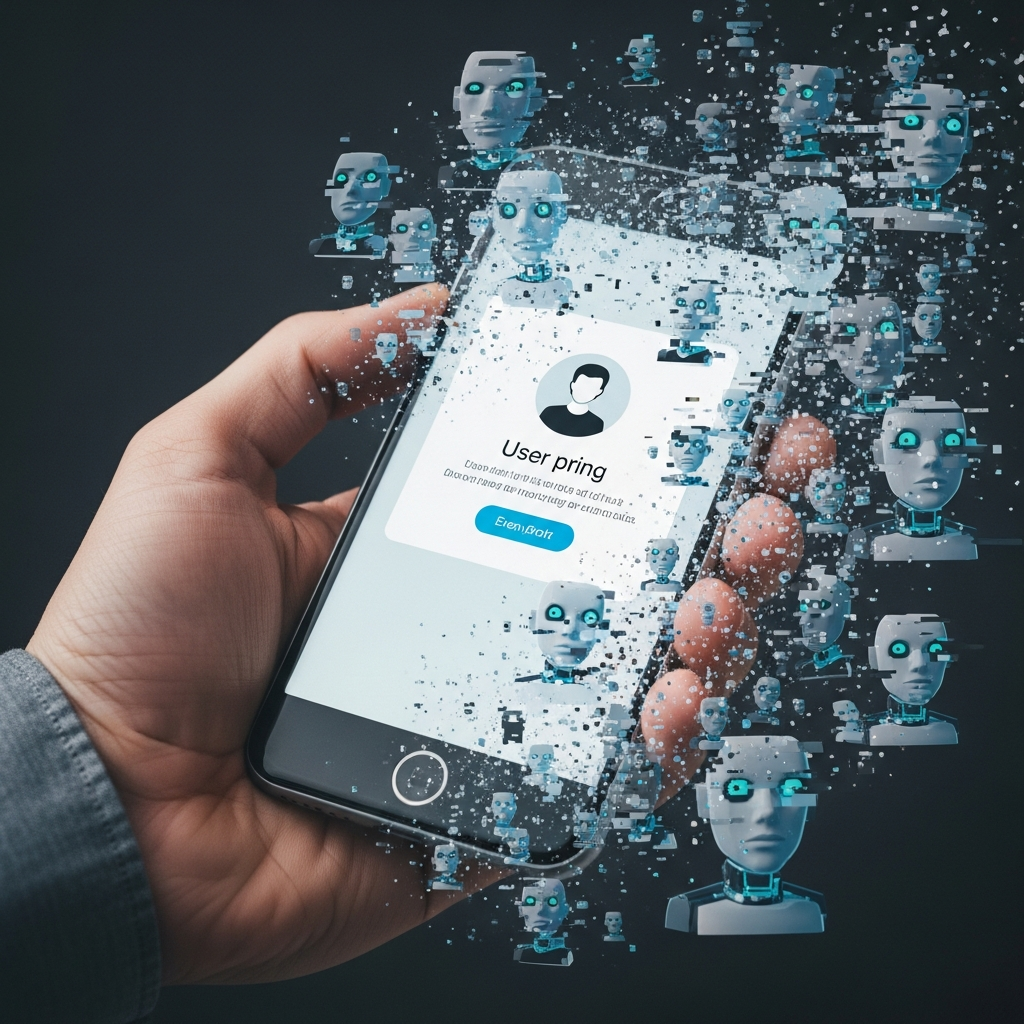
Does your app truly know who’s behind the screen? In today’s digital landscape, a critical “ghost problem” haunts many platforms: a significant number of registered users may not be real. Bots, sophisticated deepfakes, and stolen identities are increasingly bypassing traditional onboarding processes, inflating user counts while exposing businesses to immense fraud losses and compliance risks. This guide dives deep into the unseen threats of app identity fraud and reveals how robust, real-time app user identity verification can secure your platform, build trust, and unlock genuine growth.
The Unseen Threat: Why Your User Data Might Be Corrupted
You’ve invested heavily in creating an intuitive app experience. Onboarding flows are optimized, and sign-up numbers are celebrated. Yet, an uncomfortable truth persists: many digital platforms unknowingly harbor fake users. These aren’t just minor anomalies; they represent a fundamental vulnerability. Identity fraud isn’t a looming future concern; it’s a present-day crisis unfolding at scale.
Fraudsters no longer need complex tools. A convincing deepfake face can be generated cheaply, and fake ID templates are readily available online. Traditional verification methods, often mere checkbox exercises, are no match for these evolving tactics. Globally, identity fraud exacted a staggering $48 billion toll in 2023, with deepfake fraud attempts surging fourfold since 2022. Alarmingly, 68% of businesses identify gaps in their Know Your Customer (KYC) processes as their primary compliance risk. As one expert aptly puts it, “You’re not acquiring users. You’re acquiring entries in a database — and hoping they’re human.”
Even leading consumer apps, particularly in high-stakes environments like online dating, acknowledge this critical need. Platforms such as Hinge and Tinder now implement mandatory “Face Check” video selfie verification, while Bumble uses “ID Verification” to ensure genuine human interaction and enhance user safety. This proactive approach highlights the indispensable role of robust app user identity verification across all industries.
Beyond the Blink: True Liveness Detection Explained
For too long, “liveness detection” became an overused buzzword. Basic checks like blinking or smiling at a camera were erroneously equated with genuine verification. These simplistic methods are trivially defeated by looped videos, high-resolution printouts, or even basic deepfake technology. The real challenge extends far beyond merely asking, “Does this document look real?”
The crucial question is: “Is the person presenting this document actually present, alive, and who they claim to be?” These are fundamentally different inquiries. Genuine liveness detection is a sophisticated, multi-layered system designed to answer the latter. It combines advanced techniques such as micro-expression analysis, depth perception cues, neural network classification, and behavioral biometrics. The goal is unequivocal: to establish, in real time, that a live, present human being is actively behind the camera.
Looking ahead, the evolution of biometric technology promises even deeper insights into user presence. Innovations, like Ozlo’s Sleepbuds, demonstrate how integrated sensors can track subtle physiological data such as body movement and respiration rate, even detecting delta wave patterns in brain activity. While initially for sleep analysis, these advancements hint at a future where continuous biometric authentication and even more nuanced liveness checks could become standard for comprehensive app user identity verification, ensuring not just initial presence, but ongoing authenticity.
Building a Fortress: The Complete Identity Verification Stack for Apps
Winning the battle against identity fraud requires more than a single defensive layer. Successful platforms employ a comprehensive identity verification stack, where each step intelligently builds upon and confirms the preceding one. This integrated pipeline ensures a high level of security and compliance, forming an impenetrable chain of trust.
Here’s how a complete app user identity verification system typically operates:
Real-time Face Tracking & Blink Detection: This initial layer continuously monitors facial movements. It instantly flags static spoofs, printed photos, and replay attacks, ensuring the user is actively engaging with the camera from the very first moment.
AI-Powered Deepfake Resistance: Utilizing deep learning models specifically trained on synthetic media, this crucial step detects AI-generated faces. These faces might appear flawless to the human eye but exhibit subtle neural-level inconsistencies that advanced AI algorithms can identify.
KYC Document OCR Capture: Passports, national IDs, and driver’s licenses are automatically scanned. Optical Character Recognition (OCR) extracts data while simultaneously performing tamper detection. This ensures the document itself is authentic and uncompromised.
Facial Recognition Match: The live face captured in step one is instantaneously compared against the document photo extracted in step three. This real-time biometric matching provides sub-second results, confirming the live person is indeed the individual represented on the document.
Compliance Output: The culmination of these steps generates a fully verified identity record. This output adheres to critical regulatory mandates such as KYC/AML, GDPR, and CCPA, providing a clear, auditable trail ready for legal and financial scrutiny.
This isn’t theoretical security. Financial institutions, fintech platforms, and enterprise onboarding systems globally are implementing this exact pipeline. They recognize that identity verification is no longer an afterthought but a foundational element of their operational integrity. Top dating apps like Hinge and Bumble also leverage elements of this stack, using “Face Check” and “ID Verification” to build safer communities, underscoring its versatility across diverse platforms.
The Strategic Advantage: Why Verified Users Drive Growth
The landscape for digital platforms is rapidly changing. Fraud is no longer merely a back-office expense; it has become a significant impediment to genuine business growth. Every unverified, fake account that slips through your onboarding process pollutes your valuable user data, distorts key performance metrics, and leaves your platform vulnerable to regulatory liabilities you might not even realize exist.
Forward-thinking platforms are pivoting their strategies. Instead of pouring more resources into advertising to compensate for data inaccuracies, they are fortifying their foundations. By meticulously verifying every user at the point of entry, they build trust directly into their product from day one. This transforms compliance from a burdensome cost center into a powerful competitive advantage.
Imagine declaring, “Every user on our network is a verified, real human identity.” This isn’t just a security claim; it becomes a compelling product feature. It’s a powerful sales argument that can secure high-value enterprise deals and unlock access to regulated markets that unverified competitors simply cannot touch. As industry leaders are discovering, “Verification isn’t friction. Fraud is friction. Verification is the cure.” Prioritizing robust app user identity verification positions your platform for sustainable success and market leadership.
Choosing Your Shield: Key Considerations for a Liveness & KYC API
Not all KYC and liveness detection solutions are created equal. Before integrating any identity verification system into your app, it’s crucial to ask the right questions. The sophistication of modern fraud demands an equally advanced defense.
Here are the critical factors to evaluate:
Does it specifically detect deepfakes? Basic liveness detection was developed before generative AI became prevalent. If the underlying model wasn’t explicitly trained on synthetic media, it will inevitably fail against modern deepfakes. Ensure the solution offers advanced deepfake detection as a core capability.
Can it match a live face to a document? Liveness detection confirms a real person is present. However, it doesn’t confirm who that person is. Without a crucial document matching step, you’ve only solved half the problem. A complete solution must cross-reference the live biometric capture with a verified identity document.
Is it compliant out-of-the-box? Data privacy and regulatory frameworks like GDPR, CCPA, and KYC/AML are complex and continuously evolving. If a vendor cannot clearly articulate how they handle biometric data and which specific frameworks they are compliant with, reconsider. Comprehensive compliance is non-negotiable.
How fast is the verification process? User experience is paramount. Enterprise-grade app user identity verification should be near-instant. If your users face lengthy loading screens, it creates friction, leading to frustration and increased drop-off rates. Speed and accuracy must go hand-in-hand.
Does it have a real API for seamless integration? You need a robust, well-documented API that integrates cleanly across web, mobile, and desktop platforms. Avoid proprietary “black box” solutions that are difficult to implement and lack flexibility for your development team.
The challenge of identity verification won’t resolve itself. Fraudsters consistently refine their tools, while regulations become more stringent each year. The chasm between platforms with truly effective verification and those relying on inadequate measures is rapidly expanding. The question isn’t whether your app needs this advanced protection; it’s how you will choose to implement it. Don’t build it yourself, or settle for an inadequate bolt-on. Partner with a system that has already mastered the complexities of digital identity security.
Frequently Asked Questions
What is the true meaning of liveness detection in app security?
True liveness detection in app security goes beyond simple actions like blinking or smiling. It’s a sophisticated, multi-layered biometric process that uses micro-expression analysis, depth perception, neural network classification, and behavioral biometrics. Its core purpose is to confirm, in real-time, that a live, physically present human is genuinely interacting with the camera, rather than a photo, video, or deepfake. This ensures the person is not only real but also actively participating in the verification process.
Which app identity verification features are essential for modern platforms?
Modern platforms need a comprehensive app user identity verification stack. Key features include real-time face tracking and blink detection to catch static spoofs, AI-powered deepfake resistance trained on synthetic media, and robust KYC document OCR capture with tamper detection. Crucially, this must be paired with accurate facial recognition matching between the live user and their official document, culminating in compliance-ready output that meets GDPR, CCPA, and KYC/AML mandates.
How does robust app user identity verification impact business growth?
Robust app user identity verification transforms security from a cost center into a significant driver of business growth. By ensuring every user is a verified, real human, platforms gain cleaner data, more accurate metrics, and drastically reduced fraud liability. This foundational trust becomes a compelling product feature, attracting enterprise clients, unlocking access to regulated markets, and significantly enhancing brand reputation, ultimately leading to sustainable growth and a stronger competitive position.
Secure Your App’s Future Today
Don’t let your app become a ghost town of unverified users. The stakes are too high. Investing in cutting-edge app user identity verification is not just about mitigating risk; it’s about building a foundation of trust that will define your platform’s success in the coming years.
QuantoSei’s AI-Powered Liveness Detection & KYC System offers the advanced security and seamless integration your app needs. Explore our live demo, speak with our expert team, or review full product details to understand how we can help you verify every user with confidence.