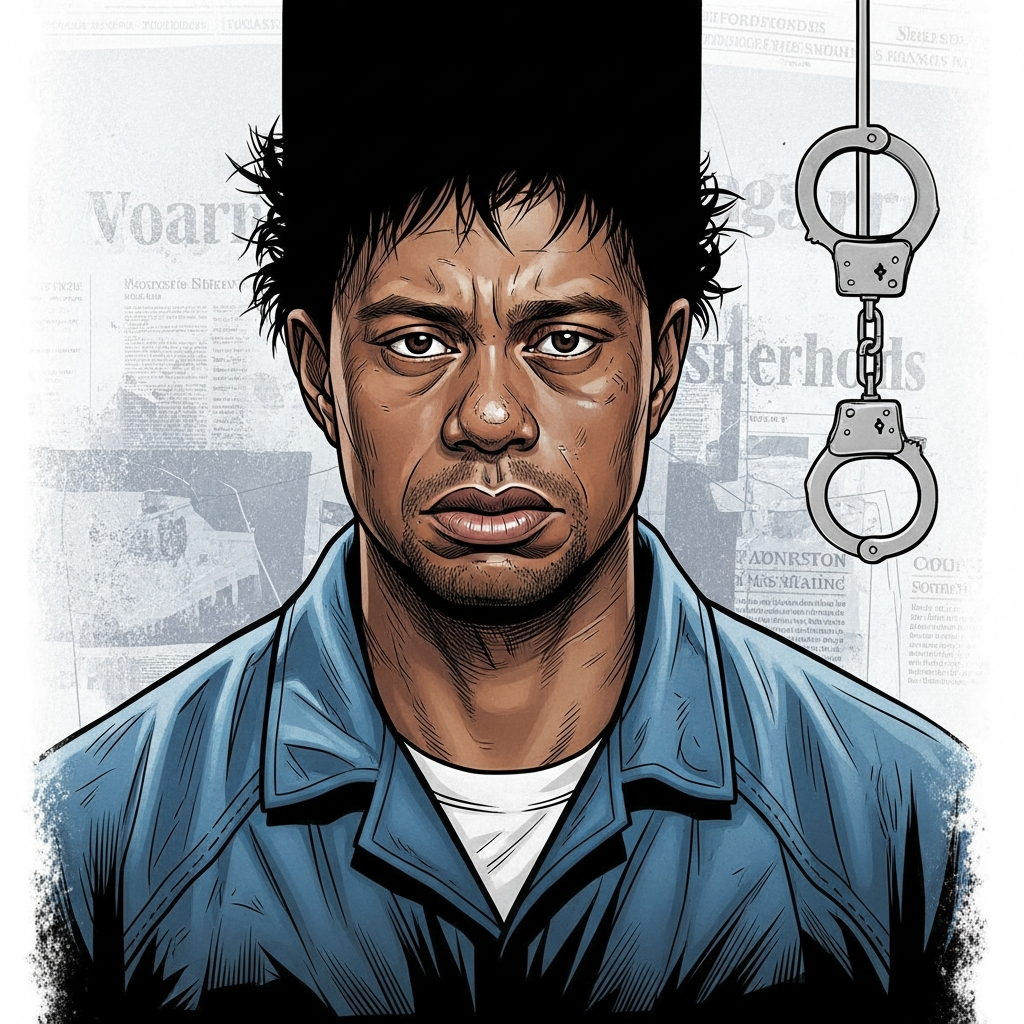
Golf icon Tiger Woods faces intensifying public scrutiny and legal fallout following his March 2026 DUI arrest, a situation exacerbated by the release of a stark second mugshot. This unsettling image, captured after booking at the Martin County Sheriff’s Office, depicts Woods in blue prison garb, stone-faced with disheveled hair, sharply contrasting his initial arrest photo. The incident has cast a long shadow over the legend’s career, prompting a public plea for treatment and sparking widespread discussion about prescription medication use among athletes.
The Incident Unfolds: Details of the 2026 Arrest
The dramatic events began on March 27, 2026, near Woods’ Jupiter Island, Florida home. The golf superstar was arrested for DUI after a car crash where his Range Rover struck a truck and overturned. Woods, then 50, was initially seen in a blue polo, his eyes visibly bloodshot in the first booking photo. Subsequent police body camera footage offered a detailed, troubling account of the scene.
During the arrest, Woods failed several field sobriety tests. Officers reported “signs of impairment,” despite a breathalyzer test yielding negative results for alcohol. Woods admitted to taking “a few pills,” and the police report confirmed two hydrocodone pills were discovered in his pocket. Hydrocodone, a potent opioid, is commonly prescribed for moderate to severe pain but carries a high potential for misuse and dependence. When offered a urinalysis, Woods refused. He told officers he was distracted at the time of the crash, explaining he was “looking down at his cell phone and changing the radio station.” Notably, Woods also informed police that he had just concluded a phone call with President Donald Trump.
The other driver, Jeromy Bullard, stated Woods had hit him while attempting to pass a Ford F-150 with a trailer, crossing double solid lines. Woods was deemed at fault for the crash and issued a non-criminal citation for careless driving, incurring a $163 fine.
Legal Repercussions and Woods’ Public Plea
In the aftermath, Woods pleaded not guilty to charges of misdemeanor driving under the influence with property damage and refusal to submit to a lawful test. The legal proceedings coincided with his immediate personal and professional decisions. Just days after the crash, on March 31, Woods released a public statement announcing his decision to “step away for a period of time to seek treatment and focus on my health.” He underscored his commitment to “taking the time needed to return in a healthier, stronger, and more focused place, both personally and professionally.”
Due to privacy concerns, Woods was granted approval to seek treatment outside the United States. He reportedly arrived in Zurich, Switzerland, shortly after making his statement. This move signaled a serious commitment to addressing the underlying issues contributing to the incident.
A Lingering Shadow: Woods’ History with Prescription Medication
The 2026 DUI incident, while distinct, draws unsettling parallels to Woods’ past struggles with prescription medication. This marks his second DUI charge not linked to alcohol, bringing his history of substance use back into the public eye. His 2017 arrest, for instance, involved him being found asleep behind the wheel, with toxicology reports revealing a cocktail of substances including marijuana, Ambien, Xanax, and two opioid painkillers, Dilaudid and Vicodin. Woods attributed that incident to prescribed medications for chronic pain and insomnia following various surgeries.
Woods’ long-standing physical health issues, particularly a series of debilitating back injuries and surgeries – including a significant procedure in late 2025 – have been a major factor in his reliance on pain medication. The 2021 vehicle crash in California, which left him with a shattered right leg, further compounded his recovery challenges and escalated concerns regarding his ongoing need for potent painkillers. His current admission of taking hydrocodone, a powerful prescription opioid, underscores the continuous battle many athletes face with chronic pain management. Hydrocodone works by binding to opioid receptors in the brain, offering pain relief, relaxation, and even euphoria. These potent effects are precisely why it carries such a high risk of misuse and the rapid development of tolerance and physical dependence, fueling the national opioid crisis where addiction often begins with legitimate prescriptions.
Impact on an Icon’s Career and Public Image
The recent arrest delivered an immediate and significant blow to Woods’ celebrated golf career and carefully managed public image. The incident occurred mere days after his return to competitive golf, his first appearance since July 2024, following his late-2025 back surgery. He had competed with his Juniper Links Golf Club in the TGL league final, a league he co-founded, signaling a hopeful return to form.
However, the DUI quickly overshadowed this comeback. Woods promptly announced his withdrawal from the upcoming Masters tournament and also pulled his name from consideration for the U.S. Ryder Cup captaincy in 2027. These decisions reflect the profound personal and professional challenges he now faces, emphasizing the need for a sustained period of focus on his health.
Beyond the immediate career implications, the public perception, or “optics,” around Woods continues to worsen. The release of the second, more “solemn” mugshot further fueled public discussion and media scrutiny. Even his clothing brand, Sun Day Red, launched in 2024, faced a backlash. Promotional content tweeted by the brand almost a week after his legal troubles began, urging purchases for the Masters (which Woods wouldn’t attend), drew sharp criticism. Ironically, the blue Sun Day Red polo Woods was wearing in his initial mugshot reportedly sold out after news of his arrest spread, highlighting a complex intersection of celebrity, controversy, and consumer behavior. Despite the intense public spotlight, Woods’ girlfriend, Vanessa Trump, publicly expressed her support, sharing a supportive photo of the couple with a loving message.
Frequently Asked Questions
What were the circumstances of Tiger Woods’ 2026 DUI arrest?
Tiger Woods was arrested on March 27, 2026, in Jupiter Island, Florida, after his Range Rover crashed into a truck and overturned. Police body camera footage showed him failing field sobriety tests and exhibiting signs of impairment, despite blowing negative for alcohol. Woods admitted to taking “a few pills,” and two hydrocodone pills were found in his pocket. He told officers he was distracted by his cell phone and changing the radio station prior to the crash. Woods subsequently refused a urinalysis and was also cited for careless driving.
Where did Tiger Woods seek treatment after his arrest?
Following his March 2026 DUI arrest, Tiger Woods released a public statement on March 31, announcing his decision to “step away for a period of time to seek treatment and focus on my health.” He was approved to seek professional treatment outside the United States due to privacy concerns. According to reports, Woods traveled to Zurich, Switzerland, to begin his recovery program. His statement emphasized a commitment to returning “in a healthier, stronger, and more focused place.”
What are the broader implications of prescription opioid misuse highlighted by Woods’ case?
Tiger Woods’ repeated encounters with prescription medication underscore the widespread problem of opioid addiction, often stemming from legitimate pain management. His case illustrates how individuals, even high-profile athletes managing chronic pain from injuries and surgeries, can develop dependence on powerful medications like hydrocodone. Experts note that opioids bind to brain receptors, providing pain relief but also creating a high potential for misuse, tolerance, and physical dependence. This highlights the critical need for comprehensive, individualized treatment programs that address both physical and behavioral factors for those struggling with opioid addiction.
Conclusion
The 2026 DUI arrest and its subsequent fallout represent another challenging chapter in the life of Tiger Woods, a journey marked by both unparalleled athletic achievement and significant personal struggles. The release of the second mugshot, coupled with the details of his impaired driving and history of prescription medication use, has intensified public scrutiny. As Woods embarks on a path to treatment in Switzerland, the golf world and his legions of fans watch with a mix of concern and hope. His commitment to recovery is a vital step, emphasizing that even icons face profound personal battles, and true strength often lies in seeking help. The road ahead for Woods will undoubtedly be challenging, both personally and professionally, as he strives to rebuild his health and reputation.