The NBA Draft Lottery is a pivotal event shaping the future of basketball franchises, offering hope to struggling teams through top collegiate talent. Over the years, its structure has evolved significantly, particularly with the major reforms implemented to address concerns about “tanking” – the deliberate losing of games to secure better draft positioning. Understanding these NBA draft lottery changes is crucial for fans and analysts alike, as they profoundly influence team strategy, player acquisition, and the competitive balance of the league. This ultimate guide breaks down the core transformations, their rationale, and their ongoing impact, ensuring you grasp every strategic nuance of this high-stakes process.
The Genesis of Change: Why the NBA Reformed Its Lottery System
For decades, the NBA Draft Lottery operated under a system designed to give the league’s worst teams the best chance at securing the top overall pick. However, this well-intentioned mechanism inadvertently fostered a concerning trend: “tanking.” Teams at the bottom of the standings would sometimes appear to strategically lose games, rest key players, or even trade away valuable assets to improve their lottery odds. The allure of a transcendent talent like LeBron James or Victor Wembanyama was often too strong, leading to what many perceived as a race to the bottom, diminishing the integrity of regular-season play.
This perception of intentional losing not only frustrated fans but also undermined the competitive spirit the league strived to uphold. Critics argued that the previous system rewarded failure too generously, creating an unhealthy incentive for teams to avoid winning. The league’s leadership recognized this growing problem, sparking a deep dive into potential structural reforms that could maintain the lottery’s purpose of aiding struggling franchises without encouraging a losing mentality. The goal was clear: level the playing field, reduce the incentive to tank, and foster more intense competition across all 82 regular-season games.
Unpacking the New NBA Draft Lottery Rules
The most significant NBA draft lottery changes were officially approved in September 2017 and took effect for the 2019 NBA Draft. These reforms dramatically altered the odds distribution for the league’s worst-performing teams, aiming to dilute the disproportionate advantage previously held by the absolute last-place finisher.
Under the prior system, the team with the worst record had a 25% chance of securing the No. 1 pick, while the second-worst had 19.9%, and the third-worst 15.6%. This steep gradient created a strong incentive for teams to finish as low as possible. The new rules introduced a much flatter odds structure, particularly for the top three spots.
Revised Odds Distribution
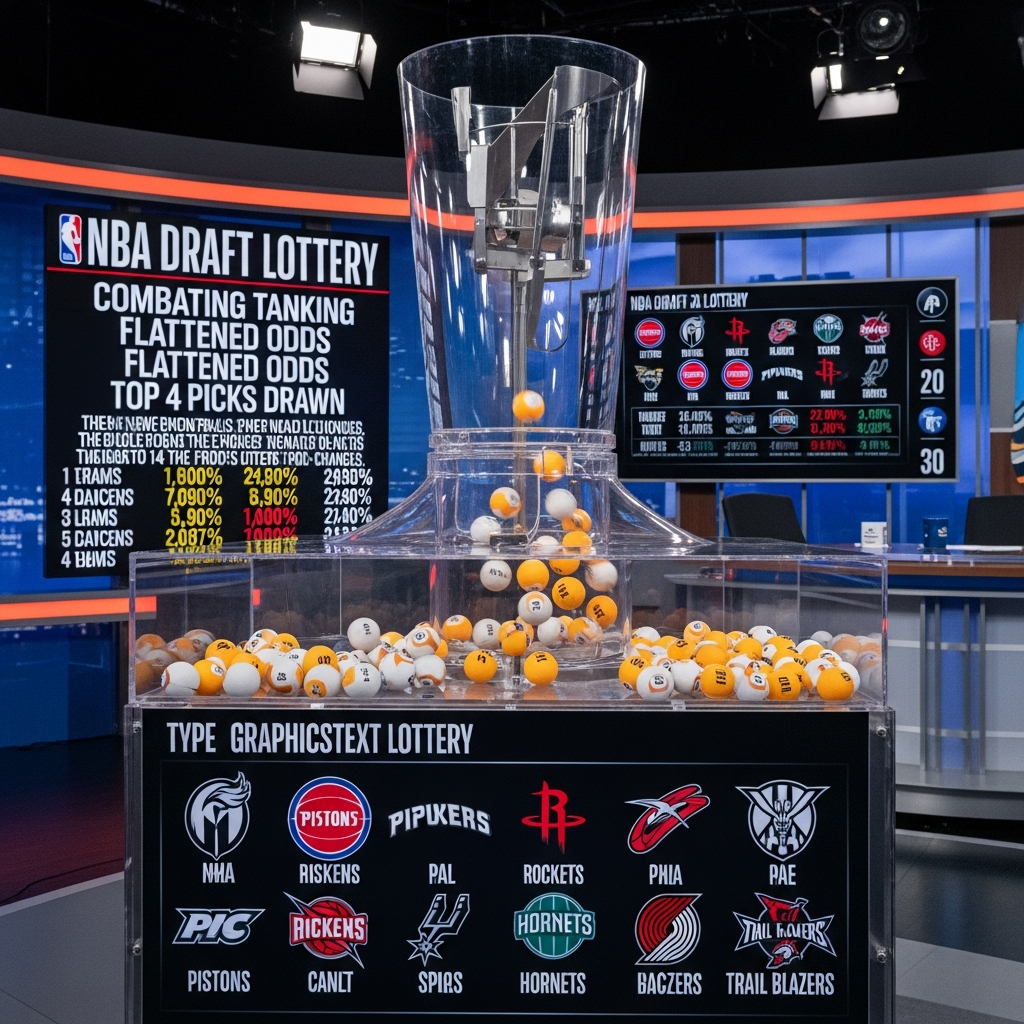
With the new NBA draft lottery rules, the three teams with the worst regular-season records now all share an equal 14% chance of landing the top overall pick. This marked a considerable reduction from the 25% previously assigned to the league’s last-place team. Following these top three, the odds then gradually decrease for subsequent teams. For instance, the fourth-worst team now has a 12.5% chance, the fifth-worst 10.5%, and so on.
This revised distribution means that while finishing last still provides the best chance at a high pick, it no longer guarantees a significantly better outcome compared to the second or third-worst teams. Furthermore, the new system expanded the number of lottery picks to be drawn from three to four. Previously, only the top three picks were determined by the lottery, with the remaining picks assigned in reverse order of regular-season standings. Now, the top four picks are determined by the lottery, adding another layer of unpredictability.
Impact on Top-4 Selection Chances
Another key aspect of the NBA draft lottery changes is how they affect the lowest-ranked teams’ chances of staying within the top four. Under the old system, the worst team was guaranteed a top-four pick. With the new rules, while the worst team has a 14% chance at No. 1, they also have a 47.9% chance of falling to fifth, sixth, or even seventh overall. This increased risk of sliding further down the board adds another deterrent to overt tanking, as even finishing dead last doesn’t assure a foundational talent within the top tier. Teams finishing with the fifth-worst record, for example, can now jump into the top four, whereas before they were almost certain to pick no higher than fifth.
Analysis: Has the New System Worked?
The primary objective of the NBA draft lottery changes was to curb tanking. Has it been successful? The initial evidence suggests a mixed but generally positive outcome. While no system can entirely eliminate the incentive to acquire high-value draft assets, the reformed lottery has certainly made a difference in how teams approach the bottom of the standings.
One immediate effect is the reduction in outright disastrous seasons where teams appear to give up entirely. While struggling teams still exist, the frantic race to secure the absolute worst record has somewhat subsided. Instead of one team having a dominant 25% chance, three teams now share the 14% odds, making the distinction between finishing first, second, or third from the bottom less impactful in terms of lottery fortune. This flatter structure encourages more competitive games among teams vying for slightly better odds, rather than actively trying to lose.
The increased unpredictability has also added an exciting element to the lottery itself. We’ve seen teams with significantly lower odds leap into the top three, creating captivating narratives and showcasing the system’s randomness. This unpredictability, while frustrating for some, aligns with the league’s goal of preventing predictable outcomes and adding a layer of suspense. Ultimately, the changes foster a greater focus on player development and team building throughout the season, rather than solely on draft position.
What’s Next for the NBA Draft Lottery?
While the 2017 NBA draft lottery changes significantly altered the landscape, discussions about further refinements or alternative systems are ongoing. The league continually evaluates its mechanisms to ensure competitive balance and fan engagement. Some proposals have included a “play-in” tournament for lottery teams, or even radical ideas like a “weighted wheel” system that combines previous records. However, for the foreseeable future, the current lottery system appears to be stable, with the league keen to observe its long-term effects on competition and team strategy. The emphasis remains on ensuring that while struggling teams receive assistance, the fundamental drive for winning is never undermined.
Frequently Asked Questions
What were the key changes in the NBA draft lottery implemented in 2019?
The most significant NBA draft lottery changes, effective for the 2019 draft, flattened the odds for the top three worst teams. Previously, the worst team had a 25% chance at the No. 1 pick. Under the new rules, the three teams with the worst records each receive an equal 14% chance at the top pick. Additionally, the number of lottery-determined picks expanded from the top three to the top four, further increasing unpredictability and reducing the absolute bottom team’s guaranteed highest pick.
How do the current NBA draft lottery odds work for the worst teams?
Under the current system, the three teams with the worst regular-season records all have an identical 14% chance of securing the No. 1 overall pick in the NBA Draft. The odds then progressively decrease for teams with better records. For example, the fourth-worst team has a 12.5% chance, and the fifth-worst team has a 10.5% chance. This flatter distribution means that while finishing last still offers a strong opportunity, it no longer provides a disproportionate advantage over the second or third-worst teams, aiming to disincentivize intentional losing.
Has the NBA draft lottery reform successfully reduced tanking?
The NBA draft lottery reforms have had a noticeable impact on reducing overt tanking, though completely eliminating the incentive to acquire high draft picks is challenging. By flattening the odds for the worst teams and increasing the randomness of the top four picks, the direct reward for finishing last has diminished. Teams now face a higher risk of sliding further down the draft board even with the worst record, which discourages deliberate losing strategies and encourages a more competitive approach throughout the regular season.
Conclusion
The NBA draft lottery changes represent a crucial evolution in the league’s efforts to maintain competitive balance and enhance the integrity of its regular season. By flattening the odds and increasing unpredictability, the NBA has taken significant steps to mitigate the incentive for tanking, encouraging teams to compete harder every night. While no system is perfect, these reforms have reshaped team strategies and added a new layer of excitement to the annual draft process. As the league continues to evolve, understanding these fundamental shifts remains vital for anyone following the path of basketball’s future stars.