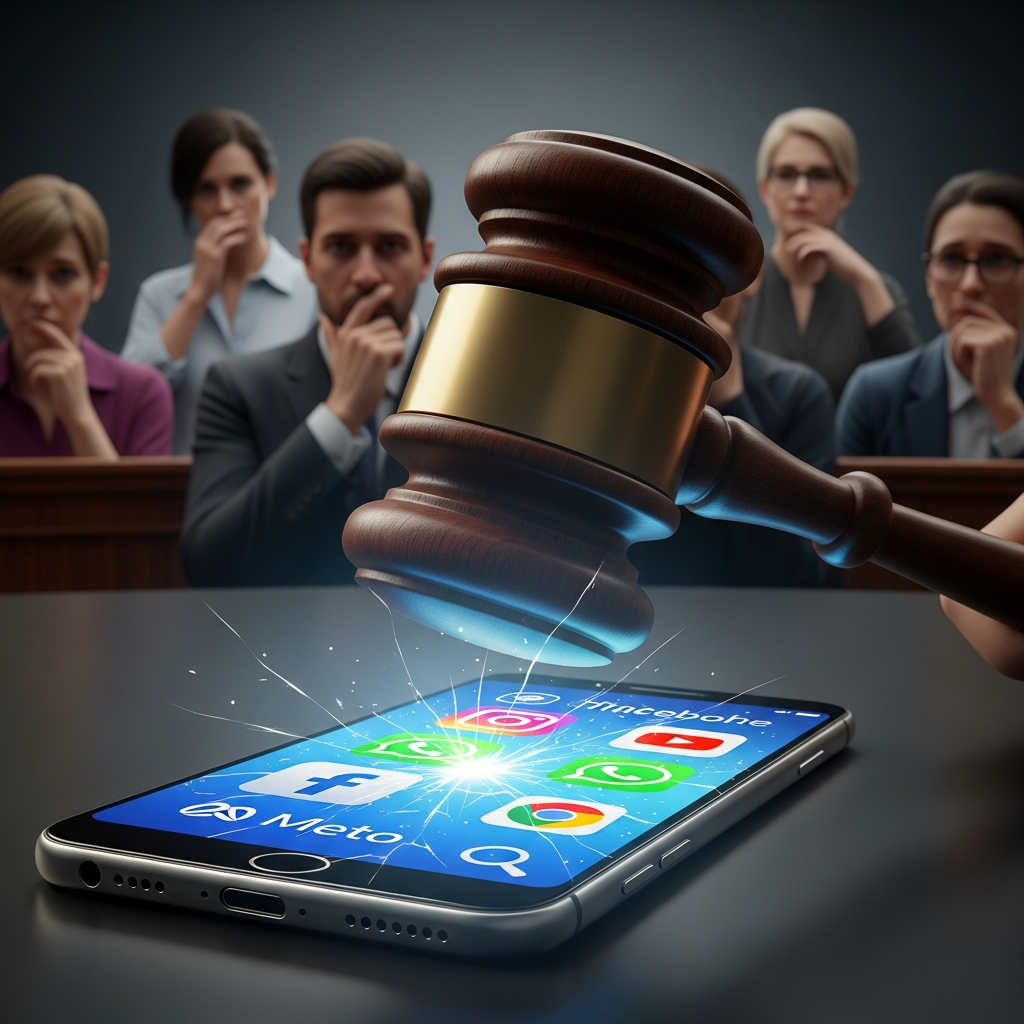
A groundbreaking legal decision has ignited a new debate around the accountability of major social media platforms. Critics are hailing a recent social media verdict against giants like Meta and Google as a “Big Tobacco moment,” drawing potent parallels to historic lawsuits that reshaped the tobacco industry. This landmark finding of liability underscores years of advocacy by parents and child safety experts who argue that these platforms intentionally design addictive features, profoundly harming children’s mental health and well-being. The ruling signals a critical turning point, pushing for more robust regulatory action and forcing tech companies to confront the societal impact of their digital empires.
A New Era of Accountability for Big Tech
The recent social media verdict, years in the making, has thrust Meta Platforms (including Instagram and Facebook) and Google (with YouTube) into the spotlight for their alleged role in creating addictive platforms that negatively affect young users. This legal precedent, originating from a Los Angeles jury, represents a significant victory for those who have long challenged Big Tech’s practices. For many, it’s a long-overdue moment of profound accountability.
The “Big Tobacco Moment” Explained
The “Big Tobacco moment” analogy, popularized by figures like Sarah Gardner, CEO of Heat Initiative, highlights a pivotal shift. Gardner asserts that this legal outcome proves “the harm these companies intentionally cause children has been proven in a court of law.” This comparison suggests that, much like tobacco companies were eventually held liable for public health crises, social media firms are now facing legal repercussions for the psychological and developmental harms linked to their platforms. The parallel emphasizes the gravity of the legal finding and its potential to set a powerful precedent for future litigation and regulation.
Jury Achieves What Legislature Could Not (Yet)
Alvaro Bedoya, a former FTC commissioner, remarked that a jury of ordinary citizens has managed to hold Meta and Google accountable for addicting young people to their products, a feat that Congress and state legislatures have yet to fully accomplish. This sentiment underscores the power of civil litigation in driving change when legislative processes move slowly. The trial centered on allegations that tech companies deliberately crafted their platforms with engaging, sometimes manipulative, features designed to maximize user engagement, particularly among young people, leading to compulsive use and detrimental health effects.
The Core Allegations: Addictive Design & Harm
The legal proceedings focused intensely on the design choices made by tech giants. Plaintiffs argued that features such as infinite scrolling, push notifications, and algorithmically driven content feeds are specifically engineered to keep users, especially adolescents, hooked. These design elements, critics contend, exploit developing brains and contribute to a range of mental health issues.
Plaintiff’s Ordeal and Company Denials
The plaintiff in this specific case, identified as Kaley (or KGM), testified that her compulsive use of these platforms led to severe anxiety, body dysmorphia, and even suicidal thoughts. Her experience mirrors the struggles of countless young people whose digital lives increasingly intertwine with their mental health.
Both Meta and Google have vehemently denied these claims, stating they will appeal the verdict. Meta emphasized that “Teen mental health is profoundly complex and cannot be linked to a single app,” maintaining confidence in their efforts to protect teens online. Google’s spokesperson, José Castañeda, similarly stated that the case “misunderstands YouTube,” asserting it is a responsibly built streaming platform, not a social media site. These statements highlight their defensive posture and commitment to challenging the verdict in higher courts, indicating a protracted legal battle ahead.
Advocates & Experts Demand Change
The verdict has emboldened a wide array of advocates, child safety experts, and parent groups who have been working for years to raise awareness about the dangers of unchecked social media use. This ruling provides significant validation for their ongoing efforts.
A “New World” in Online Child Protection
Jonathan Haidt, author of “The Anxious Generation” and a leading voice for phone-free schools, declared that this jury finding ushers in “a new world” for safeguarding children from online harms. He praised the families who endured painful legal processes to speak out, noting that “thousands of cases will follow,” targeting Meta, Snap, TikTok, and YouTube. Haidt’s perspective suggests a ripple effect, where this initial verdict could open the floodgates for widespread litigation, compelling the industry to fundamentally rethink its approach to user safety and platform design.
Families United for Justice
Parents for Safe Online Spaces (PSOS), a group actively campaigning for the Kids Online Safety Act, hailed the jury’s decision as a “rare and momentous win.” Many parents who tragically lost children, attributing their deaths to social media harms, attended the trial in Los Angeles, transforming their personal grief into a powerful collective call for justice. Their unwavering resolve underscores the deep emotional stakes behind this legal battle, demanding that companies be held accountable for what they perceive as corporate greed at the expense of children’s well-being.
Legislative Momentum Builds: The Push for KOSA & State Action
Beyond the courtroom, the social media verdict is expected to catalyze legislative efforts aimed at regulating tech platforms and enhancing online safety for minors. Lawmakers on both federal and state levels are renewing calls for action.
Federal Efforts: The Kids Online Safety Act
The Kids Online Safety Act (KOSA) has been under discussion in various forms for several years but has yet to pass Congress. This proposed federal legislation aims to mandate multiple safeguards for minors on tech platforms. Following the verdict, Republican Sen. Marsha Blackburn, a proponent of KOSA, urged Congress to “enshrine protections for American families into law.” Democratic Sen. Ed Markey echoed this sentiment, stating, “Big Tech’s Big Tobacco moment has arrived,” and stressing that Congress must impose “real guardrails” on these platforms. The verdict provides a fresh impetus for KOSA, making its passage seem more plausible.
State-Level Initiatives: Colorado’s Proactive Stance
States are also taking proactive steps to address social media harms. For instance, the Colorado Legislature in 2026 plans to introduce a bill requiring social media sites and video games to implement parent-set privacy settings that children cannot easily disable. This measure is specifically designed to combat addictive use and prevent child exploitation, illustrating how states are stepping in to fill regulatory gaps. Such state-level actions, alongside federal pushes, highlight a growing, multi-pronged effort to ensure a safer digital environment for young users. The Colorado legislative agenda also includes a third attempt to revise its 2024 AI regulation law, further signaling a broader push to manage technology’s societal impact.
The Broader Landscape: Tech’s Evolving Political Stance & Challenges
This social media verdict isn’t an isolated event; it’s part of a larger, evolving narrative surrounding Big Tech’s influence, responsibilities, and challenges. The industry, once seen as idealistic, has faced increasing scrutiny over its market power, political alignments, and social impact.
Silicon Valley’s Shifting Allegiances
Silicon Valley’s political landscape has shifted significantly in recent years. What was once seen as a largely progressive, anti-establishment force has increasingly aligned with conservative politics, particularly under the Trump administration. This transition, fueled by concerns over antitrust actions, regulatory threats, and perceived “snubs” from Democratic administrations, has seen tech leaders engage in more transactional politics. This backdrop of prioritizing business interests and resisting perceived over-regulation from government bodies helps contextualize the industry’s vigorous defense against the social media liability claims and their lobbying efforts against bills like KOSA. Some critics point to a phenomenon of “enshittification,” where platforms degrade user experience to extract more profit, further fueling public and legal backlash.
Energy Demands: A Different Kind of “Hail Mary” for Tech
Interestingly, while facing a legal “Hail Mary” with this social media verdict, Big Tech is simultaneously pursuing a different kind of “Hail Mary” in the energy sector. Companies like Google, Microsoft, and Amazon are pouring investments into nuclear energy, particularly Small Modular Reactors (SMRs), to power their rapidly expanding, energy-intensive AI operations. This aggressive pivot to nuclear power represents their “Hail Mary” play to meet massive energy demands while upholding carbon-neutral commitments. This dichotomy illustrates Big Tech’s immense power and resources, capable of monumental strategic shifts in some areas, yet fiercely defensive in others where their core business models face legal challenges over public harm. It showcases a complex industry grappling with multiple, colossal challenges across technological, societal, and environmental fronts.
Frequently Asked Questions
What is the significance of the “Big Tobacco Moment” comparison for social media companies?
The “Big Tobacco Moment” analogy suggests that social media companies are now facing legal accountability for public health harms, similar to how tobacco companies were held liable for the health consequences of their products. This comparison implies a major shift in public perception and legal precedent, potentially leading to significant regulatory changes and stricter controls on platform design, particularly concerning addictive features and their impact on children’s mental health. It validates long-held criticisms by advocates and parents.
How might this social media verdict influence future online safety legislation like the Kids Online Safety Act?
This landmark social media verdict is expected to provide significant momentum for online safety legislation, including the Kids Online Safety Act (KOSA). Lawmakers and advocacy groups are using the ruling to press for faster legislative action, arguing that the verdict proves the necessity of laws that mandate safeguards for minors on tech platforms. It strengthens the case for federal and state regulations, such as implementing parent-set privacy controls and requiring greater transparency from social media companies about their design choices and algorithms.
What are tech companies doing in response to these legal and regulatory pressures?
In response to the verdict, Meta and Google have both announced their intent to appeal the ruling, indicating a prolonged legal battle. They maintain that teen mental health is complex and not solely attributable to their platforms, and they highlight their existing safety tools. Simultaneously, the broader tech industry faces pressure from other angles, including shifting political landscapes and massive energy demands from AI. Companies are investing heavily in areas like nuclear energy for data centers, illustrating their strategic efforts to address certain challenges while defending their core social media operations against liability claims.
Conclusion
The recent social media verdict marks an unprecedented moment of accountability for Big Tech, drawing a powerful “Big Tobacco” comparison that reverberates through legal, legislative, and social spheres. This ruling, which finds Meta and Google liable for harms linked to their addictive platforms, represents a critical turning point for child online safety. While tech companies are preparing vigorous appeals, the verdict has energized advocates, experts, and lawmakers, fueling a renewed push for comprehensive legislation like the Kids Online Safety Act and similar state-level initiatives. This period signifies a profound re-evaluation of the responsibilities of digital platforms and a growing societal demand for safer, more ethical online environments for the next generation. The battle for digital well-being is far from over, but this verdict clearly signals a new front in the ongoing fight.