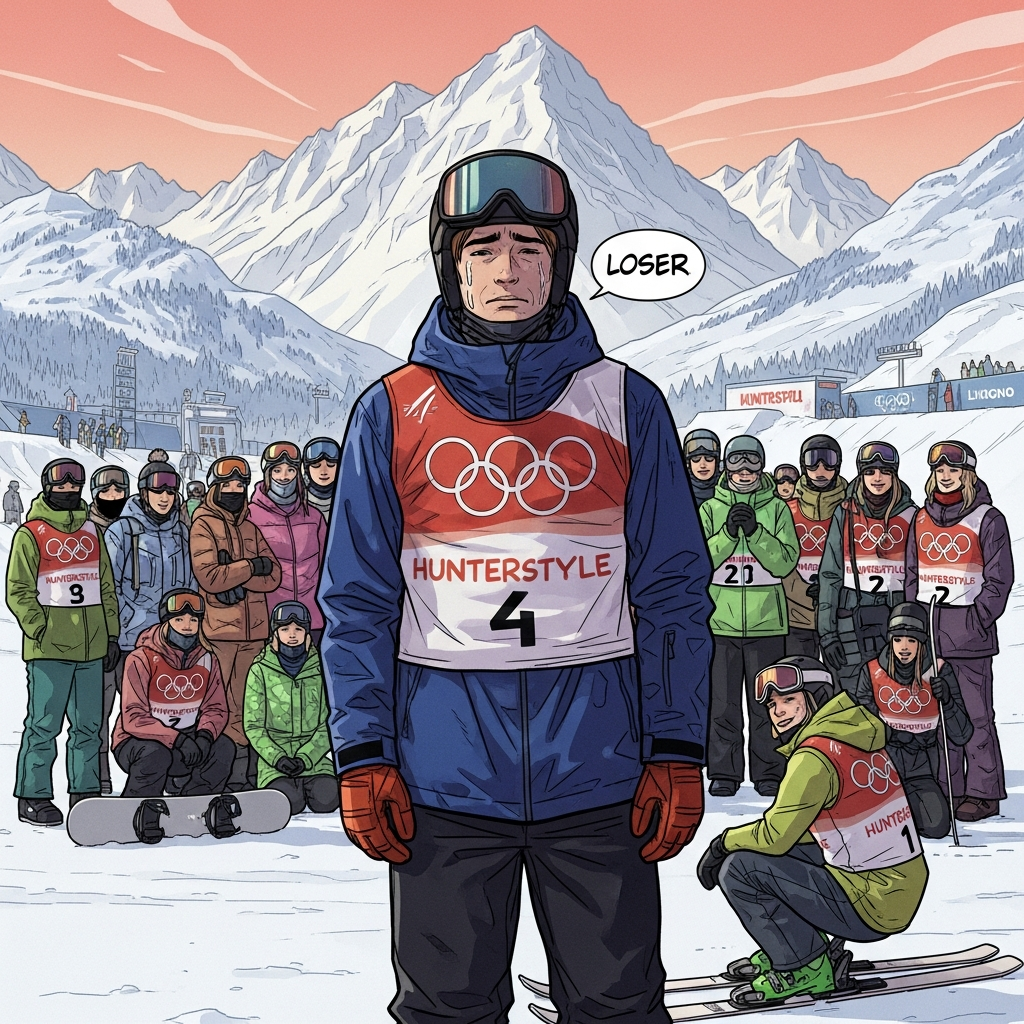
A firestorm erupted at the 2026 Winter Olympics in Livigno, Italy, after former President Donald Trump publicly criticized American freestyle skier Hunter Hess. His online comments, labeling Hess “a real loser,” ignited a significant Olympian Trump controversy. This swift and harsh denunciation stemmed from Hess’s nuanced remarks about representing the United States amidst a divisive political climate. The incident quickly drew strong responses from prominent athletes, including snowboarding star Chloe Kim and freeski phenom Eileen Gu, who emphasized unity, compassion, and the fundamental right to free expression. Their unified stance underscored a growing intersection between athletic achievement and political discourse on the global stage.
The Spark: Hunter Hess’s Nuanced Stance on Representation
The controversy began when Hunter Hess, a 27-year-old freeski Olympian, addressed what it meant to represent the U.S. in the current domestic and international landscape. He articulated “mixed emotions” about the situation. Hess openly stated there was “a lot going on that I’m not the biggest fan of.” He also clarified that wearing the American flag did not imply endorsing “everything that’s going on in the U.S.” Instead, he represented his “friends and family back home” and aspects of the country aligning with his moral values. Hess specifically mentioned his reluctance to support immigration crackdowns in states like Minnesota, which had affected his community.
Trump’s Scathing Retort and its Aftermath
These carefully articulated sentiments drew swift condemnation from former President Donald Trump. On his Truth Social platform, Trump labeled Hess “a real Loser” and suggested he “shouldn’t have tried out for the Team.” He concluded his post by stating, “Very hard to root for someone like this. MAKE AMERICA GREAT AGAIN!” It is crucial to note that Trump’s post misrepresented Hess’s words; Hess never stated he refused to represent the U.S. This public attack ignited a broader athlete political expression debate, forcing other Olympians into the conversation.
Chloe Kim’s Powerful Plea for Compassion and Unity
American snowboarding star Chloe Kim, a two-time gold medalist vying for an unprecedented third straight halfpipe gold, quickly voiced her support for Hess. She passionately advocated for leadership rooted in “love and compassion.” Kim affirmed her profound pride in representing the United States. She also highlighted the immense opportunities her immigrant parents, who arrived from South Korea in 1982, found in the U.S.
Personal Resonance and Collective Support
Kim emphasized the personal impact of Trump’s comments, noting, “Obviously, my parents being immigrants, this one hits pretty close to home.” She stressed the importance of athletes uniting and supporting one another during challenging times. Kim firmly asserted that athletes, like all citizens, have “a right to voice our opinions on what’s going on.” Her teammates echoed these powerful sentiments. Maddie Mastro expressed pride in Team USA but also sadness about domestic issues. She believed the country’s values included kindness and compassion, uniting against injustice. Bea Kim, making her Olympic debut, celebrated diversity as a source of national strength and opportunity. Maddy Schaffrick viewed the Games as an embodiment of global unity and friendly competition.
Eileen Gu’s Perspective on Olympic Spirit Versus Politics
Eileen Gu, the American-born freeski sensation who represents China, also expressed dismay at the escalating political rhetoric. A two-time gold medalist, Gu recently secured a silver in freeski slopestyle at the Winter Olympics 2026. She described the political controversy as “eclipsing the Olympics,” calling it “unrelated to the spirit of the Games.” Gu stressed that such incidents ran “contrary to everything the Olympics should be.” She emphasized sport’s universal purpose: “to bring people together.” Gu saw athletic competition as one of humanity’s “very few common languages,” fostering connection through shared spirit and pushing human limits.
Navigating Dual Allegiance and Public Scrutiny
Gu’s remarks carried particular weight due to her own history of navigating national allegiance. Born and raised in San Francisco, she chose to represent her mother’s native China in 2019, a decision that drew intense media scrutiny. China does not permit dual citizenship, and her status remains a frequent topic of debate. Drawing on her personal experience of being “caught in the crossfire,” Gu expressed deep sympathy and empathy for Hess. She wished him the best in his performance, acknowledging the immense pressure.
The Complexities of National Allegiance and Activism
Gu’s comments, however, also sparked a renewed wave of criticism. Many commentators and social media users highlighted a perceived hypocrisy. Critics noted Gu’s vocal stance on U.S. political discourse contrasted sharply with her consistent silence on China’s alleged human rights abuses. These include the reported systematic repression of Uyghurs and other Muslim minorities. Former NBA player Enes Kanter Freedom labeled Gu a “traitor.” He argued she leveraged her fame from a free country to represent an authoritarian regime. Others pointed to her lucrative endorsement deals with Chinese and Western companies, suggesting a prioritization of financial gain over moral stands.
Broader Implications for Athlete Free Speech
This Olympian Trump controversy brought the broader issue of athlete free speech and national representation into sharp focus. Hunter Hess’s initial comments reflected a common dilemma for immigrant athletes and those with nuanced political views. They must balance national pride with personal convictions, especially when representing a nation facing internal division. Curler Rich Ruohonen, from Minnesota, also spoke out against immigration sweeps in his home state. He underscored the constitutional right to freedom of speech. The incident highlights the evolving role of athletes as not just competitors, but also as individuals with platforms to voice societal concerns. The Olympic spirit, meant to unite nations, increasingly intersects with complex political realities.
A Politically Charged Games: Broader Implications
The 2026 Winter Olympics quickly became a stage for more than just athletic prowess. The Hess-Trump exchange, and the subsequent responses from athletes like Kim and Gu, underscored a global trend. Sports are increasingly intertwined with political and social commentary. This ongoing dialogue challenges the traditional notion of athletes as apolitical figures. It emphasizes their growing influence as cultural figures capable of shaping public opinion. The collective calls for compassion, unity, and the right to individual expression demonstrate a powerful counter-narrative to political polarization. This incident will likely resonate long after the final medals are awarded, prompting further discussion on the role of athletes in a politically charged world.
Frequently Asked Questions
What specific comments by Hunter Hess triggered Donald Trump’s criticism?
Hunter Hess expressed “mixed emotions” about representing the U.S. at the 2026 Winter Olympics, citing “a lot going on that I’m not the biggest fan of.” He clarified that wearing the flag didn’t mean he represented “everything that’s going on in the U.S.,” specifically mentioning concerns about immigration crackdowns. Former President Donald Trump then labeled Hess “a real loser” on Truth Social, misrepresenting his comments as a refusal to represent the country.
How have other prominent athletes, beyond Chloe Kim and Eileen Gu, responded to the controversy?
Chloe Kim’s Team USA snowboarding teammates, including Maddie Mastro, Bea Kim, and Maddy Schaffrick, publicly supported Hess. They echoed sentiments of national pride coupled with the right to voice opinions on domestic issues. They emphasized the importance of diversity, compassion, and unity in challenging times. Curler Rich Ruohonen also spoke out, condemning immigration sweeps in his home state of Minnesota and highlighting freedom of speech.
What broader conversations does this incident spark about athlete free speech in international competitions?
The controversy ignited by Trump’s remarks on Hunter Hess highlights the increasing intersection of sports and politics. It prompts discussions about athletes’ rights to express personal political views while representing their country. It also brings into focus the complexities faced by immigrant athletes or those with nuanced opinions. The incident underscores the tension between national representation and individual freedom of expression on a global stage, challenging the traditional apolitical image of Olympians.
References
- www.nytimes.com
- www.nbcnews.com
- apnews.com
- <a href="https://www.aol.com/articles/eileen-gu-garners-backlash-commenting-024149887.html?utmsource=spotim&utmmedium=spotimrecirculation&spotimcommentid=spIjnMf2Jd23874326cbNDXWc&spotimhighlight_immediate=true”>www.aol.com
- nypost.com