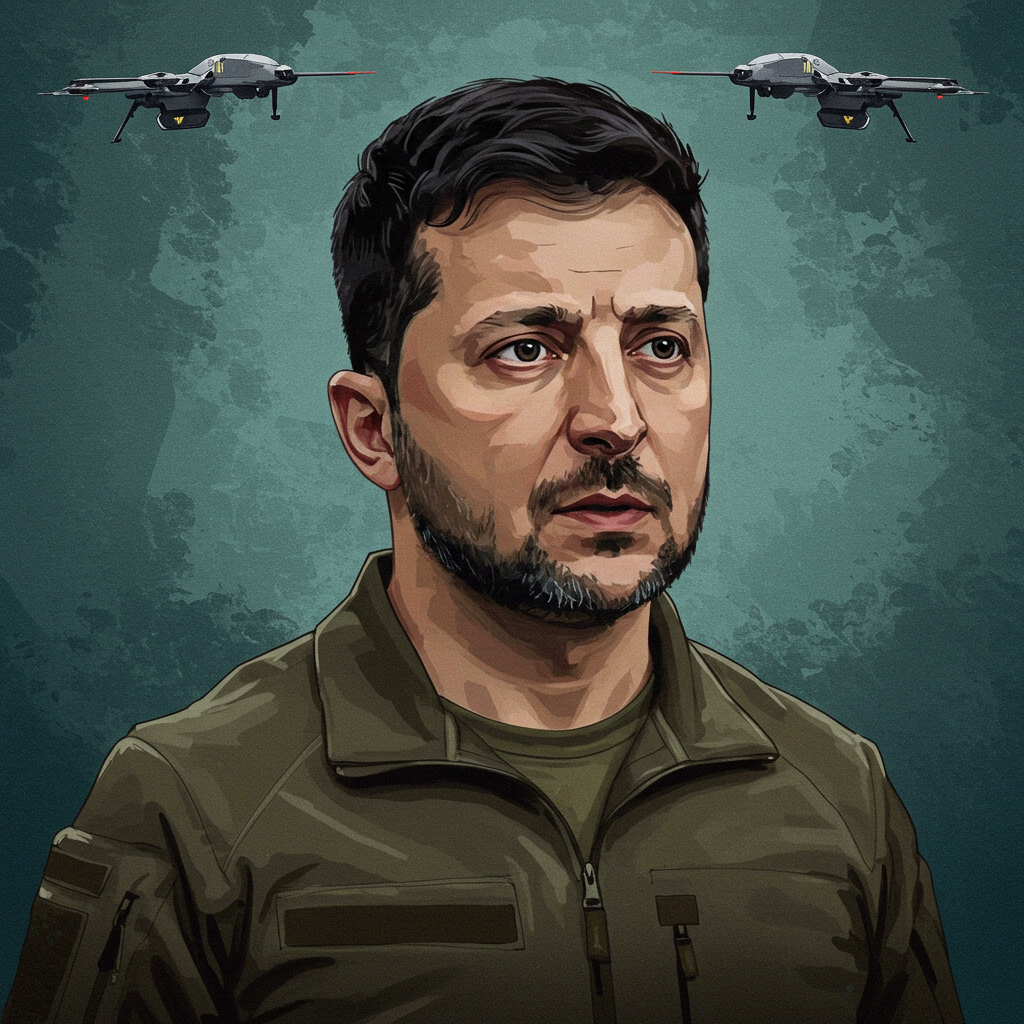
Early on July 7, 2025, Russia launched a massive aerial assault across ukraine. President Volodymyr Zelenskyy reported that Moscow fired some 101 drones overnight. The widespread strikes targeted various regions across the country.
The attack resulted in significant civilian casualties and destruction. At least four people were killed in the barrage. Over 40 others sustained injuries. This included several children caught in the violence.
Devastating Impact Across Multiple Regions
The human cost of the attack was felt deeply in several Ukrainian cities. One fatality was confirmed in the southern region of Odesa. Tragically, a security guard was killed when a drone ignited a fire in his booth near a new residential building. The strikes in Odesa also damaged numerous structures. These included ten garage units and an administrative building. Vehicles, trucks, and even a passenger bus were hit.
In the eastern city of Kharkiv, emergency responders rushed to search for survivors. They sifted through the rubble of apartment buildings struck by drones. Kharkiv, Ukraine’s second-largest city, was a primary target. Attacks occurred around 5:30 a.m. local time. Shahed-type drones hit a nine-story residential building in the Shevchenkivskyi district. A fire engulfed the eighth floor. Other drones struck a kindergarten and a commercial site in the Slobidskyi district. Fires broke out in an outbuilding and a car. Kharkiv alone reported 27 injuries, including three children.
Other regions also suffered losses. Two deaths were reported in the Sumy region in eastern Ukraine. A separate fatality occurred in the southern Kherson region. Officials stated that the majority of injuries were concentrated in the eastern regions of Kharkiv and Dnipropetrovsk. A late-morning attack on the industrial city of Zaporizhzhia also added to the wounded count.
Scale of the Aerial Assault
The July 7th attack underscores the relentless nature of Russia’s aerial campaign. Ukraine’s Air Force reported that Russia launched 101 strike drones along with four missiles in this coordinated assault. This was part of a larger pattern of intensifying attacks. President Zelenskyy stated that over the preceding week, Russia had launched approximately 1,270 drones. This figure also included 39 missiles and nearly a thousand guided bombs.
The scale highlights the severe pressure on Ukraine’s defenses. Just days earlier, on the preceding Friday, Russia conducted an even larger attack. That barrage involved over 530 drones and roughly a dozen missiles. Ukraine’s air force described it as Russia’s largest overnight strike of the war at that point. The July 7th attack, while smaller in drone count, still saturated defenses and caused devastating results.
Ukraine’s defense and Response
Ukrainian forces actively engaged the incoming threats. They successfully countered a significant portion of the aerial weapons. Ukrainian air defense systems neutralized 75 of the 101 incoming drones. This involved shooting down 58 drones. An additional 17 drones were suppressed using electronic warfare systems.
President Zelenskyy reiterated the critical importance of air defense. He stressed that protecting lives remains Ukraine’s top priority. Securing sufficient air defense systems is paramount. He urged international partners to accelerate and increase deliveries of these vital assets. Some reports indicated that the United States had paused military aid to Ukraine, citing low stockpiles, which adds urgency to these calls for support from allies.
Boosting Domestic Production and Calls for Sanctions
Ukraine is also proactively strengthening its own defense capabilities. The government is actively advancing agreements to invest in domestic weapons production. This includes manufacturing all types of drones. A special focus is placed on developing and producing interceptor drones. These are crucial for downing incoming Russian aerial threats. Ukraine is currently contracting at full capacity in this area. Zelenskyy expressed gratitude towards all international partners providing assistance in this effort.
Ukrainian officials also called for stronger international action against Russia. Andriy Yermak, head of President Zelenskyy’s office, advocated for more stringent international sanctions. His rationale is to hinder Russia’s ability to acquire parts for weapons manufacturing abroad. Yermak warned that Russia’s increasing domestic weapons production poses a future threat. This threat extends not only to Ukraine but potentially beyond its borders. The ongoing attacks occur amid stalled cease-fire negotiations. These talks are reportedly being led by the United States.
Frequently Asked Questions
How many drones did Russia launch on Ukraine on July 7th and where did they hit?
On July 7, 2025, Russia launched a large-scale aerial assault involving 101 strike drones and four missiles targeting Ukraine. The attacks impacted multiple regions across the country. Key areas targeted included the southern city of Odesa, the eastern city of Kharkiv, the Sumy region, the Kherson region, and the Dnipropetrovsk region. Zaporizhzhia also experienced an attack later in the day.
What were the human casualties and damage reported from the July 7th attacks?
The Russian attacks on July 7th resulted in at least four confirmed deaths and over 40 injuries. The fatalities occurred in Odesa (a security guard), Sumy (two people), and Kherson (one person). Numerous injuries, including several children, were reported across the targeted regions, with the highest concentration in Kharkiv and Dnipropetrovsk. The strikes caused extensive damage to civilian infrastructure, including residential apartment buildings, a kindergarten, commercial sites, garages, administrative buildings, and various vehicles in cities like Kharkiv and Odesa.
How did Ukraine defend against the July 7th drone barrage, and what is their long-term strategy?
Ukrainian air defense forces actively countered the July 7th attack, successfully neutralizing 75 of the 101 incoming drones. This defense involved shooting down 58 drones and using electronic warfare systems to suppress 17 others. Ukraine’s long-term strategy, as outlined by President Zelenskyy, prioritizes bolstering air defense capabilities through international aid and increasing domestic weapons production, particularly focusing on interceptor drones. Ukraine is also urging stronger international sanctions to limit Russia’s ability to manufacture weapons.
The July 7th drone barrage illustrates the continuous threat faced by Ukrainian civilians. It highlights the critical need for robust air defense. Ukraine continues to seek support from international partners. They are simultaneously boosting their own defense production. The conflict’s trajectory remains uncertain. Attacks like these underscore the ongoing humanitarian crisis and the urgent need for protective measures.