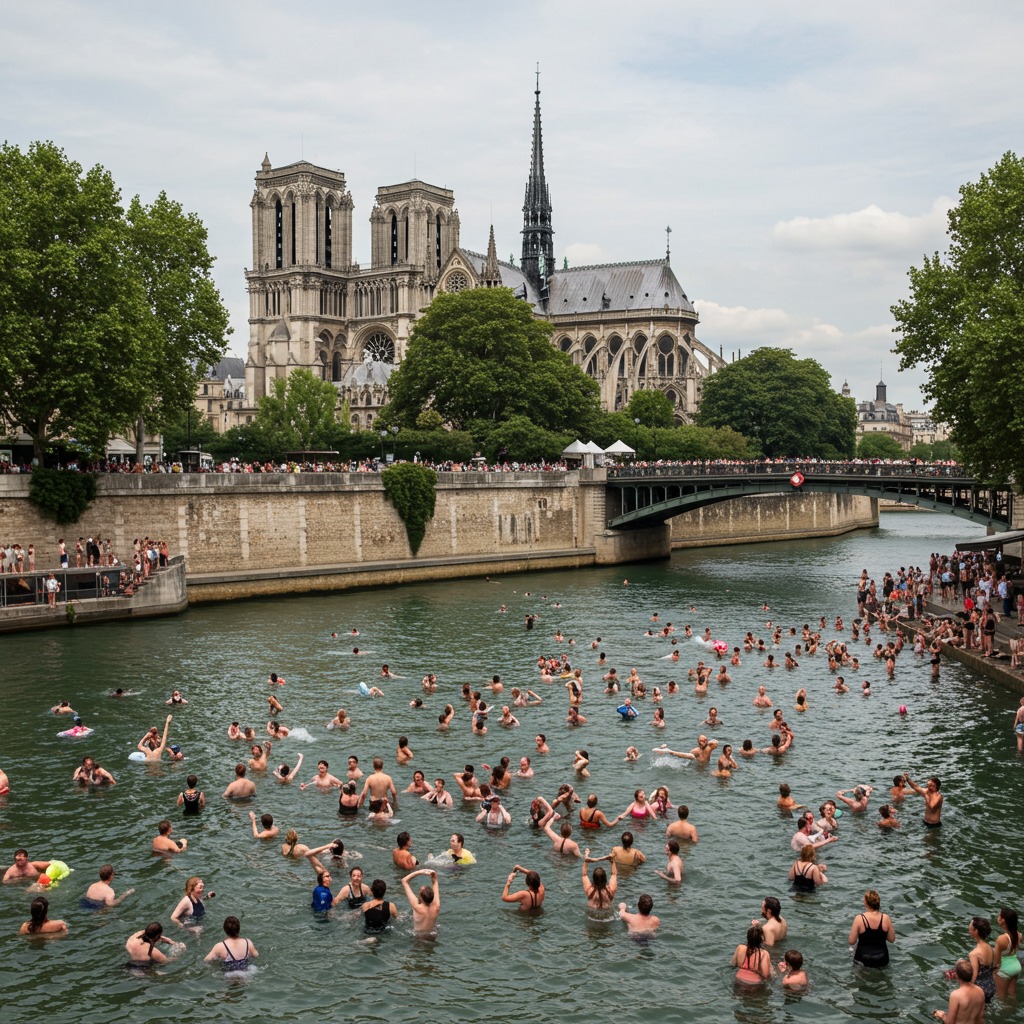
For the first time in over a century, the iconic river Seine in Paris is once again open for public swimming. This momentous occasion, celebrated on Saturday, July 5, 2025, marks a historic return for Parisians and visitors alike. The ability to take a refreshing dip in the heart of the French capital follows a massive, multi-year cleanup effort. Undertaken largely in preparation for the 2024 Olympic Games, this extensive project cost approximately 1.4 billion euros ($1.5 billion).
The Seine, once a symbol of Paris’s vibrant life and leisure, had become too polluted and dangerous for bathing. Swimming in the river was officially banned in 1923. The ban remained in place for decades due to severe pollution levels and the inherent risks posed by active river navigation traffic.
Decades of Pollution and a Monumental Cleanup
For nearly 100 years, the dream of swimming in the Seine seemed impossible. Industrial discharge, urban runoff, and untreated sewage significantly degraded the water quality. The river environment was severely compromised, making direct contact unsafe.
However, the bid to host the 2024 Olympics provided a powerful catalyst for change. With plans to hold triathlon and marathon swimming events directly in the Seine, city authorities embarked on an ambitious restoration program. This wasn’t just a surface-level fix. The cleanup involved significant infrastructural upgrades.
Major investments included constructing new disinfection units. A huge underground storage basin was also built to capture excess rainwater mixed with sewage during heavy downpours. This prevents millions of cubic meters of polluted water from overflowing directly into the river. Furthermore, strict regulations were enforced. Houseboats that previously discharged waste directly into the Seine were mandated to connect to the municipal sewer system. Homes and businesses upstream from Paris also had wastewater redirected to treatment plants, separating it from the rainwater drainage that feeds into the river. These comprehensive measures aimed to drastically reduce bacterial contamination.
The Official Green Light and Water Quality Assurance
Following the extensive cleanup, authorities have now given the public permission to swim in designated areas. City officials report that the Seine’s water quality consistently meets strict European regulations on most days. This was a critical benchmark to clear before opening the river to the public.
Daily testing is conducted to monitor bacteria levels and other water quality indicators. Paris Deputy Mayor Pierre Rabadan confirmed these rigorous checks are ongoing. Environmental authorities have verified that on the opening day, bacteria levels, including E. coli and enterococci, were exceptionally low. Some reports indicated levels were ten to twenty-five times below official safety thresholds.
Just like popular French beaches, a flag system is being implemented at the new Seine swimming sites. This system provides real-time information to potential swimmers. A green flag signals that water quality is good and swimming is permitted. A red flag indicates conditions are unsafe, either due to poor water quality or excessive current. While tests have generally aligned with regulations since early June 2025, exceptions have occurred after heavy rain or due to boat-related pollution, highlighting the dynamic nature of a natural urban waterway.
Experiencing the Historic Plunge
The reopening on July 5, 2025, saw eager Parisians queuing up early, towels in hand. Three specific sites along the riverbanks are now open for public bathing. These include locations integrated into the popular ‘Paris Plages’ event. Two new swimming zones feature specially constructed wooden decks. One is located near the iconic Eiffel Tower, and another is close to the historic Île Saint-Louis in central Paris. A third site is situated in eastern Paris, near Grenelle.
The atmosphere on opening day was one of immense joy and excitement. Swimmers expressed delight at being able to dip into the river in the very heart of their city. Sports coach and influencer Lucile Woodward, among the first to swim, described the experience near Île Saint-Louis as “so chic.” She noted a natural apprehension about open water but felt confident given the intense testing the area likely underwent. Woodward joked her skin was fine afterward.
Another participant, 25-year-old construction worker Amine Hocini, found swimming “in the heart of the city” amazing, especially welcome during a period of high temperatures. Many swimmers were surprised by how warm the water felt. Safety was a key priority at the designated sites. All participants were required to wear bright yellow lifebuoys. A dozen lifeguards in high-visibility vests kept a watchful eye over those taking the plunge. While the current was generally gentle, it served as a reminder that they were swimming in a working urban river.
Lingering Skepticism and Realities
Despite the official reassurances and the palpable excitement, some skepticism remains among certain residents and experts. François Fournier, a long-time resident living near the riverbanks, expressed caution. Having witnessed decades of debris and pollution, he stated he would wait until the water was “really squeaky clean” before attempting a swim.
Dan Angelescu, CEO of Fluidion, a company independently monitoring the Seine’s water quality, voiced concerns about the current testing methodology. He believes it may underestimate bacterial levels due to high variability in river conditions. Angelescu stated that based on his independent testing, only a few days in a typical swimming season might have water quality he considers acceptable. He stressed that current science might not fully capture the risks.
Observations on opening day noted some minor floating debris, like leaves or the occasional plastic wrapper. However, a significant change from the past was the absence of a strong sewage odor. The river instead carried a milder, earthy, river-like scent, indicating a notable improvement in its general state.
A Dream Realized and a Legacy for Paris
The return of public swimming fulfills a promise made decades ago. Former Paris Mayor (and later French president) Jacques Chirac first pledged to make the Seine swimmable back in 1990. This achievement represents the culmination of a long-held dream for many Parisians. Project manager Cléa Montanari described the opportunity as “a dream come true.” While acknowledging that a truly drinkable Seine would be the ultimate goal, she considered being able to swim in it a significant step.
Opening the river for bathing allows Paris to showcase the success of its massive environmental investment. It builds upon the river’s prominence during the 2024 Olympics, where it hosted key aquatic events. The designated swimming zones, open at scheduled times, are typically available for free until the end of August. Specific age requirements (minimum 10 or 14 years depending on location) are in place.
Swimming outside of these officially designated and monitored bathing sites remains illegal. This ban is enforced for both safety reasons and to manage the ongoing river traffic. The blend of official confidence, participant enthusiasm, and some lingering public caution reflects the complexity of reclaiming such a major urban waterway. Nevertheless, the historic plunge marks a significant environmental milestone and offers a unique new way for people to connect with the heart of Paris.
Frequently Asked Questions
Why was swimming in the Seine illegal for over 100 years?
Swimming in the Seine River was officially banned in 1923. This prohibition was primarily enacted due to severe pollution and health risks associated with the high levels of contaminants in the water. Additionally, the increasing boat traffic on the busy urban waterway posed significant safety hazards to swimmers. Decades of untreated sewage discharge and industrial runoff made the river unsafe for direct human contact.
Where are the designated swimming spots open in the Seine?
As of the historic reopening on July 5, 2025, three specific sites along the Seine River are designated for public swimming. These areas are integrated into the city’s ‘Paris Plages’ summer event. Two feature new built wooden decks: one located near the Eiffel Tower and another close to the Île Saint-Louis in central Paris. A third official swimming site is situated in eastern Paris, specifically at the Grenelle safe bathing location.
Is the water quality in the Seine river safe for swimming?
According to Paris officials and environmental authorities, the water quality in the designated swimming zones meets European safety standards on most days. Daily testing is conducted, and on the opening day, bacterial levels were reported to be exceptionally low, significantly below official thresholds. A flag system (green for safe, red for unsafe) is used to inform the public daily. However, independent testing suggests water quality can be highly variable, and some skepticism about consistency remains among experts and long-time residents.
—