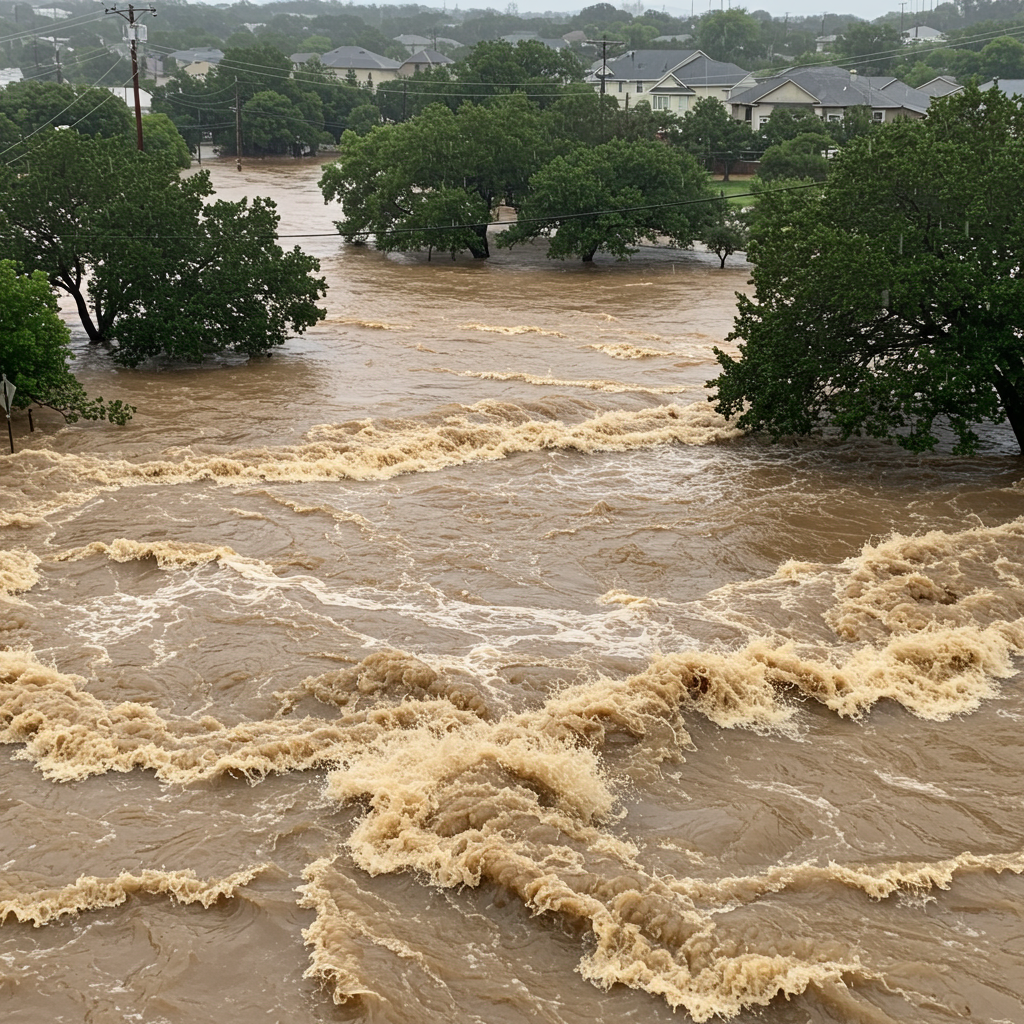
Central Texas reels this weekend following catastrophic flash flooding that began sweeping across the region Friday, July 4th, with the full scale of the devastation becoming painfully clear by Sunday, July 6th, 2025. Heavy, relentless rains triggered rapid and unprecedented rises in rivers and waterways, particularly impacting communities west and northwest of austin. As of late Sunday night, officials confirm at least 11 fatalities in the Austin region across Travis, Williamson, and Burnet counties, with countless others displaced and search efforts continuing for missing individuals.
This localized impact near Austin is part of a larger, devastating statewide event. According to reports synthesizing information from multiple counties, the total death toll from the Central Texas floods has tragically climbed to at least 80 across six affected counties, making this one of the deadliest weather events in recent Texas history. Kerr county, further west along the Guadalupe River, bore the brunt of the disaster, reporting 68 deaths alone.
Unfolding Crisis in Travis County
Travis County experienced significant loss and disruption. County officials confirmed six deaths attributed to the flash floods. At a Sunday news conference, Travis County Judge Andy Brown stated that while they had confirmed fatalities, an exact number of missing persons remained uncertain as search efforts continued. The severity of the flooding was underscored by the sheer volume of emergency calls; Sheriff Sally Hernandez reported that flood-related 911 calls surged from 49 early Saturday morning to 112 by 3 a.m.
As daylight broke on Saturday, revealing the extent of the damage, rescue operations escalated dramatically. Austin-Travis County EMS personnel successfully rescued 25 individuals trapped in the northwest area of the county. Special response teams went door-to-door in affected neighborhoods, performing welfare checks on residents who had placed emergency calls overnight.
County officials acknowledged the proactive efforts of the National Weather Service (NWS) in issuing alerts. However, Travis County Chief Emergency Management Coordinator Eric Carter noted it was premature to determine if any of the deaths could have been prevented given the rapid and intense nature of the flooding. Authorities urged residents impacted needing immediate shelter, clothing, food, or water to contact the Red Cross at 1-800-733-2767. Property damage reports should be directed to the Texas Department of Emergency Management. Residents were strongly advised against recreational water activities on local lakes while recovery crews cleared debris and continued search operations.
Broader Impact and Community Response
The ripple effects of the flooding extended beyond those directly in the path of the water. Austin ISD Superintendent Matias Segura sent an email to the community Saturday acknowledging that district families had been affected by flooding in Kerr County, specifically mentioning impacts at Camp Mystic, a Christian girls’ camp along the Guadalupe River that was severely hit. The tragedy at Camp Mystic, located outside the immediate Austin area focus of the original report but central to the larger disaster, resulted in the confirmed deaths of campers and counselors, with many initially reported missing.
On Sunday evening, the Austin community gathered to mourn victims of the floods, including a student from Casis Elementary who was reportedly among the deceased from the Camp Mystic tragedy. A vigil held in the West Austin neighborhood of Tarrytown saw community members light candles, pray, and sing in remembrance. Green bows symbolizing hope and loss lined streets leading to Casis Elementary, highlighting the deep personal toll the disaster has taken.
Devastation in Neighboring Counties
The severe weather system brought destruction to other Central Texas counties surrounding Austin as well.
Williamson County Struggles with Rising Waters
In Williamson County, authorities confirmed two fatalities and reported one person still missing as of Sunday evening. Sheriff Matthew Lindeman detailed the rapid onset of the crisis. Calls began arriving before 2 a.m. Saturday about roads submerged by water in the Liberty Hill area. By 5 a.m., emergency calls from far western Williamson County indicated floodwaters were entering homes.
After sunrise Saturday, deputies proactively went door-to-door in RV parks located in low-lying areas along Highway 29 east of Georgetown, advising residents to move to higher ground. Most residents heeded the warnings, potentially preventing further casualties. One individual, however, required rescue later in the day by swift-water teams from Parks & Wildlife and the sheriff’s office. Several pets were also safely rescued.
Tragedy struck later Saturday afternoon when the Sheriff’s Office received a report of a vehicle swept away from County Road 284, west of Liberty Hill. The vehicle was located hours later partially submerged, but it wasn’t until the water began to recede late Saturday night that a body was discovered near the vehicle. Sunday evening brought further sorrow with the recovery of a second body after a day of intensive search operations. The floods also impacted infrastructure, leading to a boil water notice issued Saturday afternoon for parts of Georgetown due to a likely flood-related line break.
Burnet County Faces Extensive Rescues and Recoveries
Burnet County also confirmed fatalities and missing persons, reporting three deaths and three people still unaccounted for. The county saw extensive rescue operations, with officials conducting 63 rescues primarily in areas around Cow Creek and Hamilton Creek, known for their susceptibility to flash flooding.
Capt. Mike Sorenson with the Burnet County Sheriff’s Office described the varied and challenging nature of these rescues. Emergency personnel pulled people from cars submerged in water, retrieved individuals who had climbed onto car rooftops, rescued those clinging to trees, and extracted residents trapped in flooded homes and on rooftops. These efforts involved collaboration between several local, state, and federal agencies, including the Texas National Guard, which facilitated five air evacuations in Burnet County due to the difficult terrain and conditions.
By Sunday, Sheriff Sorenson indicated a shift in operations from active rescue to recovery efforts. He acknowledged the grim reality that some missing individuals might unfortunately never be found but emphasized that search crews were still actively looking. The Burnet County Sheriff’s Office shared a list of road closures and areas to avoid on its Facebook page and advised people to call 911 for emergencies due to issues with standard phone lines.
The Broader Context: Record Flooding and Warning Debates
The Central Texas floods of July 2025 unfolded with terrifying speed, especially along river systems. Upstream of the Austin region, the Guadalupe River at Hunt rose nearly 13 feet in approximately 15 minutes and surged 26 feet within just 45 minutes in the early hours of Friday, July 4th. This rapid rise, exceeding levels seen in the historic 1987 flood in some areas, overwhelmed communities and camps along the river before many people could react. The topography of the Texas Hill Country, often called “Flash Flood Alley” due to its steep terrain and thin soil, exacerbates the impact of heavy rainfall by causing rapid runoff that quickly swells waterways.
While the NWS issued a flood watch for the area on Thursday, July 3rd, and later upgraded it to flood warnings and flash flood emergencies early Friday morning, the speed and intensity of the event raised questions. The NWS described the situation as “particularly dangerous” and a “very dangerous and life-threatening flood event” in alerts issued hours before the first reports of catastrophic flooding.
Despite these warnings, the fact that the most severe flooding occurred overnight, catching many residents and campers while they were asleep, highlights the critical challenge of delivering and receiving urgent alerts in time. Some local officials noted the difficulty in predicting the exact location and intensity of extreme rainfall events. The debate continues regarding the effectiveness of warning systems and evacuation procedures, particularly for transient populations like campers, versus strategies of sheltering in place on high ground.
Resources and Safety Information
Staying informed and prepared is crucial during and after severe weather events. Several resources are available for Central Texas residents:
Monitor weather updates from the National Weather Service Austin/San Antonio on X.
Get local notifications and tips from Austin Emergency Management on Facebook or X.
Sign up for emergency alerts via WARN Central Texas.
Report power outages or view outage maps through your provider (Austin Energy, Bluebonnet Electric Co-op, Pedernales Electric Co-op, Oncor).
Check rainfall totals, lake levels, streamflow, and river stages using the Lower Colorado River Authority’s HydroMet monitoring system.
View a map of road closures due to flooding at ATXFloods.com.
Officials strongly reiterate the critical safety message: Never drive, walk, or swim through flooded areas. Floodwaters are powerful and dangerous, often concealing unseen hazards.
Search and recovery efforts continue across the impacted counties, involving hundreds of first responders from local, state, and federal agencies, including search dogs and aircraft. The magnitude of the disaster has led to the deployment of rapid DNA testing to help identify victims and provide closure for grieving families. President Donald Trump has approved a major disaster declaration, unlocking federal resources for response and recovery. The human toll is immense, with families anxiously awaiting news of missing loved ones and communities coming together to support victims. Organizations like the Red Cross and World Central Kitchen are providing essential services like shelter and food.
Frequently Asked Questions
How high did the Guadalupe River rise during the Central Texas floods?
During the peak of the flash floods in early July 2025, the Guadalupe River experienced an extremely rapid and significant rise. Upstream of the main affected areas, the river rose nearly 13 feet in approximately 15 minutes at one point. In other locations along the river, particularly around Kerr County, surges of 20 to 30 feet were reported within short periods, overwhelming communities and camps almost instantly and contributing significantly to the high death toll.
Where can I find resources for Central Texas flood victims?
If you are a flood victim in Central Texas and need immediate assistance, contact the Red Cross at 1-800-733-2767 for help with shelter, clothing, food, or water. To report property damage, reach out to the Texas Department of Emergency Management. Stay updated on emergency information and resources by following official local accounts like Austin Emergency Management and signing up for alerts via WARN Central Texas.
How can residents stay safe during future flood warnings in the Austin area?
Residents in Central Texas, especially in flood-prone areas, should have multiple ways to receive emergency alerts, such as phone notifications, local news, and weather radios. Pay close attention to National Weather Service watches (flooding is possible) and warnings (flooding is imminent or occurring), particularly flash flood warnings which indicate immediate danger. Know your evacuation routes if you live in a low-lying area. Crucially, remember the phrase “Turn Around, Don’t Drown” – never attempt to drive, walk, or swim through flooded roads or areas, as water depth and current can be deceptively dangerous. Monitor resources like ATXFloods.com for real-time road closures.
Conclusion
The flash floods that struck Central Texas, including the Austin region, over the Fourth of July weekend in 2025 represent a catastrophic event with a tragic human cost. While the immediate focus in Travis, Williamson, and Burnet counties centered on rescue and recovery efforts resulting in at least 11 confirmed deaths, the broader picture reveals a statewide disaster claiming at least 80 lives, heavily impacting areas like Kerr County. As search operations continue for those still missing, communities are beginning the long process of assessing damage, supporting victims, and grappling with the rapid and devastating nature of the floodwaters. This event serves as a stark reminder of the power of nature and the critical importance of heeding warnings and having emergency preparedness plans in place in areas susceptible to flash flooding. Resources are available for those affected, and the community is urged to continue supporting recovery efforts while staying safe during this challenging time.