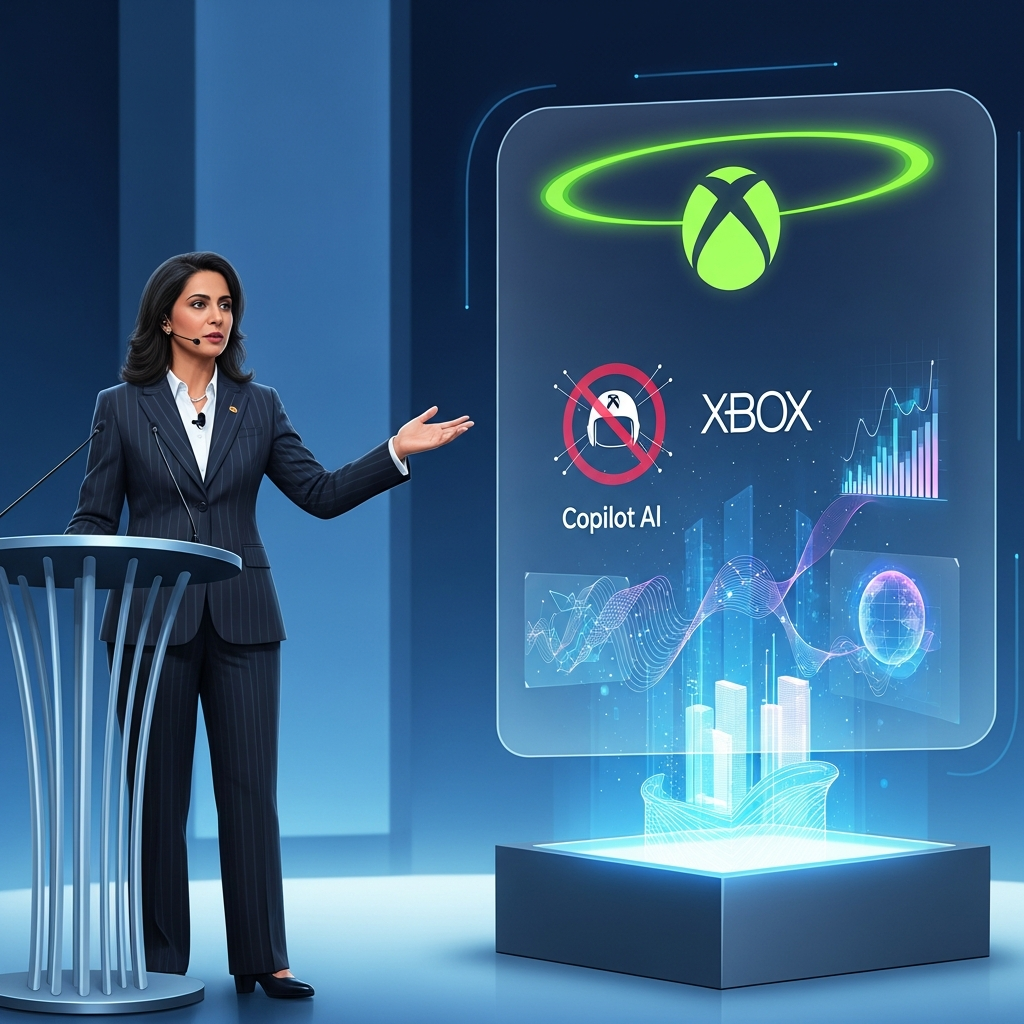
Xbox is undergoing a significant strategic overhaul, highlighted by a surprising decision: the gaming giant is actively removing Microsoft’s Copilot AI assistant from its mobile application and halting its integration into Xbox consoles. This bold move, announced by Xbox CEO Asha Sharma in May 2026, signals a clear departure from previous AI strategies and sets a fresh course for the brand’s future. It’s a pivotal moment, reflecting a broader shift within Microsoft regarding AI implementation and user feedback.
This strategic pivot is more than just a feature removal; it’s a fundamental re-evaluation of how artificial intelligence will serve Xbox players and developers. Under Sharma’s new leadership, the focus is sharpening on speed, community connection, and addressing core pain points. This article will explore the reasons behind the Copilot AI discontinuation, delve into Xbox’s evolving AI strategy, and analyze the potential implications for next-generation consoles and the wider gaming landscape.
The Demise of Xbox Copilot: From Vision to Veto
Microsoft’s Copilot AI was initially envisioned as a groundbreaking in-game assistant for Xbox. Its promise was tantalizing: offering real-time, contextual advice based on gameplay, enhancing the gamer experience through personalized recommendations, and simplifying access to social features. A beta version was successfully launched on the Xbox mobile app in May 2025. Internal presentations at the Game Developers Conference (GDC) in March 2026 even showcased plans for a full rollout to Xbox consoles later that same year, illustrating its potential in titles like Forza Horizon and Sea of Thieves.
However, this ambitious vision has now been abruptly canceled. Sharma explicitly stated that these plans “don’t align” with Xbox’s new strategic direction. The decision to wind down Copilot on mobile and cease its console development comes amid mounting criticism of Microsoft’s broader handling of Copilot in Windows apps, suggesting a general negative perception of such broad, intrusive AI bots among users. Many found these tools lacking practical utility, with some likening them to “condescending robots” rather than helpful assistants.
Sharma’s Mandate: Speed, Community, and Friction
Xbox CEO Asha Sharma, who previously led Microsoft’s CoreAI division, has been outspoken about her mission to “get the business back on track.” Her vision emphasizes three critical areas: moving faster, deepening connections with the community, and addressing friction for both players and developers. The decision to retire Copilot is presented as a direct consequence of this strategic pivot, an initial step in a broader process to “retire features that don’t align with where we’re headed.”
This shift isn’t just about removing features; it’s about optimizing resources. Sharma’s public commitment to avoid “soulless AI slop” in games underscores a desire for meaningful, impactful technology. This clear stance, especially given her background in AI, indicates a conscious move away from general-purpose AI assistants towards more focused, valuable applications within the gaming ecosystem.
A New AI Frontier for Xbox: Beyond the Assistant
While the general-purpose Copilot AI assistant is being phased out, it doesn’t mean Xbox is abandoning artificial intelligence altogether. Far from it. The strategic hires Sharma has made tell a different story about AI’s future within the company. She has brought in several key leaders from her former CoreAI team, including Jared Palmer (VP of Product), Tim Allen (VP of Design and Research), and Evan Chaki (General Manager for engineering simplification). These appointments, alongside other significant talent acquisitions like former ChatGPT leader Jonathan McKay, signal a refocusing of AI efforts, not their complete abandonment.
AI: Behind the Scenes, Not Just On-Screen
The interpretation from industry experts is that while AI might not be a prominent, public-facing feature in the direct consumer experience of Xbox products, it is likely to be deeply integrated into the operational management of the Xbox division and the advanced tools offered to creators. Sharma herself clarified this, stating Xbox would be “refocusing our AI efforts to solving player problems like enhancing real-time graphics.” This pivot suggests AI will play a foundational role in improving the core gaming experience, from rendering and content discovery to deeper personalization, rather than acting as a chat interface.
This behind-the-scenes integration is crucial for addressing the “friction for both players and developers” that Sharma aims to solve. Streamlining development workflows, enhancing game performance through intelligent upscaling, and creating more adaptive content discovery engines are all areas where advanced AI can provide substantial value without being an overt “assistant” that might distract from gameplay.
Project Helix & The Future of Xbox AI: Next-Gen Integration
The strategic shifts extend to the very core of Xbox hardware development. Recent leaks regarding the next-generation Xbox, codenamed “Project Helix,” reveal a significant embrace of AI at a hardware level. This information, attributed to prominent hardware insiders, indicates a radical departure from traditional console design, particularly concerning the Graphics Processing Unit (GPU).
Next-Gen Hardware: A Different Kind of AI
Project Helix is rumored to abandon custom GPU designs, instead opting for a standardized RDNA 5 architecture without Microsoft-side customization. This move could simplify game development, aligning console hardware more closely with PC components. Crucially, the leak highlights extensive AI integration within the console’s architecture. While the general Copilot assistant is being retired from current systems, next-gen hardware appears to be preparing for more specialized AI “Copilot features” through a dedicated Neural Processing Unit (NPU).
The leaked specifications suggest that approximately 100 TOPS (Tera Operations Per Second) will be specifically allocated for AI tasks like “Copilot integration” within the NPU. An even more substantial 3,000 TOPS of AI performance is earmarked for features such as upscaling and neural rendering, including FSR5. This indicates Xbox’s commitment to competing directly with advanced rendering technologies seen in rivals like the PlayStation 5 Pro, which uses AI for features like PSSR 2.
FSR5 and Neural Rendering
The integration of FSR5 (FidelityFX Super Resolution 5), potentially including a feature like “FSR Diamond,” means the next-gen Xbox aims to deliver impressive visual fidelity and performance through AI-powered anti-aliasing and upscaling. This approach allows games to render at lower resolutions and then intelligently upscale to higher ones, improving frame rates and visual quality without requiring raw GPU power increases. This hardware-level AI integration represents a sophisticated, performance-enhancing application of AI that directly benefits the core gaming experience, distinguishing it sharply from the retired general-purpose Copilot assistant.
Broader Strategic Shifts Under Sharma: A Brand in “Metamorphosis”
Asha Sharma’s tenure as Xbox CEO, beginning in February 2026, has been characterized by rapid and decisive action. Beyond the AI strategy re-evaluation, she is spearheading a broader “metamorphosis” for the Xbox brand, aimed at revitalizing the business amidst significant financial challenges. Xbox has faced declining gaming revenue, with quarterly hardware sales reportedly dropping by 33% and overall revenue decreasing by 9% year-on-year.
Game Pass, Branding, and Revenue Challenges
Sharma has openly addressed these difficulties. An internal memo revealed concerns that “Game Pass has become too expensive for players,” leading her to personally tackle pricing adjustments. She has also made swift decisions regarding brand identity, reportedly abandoning the “Microsoft Gaming” name to revert to “Xbox,” reinforcing the brand’s console manufacturing heritage. This leadership overhaul, combining internal promotions with new hires from diverse tech backgrounds, underscores her commitment to injecting fresh perspectives while retaining institutional knowledge.
Sharma’s comprehensive strategy was outlined in a recently published mission statement, acknowledging that these extensive efforts will require time to yield their intended results. Her transparency and proactive approach signal a determined effort to orchestrate “the return of Xbox” in a highly competitive market.
Impact on Players and Developers
For players, the removal of the general-purpose Copilot AI assistant means a cleaner, less intrusive gaming experience on current platforms. The pivot towards integrating AI for enhanced graphics, content discovery, and personalization suggests future improvements that will be felt rather than explicitly interacted with. This promises a more refined and performant gaming experience without the “condescending robot” distractions.
For developers, the strategic hires from CoreAI and the focus on simplifying development processes imply better tools and infrastructure support. While the specific nature of these AI-powered development tools remains to be seen, the intent is to address friction and enable faster, more efficient game creation. The rumored Project Helix hardware, with its extensive AI capabilities for rendering, also points to powerful new opportunities for developers to push visual boundaries and optimize performance in next-generation titles.
Frequently Asked Questions
Why is Xbox discontinuing the Copilot AI assistant from its current platforms?
Xbox CEO Asha Sharma announced the decision to wind down Copilot AI on mobile and halt its development for consoles in May 2026. This move is part of a broader strategic pivot to “move faster, deepen our connection with the community, and address friction for both players and developers.” Sharma indicated that the previous Copilot plans “don’t align” with Xbox’s new direction, reflecting a desire to move away from general-purpose, public-facing AI assistants that were met with user criticism, towards more integrated, value-driven AI applications.
What are Xbox’s new priorities for AI integration following the Copilot removal?
Following the discontinuation of the general Copilot assistant, Xbox is “refocusing our AI efforts to solving player problems.” This includes leveraging AI to enhance real-time graphics, improve content discovery algorithms, and deepen personalization experiences within the Xbox ecosystem. The company has brought in AI experts from Microsoft’s CoreAI division to integrate AI more fundamentally into operational management and development tools, rather than as an explicit, interactive in-game assistant for current-generation systems.
How might this strategic shift affect future Xbox consoles and games, especially with “Project Helix”?
The strategic shift suggests a move towards hardware-level AI integration in future Xbox consoles like the rumored “Project Helix.” Leaks indicate Project Helix will feature a dedicated Neural Processing Unit (NPU) for specific AI tasks, including specialized “Copilot features” and significant AI performance (around 3000 TOPS) for advanced rendering technologies like FSR5. This means future games could benefit from AI-powered visual enhancements, intelligent upscaling, and more sophisticated content generation or player adaptation, offering a more refined and performant experience rather than a broad AI chatbot.
Conclusion
The decision to retire the general-purpose Copilot AI marks a significant turning point for Xbox. Under Asha Sharma’s decisive leadership, the brand is undergoing a comprehensive strategic overhaul, driven by a commitment to speed, community engagement, and solving core problems for players and developers. While the public-facing AI assistant is being phased out, AI’s role within Xbox is far from over. Instead, it’s evolving, moving towards more foundational, performance-enhancing integrations within the console architecture and development workflows.
This “metamorphosis” signals a revitalized Xbox, poised to tackle declining revenues and intense market competition with a focused, player-centric approach. The upcoming Xbox Games Showcase on June 7, followed by a dedicated presentation for Gears of War: E-Day from Vancouver’s The Coalition, will undoubtedly offer further insights into this exciting new chapter for the gaming giant. The future of Xbox is clearly defined by strategic pivots, purposeful innovation, and a keen ear to the pulse of the gaming community.