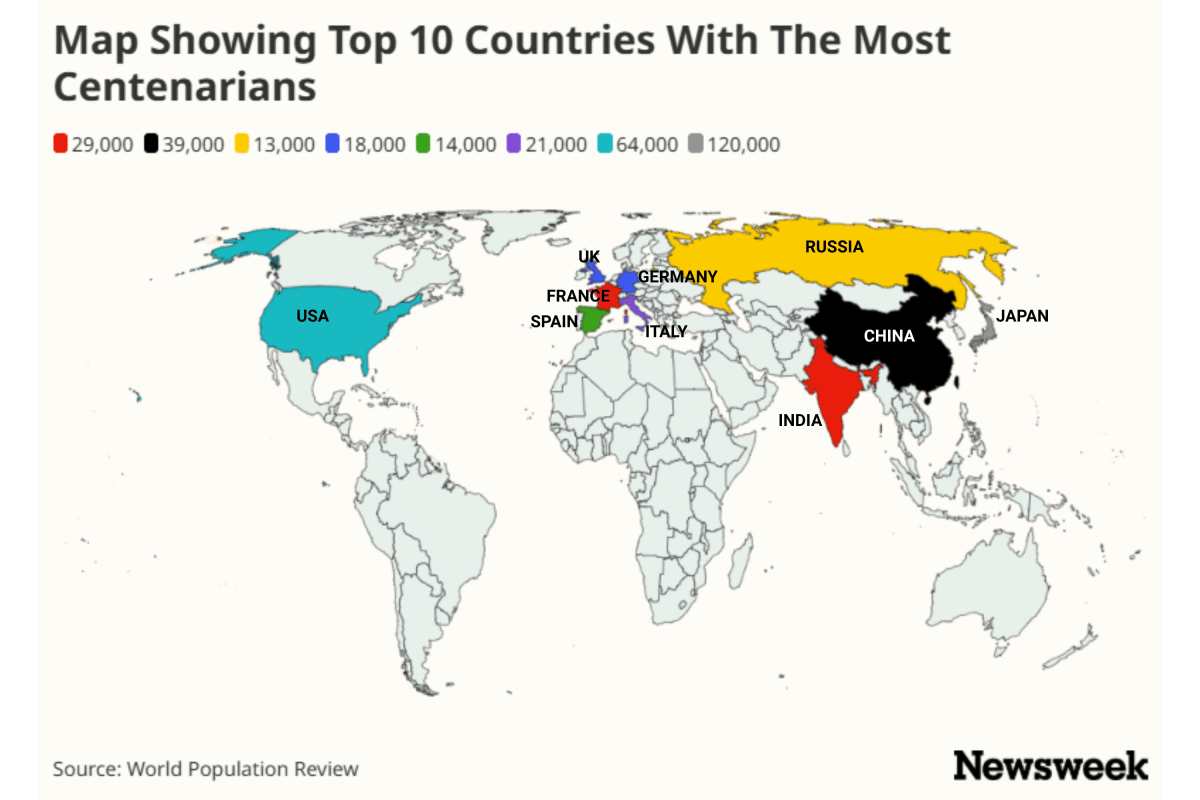
The Japan centenarian population has officially surpassed the 100,000 mark for the first time, a historic demographic milestone that serves as both a testament to extraordinary medical success and a warning of an impending socioeconomic crisis.
Key Takeaways
- Historic Milestone: As of September 1, 2026, Japan recorded 107,677 citizens aged 100 or older, the highest number in the world.
- Gender Disparity: Women make up the vast majority of this group, accounting for approximately 88% (94,298 women compared to 13,379 men).
- The Longevity Paradox: While increased life expectancy reflects advancements in nutrition and healthcare, it is coupled with a record-low fertility rate of 1.14.
- Economic Pressure: A shrinking workforce must support a growing elderly population, threatening the sustainability of Japan’s social security and pension systems.
- Future Projections: Japan’s total population is expected to decline from 126 million to approximately 87 million by the year 2070.
- High Fish Consumption: Rich in omega-3 fatty acids.
- Soy and Seaweed: Essential for mineral intake and gut health.
- Vegetable-Heavy Meals: Low in saturated fats and high in fiber.
- Portion Control: A cultural emphasis on balanced, nutrient-dense meals.
- Powered Exoskeletons: Wearable robotics to assist with mobility and prevent falls.
- Advanced Assistive Devices: Such as automatic-focus eyewear to aid vision.
- Elderly-Focused Consumer Goods: Notably, the market for adult diapers in Japan has outpaced the market for baby diapers for over a decade.
- Healthcare Automation: AI and robotics used in nursing homes to assist with patient care and monitoring.
- For Investors: The “Silver Economy” is no longer a niche market. Companies specializing in geriatric healthcare, robotics, and age-friendly urban design are positioned for long-term growth as other nations in Europe and North America face similar shifts.
- For Policymakers: Japan is a “real-world test case.” The ability of a nation to balance social security sustainability with a shrinking tax base will determine the stability of many modern democracies in the coming decades.
- For Residents of Aging Nations: The Japanese experience suggests that longevity is not just a medical achievement but a sociological one. Preparing for a society where the elderly are a dominant demographic will require rethinking everything from urban planning to labor laws.
- Immigration Policy: While immigration has increased, it remains low at approximately 3% of the total population. Whether the government can increase foreign residency to bolster the workforce without causing social friction remains an open question.
- Fertility Interventions: The effectiveness of current government subsidies and child-rearing support programs will be closely monitored. If these fail to move the needle on the 1.14 fertility rate, more radical social reforms may be required.
- Social Security Reform: Watch for upcoming legislative debates regarding the age of pension eligibility and the funding models for universal healthcare.
- www.newsweek.com
- www.bbc.com
- www.nbcnews.com
- www.usatoday.com
What Happened: A Historic Milestone
According to data released by Japan’s Ministry of Health, Labour and Welfare, the number of citizens aged 100 or older reached 107,677 in September 2026. This figure represents an increase of 7,914 individuals over the previous year, marking the 56th consecutive year that the centenarian count has risen in the country.
This achievement places Japan in a unique global position. Scientific American reported that Japan is the first nation to ever surpass 100,000 centenarians. While the U.S. Census Bureau estimated approximately 101,000 centenarians in the United States in 2024, that figure remains a projection rather than a confirmed census count, making Japan’s milestone a verified global first.
Historically, the growth of this demographic has been exponential. In 1963, when official tracking began, there were only 153 people aged 100 or older. By 1981, that number had passed 1,000, and by 1998, it had reached 10,000, according to the BBC. The leap from 10,000 to over 100,000 in less than three decades highlights the rapid acceleration of life expectancy in the archipelago.

Why It Matters: The Dual-Edged Sword of Longevity
The surge in the Japan centenarian population is described by experts as a “dual-edged sword.” On one side, it is a profound victory for public health, nutrition, and medical technology. On the other, it signals a deepening “existential crisis” for the nation’s economic and social structures.
Kenichiro Ueno, Japan’s Health Minister, expressed a sense of pride in the milestone. Speaking to reporters, Ueno stated he was “delighted that so many people are living long, healthy and active lives,” attributing the success to advancements in medical technology and improved living conditions. However, he also issued a stern warning regarding the “challenge the country faces in maintaining a sustainable social security system.”
Prime Minister Sanae Takaichi has been even more direct, characterizing the nation’s demographic shift—where the elderly population grows while the youth population shrinks—as a “quiet emergency.”
The Demographic Imbalance at a Glance
| Metric | Current Status / Data | Source/Context |
|---|---|---|
| Centenarian Count (2026) | 107,677 | Ministry of Health, Labour and Welfare |
| Total Fertility Rate (2022/25) | 1.14 to 1.26 | OECD / National Institute of Population |
| Population Replacement Level | 2.1 children per woman | Standard Demographic Threshold |
| Projected 2070 Population | 87 million | National Institute of Population |
| Projected 2070 Elderly % | Nearly 40% | National Institute of Population |
The Biology of Longevity: Why Japan Lives So Long
Researchers have long sought to understand why Japan consistently leads the world in life expectancy, which currently sits at approximately 84 years according to the World Bank and OECD. The reasons are multifaceted, spanning diet, lifestyle, and systemic healthcare.
Nutritional Foundations
Research from the National Library of Medicine and reports from the BBC suggest that the traditional Japanese diet is a primary driver of cardiovascular and cognitive health. Key components include:
Lifestyle and Healthcare Access
Beyond diet, Scientific American noted that Japan maintains relatively low obesity rates compared to other developed nations. This is supported by a culture of active living; older adults frequently remain mobile through walking, cycling, and the widespread use of public transportation.
Furthermore, Japan’s universal healthcare system ensures that widespread health screenings and medical interventions are both affordable and accessible. This proactive approach allows for the early detection and management of chronic conditions like heart disease and cancer, which are leading causes of death in older populations.

The Demographic Crisis: A Shrinking Future
While the longevity of individuals is a success, the longevity of the state is under threat. The rise in centenarians is occurring alongside a dramatic decline in birth rates. In 2022, Japan’s total fertility rate was recorded at 1.26, and by 2025, it had dropped to a record low of 1.14. To maintain a stable population, a replacement rate of 2.1 is required.
This imbalance creates a massive strain on the working-age population. As fewer children are born, there are fewer workers to contribute to the tax base and fewer caregivers to support the elderly. The National Institute of Population and Social Security Research warns that by 2070, nearly 40% of the population will be aged 65 or older.
The Roots of Marriage Reluctance
Minister Ueno has pointed to several socioeconomic factors contributing to this decline. He noted that the high cost of child-rearing and education, combined with the mental and physical burden placed on working parents, has led to a significant reluctance to marry.
Data suggests this is a generational trend: more than 20% of single men and women aged 18–34 have expressed no intention of marrying, with nearly 50% of that demographic seeing no perceived benefit to marriage. This shift in social values, driven by economic pressure, makes the demographic decline appear increasingly difficult to reverse through government subsidies alone.
Economic Shifts: The Rise of “Silver Tech”
As the demographic landscape shifts, the Japanese economy is undergoing a massive pivot. With a growing population of wealthy, long-lived seniors, industries are moving away from youth-centric products toward what is being termed “Silver Tech.”
Innovation for an Aging Society
Companies are increasingly investing in technologies designed to assist the elderly in maintaining independence. This includes:
While these innovations offer economic opportunities, they also highlight the necessity of technological intervention to compensate for a shrinking human workforce.

Counterpoints: Data Integrity and Quality of Life
Despite the celebratory tone of some officials, there are significant concerns regarding the accuracy of demographic data and the actual well-being of the elderly.
The Question of Data Integrity
In 2010, a government audit revealed a massive discrepancy in Japan’s family registries, finding that over 230,000 people listed as being 100 or older were unaccounted for. This led to suspicions that some families might have been hiding the deaths of elderly relatives to continue receiving pensions. While recent figures from the Ministry of Health appear robust, the historical precedent serves as a reminder of the complexities in tracking a massive, aging population.
Quality of Life vs. Longevity
Jay Olshansky, an epidemiologist at the University of Illinois Chicago, has raised critical questions about the distinction between living a long life and living a healthy one. Speaking to Scientific American, Olshansky emphasized that “what’s really critical… is quality of life.”
As more people reach their 90s and 100s, the medical community faces the challenge of ensuring these additional years are spent in good health rather than in a state of chronic infirmity or dependency. The cost of managing long-term care for a population with age-related disabilities is one of the most significant fiscal risks facing the Japanese government.
What It Means for You
The demographic shifts in Japan offer a blueprint—and a warning—for other developed nations.
What Happens Next
Several key indicators will determine whether Japan can navigate this “quiet emergency”:
Frequently Asked Questions
Why is the centenarian population in Japan growing so fast?
The growth is driven by a combination of improved medical technology, better nutrition (specifically diets rich in fish and vegetables), and a lifestyle that encourages physical activity. Additionally, Japan’s universal healthcare system allows for early intervention and management of chronic illnesses, which significantly extends life expectancy.
Is the high number of centenarians a problem for Japan?
It is a “dual-edged sword.” While it is a success for public health, it creates a demographic imbalance. A growing number of elderly citizens requires more funding for pensions and healthcare, while a shrinking number of young workers is available to fund these systems through taxes and labor.
How does Japan’s fertility rate compare to other countries?
Japan’s fertility rate is significantly below the replacement level of 2.1. With a rate of approximately 1.14, the population is naturally declining. This is a common challenge in many highly developed nations, but Japan’s decline is particularly pronounced due to the speed of its aging process.
What is “Silver Tech”?
“Silver Tech” refers to technological innovations specifically designed to assist the aging population. This includes everything from wearable robotic exoskeletons that help with mobility to advanced medical monitoring devices and consumer products tailored for seniors.
Conclusion
Japan’s milestone of 107,677 centenarians is a landmark achievement in human longevity. However, the celebration is tempered by the reality of a shrinking nation. As the country navigates the complexities of a record-low birth rate and an unprecedentedly old population, the world will be watching to see if Japan can build a sustainable model for the 21st-century demographic reality.
References
Featured image: Newsweek — via Newsweek