NASA’s Curiosity Mars rover has achieved a historic milestone, unveiling the most diverse collection of organic molecules ever discovered on the Red Planet. This groundbreaking finding, stemming from a unique chemistry experiment performed on another world, provides crucial new insights into Mars’s ancient habitability. While not definitive proof of past life, these “building blocks of life” suggest that Mars once harbored the necessary chemistry for life to emerge. The discovery significantly advances our understanding of the Red Planet’s potential to preserve vital clues over billions of years.
Curiosity’s Landmark Experiment: A First on Another World
In a truly unprecedented scientific endeavor, NASA’s Curiosity rover successfully conducted a specialized chemistry experiment directly on the Martian surface. This marks the first time such an intricate process has ever been executed on another planet. The rover, which landed in Mars’s Gale Crater in 2012, has continually explored this ancient lake bed, seeking evidence of conditions favorable for life.
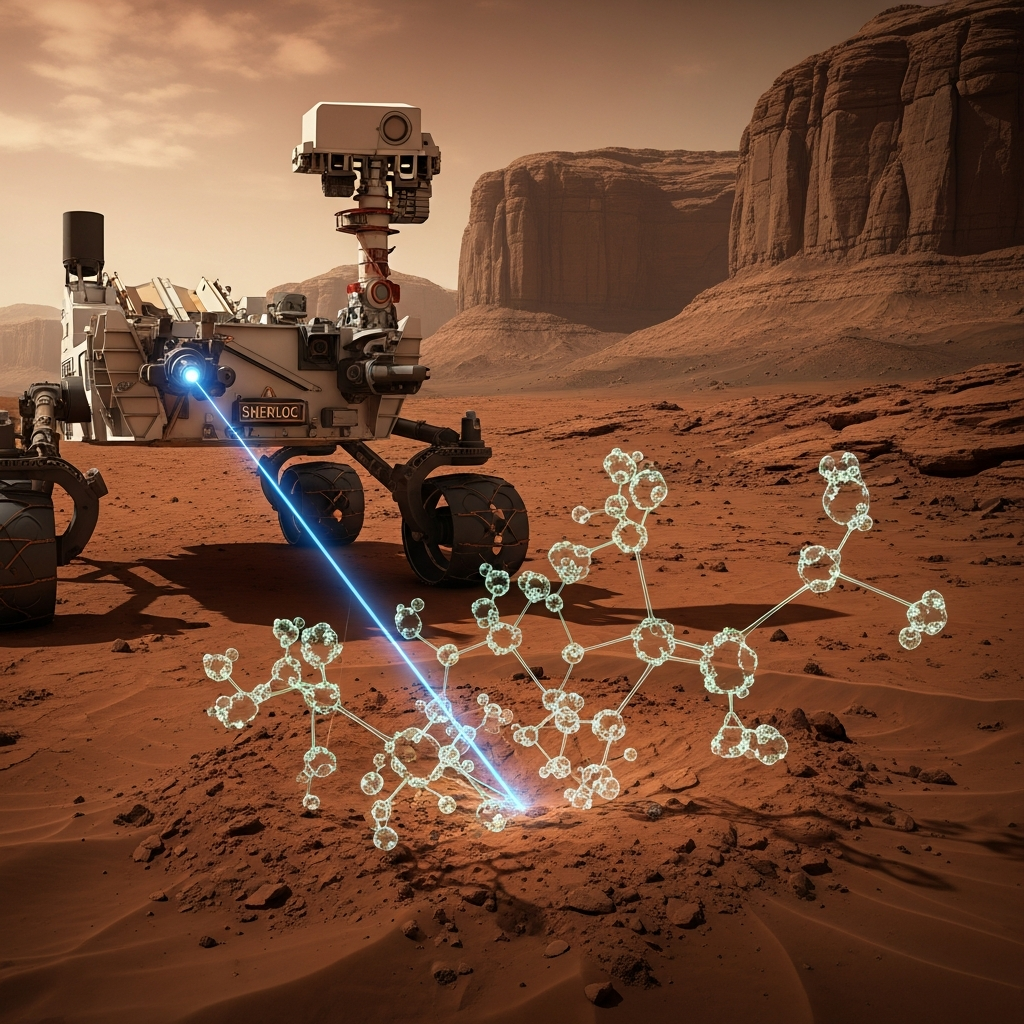
The critical experiment took place in 2020. It focused on a rock sample from a site nicknamed “Mary Anning 3.” This location is part of a clay-enriched region on Mount Sharp, an area believed to have been covered by ancient lakes and streams. To unlock the secrets held within the Martian rock, Curiosity utilized its sophisticated Sample Analysis at Mars (SAM) instrument suite. The team carefully employed a powerful chemical reagent: tetramethylammonium hydroxide (TMAH).
Using TMAH, SAM broke apart larger, complex organic matter into smaller, identifiable molecules. This innovative approach allowed scientists to overcome the challenges of detecting and identifying intricate compounds that might otherwise remain hidden. The success of this experiment, described by lead author Amy Williams as requiring “two shots to get it right,” demonstrated the viability of advanced wet chemistry techniques far from Earth. This trailblazing effort pushes the boundaries of extraterrestrial scientific analysis.
Unveiling Mars’s Chemical Diversity: Precursors to Life
The Curiosity Mars rover‘s groundbreaking experiment detected over 20 distinct organic molecules. Seven of these carbon-containing compounds had never before been confirmed on the Red Planet. This expanded library of Martian organics offers unprecedented insights into the planet’s chemical history.
Among the most exciting finds was benzothiophene. This molecule contains both carbon and sulfur. It is frequently associated with meteorites and asteroids. Scientists hypothesize that such meteoritic deliveries played a significant role in seeding prebiotic chemistry across the early solar system, including Earth. Amy Williams noted, “The same stuff that rained down on Mars from meteorites is what rained down on Earth, and it probably provided the building blocks for life as we know it on our planet.”
Another key discovery was a nitrogen heterocycle. This molecular structure, featuring a ring of carbon atoms with incorporated nitrogen, is particularly intriguing. It is considered a chemical precursor to RNA and DNA. These nucleic acids are absolutely vital for genetic information on Earth. While this represents “just the bricks, not the house” of DNA, it confirms the presence of fundamental components essential for life’s emergence. These findings significantly bolster the evidence for prebiotic chemistry on Mars.
Tracing Ancient Habitability in Gale Crater
Curiosity’s landing site, the Gale Crater, is a crucial location for understanding Mars’s past. Billions of years ago, around 3.5 to 4.1 billion years in the past, Mars was a very different world. Its surface was likely dotted with vast lakes and winding rivers. These bodies of liquid water are key ingredients for life as we know it. The ancient sediments in Gale Crater, especially the clay-rich sandstones of the Glen Torridon region, acted as natural preservation chambers.
The latest findings from the Curiosity rover confirm that this ancient, complex organic material has been remarkably preserved. It endured billions of years of geological processes and exposure to radiation. Scientists previously worried that Mars’s harsh surface environment, with its intense solar radiation, would have destroyed all traces of delicate organic molecules. However, the discovery of macromolecular organic matter suggests these compounds were protected. Their survival in the shallow subsurface, likely shielded by layers of rock and clay, is a significant breakthrough. This preservation indicates that if microbial life once flourished, its chemical fingerprints could still exist today.
Building Blocks, Not Definitive Proof of Life
It is vital to clarify the implications of Curiosity’s exciting discoveries. While the presence of diverse organic molecules represents “building blocks” and strong evidence of prebiotic chemistry on Mars, they do not constitute definitive proof of past or present life. The NASA-led team consistently emphasizes this distinction.
These organic compounds could have originated from several sources. They might have formed through non-biological, geological processes directly on the Red Planet. Alternatively, as seen with benzothiophene, they could have been delivered to Mars by meteorites and comets crashing onto its surface. Therefore, while the findings make Mars’s ancient environment incredibly compelling for astrobiological research, they do not yet confirm that tiny microbial organisms ever flourished there. The next critical step for scientists is to determine the precise origin of these native Martian organics.
Informing Future Explorations: A Trailblazer for Astrobiology
The success of Curiosity’s TMAH experiment holds profound implications for future planetary missions. It serves as a “trailblazer,” demonstrating that sophisticated wet chemistry is feasible on other worlds. This knowledge directly informs the design of next-generation life detection instruments.
NASA’s Perseverance rover, currently exploring the Jezero Crater, has also found evidence of both cyclic organic molecules and macromolecular carbon. This convergence of evidence from different rovers and locations strongly suggests that organic carbon is better preserved on Mars than previously thought. The understanding that such complex molecules can persist for extended durations in Martian rocks provides powerful guidance for future missions.
Versions of the TMAH experiment are already integrated into upcoming missions. The European Space Agency’s Rosalind Franklin rover, now scheduled to launch in late 2028, will carry the Mars Organic Molecule Analyzer (MOMA) and a much longer drill. This will allow it to sample deeper, potentially uncovering more protected organics. Furthermore, the Dragonfly Mass Spectrometer (DraMS) instrument on NASA’s Dragonfly rotorcraft, slated for Saturn’s moon Titan, will also utilize similar chemical techniques. These missions aim to delve deeper into the identities and ultimate origins – be they geologic, meteoritic, or biological – of extraterrestrial organic compounds.
The Quest for Martian Samples
To make the “extraordinary claim” of past life on Mars, scientists largely agree that returning Martian rocks to Earth for meticulous study is essential. Earth-based laboratories offer unparalleled analytical capabilities. These far exceed what can be achieved with current rover instrumentation.
NASA’s Perseverance rover has already collected numerous rock samples for the proposed Mars Sample Return mission. However, this critical mission’s status became uncertain following a U.S. Congress vote in January. Despite these challenges, the ultimate goal remains to bring these precious samples home. Doing so would allow scientists to search for ancient biosignatures, potentially hidden within the macromolecular organic material confirmed by Curiosity and Perseverance. This would be the definitive step in the quest to answer one of humanity’s most profound questions: Is there, or was there ever, life beyond Earth?
Frequently Asked Questions
What specific new organic molecules did Curiosity discover, and why are they important?
The Curiosity Mars rover detected over 20 distinct organic molecules, including seven new to Mars. Among the most significant finds were benzothiophene, a carbon and sulfur-containing molecule often found in meteorites, and a nitrogen heterocycle. This nitrogen-bearing molecule is considered a chemical precursor to vital genetic materials like RNA and DNA. Their discovery is crucial because they represent fundamental “building blocks of life” and suggest that ancient Mars had the necessary chemistry to potentially support life’s emergence.
How does Curiosity’s TMAH experiment influence future Mars missions like Rosalind Franklin or Mars Sample Return?
Curiosity’s successful TMAH (tetramethylammonium hydroxide) experiment proved that complex “wet chemistry” can be performed on another planet. This pioneering work is invaluable for designing future instruments. For example, the European Space Agency’s Rosalind Franklin rover, launching in late 2028, will carry a Mars Organic Molecule Analyzer (MOMA) with similar TMAH capabilities and a deeper drill. This will allow for more thorough searches for organics. The broader understanding of preserved organics also guides the Mars Sample Return mission, emphasizing the value of bringing samples back to Earth for definitive life detection analysis.
Does the discovery of “prebiotic chemistry” on Mars confirm the existence of past or present life?
No, the discovery of prebiotic chemistry and diverse organic molecules on Mars does not definitively confirm the existence of past or present life. While these molecules are fundamental “building blocks” essential for life as we know it, they can also form through non-biological geological processes on Mars or be delivered by meteorites. Scientists describe them as strong evidence of Mars’s ancient habitability and potential for life’s emergence, but not as direct proof of life itself. Further, more advanced analysis, ideally from samples returned to Earth, would be needed to make such an extraordinary claim.
The Continuing Search for Life Beyond Earth
The Curiosity Mars rover continues its relentless exploration, pushing the boundaries of what we know about the Red Planet. Its latest findings represent a pivotal moment in the search for extraterrestrial life. By confirming the widespread preservation of complex organic molecules and demonstrating advanced chemical analysis capabilities, Curiosity has illuminated Mars’s ancient past and paved the way for future astrobiological endeavors. The quest to understand if we are alone in the universe is a journey of incremental discoveries, and each “building block” found brings us closer to unraveling one of humanity’s oldest mysteries.