Key takeaways
- Theoretical physics indicates that no material can be 100% transparent because light waves inevitably convert into sound waves at a quantum level.
- In extreme states like superfluids, this energy loss occurs through minute quantum mechanical vibrations known as phonons.
- Recent experiments on Indium Tin Oxide (ITO) have identified a physical saturation point that limits how effectively the material can switch light.
- Researchers believe these findings are essential for developing next-generation metamaterials and “photonic time crystals.”
The transparency limits of materials have long been a target for engineers, but new research suggests a fundamental quantum barrier exists where light is destined to transform into sound.
While engineers have spent decades striving for perfect clarity in glass, lenses, and fiber optics, a growing body of scientific evidence suggests that the quest for absolute transparency is fundamentally impossible. Recent theoretical and experimental breakthroughs have revealed that the transparency limits of materials are dictated by inescapable quantum processes that turn light into sound.
The quantum wall: Why light becomes sound
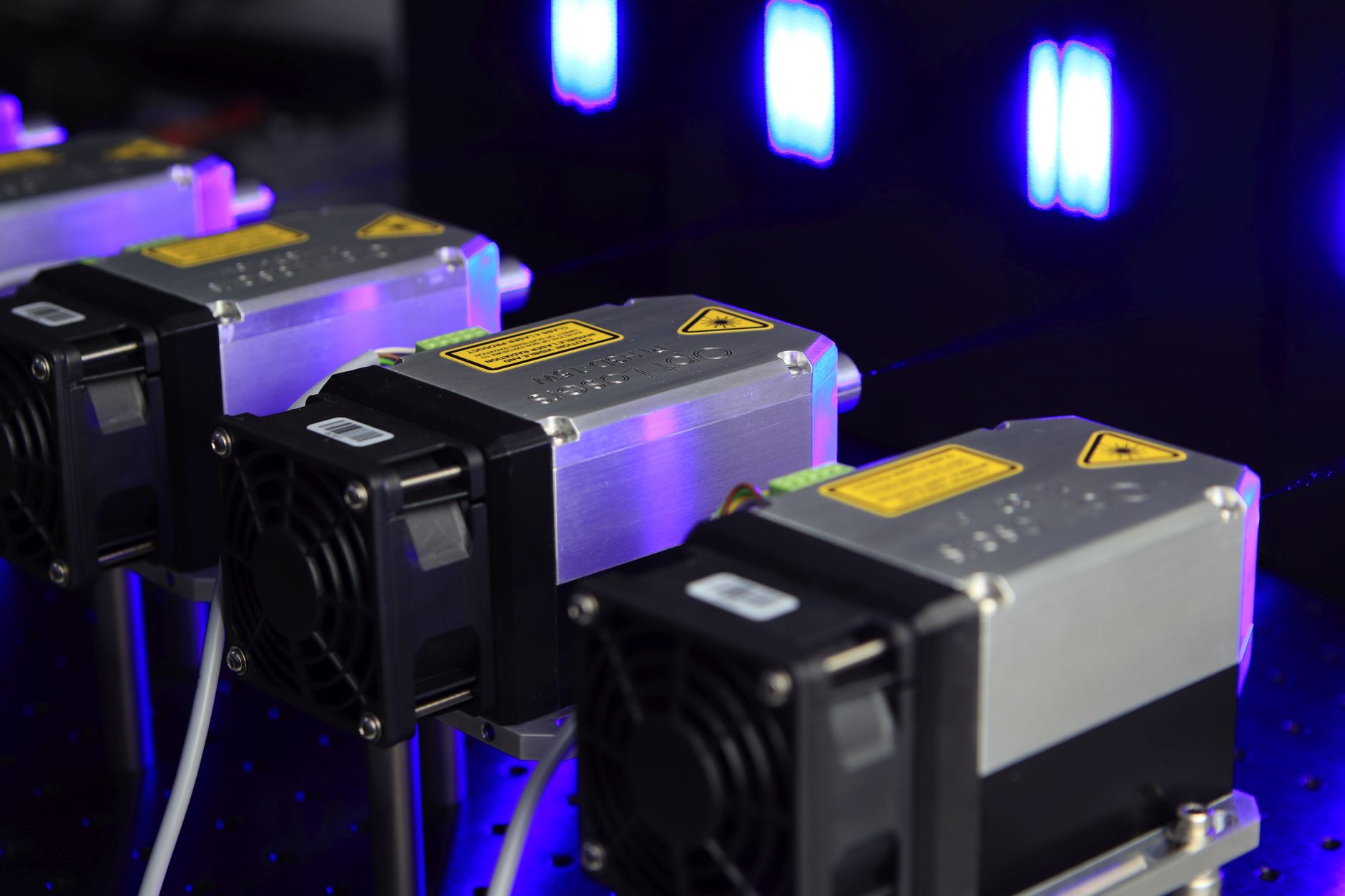
At the most fundamental level, the ability of a material to allow light to pass through it without interference is limited by the way atoms and photons interact. According to a new theoretical study, even under perfect conditions, a fraction of all light passing through any physical medium will be lost. This is not merely a result of impurities or manufacturing flaws, but rather an unavoidable quantum mechanical process where waves of light are converted into sound waves.
This phenomenon was explored by theoretical physicists Alberto Nicolis and Federico Piazza, who sought to calculate the exact theoretical limit of transparency. Their work focused on extreme states of matter, specifically superfluids. When liquid helium is cooled to just a few degrees above absolute zero, it enters a superfluid state where internal motion occurs without any friction. This state is strikingly clear, and while scientists were unable to measure any visible light attenuation, they observed the absorption of X-rays.
To solve the mystery of light loss, the researchers collaborated with Angelo Esposito, a scientist who had been conducting similar calculations in his search for dark photons—theoretical particles of dark matter. Esposito discovered that if a dark photon were to nudge an atomic nucleus inside superfluid helium, it would trigger a quantum mechanical vibration, creating a minute sound wave. Applying this principle to regular photons, the researchers found that photons continuously deliver tiny “kicks” to atomic nuclei. These kicks gradually bleed energy away from the light, turning it into passing sound waves until the light eventually vanishes.
In a mathematically perfect superfluid, a light beam could travel a distance equal to the diameter of the Earth before fading noticeably, yet the eventual loss of energy remains a physical certainty. “I find this work super interesting. In theoretical physics, we look for fundamental limitations set by nature. This paper precisely gives one!” said Borna Salehian, a physicist at the Swiss Federal Institute of Technology Zurich, according to Scientific American.
The practical boundary: Indium Tin Oxide and optical switching
While the superfluid research addresses the absolute theoretical floor of transparency, practical engineering faces its own set of hurdles. A separate study conducted by researchers at Imperial College London and the University of Exeter has identified the physical limitations governing the optical switching capabilities of indium tin oxide (ITO), a transparent conducting material used extensively in modern optoelectronic devices and displays.
In a study published in September 2026, a team led by PhD student Yan Li subjected a 310-nanometre-thick layer of ITO to intense, ultrafast laser pulses. The goal was to see how much the material could modulate light—essentially acting as a high-speed switch for optical signals. The team observed dramatic shifts: at lower laser intensities, transmission increased by up to 280%, while reflection decreased by as much as 74%.
However, the researchers discovered a critical “saturation point.” As the intensity of the laser increases, the material’s ability to modulate light ceases to increase linearly. Instead, the optical response reaches a ceiling where additional energy produces diminishing returns. This saturation is believed to be of electronic origin; once a specific threshold of electrons is excited within the ITO, the material can no longer respond with greater optical changes.
Breaking the standard models
One of the most significant aspects of the Imperial College London study was the failure of existing scientific models to predict the material’s behavior under extreme conditions. For years, scientists have relied on the “two-temperature model,” which treats hot electrons and the atomic lattice as two coupled thermal populations. While this model works well under moderate conditions, it failed to accurately explain the behavior of ITO at the highest laser intensities.
Instead of following the predictable path of the two-temperature model, the material entered an unexpected “high-intensity regime.” In this state, the material’s response partially recovered and evolved on a faster timescale than conventional thermal models allow. Professor Riccardo Sapienza, a senior author from Imperial College London, noted that as modulation approaches the time of an optical wave cycle, “new physics will appear, which is what we’re trying to understand.”
The team proposes that additional electron-electron interactions may be lifting more electrons into the conduction band, which would explain the observed partial recovery. This discovery provides a new roadmap for researchers attempting to push the boundaries of what transparent materials can do in high-speed communication and computing.
| Feature | Superfluid Helium (Theoretical) | Indium Tin Oxide (ITO) (Practical) |
|---|---|---|
| Primary Limitation | Quantum sound wave conversion | Electronic saturation point |
| Observed Effect | Light energy loss to phonons | Diminishing modulation response |
| Key Research Focus | Fundamental physical limits | Optical switching efficiency |
| Potential Application | Testing quantum boundaries | Metamaterials & Time Crystals |
| Research Institution | Various (Theoretical Physics) | Imperial College London / Exeter |
The future of metamaterials and photonic time crystals
Understanding these limits is not merely an academic exercise; it is a prerequisite for the next generation of light-based technology. Professor Sir John Pendry, a senior author and Professor of Solid-State Physics at Imperial College London, stated that this study of pumping ITO at high intensities will be “central to realising the next generation of metamaterials, structured in time as well as space.”
This refers to the potential creation of “photonic time crystals.” While traditional crystals are structured in space, photonic time crystals would involve manipulating the optical properties of a material in real-time. By understanding exactly where a material like ITO saturates and how it behaves in the high-intensity regime, engineers can design devices that manipulate light with unprecedented speed and precision.
Professor John Tisch, a Professor of Laser Physics at Imperial College London, emphasized that for practical time-varying photonics, the magnitude of optical change is only part of the equation. “We also need to know how fast a material switches, where its response saturates and what happens when we push beyond that limit,” Tisch said. This research provides the necessary insights into those specific processes.
What It Means for You
While these discoveries happen in the realm of high-level physics, the implications ripple through several industries:
- For Telecommunications Developers: The fundamental limit of light-to-sound conversion explains why signal attenuation is an inevitable hurdle in fiber-optic networks. This reinforces the necessity of using amplifiers at regular intervals to maintain signal integrity over long distances.
- For Consumer Electronics Engineers: As we demand faster and more efficient screens and sensors, understanding the saturation points of materials like indium tin oxide is vital. It prevents engineers from attempting to push hardware beyond its physical capabilities and guides the search for better alternatives.
- For Quantum Computing Researchers: The link between light, sound, and even dark matter particles provides a new playground for testing quantum states. The ability to predict how photons interact with atomic nuclei could lead to more stable quantum communication protocols.

Counterpoints and open questions
Despite the excitement surrounding these findings, several questions remain unanswered. The connection between the theoretical limits in superfluids and the practical limits in materials like ITO is still largely based on the assumption that similar rules governed by underlying quantum mechanics apply universally. While experts anticipate this to be true, more empirical evidence is needed to confirm that the “quantum sound wave” effect is the primary driver of transparency loss in everyday materials.
Furthermore, the mechanism behind the unexpected recovery in the high-intensity regime of ITO remains a hypothesis. While the researchers suggest electron-electron interactions are responsible, they have noted that further work is required to confirm this mechanism directly. There is also the challenge of scalability: a material that performs exceptionally well in a controlled laboratory setting under ultrafast laser pulses may not behave the same way in a commercial smartphone or a standard fiber-optic cable.
What Happens Next
In the coming years, the scientific community will likely focus on two main fronts. First, researchers will attempt to determine how far the physics observed in ITO extends to other switchable materials, as suggested by Professor John Tisch. If these saturation and recovery patterns are common, it could lead to a massive redesign of how we select materials for optical components.
Second, the quest for “photonic time crystals” will move from theoretical modeling to experimental prototyping. Watch for upcoming announcements from institutions like Imperial College London regarding the first successful demonstration of time-structured metamaterials. These developments will be the primary indicator of whether we can truly master the manipulation of light at its most fundamental limits.
As science continues to probe the boundaries of the physical world, the distinction between what is possible and what is fundamentally forbidden becomes clearer
Frequently asked questions
Why can't materials be 100% transparent?
According to theoretical research, no material can be perfectly transparent because of an unavoidable quantum mechanical process. As light waves pass through a physical medium, they inevitably interact with atomic nuclei, causing a tiny amount of energy to be converted into sound waves, also known as phonons. This means a fraction of light is always lost to these vibrations, regardless of how pure the material is.
What is Indium Tin Oxide (ITO) used for?
Indium tin oxide (ITO) is a transparent conducting material that is widely used in modern technology. It is a critical component in optoelectronic devices, such as touchscreens, liquid crystal displays (LCDs), and various types of sensors. Because it can conduct electricity while remaining clear, it is ideal for creating interfaces between electronic circuits and light.
What is the "saturation point" in optical switching?
In the context of optical switching, the saturation point is a physical limit where increasing the intensity of a light source (like a laser) no longer produces a proportional increase in the material’s response. In the study of ITO, researchers found that once a certain threshold of electrons is excited, the material’s ability to modulate light transmission and reflection reaches a ceiling, making further energy input ineffective for increasing modulation.
What are photonic time crystals?
Photonic time crystals are a theoretical next-generation class of metamaterials that are structured in time rather than just in space. While traditional crystals have a repeating pattern of atoms in space, these materials would involve rapidly changing their optical properties over time. This would allow for the extreme manipulation of light, potentially enabling much faster and more efficient optical communication and computing technologies.
References
- Ultrafast laser study reveals limits of optical switching in key photonic material — imperial.ac.uk
- Limit of light: US scientists reveal why no material can ever be 100% transparent — yahoo.com
Featured image: Photo by Jeff Burkholder on Pexels