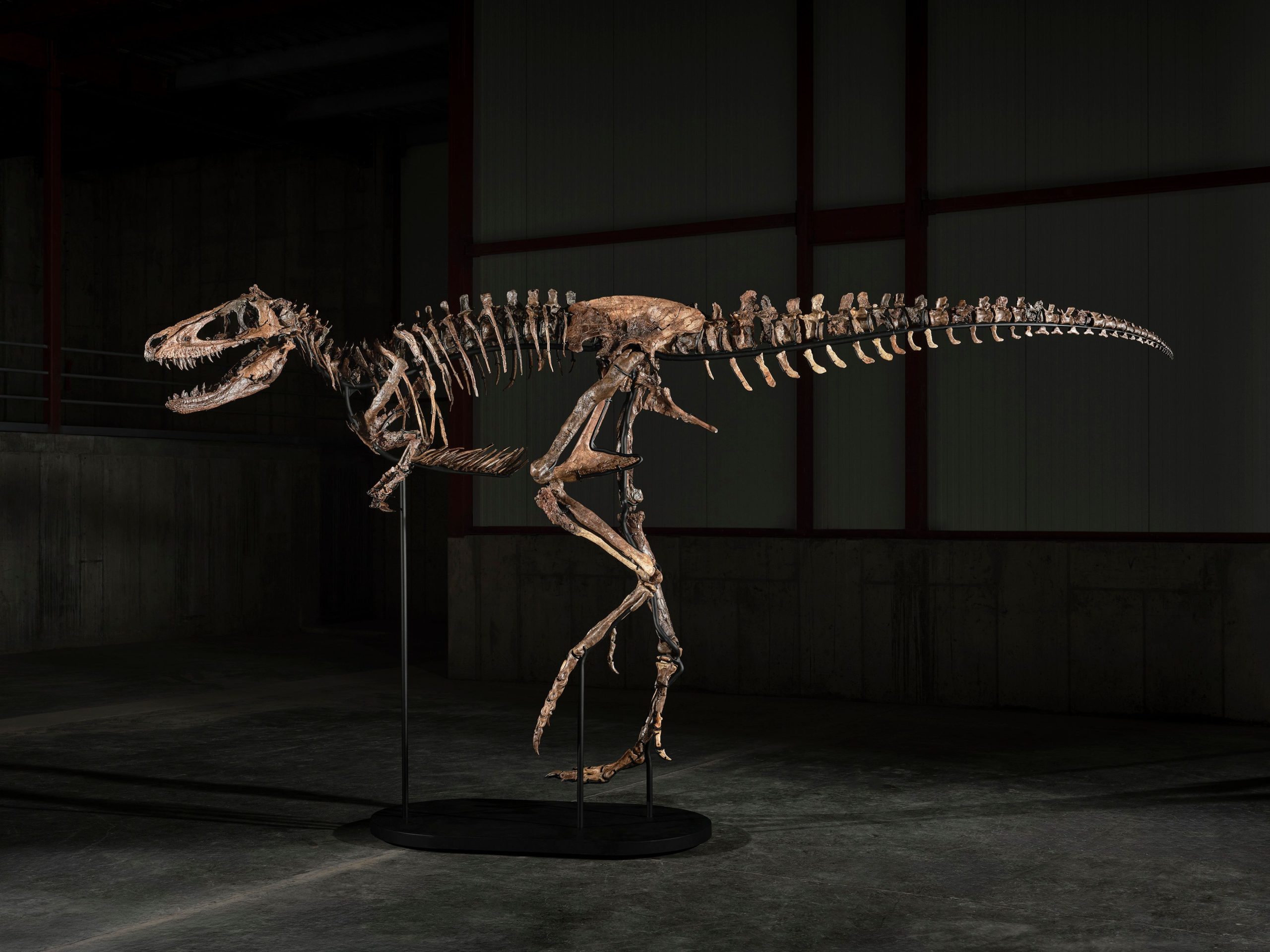
The fossil-bones-from-sahelanthropus-tchadensis-chevron_right/” title=”Definitive Study: Sahelanthropus' Upright Walk & Human Origins”>nanotyrannus skeleton sale at Sotheby’s in New York has established a massive new benchmark for the prehistoric fossil market, fetching a staggering $47.3 million during a high-stakes auction on Tuesday, October 27, 2026. The sale of the specimen, nicknamed “Jodi,” far exceeded the auction house’s initial estimates of $6 million to $9 million, signaling an unprecedented surge in the valuation of high-end paleontological finds.
Key Takeaways
- Record-Breaking Price: The Nanotyrannus skeleton sale reached $47.3 million, making it the second-most expensive dinosaur fossil ever sold, trailing only the $50.1 million sale of the T. rex known as “Gus.”
- Scientific Significance: The specimen belongs to a recently confirmed distinct genus, Nanotyrannus, ending decades of debate over whether it was merely a juvenile Tyrannosaurus rex.
- Intense Competition: The auction involved a 12-minute bidding war between six interested parties, ultimately won by an undisclosed buyer.
- Ethical Conflict: The sale has reignited a global debate between auction houses, who view private investment as a driver for discovery, and scientists, who fear significant specimens are being removed from public and academic reach.
- Specimen Details: “Jodi” is approximately 19.6 feet long, stands 9.6 feet tall, and consists of 191 fossilized bone elements, including a nearly complete skull.
- Forelimbs: Nanotyrannus possessed relatively longer forelimbs.
- Claws: It featured larger, more prominent hand claws.
- Dentition: The teeth were more slender and blade-like, specialized for slicing through meat.
- Body Structure: The specimen was more gracile and “sleek” compared to the robust build of an adult T. rex.
- For Researchers and Students: Expect a tightening of access to high-quality specimens. As more “complete” skeletons enter private hands, the pool of available material for hands-on study may shrink, potentially shifting research toward digital scans or less complete remains.
- For Museum Supporters: The trend highlights a growing disparity between the value of individual artifacts and the operational budgets of the institutions that house them. Advocacy for increased public funding of science may become more urgent as the “trophy market” outpaces institutional wealth.
- For Investors and Collectors: The fossil market is becoming a legitimate, albeit volatile, asset class. Much like the fine art market, it is susceptible to trends, high-profile sales, and potential legal complexities regarding the provenance and origin of specimens.
- The Provenance and Legal Risk: The market has faced scrutiny regarding the legality of fossil ownership. Recent years have seen high-profile cases involving the surrender of assets due to investigations into financial crimes and illegal excavations. Will the rise in prices attract more scrutiny from international authorities?
- The “Fossil Bubble”: Is the current valuation of dinosaur fossils sustainable, or is it a speculative bubble driven by a small group of ultra-high-net-worth individuals?
- The Transparency Gap: With the buyer of “Jodi” remaining anonymous, the scientific community has no way of knowing if the specimen will be made available for study or hidden in a private vault.
- The Destination of “Jodi”: If the buyer chooses to loan the specimen to a major museum, it could serve as a model for the “Griffin approach” to private collecting.
- New Research Publications: With the Nanotyrannus genus now firmly established, expect a surge in comparative studies as researchers attempt to map the evolutionary relationship between this predator and the T. rex.
- Auction Trends: Watch for upcoming auctions at Christie’s or other major houses to see if the “trophy fossil” trend continues to escalate in the coming year.
- www.dailysabah.com
- www.theguardian.com
- www.artnews.com
- www.aa.com.tr
- observer.com
- www.bbc.com
What Happened: A 12-Minute Bidding War
On Tuesday, October 27, 2026, the Upper Manhattan headquarters of Sotheby’s became the epicenter of the prehistoric collecting world. The centerpiece of the evening was “Jodi,” a remarkably complete Nanotyrannus skeleton that had been on display at the auction house since early October.
According to reports from Sotheby’s, the auction was characterized by a rapid and intense 12-minute battle involving six prospective buyers competing via telephone and online platforms. While the hammer price sat at $40.5 million, the final total, including auction fees, reached $47.3 million. The identity of the winning bidder remains undisclosed, leaving the ultimate destination of this 67-million-year-old predator a mystery.
This sale follows a trend of escalating prices for “trophy” fossils. Just months earlier, in July 2026, Sotheby’s sold a Tyrannosaurus rex named “Gus” for a record $50.1 million. The current Nanotyrannus skeleton sale further cements the transition of dinosaur remains from scientific specimens to high-value luxury assets, comparable to blue-chip fine art or rare timepieces.
The Specimen: From Montana Ranch to Global Spotlight
The story of “Jodi” began in 2019 in the Hell Creek Formation of Garfield County, Montana. The remains were discovered by Jodi Pierson, a local rancher, on her privately owned land near the town of Jordan. The discovery was significant due to the site’s geological importance, as the Hell Creek Formation is one of the most heavily studied areas for Late Cretaceous life.
Following the discovery, the specimen was excavated by commercial paleontologist Clayton Phipps, who also famously discovered the “Dueling Dinosaurs” fossil in 2006. The excavation and preservation of “Jodi” were later featured in the 2020 Discovery Channel series Dino Hunters.
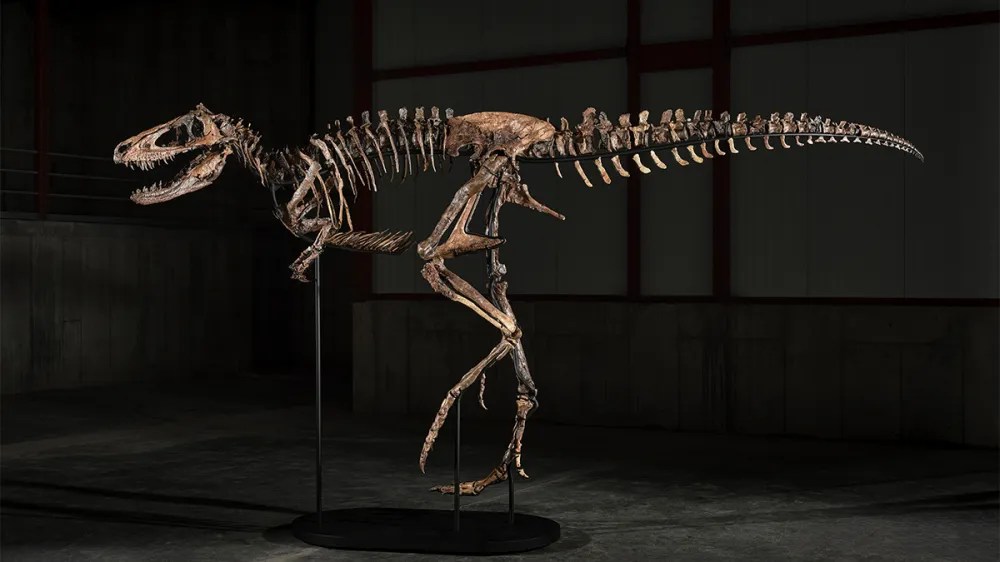
Physically, the specimen is extraordinary. It is approximately 70% complete, containing 191 fossil bone elements. The skeleton is roughly 19.6 feet (6 meters) long and stands approximately 9.6 feet (2.9 meters) tall on its display armature. One of its most striking features is a “beautifully preserved, virtually complete skull” containing 53 bones and roughly 50 teeth at various stages of development.
The Scientific Evolution of Nanotyrannus
For much of the last century, the scientific community was embroiled in a heated debate: was Nanotyrannus a unique, smaller predator, or was it simply a juvenile Tyrannosaurus rex? Many researchers argued that the smaller size and more slender build were merely growth stages of the more famous giant.
However, this ambiguity was largely settled by research published in the journal Nature in 2025. The study provided definitive evidence that Nanotyrannus is a distinct genus that coexisted with T. rex approximately 67 million years ago. Researchers identified over 150 morphological differences between the two, including:
Megan Jacobs, a paleontologist at the University of Portsmouth, noted that while the species was long mistaken for a teenager of the T. rex, its anatomical distinctions are profound. This scientific reclassification is widely credited with contributing to the specimen’s massive market value; a “newly-identified” species carries a premium that a common juvenile specimen does not.
Market Analysis: The Rise of the “Trophy Fossil”
The Nanotyrannus skeleton sale is not an isolated event but part of a documented upward trajectory in the fossil market. A peer-reviewed study in the journal Geoheritage analyzed over 10,000 fossil auction listings between 2010 and 2022, noting that while dinosaurs represent a small fraction of total specimens traded, they generate the highest financial returns.
To understand the scale of the current market, it is essential to compare “Jodi” with other landmark sales:
| Fossil Name | Species | Sale Price | Auction House | Year | Status |
|---|---|---|---|---|---|
| Gus | Tyrannosaurus rex | $50.1 million | Sotheby’s | 2026 | Record Holder |
| Jodi | Nanotyrannus | $47.3 million | Sotheby’s | 2026 | 2nd Most Valuable |
| Apex | Stegosaurus | $44.6 million | Sotheby’s | 2024 | 3rd Most Valuable |
| Stan | Tyrannosaurus rex | $31.8 million | Christie’s | 2020 | High-Value Sale |
| Ceratosaurus | Ceratosaurus | $30.5 million | Sotheby’s | 2025 | High-Value Sale |
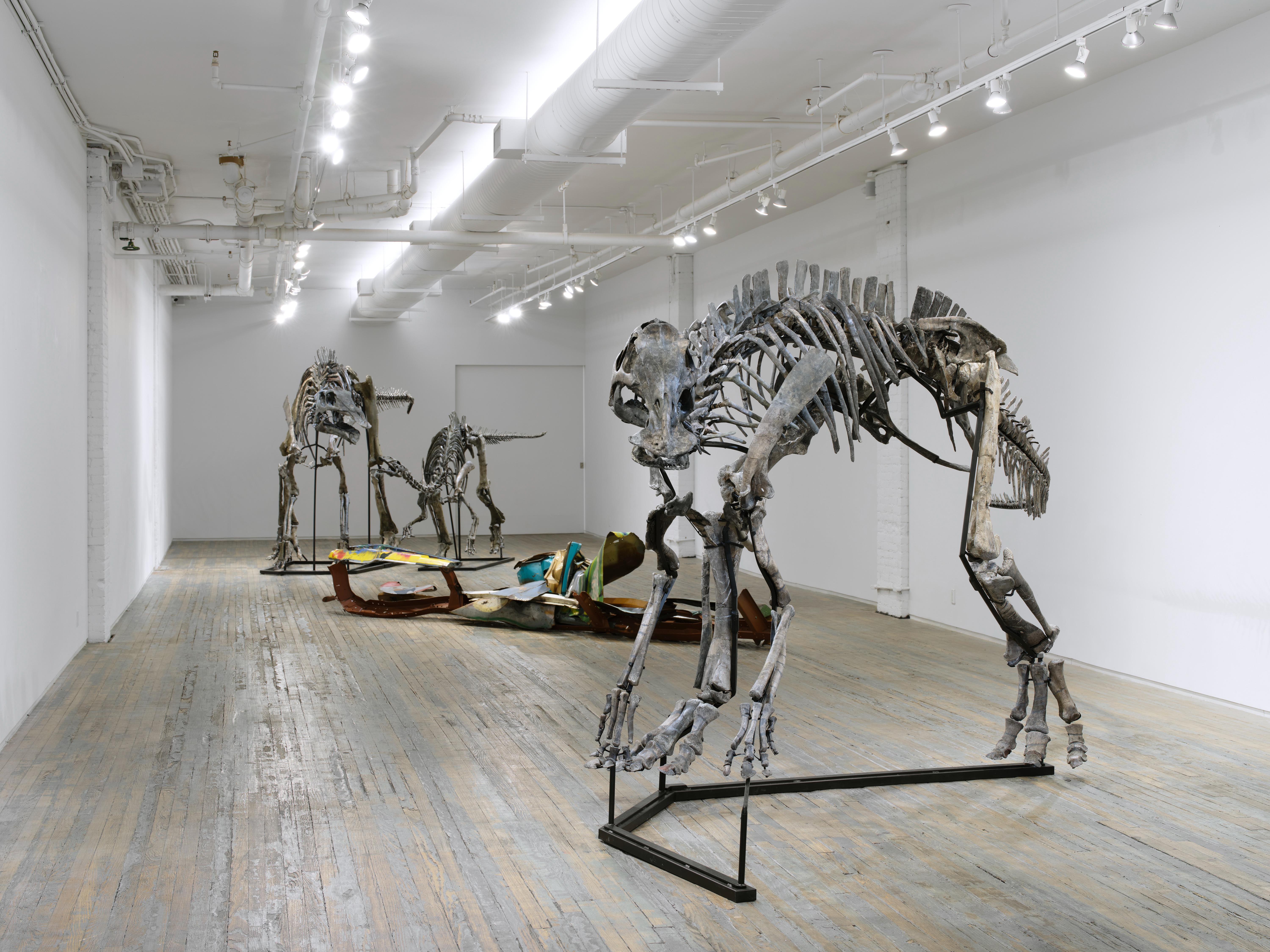
This data illustrates a “new tier” of valuation. As collectors increasingly view these specimens as “trophy objects”—akin to blue-chip paintings—the gap between auction estimates and final hammer prices continues to widen. For instance, “Jodi” was estimated at a maximum of $9 million but sold for over five times that amount.
Why It Matters: The Ethics of Private Ownership
The massive influx of capital into the fossil market has created a profound rift between the commercial and scientific worlds. The central question is whether significant biological specimens belong in the hands of private collectors or in the care of public institutions.
The Scientific Argument: The Risk of “Disappearing” Fossils
Many paleontologists argue that when a specimen like “Jodi” is sold to an anonymous private buyer, it effectively disappears from the scientific record. Professor Steve Brusatte of the University of Edinburgh has been a vocal critic of this trend, calling the sale of such specimens “harrowing.”
“It’s harrowing to think it could disappear into the vaults of a collector rather than displayed on a museum where it can wow and inspire kids and families and the public at large,” Brusatte told the BBC. The primary concern is that private owners may not allow researchers access to the bones for future study, scans, or sampling—technologies that may not even exist yet.
Thomas R. Holtz Jr., a tyrannosaur researcher at the University of Maryland, echoed these concerns, pointing to the economic reality of modern museums. He noted that while a single fossil can fetch $47 million, many institutions, such as the Academy of Natural Sciences at Drexel in Philadelphia or the Sternberg Museum of Natural History at Fort Hays State University, face closure or severe budget cuts.
“If it simply graces the lobby or ballroom of one of some billionaire’s mansions, unseen and unaccessible to all but their friends, servants and so forth, it is effectively lost to both the public and the scientific community,” Holtz stated. “In fact, at that point, it is no different than if it had just been left in the ground.”
The Commercial Argument: Funding Discovery
Conversely, auction houses and some industry professionals argue that private investment is a vital engine for paleontology. Cassandra Hatton, Sotheby’s Head of Science and Natural History, emphasized that the passion and expertise of fossil hunters are fundamental to these stories.
From this perspective, the high prices paid by the ultra-wealthy provide the necessary capital to fund the expensive, labor-intensive processes of excavation, preparation, and mounting. Without the incentive of high-value sales, many significant specimens might remain undiscovered or lost to erosion.
There is also the “philanthropic model” to consider. Collectors like billionaire Ken Griffin, who purchased the Stegosaurus “Apex” in 2024, have demonstrated that private acquisition can lead to public benefit. Following his purchase, Griffin arranged for a multi-year loan of the specimen to the American Museum of Natural History and funded research fellowships and educational initiatives.
What It Means for You
Depending on your relationship with science, art, or the economy, the implications of the Nanotyrannus skeleton sale vary:
Counterpoints and Open Questions
While the sale is a triumph for the auction house, several risks and unanswered questions remain:
What Happens Next
As the dust settles on the Sotheby’s auction, several key developments will be worth watching:
Frequently Asked Questions
Is Nanotyrannus actually a baby Tyrannosaurus rex?
No. While it was believed to be a juvenile T. rex for decades, research published in the journal Nature in 2025 confirmed that Nanotyrannus is a distinct genus. It possessed over 150 anatomical differences from T. rex, including longer arms and different tooth structures, indicating it was a separate species that lived alongside the larger T. rex.
Why was the price of the skeleton so much higher than expected?
The Nanotyrannus skeleton sale reached $47.3 million, far exceeding the $6 million to $9 million estimate. This is attributed to the specimen’s extreme completeness (191 bones), its recent scientific reclassification which increased its rarity and prestige, and a growing market of ultra-wealthy collectors treating fossils as “trophy objects” similar to fine art.
Who owns dinosaur fossils found on private land?
In the United States, fossils discovered on privately owned land are generally considered the property of the landowner. This allows for the legal commercial sale of specimens, as seen with the discovery of “Jodi” on the ranch of Jodi Pierson in Montana.
Can scientists still study fossils if they are sold to private collectors?
It depends on the buyer. If the collector agrees to loan the specimen to a museum or allows academic access for scanning and research, science continues. However, if the owner keeps the specimen in a private residence and denies access, the specimen is effectively lost to the scientific community for future study.
References
Featured image: Image via Observer