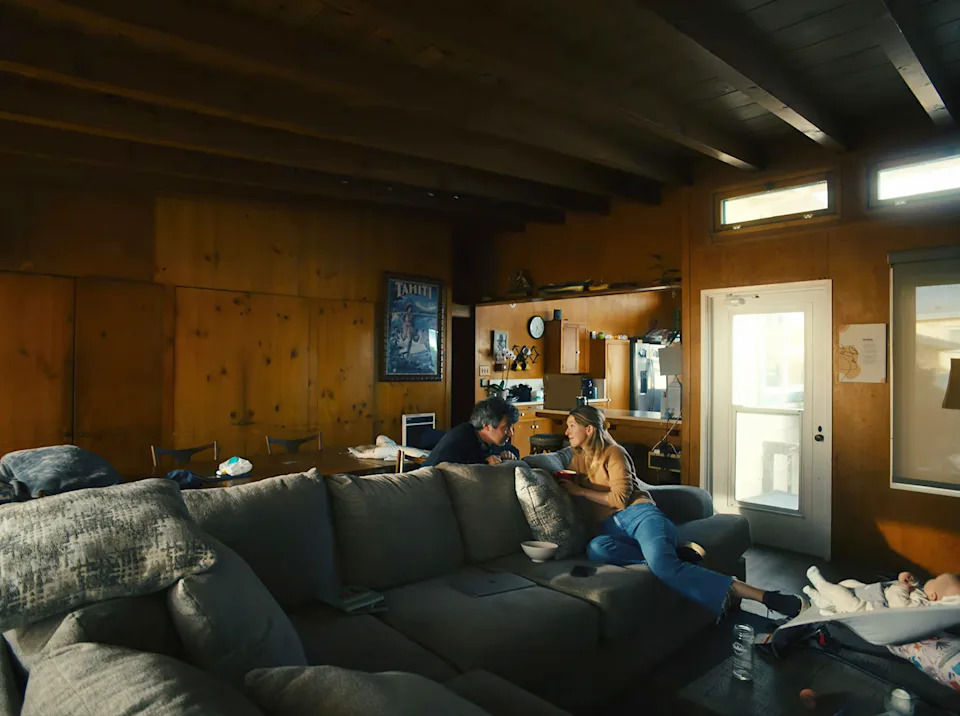
The You Can See Everything documentary has redefined the boundaries of non-fiction cinema, breaking domestic box office records and igniting a fierce debate over the nature of performance, truth, and the very definition of the documentary genre.
Key Takeaways
- Record-Breaking Success: The A24 production has earned $45.1 million at the North American box office, supported by a massive 98% Rotten Tomatoes rating.
- Genre Defiance: Co-directors Nathan fielder and Lance Oppenheim have utilized a “meta-documentary” style that blends observational vérité with staged reenactments.
- Award Controversy: The Directors Guild of America (DGA) has ruled the 174-minute film ineligible for the Feature Prize, relegating it to the Documentary category.
- The Seyfried Factor: Actress Amanda Seyfried’s involvement in the film’s second half has turned the narrative into a “hall of mirrors,” bolstering her Academy Award prospects.
- Legal Context: The film captures the final 34 days of Elizabeth holmes’s freedom before her 11-year prison sentence for fraud.
- The Investigative View: John Carreyrou, the Wall Street Journal reporter who originally broke the Theranos fraud story, argues the scene is a “tell.” He suggests Holmes was not actually confused by the joke but was “playing dumb” to avoid showing a reaction.
- The Neurodivergent View: Some observers suggest the behavior provides evidence of “masking,” a phenomenon where neurodivergent individuals imitate social cues to navigate neurotypical environments.
- The Practical View: Others argue the scene simply depicts an exhausted mother of two small children, facing imminent imprisonment, attempting to “politely bluff her way out” of a social interaction.
- www.yahoo.com
- slate.com
- www.yahoo.com
- variety.com
- www.hollywoodreporter.com
What Happened: A Box Office and Critical Phenomenon
Since its theatrical opening on October 16, 2026, the You Can See Everything documentary has emerged as an unprecedented commercial and critical juggernaut. According to reports from Yahoo, the film has amassed a total domestic haul of $45.1 million, including a massive $19.5 million second-weekend showing. This financial success is matched by critical acclaim, with the film holding a Metacritic score of 97 and a 98% rating on Rotten Tomatoes.
Critics have been quick to label the film a landmark. Brett Arnold of Yahoo described it as a brilliant work that deserves a Best Picture nomination, while Nick Schager of the Daily Beast claimed it stands shoulder-to-shoulder with the greatest documentaries ever made. However, the film’s path to major awards has hit a procedural snag. On October 27, 2026, Variety reported that the Directors Guild of America (DGA) ruled the film ineligible for the “Outstanding Directorial Achievement in Theatrical Feature Film” prize. The DGA maintained that, per its rule book, documentaries are excluded from the feature category, meaning directors Nathan Fielder and Lance Oppenheim will compete exclusively in the Documentary category.
The Production: Living in the “Bubble”
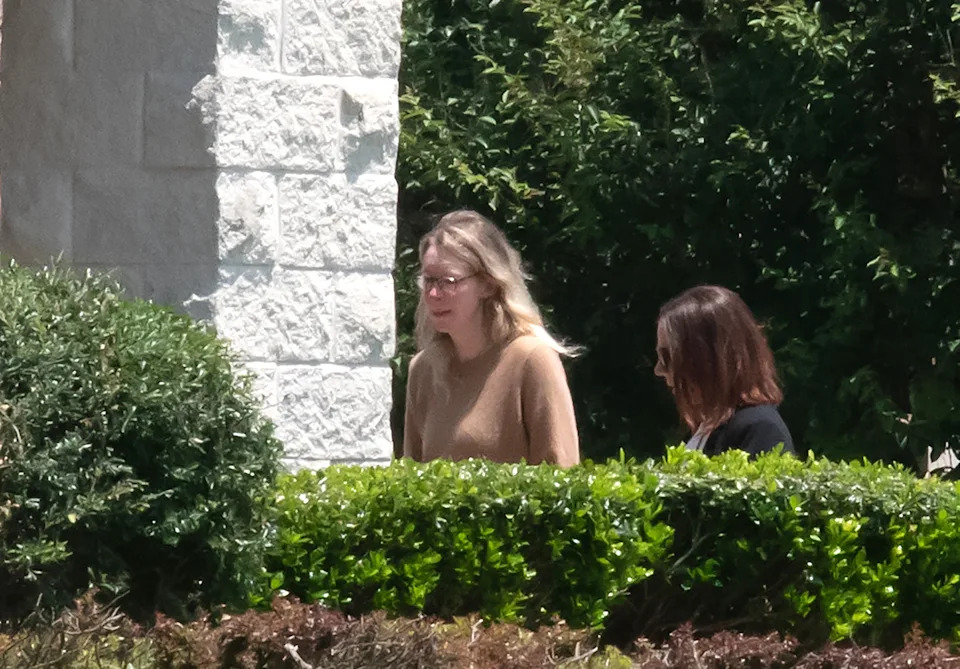
To capture the final month of Elizabeth Holmes’s life before her incarceration, the production crew moved into a rented, four-bedroom beachfront cottage in the gated community of Sandy Lane in Del Mar, California. This intimate setting allowed for what co-director Lance Oppenheim described as an “exercise in truth, perception and distortion.”
For a period of 34 days, a small crew of approximately eight people lived in the household, filming up to 16 hours a day. The production was characterized by an intense level of access that blurred the lines between filmmaker and subject. Nathan Fielder, known for his work on HBO’s The Rehearsal, became an on-screen presence, acting as an “accidental investigator” of the everyday moments within the Holmes-Evans household.
Fielder noted that the decision to include him on camera was organic. According to an interview at the SCAD Savannah Film Festival, the subjects—Elizabeth Holmes and her fiancé, Billy Evans—frequently directed questions toward Fielder, prompting the crew to pan the camera toward him. Fielder explained that his presence was intended to help “pull Elizabeth from whatever version of reality she was living in and try and pull her back into the one that we were in.”
Production Logistics and Data
| Metric | Detail | Source |
|---|---|---|
| Total Domestic Haul | $45.1 million | Yahoo |
| Metacritic Score | 97 | Yahoo |
| Rotten Tomatoes Rating | 98% | Yahoo |
| Film Runtime | 174 minutes | Variety |
| Filming Duration | 34 days | LA Times |
| Primary Location | Del Mar, CA (Beachfront cottage) | LA Times |
The “Who’s on First?” Debate: Interpreting Truth
One of the most discussed sequences in the You Can See Everything documentary involves Fielder presenting the classic Abbott and Costello “Who’s on First?” comedy routine to Holmes and Evans. This scene has become a focal point for analysts attempting to decode Holmes’s character.
As reported by Slate, the scene serves as a Rorschach test for audiences, with three primary interpretations emerging:
Fielder and Oppenheim have noted that they were constantly tracking these bizarre, unscripted moments. Fielder admitted that during the shoot, they often felt they were witnessing a “game” they couldn’t fully comprehend.
The Seyfried Effect and the Hall of Mirrors
As the documentary progresses, the narrative undergoes a structural shift. Following the period of Holmes’s incarceration, the filmmakers lost direct access to her, leading to the introduction of Amanda Seyfried. Seyfried, who previously won an Emmy for portraying Holmes in Hulu’s The Dropout, joins the production to help re-enact key conversations and scenes.
This inclusion transforms the film into what Slate calls a “hall of mirrors.” Seyfried does not merely act; she acts as a “game scene partner,” reviewing Fielder’s footage and using her professional skills to probe the remaining subjects. This culminates in a “chilling” scene where Seyfried, playing a version of Holmes, goads Billy Evans into revealing his intense affinity for political figure Charlie Kirk and his desire to “ruin the lives” of those who wronged his partner.
A24 is reportedly mounting a significant Academy Award campaign for Seyfried in the Supporting Actress category, as her performance is seen as a masterclass in navigating the documentary’s complex layers of performance and reality.
Legal and Personal Realities of Elizabeth Holmes
While the film explores the psychological and performative aspects of the subjects, it is grounded in the stark legal reality of Elizabeth Holmes. Following her conviction for defrauding investors, Holmes is currently serving an 11-year and 3-month sentence at Federal Prison Camp Bryan, a minimum-security facility in Texas.
According to Yahoo, her sentence was recently reduced by one year, and she is expected to be released on February 22, 2030. Financially, she remains under heavy scrutiny, having been ordered to pay $452 million in restitution.
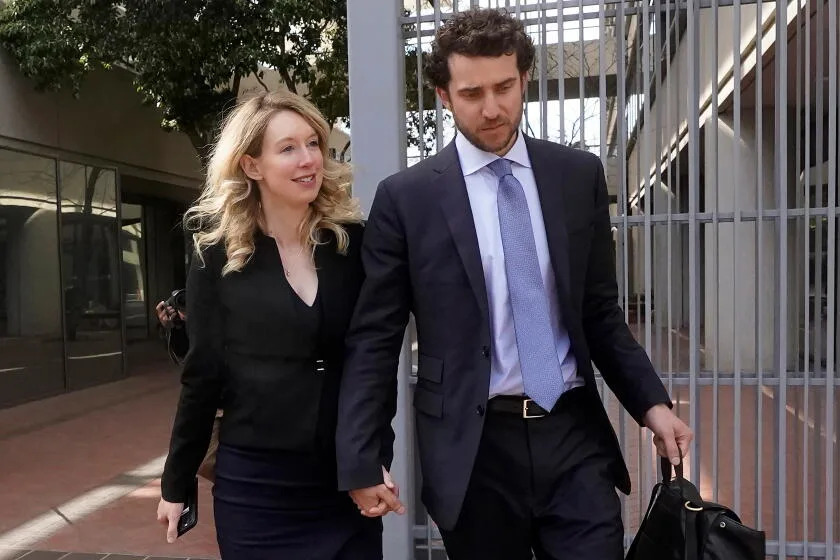
Her partner, Billy Evans, remains a central figure in the documentary. The film depicts his life in Austin, Texas, where he is currently the CEO of Haemanthus, an Austin-based blood-testing startup. The documentary also explores the personal toll of the scandal, including the birth of the couple’s two children, William and Invicta, in the years leading up to and during the legal proceedings.
The DGA Ruling and the Oscar Campaign
The decision by the DGA to exclude the film from the Feature Prize category has created a strategic hurdle for A24. Historically, the DGA Feature award has been a reliable bellwether for the Academy Award for Best Director; since 1949, the DGA winner has almost always aligned with the Oscar winner, with only eight exceptions.
By being relegated to the Documentary category, the film loses a key piece of “precursor momentum” that typically helps hybrid works transition into the “Big Four” categories (Picture, Director, Actor, Actress) at the Oscars. A24 is currently in “active conversations” with other major guilds, including BAFTA and SAG-AFTRA, to advocate for a more flexible definition of “feature” that accounts for the evolving nature of hybrid documentaries.
What It Means for You
If you are a film student or industry professional: Expect a shift in how “hybrid” content is categorized. The success of this film, despite the DGA ruling, suggests that audiences are increasingly hungry for content that blurs the line between nonfiction and staged narrative.
If you are a fan of the subjects: While the film is a massive success, it is important to note that neither Elizabeth Holmes nor Billy Evans has seen the final cut, according to Fielder. The film remains an external observation of their lives rather than a collaborative memoir.
If you are an awards watcher: Keep a close eye on the SAG-AFTRA and BAFTA announcements. The way these organizations treat the You Can See Everything documentary will signal whether the industry is ready to embrace a new genre of “meta-documentary.”
Counterpoints and Open Questions
Despite its success, the film is not without controversy. One major ethical question remains: Why did Holmes and Evans grant such “unfettered access” during the final month of Holmes’s freedom? Fielder himself expressed confusion regarding this, stating, “There was never a great explanation as to… why you would want to spend your last month of freedom in a decade with this guy.”
Furthermore, the film’s reliance on “unreliable narrators” and contradictory evidence—such as the dispute between The New York Times reporter Amy Chozick and Holmes regarding a specific quote about “playing a character”—leaves viewers with more questions than answers. Critics argue that while the film is a brilliant study of performance, it may intentionally leave the audience in a state of epistemological uncertainty, making it difficult to discern what is objectively true.

Frequently Asked Questions
Why was the film ruled ineligible for the DGA Feature Prize?
The Directors Guild of America (DGA) follows a strict rulebook that excludes documentaries from the “Outstanding Directorial Achievement in Theatrical Feature Film” category. Despite A24’s arguments that the film’s unusual construction makes it a hybrid work, the DGA maintains that films are classified based on their production mode rather than their stylistic elements.
What is Amanda Seyfried’s role in the documentary?
Amanda Seyfried appears in the second half of the film. Having previously played Elizabeth Holmes in the Hulu series The Dropout, she uses her acting expertise to reenact key conversations and scenes. Her role is described by critics as a “game scene partner” that helps the filmmakers explore the themes of performance and identity.
When will the documentary be available for streaming?
While A24 has not officially announced a streaming date, industry patterns suggest a digital release window of 30 to 45 days after the theatrical run. Given the October release, a mid-November or early December release on HBO Max is forecasted, due to A24’s existing distribution deal with the platform.
Where is Elizabeth Holmes currently located?
Elizabeth Holmes is currently incarcerated at Federal Prison Camp Bryan, a minimum-security facility in Bryan, Texas. She is serving an 11-year and 3-month sentence for fraud and is expected to be released in February 2030.
What Happens Next
The upcoming months will be critical for the You Can See Everything documentary as it enters the heart of the awards season. While the DGA ruling has complicated the path for a Best Director nomination, the film remains a powerhouse contender for Best Documentary Feature
References
Featured image: Image via Yahoo Entertainment