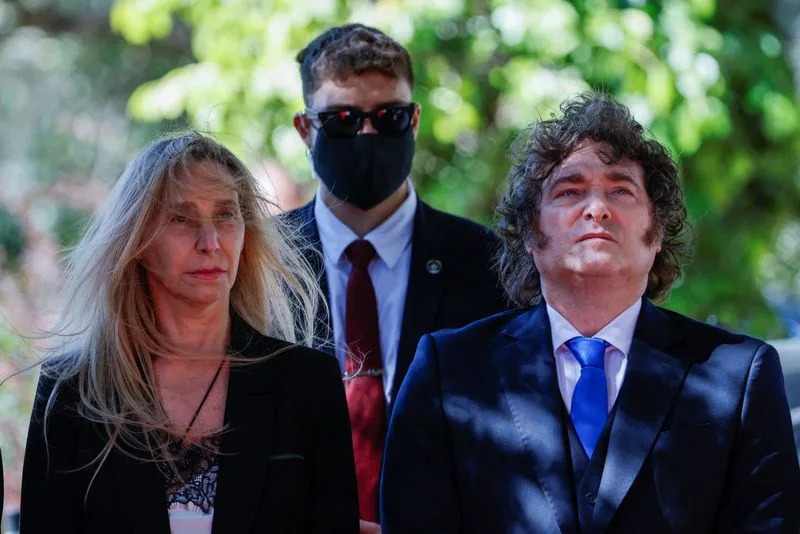
The Argentina libra cryptocurrency investigation has been officially terminated by a federal judge, clearing President Javier milei and his sister, Karina Milei, of criminal allegations regarding the collapse of the $Libra meme coin. On Friday, October 23, 2026, Federal Judge Marcelo Martinez de Giorgi issued a ruling that ended a long-standing inquiry into whether the President’s social media promotion of the token constituted a fraudulent scheme.
Key Takeaways
- Judicial Dismissal: Federal Judge Marcelo Martinez de Giorgi dropped the criminal investigation into President Javier Milei and Chief of Staff Karina Milei, ruling that their actions did not constitute a criminal offense.
- No Proof of Fraud: The judge concluded that while the President’s influence may have amplified the token’s market impact, there was no evidence of “criminally relevant deception.”
- Massive Investor Losses: Despite the dismissal, the $Libra token’s collapse resulted in estimated investor losses ranging from $100 million to $251 million.
- U.S. Advisor Cleared: The investigation into Hayden Davis, a U.S. businessman who described himself as a “launch adviser” for the token, was also dismissed.
- Political Fallout Remains: While criminal charges were dropped, the Argentine Anti-Corruption Office continues to review whether the President’s actions violated administrative ethics or conduct standards.
- The Identity of the Creators: While the eight wallets linked to the token’s creator were identified, the ultimate identity and location of the developers behind $Libra remain a subject of speculation.
- The $99 Million Withdrawal: How the creators managed to move such vast sums of money so quickly without triggering immediate freezes by centralized exchanges remains a point of technical debate among blockchain analysts.
- Regulatory Gaps: Does the dismissal of this case highlight a fundamental gap in Argentine law regarding how political figures should be allowed to interact with volatile financial markets?
- The Anti-Corruption Probe: The results of the administrative investigation into the Milei administration’s conduct will be the next major legal milestone. This could lead to sanctions or formal censures, even if criminal charges are off the table.
- Political Polarization: With the legal threat of impeachment temporarily neutralized, the battle between Milei and the opposition will likely shift back to economic policy and the social impact of his austerity measures.
- Legislative Reform: There may be renewed calls in the Argentine Congress to implement stricter regulations on cryptocurrency promotions and to define the responsibilities of public officials when engaging with digital assets on social media.
- sg.news.yahoo.com
- www.bbc.co.uk
- www.internazionale.it
- coinpedia.org
- www.aljazeera.com
What Happened: The Collapse of $Libra
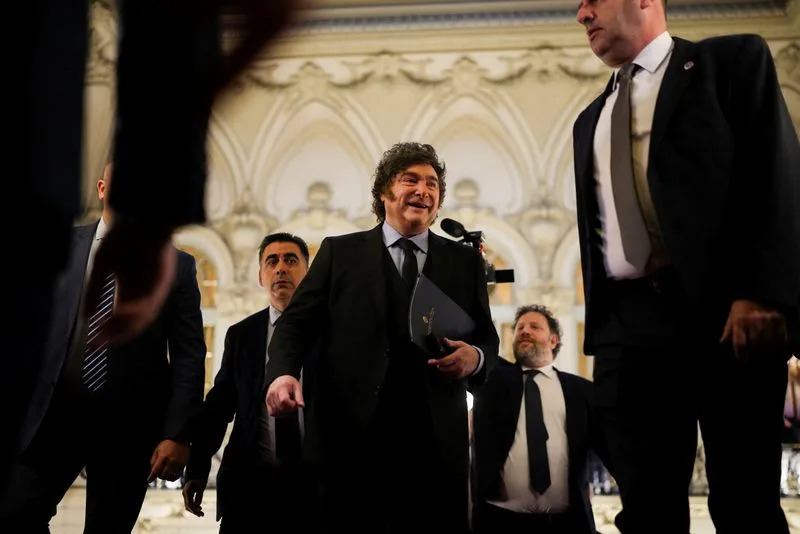
The legal saga began in February 2025, when President Javier Milei posted a recommendation for the little-known cryptocurrency known as $Libra on the social media platform X (formerly Twitter). According to reports from BBC News, Milei stated at the time that the project would assist in funding start-ups and small businesses. Following the post, the token experienced a brief, rapid market rally.
However, the surge was short-lived. Within hours of the initial posting, President Milei deleted the post and began to publicly distance himself from the project. According to the President, he had not been fully aware of the specific details of the project and decided to cease publicity once he realized the potential implications. Almost immediately after the deletion, the value of the $Libra token “nosedived,” leading to what many market observers and online critics described as a “rug pull”—a scheme where developers or promoters drive up a token’s price before abandoning the project and selling their holdings.
Between February 2025 and October 2026, the incident, colloquially referred to as “Cryptogate,” became a central point of political contention in Argentina. Opposition members of Congress moved toward impeachment proceedings, and the Anti-Corruption Office was tasked with determining if the President had acted improperly. The criminal investigation, led by Federal Judge Marcelo Martinez de Giorgi, sought to determine if the Milei administration had engaged in fraud, abuse of authority, or the misuse of public resources.
On October 23, 2026, following a recommendation by prosecutor Eduardo Taiano, Judge Martinez de Giorgi issued a 60-page ruling officially dismissing the case. The judge stated that the reported events did not meet the legal threshold for criminal prosecution, noting that investor losses and market volatility are not, in themselves, evidence of a fraudulent scheme.
Why It Matters: Political Stability and Financial Loss
The dismissal of the Argentina Libra cryptocurrency investigation carries weight far beyond the legal clearance of the Milei family. It touches on the intersection of high-level political influence and the highly volatile decentralized finance (DeFi) market.
For the Milei administration, the ruling provides significant legal relief. Since taking office in 2023, Milei has implemented aggressive economic reforms, including cutting government subsidies and laying off thousands of state employees to combat high inflation. His supporters view the dismissal as absolute proof of his innocence and a vindication against what they call an “institutional coup” attempted by political rivals.
However, for the thousands of private investors who lost significant capital, the ruling offers little solace. CoinPedia reported that investor losses are estimated to be between $100 million and $251 million. The fact that the criminal justice system found no grounds for prosecution despite such massive financial devastation has deepened political polarization and raised questions about the efficacy of current financial regulations regarding digital assets.

Deep-Dive: The Mechanics of the $Libra Scandal
To understand why this case was so contentious, one must look at the specific data points provided by blockchain researchers and industry experts. While the President was cleared of criminal intent, the technical behavior of the $Libra token suggests a highly coordinated market event.
The Blockchain Data
Blockchain researchers identified specific movements of capital that fueled the “rug pull” allegations. According to data cited by Yahoo News, eight specific digital wallets linked to the creator of the Libra token were identified as having withdrawn approximately $99 million from the marketplace following the crash.
Furthermore, Hayden Davis, the U.S.-based businessman who served as a “launch adviser,” acknowledged holding close to $100 million in assets following the crash. While Davis has denied any wrongdoing or criminal collusion with the Argentine government, the sheer volume of wealth retained by insiders while retail investors suffered losses remains a primary point of criticism from the Argentina’s Fintech Chamber.
Key Figures and Legal Status
The following table summarizes the primary individuals involved in the investigation and their current legal standing as of the October 2026 ruling:
| Individual/Entity | Role in $Libra Incident | Legal Outcome |
|---|---|---|
| Javier Milei | President of Argentina; social media promoter | Cleared of criminal fraud |
| Karina Milei | Chief of Staff; investigated for influence peddling | Cleared of criminal fraud |
| Hayden Davis | U.S. “Launch Adviser” for the token | Investigation dismissed |
| Marcelo Martinez de Giorgi | Presiding Federal Judge | Issued dismissal ruling |
| Eduardo Taiano | Lead Prosecutor | Recommended case closure |
The “Rug Pull” vs. Market Volatility
A central conflict in this case was the interpretation of the token’s crash. The Argentina’s Fintech Chamber suggested that the mechanics of the $Libra event were consistent with a “rug pull.” In such a scenario, developers use hype—often amplified by celebrities or political figures—to inflate the price of a token, only to dump their large holdings simultaneously, causing the price to collapse and leaving late-stage investors with worthless assets.
In contrast, Judge Martinez de Giorgi’s ruling focused on the lack of “criminally relevant deception.” The judge noted that while Milei’s institutional standing gave the launch “greater impact,” such influence does not automatically translate into a fraudulent scheme under Argentine law. The judiciary’s stance is that market volatility and the inherent risks of cryptocurrency cannot be treated as criminal acts unless direct evidence of intentional, deceptive coordination is present.
What It Means for You
The conclusion of the Argentina Libra cryptocurrency investigation has different implications depending on who you are within the economic ecosystem.
For Crypto Investors
If you are a retail investor participating in meme coin or low-cap cryptocurrency markets, this ruling serves as a stark reminder of the high risks associated with “influencer-driven” assets. The dismissal suggests that even when a head of state promotes a project, there may be no legal recourse for losses if the promoter can claim they acted in “good faith” or lacked technical knowledge of the project’s inner workings. Expect increased scrutiny on how decentralized assets are marketed.
For Political Observers and Voters
If you are a citizen of Argentina or a political analyst, this ruling marks a significant moment in the Milei presidency. It removes a major legal hurdle that opposition parties were using to threaten his administration with impeachment. However, the political narrative of “Cryptogate” will likely persist, as the massive scale of investor losses provides a recurring talking point for critics of the administration’s transparency and ethics.
For Fintech Developers and Advisors
If you are a professional in the digital asset space, the dismissal of the investigation into Hayden Davis provides a degree of legal clarity. It suggests that acting as an adviser or participant in a token launch is not inherently criminal, provided there is no evidence of direct collusion with government officials to manipulate markets.
Counterpoints and Open Questions
While the criminal investigation has concluded, the matter is far from settled in the court of public opinion or in other administrative arenas.
The Administrative Loophole
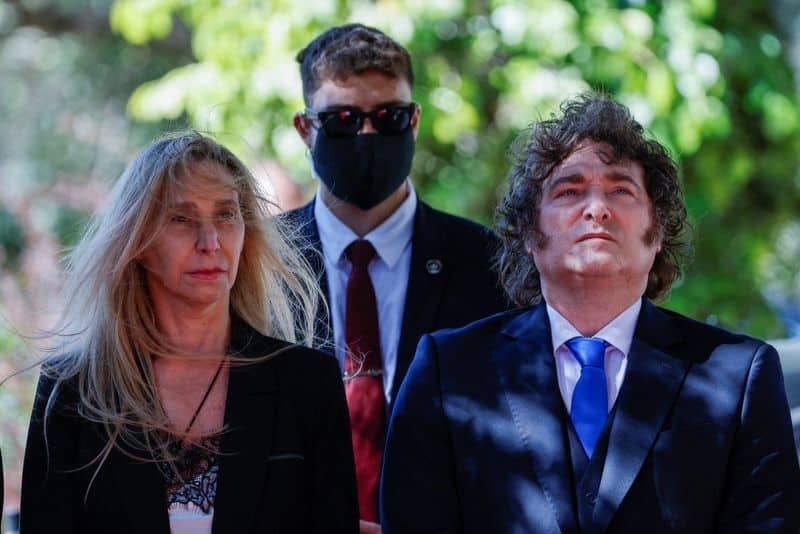
One of the most significant counterpoints to the President’s “total vindication” is the ongoing investigation by the Anti-Corruption Office. While Judge Martinez de Giorgi ruled that no criminal fraud occurred, the Anti-Corruption Office is still investigating whether the President’s actions constituted “improper conduct” or a violation of presidential ethics. This distinction is crucial: an action can be legal (not a crime) but still be an ethical violation that carries political or administrative consequences.
Unanswered Questions
Several questions remain that the judicial ruling did not address:
What Happens Next
Moving forward, the fallout from the $Libra scandal will likely manifest in three distinct areas:
Frequently Asked Questions
Why was the criminal investigation into Javier Milei dropped?
Federal Judge Marcelo Martinez de Giorgi dismissed the investigation because he found insufficient evidence of “criminally relevant deception.” While the judge acknowledged that the President’s social media posts had a significant impact on the $Libra token’s price, he ruled that market volatility and investor losses do not automatically constitute a fraudulent criminal scheme under the law.
What is a “rug pull” in cryptocurrency?
A “rug pull” is a type of scam common in the cryptocurrency market where developers or promoters create a new token, use hype and marketing to drive up its price, and then suddenly sell off their large holdings (the “pulling of the rug”). This causes the token’s value to crash instantly, leaving most investors with significant financial losses. Critics of the $Libra project alleged that the event followed this pattern.
Who is Hayden Davis?
Hayden Davis is a U.S.-based businessman who described himself as a “launch adviser” for the $Libra cryptocurrency. He was investigated for potential criminal collusion with the Argentine government. However, the investigation into his involvement was also dismissed by the federal judge, and Davis has denied any wrongdoing.
Did President Milei lose money in the $Libra crash?
The research does not specify whether President Milei personally held or lost funds in the $Libra token. However, the President has maintained that he acted in “good faith” and only shared the information to support small businesses, stating he stopped promoting the coin once he realized the details of the project were problematic.
Closing
The dismissal of the Argentina Libra cryptocurrency investigation marks the end of a high-stakes legal battle for President Javier Milei, providing him with a significant judicial victory
References
Featured image: Image via Yahoo News Singapore