The ramaswamy attack ad has ignited a fierce internal battle within the Republican Party, pitting the high-octane tactics of the MAGA wing against the traditional standards of the GOP establishment. Released by Republican gubernatorial candidate Vivek Ramaswamy, the advertisement features the estranged mother of Democratic opponent Dr. Amy Acton calling her daughter a “liar,” a move that has triggered an intense ethical and political firestorm in Ohio just 13 days before the election.
Key Takeaways
- Controversial Content: The $4 million advertisement features Donna Arthur, the estranged mother of Amy Acton, making disparaging claims about her daughter’s character.
- GOP Fracture: The ad has created a visible rift between Donald Trump and JD Vance, who defend the tactic, and leaders like Governor Mike DeWine, who have condemned it.
- Sensitive Background: The controversy is heightened by Acton’s history of childhood sexual abuse, which critics argue the ad weaponizes for political gain.
- Legal Scrutiny: Ohio Secretary of State Frank LaRose is reviewing complaints to determine if the advertisement violates state campaign laws.
- Strategic Stakes: With the election rapidly approaching, the controversy tests whether aggressive personal attacks or policy-focused campaigning will resonate more with Ohio voters.
- Will the legal review change the outcome? Ohio Secretary of State Frank LaRose is currently reviewing whether the ad violates state laws regarding truth-in-advertising or campaign conduct. A ruling to force the ad’s removal could significantly alter the campaign’s momentum.
- Will the GOP rift deepen? It remains to be seen if the tension between the Trump-aligned wing and state leaders like DeWine will lead to a broader breakdown in party coordination.
- How will the electorate react? While the ad has drawn intense criticism from leadership, the actual impact on voter turnout and undecided voters remains unquantified.
- The Secretary of State’s Decision: Any formal ruling from Frank LaRose regarding the legality of the advertisement will be a major news event.
- The Final Ad Buys: It is unclear if the Ramaswamy campaign will continue to spend heavily on this specific creative or if they will pivot to a different message in the final week.
- The Acton Response: The Democratic campaign is expected to continue highlighting the “exploitative” nature of the ad, potentially using it as a centerpiece of their own closing arguments.
- Election Day: The ultimate verdict will come from the voters of Ohio, who must decide if the tactics used in this race reflect the leadership they want in the governor’s mansion.
- www.cbsnews.com
- www.nbcnews.com
- abcnews.com
- www.pbs.org
What Happened: The $4 Million Controversy
The political landscape in Ohio shifted dramatically on Monday, October 19, 2026, when the Ramaswamy attack ad began circulating across social media platforms. By early in the week, the advertisement transitioned from digital clips to a full-scale television broadcast, marking a massive $4 million investment by the Ramaswamy campaign to undermine the credibility of Democratic candidate Amy Acton.
In the advertisement, Donna Arthur—Acton’s biological mother with whom she has been estranged for nearly 50 years—is shown criticizing her daughter and insinuating she has mental health issues. The central thrust of the ad is the label of “liar,” a claim that Acton’s campaign has labeled “horrible and hideous.”
On Friday, October 23, 2026, Vivek Ramaswamy defended the advertisement during a campaign bus tour stop in Strongsville, Ohio. He argued that the media was attempting to distract voters from the political contest by focusing on Acton’s personal history. “The irony is they’re lying about an ad that is about lying,” Ramaswamy told reporters, asserting that the Democratic campaign was changing the subject to avoid answering for their own failures.
The Historical Context: The 1978 Indictment
To understand why the Ramaswamy attack ad has caused such a profound reaction, one must look at the historical trauma at its center. Amy Acton has been open about facing homelessness and abuse during her childhood. According to court documents obtained by The Associated Press, the controversy stems from a 1978 legal case involving Acton’s stepfather, Cledith Arthur.
In July 1978, Cledith Arthur was arrested and charged with the rape of his stepdaughter, who was then 12 years old. The abuse allegedly occurred between December 1976 and April 1978. While Arthur pleaded not guilty and was indicted by a grand jury that September, he failed to appear at a court hearing and remained a fugitive until at least 1981. The case never reached a trial, and Cledith Arthur has since died.
Critics of the Ramaswamy campaign, including Acton’s brother Philip Stearns, argue that the advertisement is a “desperate, disgusting attack” that weaponizes this specific history of childhood sexual abuse. The decision to use Donna Arthur—who reportedly stood by the stepfather during the 1978 proceedings—to attack Acton’s character is viewed by many as an exploitative attempt to force a survivor to relive trauma on television.
A Party Divided: Stakeholder Reactions
The fallout from the advertisement has exposed a deepening ideological and tactical divide within the Republican Party. On one side, the national MAGA-aligned leadership has embraced the ad as a masterstroke of political combat. On the other, state-level Republican leaders have expressed profound discomfort with the tone of the campaign.
Comparison of Key Stakeholder Positions
| Figure | Role | Stance | Primary Argument |
|---|---|---|---|
| Donald Trump | Former President | Support | Called the ad “very powerful” and suggested it was “hitting pay dirt.” |
| JD Vance | Vice President | Support | Defended the “audacity” of the ad and told critics to “stop whining.” |
| Mike DeWine | Ohio Governor | Oppose | Stated the ad is “deeply, deeply troubling” and urged its removal. |
| Amy Acton | Democratic Candidate | Oppose | Labeled the ad “despicable” and an “exploitative thing to do.” |
| Nancy Mace | U.S. Representative | Oppose | Called it the “most shameful, disgusting, offensive ad” of the season. |
| Ashley Hinson | U.S. Senator Candidate | Oppose | Argued it sends the “wrong message” regarding childhood trauma. |
| Jon Husted | Ohio Senator | Oppose | Stated plainly that he “would not have run that ad.” |
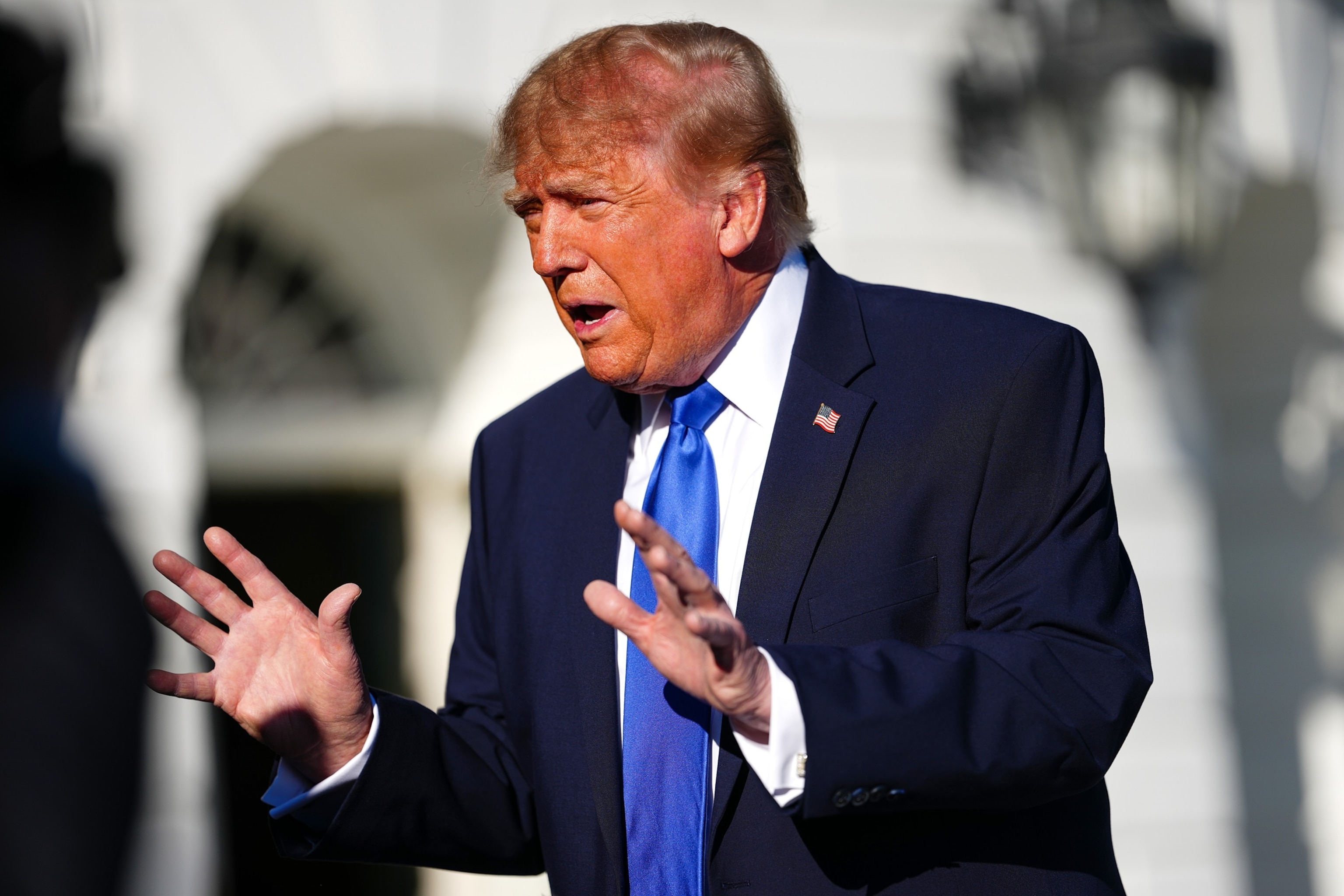
Donald Trump has been one of the most vocal defenders of the Ramaswamy attack ad. On Thursday, during a rally in Sioux City, Iowa, Trump told the crowd that Ramaswamy had called him for advice. “You’ve got to ride with it,” Trump recalled telling the biotech billionaire. Trump further criticized Governor Mike DeWine on Truth Social, labeling him a “RINO” (Republican In Name Only) and accusing him of being “disloyal to the Republican Party.”
Conversely, Governor Mike DeWine, a Republican who has endorsed Ramaswamy for the broader ticket, took the unusual step of publicly calling for the ad to be taken down. “The ad, on its face, is deeply, deeply troubling,” DeWine told reporters in Columbus, Ohio. He emphasized the party’s obligation to protect victims, stating, “We need to send the message to children that we are here to protect them.”
Why It Matters: The Strategic Implications
The controversy surrounding the Ramaswamy attack ad is more than just a local political spat; it is a litmus test for the future direction of the Republican Party.
1. Aggression vs. Decorum
For the Trump-Vance wing of the party, the ad represents a necessary evolution in political warfare. They view the use of family testimony—even when estranged—as a legitimate way to challenge an opponent’s credibility. To them, the backlash is merely “whining” from those unable to handle the realities of a high-stakes election.
2. The Risk of Alienating Moderates
For establishment Republicans and moderate voters, the ad poses a significant political risk. By targeting a candidate’s childhood trauma, the Ramaswamy campaign risks appearing predatory. This could alienate suburban voters and women, particularly those who view the exploitation of sexual abuse survivors as a violation of basic moral standards.
3. Internal Party Unity
With the election only 13 days away, the public disagreement between the President and the sitting Governor of Ohio could signal a lack of cohesion. If the GOP appears fractured on fundamental ethical questions, it may struggle to present a unified front to the electorate in a critical swing state.
What It Means for You
For Ohio Voters
As you head to the polls in less than two weeks, expect the discourse to remain highly personal. The Ramaswamy attack ad may force voters to make a choice not just between two candidates’ policies, but between two different philosophies of political engagement: one that prioritizes aggressive character destruction and one that prioritizes traditional decorum and policy-based debate.
For Political Strategists
This campaign serves as a case study in “high-risk, high-reward” advertising. If the ad successfully shifts the narrative toward Acton’s perceived lack of credibility, it will be hailed as a tactical triumph. If it instead triggers a backlash that increases sympathy for Acton, it could become a cautionary tale about the limits of personal attacks.
Counterpoints and Open Questions
While the criticism of the ad is widespread, the Ramaswamy campaign has offered several counter-arguments. Ramaswamy maintains that the focus on his tactics is a diversionary tactic used by Democrats to avoid discussing their own policy failures. He has also asserted that once elected, he will be the “No. 1 governor to prosecute” childhood abuse, attempting to frame his platform as one of protection for victims, even as his campaign uses a victim’s history against her.
Several critical questions remain unanswered:
What Happens Next
In the final stretch before the election, several catalysts will determine the trajectory of this controversy:
Frequently Asked Questions
What is the content of the Ramaswamy attack ad?
The advertisement features Donna Arthur, the estranged biological mother of Democratic candidate Amy Acton. In the ad, Arthur makes negative statements about her daughter, specifically calling her a “liar” and a “terrible person.” The campaign is using these statements to question Acton’s credibility and character.
Why is the advertisement causing a rift in the Republican Party?
The ad has split the GOP because it touches on highly sensitive personal history. The “MAGA” wing, led by Donald Trump and JD Vance, views the ad as a powerful and legitimate tool for political combat. However, traditional Republican leaders, including Governor Mike DeWine, have condemned it as “deeply troubling” and ethically wrong due to its connection to Acton’s childhood trauma.
What is the historical background involving Amy Acton’s family?
Amy Acton has alleged that she was sexually abused by her stepfather, Cledith Arthur, when she was between the ages of 10 and 12. In 1978, Cledith Arthur was indicted for the rape of a child under 13. He pleaded not guilty and remained a fugitive for several years before the case concluded without a trial. Acton has been estranged from her mother, Donna Arthur, for nearly 50 years following these events.
Is there any legal investigation into the advertisement?
nYes. Ohio Secretary of State Frank LaRose has acknowledged that his office is reviewing complaints regarding the advertisement to determine if it has violated any state laws concerning campaign conduct or truth-in-advertising. The outcome of this review is currently unknown.
—
The Ramaswamy attack ad has fundamentally altered the tone of the Ohio gubernatorial race, turning a high-stakes election into a profound debate over political ethics and the boundaries of personal warfare. As the state moves toward election day, the decision of whether to “ride with it” or pull the ad back will likely define the political identity of the winner.
References
Featured image: Image via ABC News