
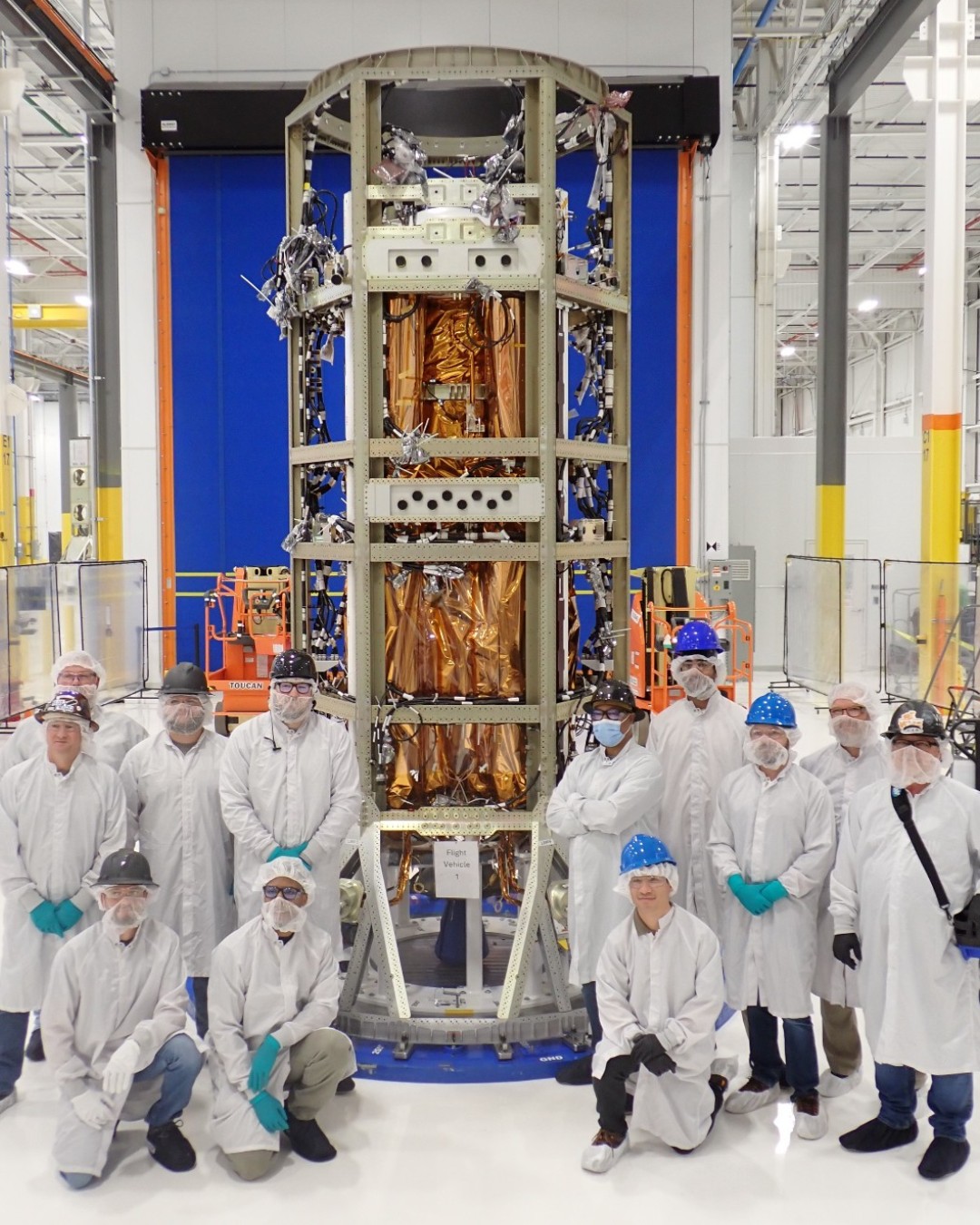
NASA science mission selection is undergoing a fundamental strategic shift as the agency moves away from highly customized, “bespoke” spacecraft in favor of standardized, commercial off-the-shelf platforms to combat budget stagnation and increase scientific output.
Key Takeaways
- Strategic Pivot: NASA is transitioning from custom-built, expensive spacecraft to commercial-off-the-shelf (COTS) satellite buses to increase mission frequency.
- Budget Constraints: The agency’s science budget has remained essentially flat at approximately $7.25 billion when adjusted for inflation since 2000.
- Commercial Integration: New contracts, such as the $300 million VADR program, are leveraging providers like Rocket Lab for dedicated and rideshare launches.
- New Mission Concepts: Projects like the DAPHNE mission and the PolSIR/TSIS-2 missions exemplify the move toward multi-point measurements and rapid deployment.
- Leadership Vision: NASA leadership is advocating for “more shots on goal” by utilizing standardized hardware to maximize scientific returns.
- PolSIR (Polarized Submillimeter Ice-cloud Radiometer): This mission will utilize two 16U CubeSats to study ice clouds in tropical and subtropical regions. Managed by Vanderbilt University and manufactured by Blue Canyon Technologies, the PolSIR mission aims to improve weather prediction accuracy by capturing diurnal patterns of ice content in clouds. These CubeSats are scheduled to launch via Rocket Lab’s Electron rockets from New Zealand no earlier than June 2027.
- TSIS-2 (Total and Spectral Solar Irradiance Sensor-2): Designed to monitor the Sun’s energy input to Earth, TSIS-2 will be a free-flying spacecraft (unlike its predecessor, which was on the ISS). Managed by NASA’s Goddard Space Flight Center, it will use instruments from the University of Colorado, Boulder, and a spacecraft provided by General Atomics – Electromagnetic Systems. The mission is slated for an early 2027 launch.
- For Investors: The shift toward standardized satellite platforms and frequent launch cadences favors companies in the commercial satellite bus and small-launch sectors. Watch companies like Rocket Lab and manufacturers like Blue Canyon Technologies as NASA continues to integrate commercial hardware into its core science portfolio.
- For the Scientific Community: Expect a higher volume of smaller, faster-moving missions. The era of waiting decades for a single flagship mission may be supplemented by a steady stream of smaller, more targeted investigations.
- For Taxpayers: This strategic pivot is an attempt to increase the return on investment for every dollar spent on space science, aiming for more data and more discoveries within a constrained federal budget.
- Early 2027: The scheduled launch window for the TSIS-2 mission.
- June 2027 (No earlier than): The scheduled launch window for the PolSIR mission.
- 2027: The critical confirmation review for the DAPHNE mission, which will determine its future funding and progress.
- 2027: The target launch for the NEO Surveyor telescope, an important step in asteroid tracking.
- 2028: The scheduled launch for the Dragonfly mission to Saturn’s moon, Titan, which remains a significant, high-cost milestone for the agency.
- www.nasa.gov
- www.colorado.edu
- arstechnica.com
- spacenews.com
What Happened
NASA is currently rolling out significant changes to its science mission selection process, a move designed to speed up and simplify how the agency identifies, develops, and launches new scientific endeavors. According to reporting from SpaceNews, the agency aims to move away from the traditional model of building singular, multi-billion-dollar spacecraft that take decades to reach fruition.
This shift is not merely a procedural update but a response to long-standing economic pressures. While launch availability has increased significantly—driven by the rise of reusable rocket technology from companies like SpaceX—the frequency of NASA’s science missions has not kept pace with the growing demand for data. The agency’s Science Mission Directorate is now looking to leverage the commercial space sector to create a more agile and frequent cadence of exploration.

Why It Matters: The Economic Reality of Space Science
The driver behind this transformation is a stark budgetary reality. While the complexity and ambition of scientific goals continue to grow, NASA’s science budget has remained largely stagnant. Nicky Fox, the Associate Administrator for NASA’s Science Mission Directorate, has noted that the agency’s science budget of approximately $7.25 billion has been essentially flat since the year 2000 when adjusted for inflation.
Historically, NASA has relied on “bespoke” missions—satellites designed from the ground up for one specific scientific purpose. These missions are often manufactured by large, traditional defense and aerospace contractors such as Lockheed Martin or Northrop Grumman. While these missions provide unparalleled capability, they are prohibitively expensive and slow to develop.
By shifting toward commercial “off-the-shelf” satellite buses, NASA hopes to open a “funding wedge.” Instead of spending the entire budget on a single, massive mission, the agency intends to use standardized platforms where only the scientific instruments are custom-built. This approach allows for “block buys,” where multiple missions are launched using similar, proven hardware, thereby reducing costs and increasing the number of active scientific assets in space.
The Bespoke vs. Mass-Produced Dilemma
The tension within NASA lies in the balance between extreme scientific precision and mission frequency. The current landscape can be viewed as a competition between two distinct philosophies of spacecraft architecture.
Traditional Bespoke Models
Bespoke missions are characterized by high customization. Every component is optimized for a specific environment, such as the extreme radiation of Jupiter or the icy crust of Enceladus. These missions are the “flagships” of the agency, providing deep, specialized insights but often at a cost that limits the total number of missions the agency can afford to fly.
Commercial Off-the-Shelf (COTS) Models
The COTS model, advocated by Nicky Fox, focuses on efficiency. Fox has famously used a culinary analogy to describe the problem, stating that instead of having a bespoke bus that “makes the tea and brings you toast,” NASA should use a standardized platform and simply swap out the instruments. The goal is to move from $1 billion missions to $100 million missions, allowing for “more shots on goal.”
| Mission Category | Estimated Development Budget | Primary Characteristics |
|---|---|---|
| Small-scale | Under $100 million | Rapid development, often CubeSat-based |
| Discovery Class | Approximately $500 million | Medium-scale, scientific priority |
| New Frontiers | Approximately $1 billion | Large-scale, deep space exploration |
| Flagship Missions | Multi-billion dollars | Highly complex, long-term development |
Case Studies in Modern Mission Selection
Two recent developments illustrate how NASA is already implementing these new selection and procurement strategies: the VADR contract and the DAPHNE mission concept.
The VADR Program and Rocket Lab
NASA has officially selected Rocket Lab to provide launch services for two critical Earth and Sun science missions under the Venture-Class Acquisition of Dedicated and Rideshare (VADR) contract. This contract is a fixed-price, indefinite-delivery/indefinite-quantity (IDIQ) agreement with a 10-year ordering period and a maximum total value of $300 million.
Managed by NASA’s Launch Services Program at the Kennedy Space Center, the VADR framework allows NASA to secure launch services more efficiently. The two missions selected under this framework are:
The DAPHNE Mission
Another example of the new mission direction is the DAPHNE (Dynamic Atmosphere-Ionosphere Explorer) mission concept. Led by the Laboratory for Atmospheric and Space Physics (LASP) at the University of Colorado Boulder, DAPHNE is designed to investigate the connection between Earth’s lower atmosphere and space weather.
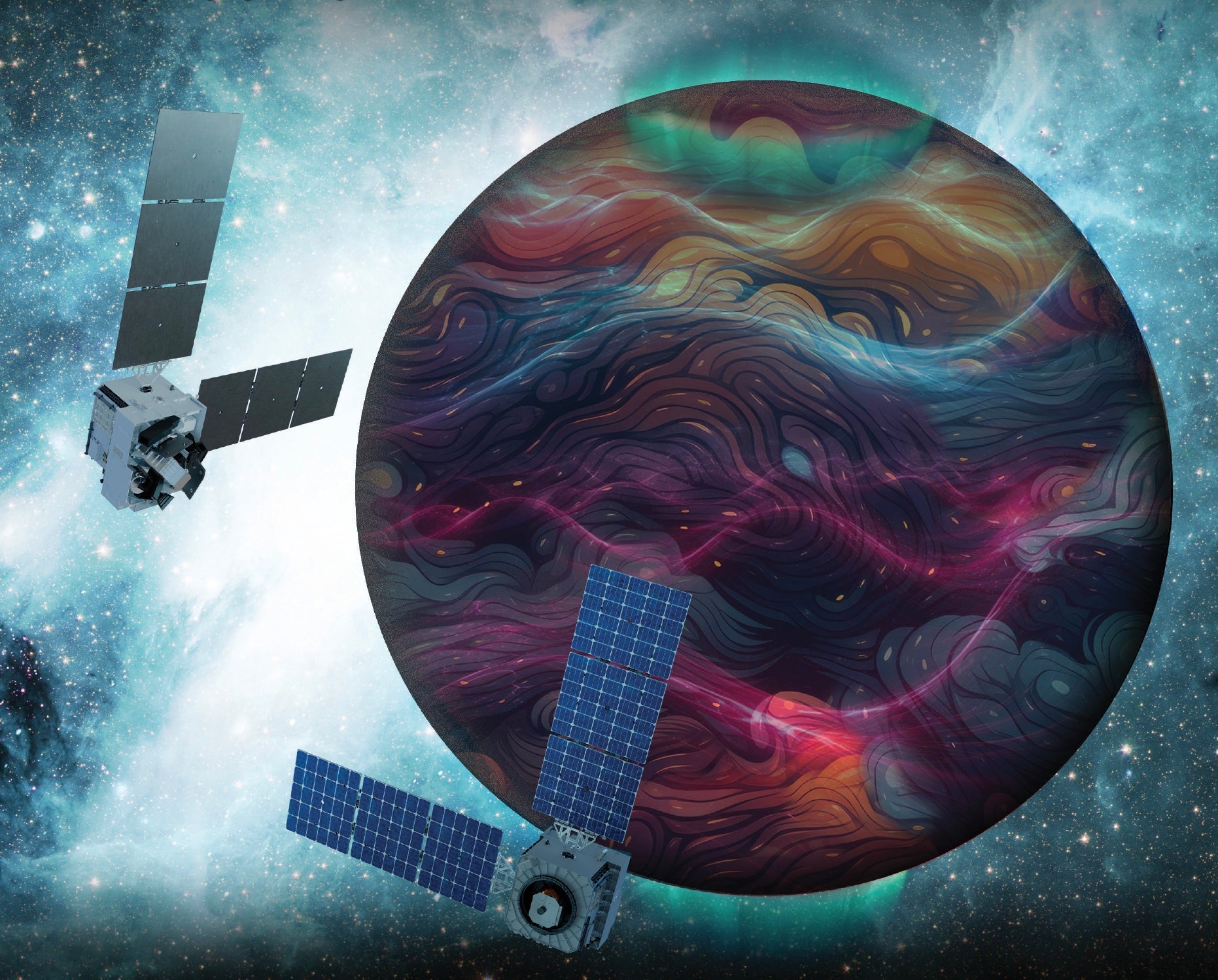
DAPHNE will utilize a pair of “identical twin” satellites to conduct coordinated, multi-point measurements of neutral winds, temperature, and composition within very low Earth orbit. The mission is currently entering Phase B of development, focusing on planning and design. The estimated total cost is not to exceed $250 million (in fiscal year 2023 dollars), excluding launch costs. If it passes its 2027 confirmation review, the mission is projected to launch no earlier than 2029.
Stakeholders and Strategic Interests
The shift in NASA’s mission selection process affects a wide array of stakeholders, from government leadership to private industry.
NASA Leadership: A Divided Focus?
There is a visible pivot within NASA leadership regarding priorities. While Nicky Fox focuses on maximizing the science budget through mission frequency, NASA Administrator Jared Isaacman has placed a significant emphasis on human spaceflight and the Artemis program. Isaacman has prioritized establishing a lunar surface base and is pushing for ambitious goals, such as a nuclear-powered Mars drone mission in 2028. This creates a dynamic where the science directorate must find ways to achieve “more for less” to ensure planetary science remains a core pillar of the agency’s identity.
The Commercial Sector
For commercial space companies, NASA’s shift is a massive opportunity. Companies like Rocket Lab, Blue Canyon Technologies, Apex Space, and K2 Space are increasingly positioned to provide the standardized buses and launch services that NASA now craves. The move toward “block buys” of commercial hardware provides a more predictable revenue stream for these companies compared to the highly competitive, one-off bidding wars of the past.
The Scientific Community
For researchers, the transition is a double-edged sword. On one hand, more frequent missions mean more opportunities for data collection and more “shots on goal” for scientific discovery. On the other hand, there are concerns that moving away from bespoke designs could limit the ability to conduct highly specialized, deep-space research that requires unique, non-standardized hardware.
What It Means for You
Counterpoints and Open Questions
Despite the clear economic logic, the transition to commercial-off-the-shelf models is not without significant risks and criticisms.
Capability Limitations: A primary concern among scientists is whether small, commercial satellite buses can ever truly replace the high-performance, custom-built spacecraft required for deep-space exploration. For example, a mission to study the sub-surface ocean of Enceladus requires extreme precision and specialized shielding that a mass-produced bus may not be able to provide. As Nicky Fox herself acknowledged, you cannot simply take a commercial bus, add four instruments, and send it to Enceladus.
Scientific Precision: There is a risk that moving toward standardization could lead to a “one-size-fits-most” approach that sacrifices the extreme sensitivity required for certain types of astronomical or planetary observations.
Funding Uncertainty: Many of these new mission concepts, including DAPHNE, are subject to rigorous “confirmation reviews” (such as the one scheduled for DAPHNE in 2027). This means that even if a mission is selected now, continued funding is never guaranteed, creating a period of uncertainty for the teams involved.
What Happens Next
Several key milestones will serve as indicators of whether NASA’s new mission selection strategy is succeeding:

Frequently Asked Questions
What is the difference between a “bespoke” and an “off-the-shelf” spacecraft?
A “bespoke” spacecraft is custom-built from the ground up for a specific scientific mission, often resulting in high performance but also high costs and long development times. An “off-the-shelf” (or COTS) spacecraft uses a standardized, commercially available satellite bus, where only the scientific instruments are customized. This is much faster and cheaper but may have limitations in capability.
Why is NASA changing its mission selection process now?
NASA is facing a “flat” science budget that has not kept pace with inflation since 2000. To increase the number of scientific missions and the amount of data collected, the agency must find ways to reduce the cost and development time of individual missions, primarily by leveraging commercial technology.
How much does a typical NASA science mission cost?
Costs vary wildly by mission class. Small-scale missions can cost under $100 million. Medium-scale “Discovery” missions cost approximately $500 million, while large-scale “New Frontiers” missions can cost around $1 billion. Flagship missions can cost many billions of dollars.
What is the VADR contract?
TheThe Venture-Class Acquisition of Dedicated and Rideshare (VADR) is a $300 million, 10-year contract managed by NASA’s Launch Services Program. It allows NASA to efficiently procure launch services for both dedicated and rideshare missions using commercial providers like Rocket Lab.
NASA’s move toward a more commercialized, standardized model of mission selection represents a significant evolution in how the agency approaches the challenges of modern space science. By balancing the need for high-precision, bespoke exploration with the efficiency of commercial platforms, NASA is attempting to navigate a future where scientific discovery must be achieved within increasingly tight budgetary boundaries.
References
Featured image: Credit: Blue Origin — via Ars Technica

One thought on “NASA Science Mission Selection: Why the Shift Matters”