
The MMX Mars mission has officially begun its five-year journey to the Red Planet’s moons, following a successful launch by the Japan Aerospace Exploration Agency (JAXA) on Tuesday, October 20, 2026. The spacecraft, traveling aboard an H3 rocket, departed from the Tanegashima space Center in Kagoshima prefecture, southern Japan, marking the start of an ambitious international effort to land on and retrieve material from phobos, the larger of Mars’ two moons.
Key Takeaways
- International Collaboration: The $578 million mission is led by JAXA and supported by NASA, the French Space Agency, the German Space Agency, and the European Space Agency (ESA).
- Primary Objective: The spacecraft aims to land a rover and a stationary lander on Phobos to collect at least 10 grams of soil, rock, and dust.
- Scientific Significance: Researchers hope to determine if the Martian moons were created by an ancient collision or were captured asteroids.
- High-Stakes Timeline: If the mission proceeds without critical failure, the collected samples are expected to arrive in the Australian desert in 2031.
- Technical Risks: The mission faces significant challenges due to Phobos’ extremely low gravity and the potential for the rover to become stuck in soft regolith.
- Landing Stability: The rover is designed to right itself if it lands upside down, but this capability is lost once its solar panels are deployed.
- Terrain Hazards: If the rover becomes wedged between rocks or sinks into soft, powdery soil, the mission could face a catastrophic setback.
- For the Scientific Community: Expect a fundamental shift in planetary science textbooks. The data from Phobos will provide the first direct evidence of whether moons are born from impacts or captured from elsewhere.
- For Future Astronauts: The data gathered by the Idefix rover regarding soil stability and gravity will be vital for planning future human landings on Mars and its moons.
- For the Aerospace Industry: The successful deployment of the H3 rocket and the complex Idefix rover will serve as a benchmark for future commercial and governmental deep-space missions.
- Will the regolith be too soft? If the Idefix rover or the stationary lander encounters extremely powdery soil, they may sink, rendering the mission a failure.
- Can the lander survive the descent? The low gravity of Phobos means that any error in descent velocity could result in the spacecraft bouncing into deep space or crashing violently.
- Will the sample capsule survive reentry? The mission concludes with a high-speed descent into the Australian desert; the integrity of the sample capsule during this phase is a significant unknown.
- Late Summer 2027: The spacecraft is expected to arrive in the Martian system and enter orbit.
- Late 2028 – 2029: The Idefix rover and the stationary lander will begin their descent and surface operations on Phobos.
- 2030: The spacecraft will conduct flybys of the moon Deimos before departing Mars.
- 2031: The sample return capsule is scheduled to land in the Australian desert, bringing the first Martian lunar material to Earth.
- www.tbsnews.net
- apnews.com
What Happened: A Successful Lift-off from Tanegashima
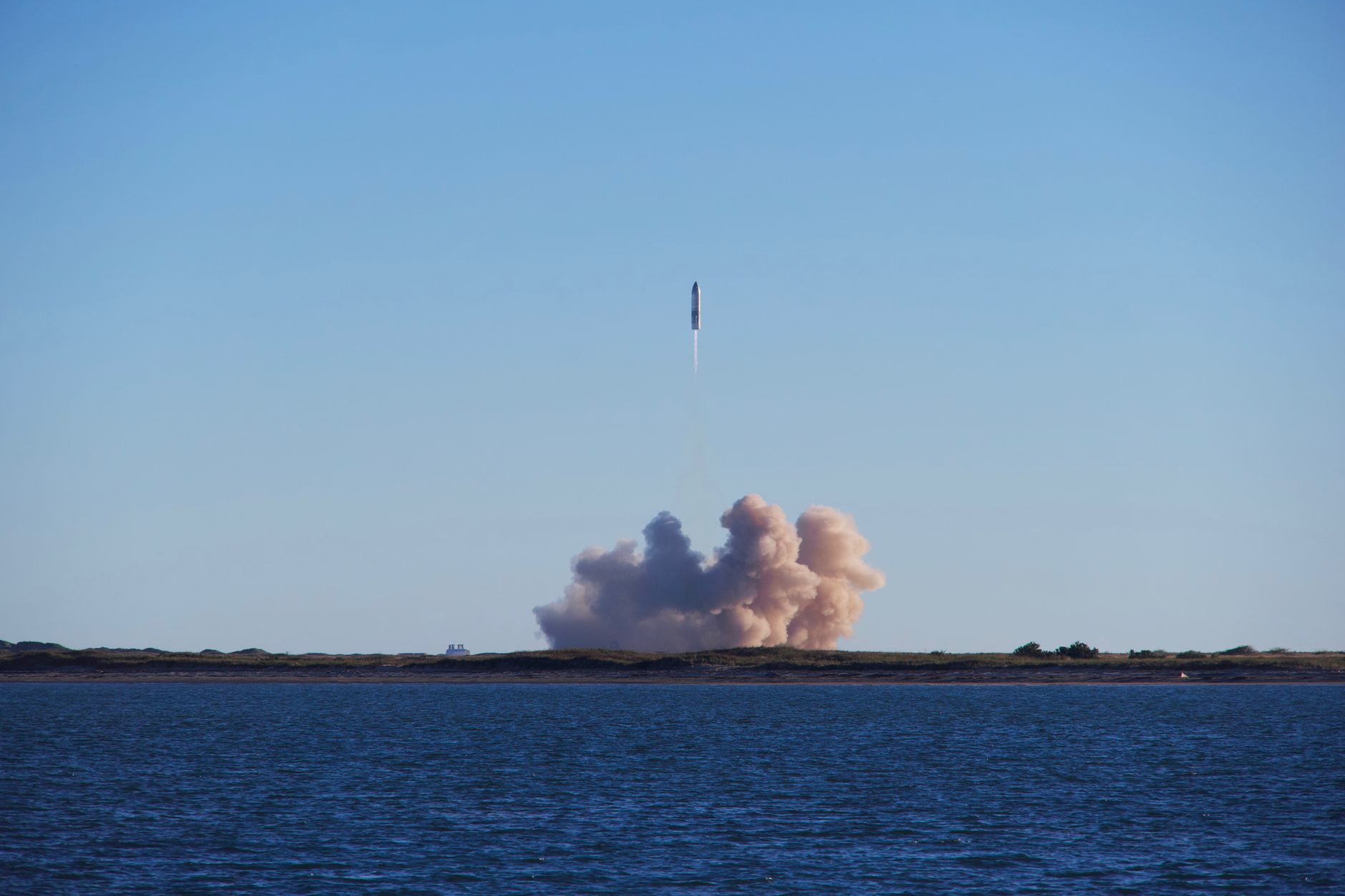
On the morning of October 20, 2026, the MMX Mars mission cleared the launch pad at the Tanegashima Space Center. The H3 rocket, a cornerstone of Japan’s recent aerospace advancements, lifted off before dawn, carrying a 5-ton spacecraft designed for the rigors of deep-space travel. According to reports from the mission control center, the spacecraft successfully separated from the rocket’s upper stage approximately one hour after liftoff.
This successful separation triggered celebrations among JAXA officials and flight controllers, who were observed embracing and shaking hands as the spacecraft began its trajectory toward the Martian system. The mission, officially known as Martian Moons Exploration (MMX), represents a significant leap in planetary science. While NASA has successfully landed nine spacecraft on the surface of Mars over the last five decades and China achieved a historic touchdown in 2021, no previous mission has ever attempted to reach Phobos or its smaller companion, Deimos.
Why It Matters: The Quest to Understand the Solar System
The significance of the MMX Mars mission extends far beyond the technical feat of a successful launch. By targeting Phobos, scientists are attempting to unlock a fundamental mystery regarding the evolution of the solar system. Phobos is a lumpy, potato-shaped celestial body measuring approximately 22 kilometers (14 miles) across. Because of its proximity to Mars, it serves as a unique laboratory for studying planetary formation.
Scientists are currently weighing two primary hypotheses regarding the origin of the Martian moons. The first is the Collision Theory, which suggests that Phobos and Deimos were formed from the debris left behind after a massive ancient impact between Mars and another large celestial body. The second is the Capture Theory, which posits that these moons are actually stray asteroids that were pulled into Mars’ gravitational influence over billions of years.
By analyzing the chemical composition of the dust and rocks brought back by the MMX spacecraft, researchers expect to find traces of Mars itself. This “two-for-one” scientific opportunity could provide the data necessary to demystify how planets and their moons form, and potentially offer insights into the chemical “recipe” required for life to emerge on other worlds.
Deep-Dive: The Technical Architecture of the MMX Mission
The mission’s operational complexity is managed through a multi-stage deployment strategy involving a primary spacecraft, a specialized rover, and a stationary lander.
The Idefix Rover: A Scout for Safety
One of the most critical components of the mission is the French-German rover, named Idefix after the famous white terrier from the Asterix comics. Roughly the size of a microwave oven, Idefix is designed to serve as a “scout for safety,” according to the French Space Agency’s Julien Baroukh.
The rover’s primary task is to navigate the treacherous, low-gravity surface of Phobos for approximately 100 days. Because Phobos has extraordinarily weak gravity, the rover must move at a controlled, glacial pace of just 1 millimeter per second (0.04 inches per second) to avoid bouncing uncontrollably off the surface.
Technical challenges for Idefix include:
The Stationary Lander and Sample Collection
Following the reconnaissance performed by Idefix, a four-legged stationary lander will descend to the surface, projected to occur in late 2028 or 2029. Unlike the rover, the lander’s mission is brief and highly focused. It is scheduled to spend only two hours on the surface of Phobos.
During this narrow window, the lander will utilize specialized drilling and vacuuming mechanisms to collect at least 10 grams (approximately one-third of an ounce) of material. Once the samples are secured, the lander will facilitate the spacecraft’s ascent, allowing it to depart the Martian neighborhood in 2030.

Financial Breakdown and International Partnerships
The MMX Mars mission is a massive financial undertaking, totaling $578 million. The project relies on a coalition of five major space agencies, each contributing specific expertise and funding to ensure the mission’s success.
| Agency | Country | Contribution (USD) | Role |
|---|---|---|---|
| JAXA | Japan | $350 million | Mission Lead |
| NASA | USA | $87 million | Scientific Support |
| French Space Agency | France | ~$68 million | Rover Development |
| German Space Agency | Germany | ~$56 million | Rover Development |
| ESA | Europe | ~$17 million | Collaborative Support |
| Total | $578 million |
This level of investment reflects the high scientific stakes. While Japan is investing the largest share, the involvement of NASA and the European Space Agency (ESA) ensures that the data gathered will be a global resource for the scientific community.
The Growing Space Race: Japan vs. China
The launch of the MMX Mars mission also occurs within a heightened geopolitical context. As nations look toward the Martian system for scientific and potential resource riches, a competitive atmosphere is emerging.
China has announced plans to launch its own Mars sample-return mission in 2028. Both Japan and China are currently targeting 2031 for the successful return of samples to Earth. This creates a high-pressure environment where the success of the MMX mission will be measured not just by scientific discovery, but by its ability to achieve its objectives ahead of or alongside international competitors.
While NASA has focused heavily on the Perseverance rover and the ongoing debate regarding how to retrieve the 30+ sample tubes currently sitting on the Martian surface, the MMX mission’s focus on the moons provides Japan with a distinct niche in the global space race.
What It Means for You
The outcomes of the MMX Mars mission will have implications for various sectors of society:
Counterpoints and Open Questions: The Risks of Failure
Despite the excitement expressed by officials, the mission is fraught with technical and historical risks. Space exploration, particularly at Mars, has a documented history of failure. Russia, for instance, stumbled in all three of its attempts to explore Phobos. Even Japan has previously struggled with missions intended to achieve Mars orbit.
Several critical questions remain unanswered:

What Happens Next: The MMX Timeline
As the spacecraft begins its long trek through the solar system, the following milestones are scheduled:
Frequently Asked Questions
What is the primary goal of the MMX mission?
The primary goal of the Martian Moons Exploration (MMX) mission is to explore the moons of Mars, specifically Phobos, and to return physical samples of its dust, soil, and rock to Earth. This will help scientists understand how the moons formed and the history of the Martian system.
Who is leading the MMX mission?
The mission is led by the Japan Aerospace Exploration Agency (JAXA). It is an international collaboration that includes significant contributions from NASA (USA), the French Space Agency, the German Space Agency, and the European Space Agency (ESA).
Why is the rover named Idefix?
The rover, which is a joint French-German project, is named Idefix after the small white terrier character in the popular French comic series Asterix. This naming convention reflects the international nature of the mission’s technical components.
How much material does the mission hope to bring back?
The stationary lander is designed to collect at least 10 grams (approximately one-third of an ounce) of material from the surface of Phobos using a combination of drilling and vacuuming techniques.
Closing
The successful launch of the MMX Mars mission marks the beginning of one of the most complex and high-stakes chapters in modern space exploration. As the spacecraft journeys toward the Red Planet, the eyes of the scientific world remain fixed on the small, potato-shaped moon of Phobos, waiting to see if it holds the keys to our understanding of the solar system’s origins.
References
Featured image: Photo by Piya Nimityongskul on Pexels