New research into microplastic chemical reactivity has revealed that these synthetic particles are not biologically inert, but instead spontaneously generate harmful reactive oxygen species (ROS) when they encounter water. For decades, the scientific community has largely operated under the assumption that commodity plastics are chemically passive in aqueous environments, yet a groundbreaking study published in the journal Nature on October 14, 2026, challenges this fundamental consensus.
Key Takeaways
- Chemical Reactivity Discovered: Microplastics generate reactive oxygen species (ROS)—a type of unstable free radical—at their surface when submerged in water.
- Mechanistic Shift: The reaction occurs because water molecules become “undercoordinated” near hydrophobic plastic surfaces, lowering the energy barrier for radical production.
- Cellular Damage Observed: In laboratory settings, the resulting ROS were shown to cause protein aggregation and the rupture of mouse red blood cells.
- Plastic Variance: Different polymers show varying levels of reactivity; Polypropylene (PP) and Polyethylene (PE) are highly reactive, while PMMA is significantly less so.
- Mitigation Potential: The addition of surfactants, such as Triton X-100, can suppress the production of these harmful radicals.
- Health Implications: While the study was conducted in vitro, it provides a potential mechanistic bridge for how microplastics might contribute to cellular mutation and inflammation in humans.
- Protein Aggregation: Using the antimicrobial protein lysozyme, the team found that proteins misfolded and clumped together when they encountered reactive plastic surfaces. This aggregation, which can be a precursor to various diseases, was found to track with interfacial activity (r = 0.68). This effect could be mitigated by the presence of caffeine, which acts as a radical scavenger, or by surfactant coatings.
- Red Blood Cell Rupture: When mouse red blood cells were incubated with polystyrene particles, they developed “schistocytes”—fragmented, helmet-shaped structures that indicate the cell membrane has been ruptured. The hemolytic activity, or the release of hemoglobin from these cells, correlated strongly with the plastic’s surface activity (r = 0.75).
- Avoid Heating Plastic: Reheating food or liquids in single-use plastic containers, especially in a microwave, can accelerate the degradation of the material and increase the release of particles.
- Choose Alternative Materials: When consuming hot beverages, opt for glass, ceramic, or stainless steel instead of plastic-lined cups or plastic containers.
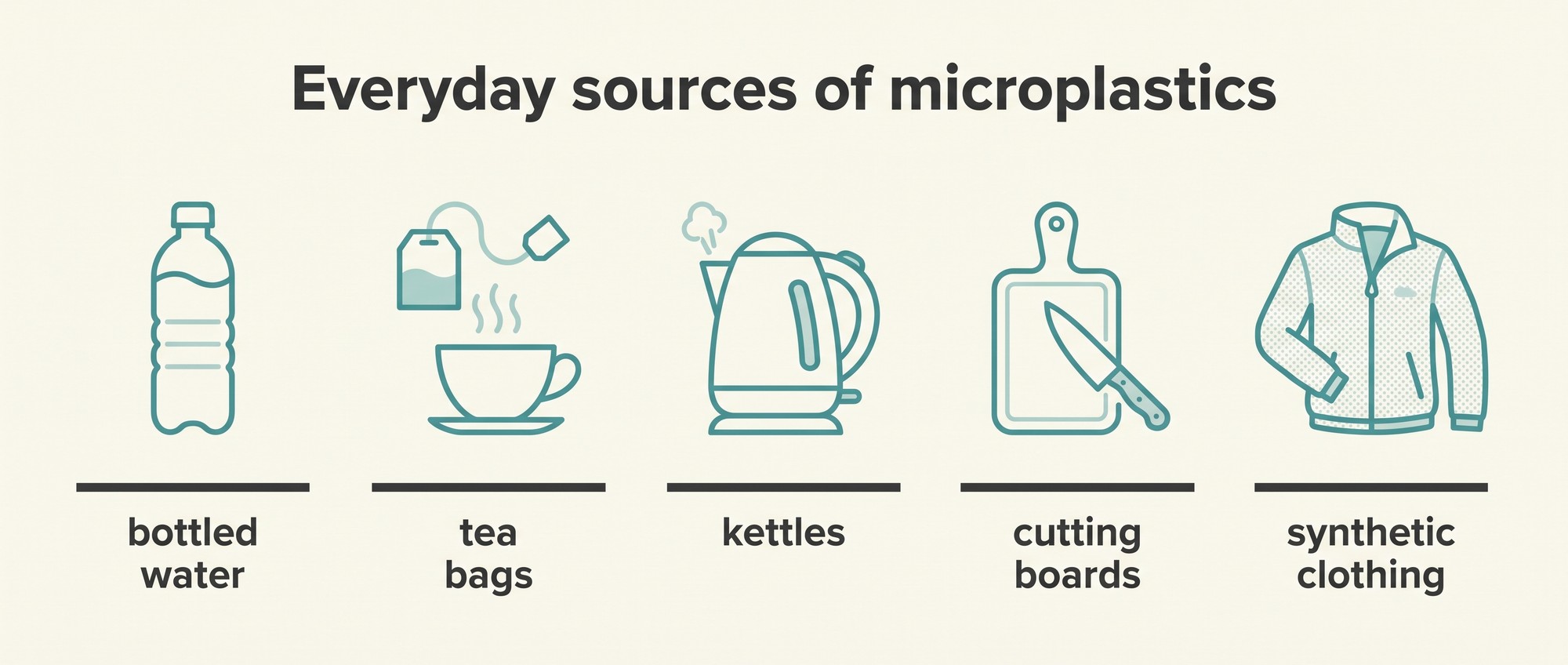
- Be Mindful of Tea and Kettles: Research suggests that certain tea bags and electric kettles can be significant sources of microplastic shedding into hot water.
- Water Filtration: Utilizing high-quality water filtration systems may help reduce the concentration of microplastics and nanoplastics in your drinking water.
- Redesigning Materials: Teresa Head-Gordon of UC Berkeley suggested that this work could lead to new engineering solutions. By understanding the plastic-water interface, engineers may be able to redesign the chemistry of commodity plastics to reduce their toxic potential.
- Regulatory Oversight: The findings add weight to the growing calls for stricter regulation of plastic production and waste management.
- Increased EPA Scrutiny: The Environmental Protection Agency (EPA) is already under pressure to list microplastics and pharmaceuticals as priority contaminants in drinking water.
- New Material Standards: The field of polymer science may shift toward developing “biologically passive” plastics that lack the hydrophobic properties that drive ROS production.
- Long-term Epidemiological Studies: Researchers will likely look for more direct links between the presence of specific reactive polymers and chronic inflammatory diseases.
- www.intelligentliving.co
- www.latimes.com
What Happened
A research team led by Wei Min of Columbia University and Teresa Head-Gordon of the University of California, Berkeley, has identified a critical chemical mechanism that may explain the biological toxicity of microplastics. The study, titled “Intrinsic physicochemical activity at microplastic-water interfaces,” was published in Nature (Vol. 658, pp. 650-657) on October 14, 2026.
Historically, materials science has treated plastics as chemically inert, which is why they are preferred for long-term packaging and resist biodegradation. However, the researchers discovered that the interface where water meets a hydrophobic (water-repelling) plastic surface acts as a chemical driver. Through a combination of quantum chemistry calculations and molecular dynamics simulations, the team found that water molecules adjacent to these plastic surfaces become “undercoordinated,” meaning they lack a full network of hydrogen-bond partners.
This state significantly lowers the energy barrier required to oxidize a hydroxide ion into a hydroxyl radical. In bulk liquid, this energy barrier is approximately 207 to 210 kcal/mol—a threshold considered insurmountable at room temperature. However, within 5 angstroms of a hydrophobic plastic interface, this barrier drops below 100 kcal/mol, allowing for the spontaneous production of highly reactive hydroxyl radicals.
Why It Matters: The Mechanism of Microplastic Chemical Reactivity
The significance of this discovery lies in the fact that water is not merely a spectator in the presence of plastic; it is an active participant in a chemical reaction that produces damaging molecules. These reactive oxygen species (ROS) are a broad class of unstable, high-energy molecules known to promote inflammation and damage biological structures.
According to Wei Min, a professor of chemistry and biomedical engineering at Columbia and a co-author of the study, ROS are “textbook examples of the kinds of molecules that can damage animal and human tissue.” He noted that if these radicals encounter DNA, they are highly likely to cause mutations.
This chemical reactivity becomes exponentially more dangerous as plastic particles break down into smaller fragments. As a piece of plastic disintegrates into microplastics and nanoplastics, its total surface area increases dramatically. Because the production of ROS is an interfacial phenomenon—occurring specifically where water meets the plastic surface—the increase in surface area leads to a higher volume of radical production. This provides a potential explanation for why smaller particles, such as nanoplastics, are often perceived to be more toxic than larger fragments.
Deep-Dive: Analyzing Plastic Reactivity and Biological Impact
To understand the practical implications of this research, it is necessary to examine how different common plastics behave and how their chemical activity translates to biological damage. The researchers tested six common commodity plastics to measure their ability to generate ROS.
Comparative Reactivity of Common Plastics
| Plastic Type | Reactivity Level | Common Applications | Statistical Correlation (Dangling OH) |
|---|---|---|---|
| Polypropylene (PP) | High | Food containers, bottle caps, textiles | N/A |
| Polyethylene (PE) | High | Plastic bags, film, packaging | N/A |
| Polystyrene (PS) | Moderate | Packaging, foam, disposable cutlery | 21.0% |
| Polyvinyl chloride (PVC) | Moderate | Pipes, medical tubing, flooring | 15.8% |
| Polyethylene terephthalate (PET) | Low/Moderate | Water bottles, beverage containers | 10.7% |
| Poly(methyl methacrylate) (PMMA) | Low | Acrylic, glass substitutes, lenses | 9.7% |
Note: The “Dangling OH” column refers to the percentage of hydroxyl groups pointing outward into the water, which directly correlated with radical production (r = 0.94).
There was a strong positive correlation (Pearson r = 0.93) between a surface’s hydrophobicity (its water contact angle) and its radical activity. This means the more water-repellent a plastic is, the more likely it is to drive the production of harmful radicals.
From Chemistry to Cellular Damage
The study transitioned from chemical observations to biological testing to see how these radicals interact with living matter. The findings were stark. In controlled laboratory environments, the researchers observed two primary modes of damage:
The Nanoplastic Threat and Historical Context
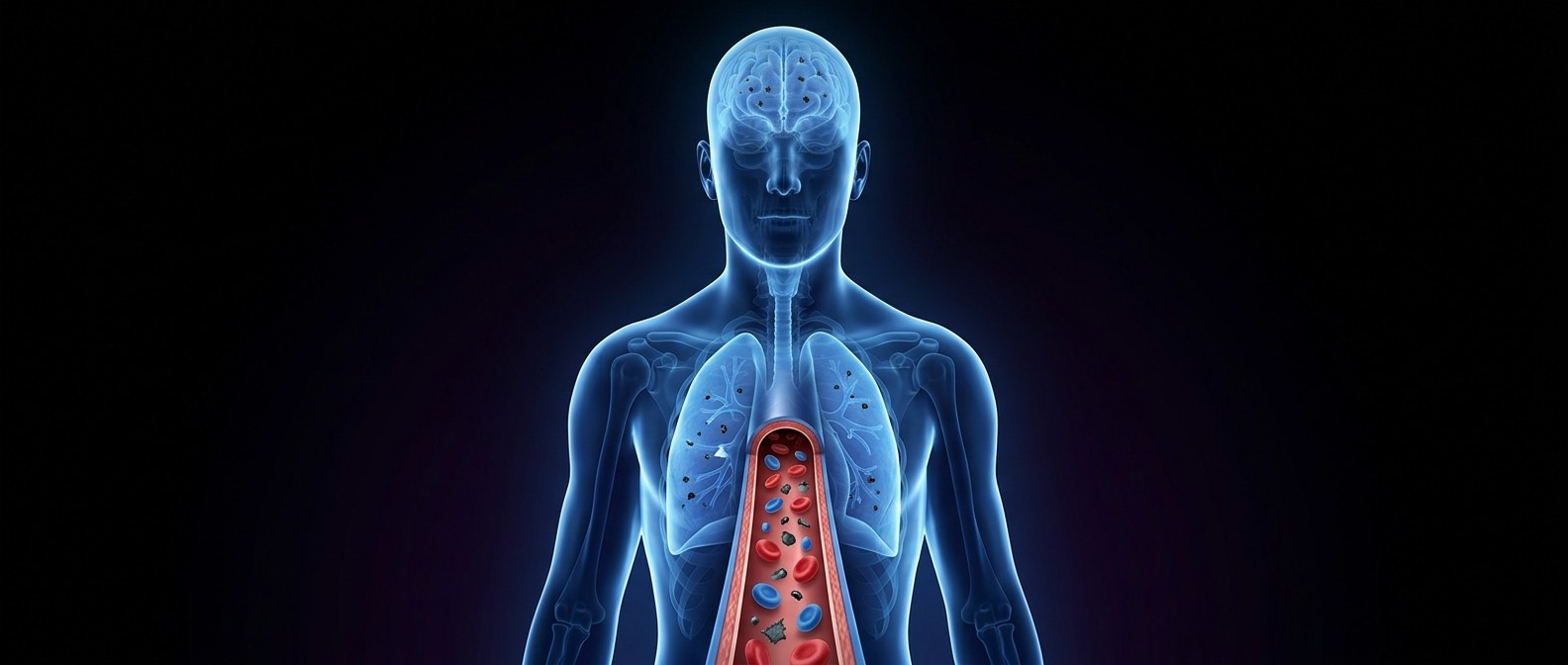
The implications of microplastic chemical reactivity are magnified when considering the scale of plastic presence in the human body. In 2024, the same research team at Columbia University published findings showing that the amount of microplastics in commercially available bottled drinking water was 10 to 100 times higher than previously estimated. Crucially, 90% of those particles were classified as nanoplastics—particles small enough to cross the blood-brain barrier and be absorbed directly into human cells.
This is not merely a theoretical concern. A 2024 study published in the New England Journal of Medicine found plastic fragments embedded in human carotid artery plaque. The presence of these fragments was correlated with a 4.5x increased risk of experiencing a heart attack, stroke, or death over a 34-month period. While the Nature study does not claim a direct causal link between microplastics and these cardiovascular events, it provides a plausible chemical mechanism—the generation of ROS—that could drive the inflammation and tissue damage associated with such conditions.
What It Means for You
While there is currently no medical “detox” to remove microplastics from the human body, the research suggests that reducing exposure is a vital preventative measure. Because the chemical reactivity is driven by the interaction between water and plastic, certain everyday habits can significantly influence your level of exposure.
For Consumers and Households
For Industry and Policy Makers
Counterpoints and Open Questions
Despite the strength of the laboratory findings, scientists urge caution in how these results are interpreted. The primary distinction is that this study was conducted in vitro (in a test tube) rather than in vivo (in a living organism).
Correlation vs. Causation
As noted by Matthew Campen, a professor of pharmaceutical research at the University of New Mexico, the study provides a “foundational” understanding of the chemistry, but it does not prove that these specific chemical reactions are the primary cause of disease in the human body. While the link between microplastics and health issues like cancer or reproductive damage is supported by epidemiological studies, the mechanism remains a hypothesis.
The Role of Biological Buffers
One significant variable in the human body is the presence of other compounds. In the laboratory, when researchers added a surfactant chemical called Triton X-100, it almost entirely eliminated the production of ROS (r = -0.99). This suggests that the complex mixture of proteins, fats, and other chemicals present in human blood and tissues might naturally dampen or coat plastic particles, potentially reducing their reactivity. Whether the body’s natural surfactants are sufficient to mitigate this risk is an open question for future research.
What Happens Next
The scientific and regulatory response to the microplastic crisis is accelerating. In April 2026, the federal government announced a $144-million effort specifically aimed at studying the effects of microplastics in human bodies and drinking water.
As the findings from the Columbia and Berkeley teams continue to be scrutinized, expect to see:
Frequently Asked Questions
How do microplastics react with water to cause harm?
Microplastics are generally hydrophobic, meaning they repel water. When water molecules touch the surface of these plastics, they become “undercoordinated,” lacking the full network of hydrogen bonds they usually have in bulk liquid. This state lowers the energy required for a chemical reaction to occur, causing the water to produce reactive oxygen species (ROS). These ROS are unstable free radicals that can attack nearby biological molecules like DNA and proteins.
Are all types of plastic equally dangerous?
No. According to the study published in Nature, reactivity varies significantly depending on the polymer type. Polypropylene (PP) and Polyethylene (PE) were found to be highly reactive and capable of generating more ROS. In contrast, Poly(methyl methacrylate) (PMMA), commonly used in acrylic, showed much lower reactivity. The level of danger is also linked to how much “dangling” hydroxyl groups are present on the plastic’s surface.
Can I filter microplastics out of my drinking water?
While many standard home water filters are designed to remove larger contaminants, nanoplastics (which are 10 to 100 times smaller than microplastics) are much harder to capture. High-quality filtration systems, such as reverse osmosis, are generally more effective at removing these tiny particles. However, the most effective way to reduce exposure is to limit the use of plastic containers, especially for hot liquids.
Does this study prove microplastics cause cancer?
No, it does not. The study provides a “mechanistic bridge”—a potential explanation for how microplastics could cause cellular damage, such as DNA mutations through ROS exposure. However, it does not provide clinical proof that microplastics cause cancer in humans. It establishes a biological possibility that warrants further investigation.
The discovery that microplastic chemical reactivity is a driver of cellular-level damage marks a significant shift in our understanding of synthetic polymer safety. As science moves from observing the presence of these particles to understanding their active chemical behavior, the focus of public health and material engineering is likely to shift toward mitigating this invisible chemical threat.
References
Featured image: Credit: Intelligent Living) — via Intelligent Living