
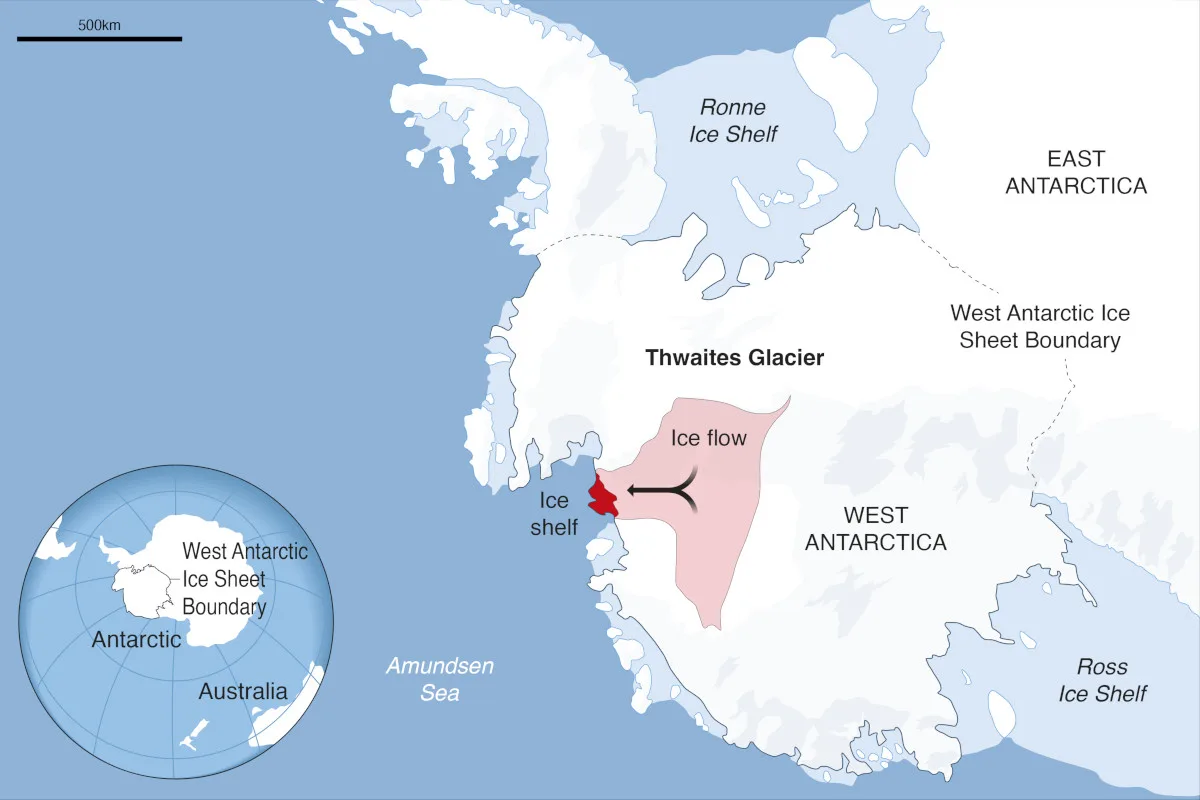
thwaites glacier melting is occurring at a significantly more aggressive rate than previous scientific models predicted, according to new research that identifies a previously misunderstood mechanism deep beneath the ice.
Key Takeaways
- Accelerated Melting: New models suggest the Thwaites Glacier could contribute up to 1.2 inches of sea level rise by 2100, doubling previous estimates.
- Tidal Pumping Mechanism: Warm seawater is infiltrating the “grounding zone” of the glacier, reaching depths of up to 3.7 miles through a process driven by tidal cycles.
- Catastrophic Potential: While Thwaites currently contributes 4% to global sea level rise, its total collapse could raise oceans by 2 feet, and the subsequent collapse of the West Antarctic ice sheet could raise levels by 11 feet.
- The Unpinning Risk: There is a 60% chance the glacier will “unpin” from the Mouginot Ridge by the end of the century, potentially triggering rapid retreat.
- Geoengineering Debate: Scientists are weighing the risks of massive interventions, such as seabed curtains or thermosyphons, to slow the melt.
- Seabed Curtains: This would involve constructing an 80-kilometer (48-mile) long overlapping panel curtain attached to the seabed. The goal is to physically block warm ocean water from reaching the glacier’s grounding zone. Estimates for the cost of such a project range from $40 billion to $80 billion, excluding ongoing maintenance.
- Thermosyphons: Proposed by the Arête Glacier Initiative, this method involves drilling holes up to 2 kilometers deep and using pipes to draw heat away from the glacier bed, effectively attempting to refreeze the ice in place.
- For Coastal Residents: If you live in low-lying areas like the Marshall Islands, Tuvalu, or coastal Florida, expect sea-level rise projections to become more frequent and more severe in urban planning and insurance assessments. The window for “managed retreat” or building defensive infrastructure is narrowing.
- For Investors and Economists: The potential for sudden, large-scale sea-level changes poses a systemic risk to real estate markets in coastal cities and global shipping infrastructure. The $40–$80 billion price tag for geoengineering highlights the massive scale of capital that may eventually be required for climate adaptation.
- For Policy Makers: The “commitment” of sea-level rise means that even if carbon emissions are brought to net zero tomorrow, the melting will continue for centuries. This requires a dual-track approach: aggressive decarbonization to slow the rate of change, and massive investment in coastal resilience to manage the inevitable rise.
- grist.org
- www.sciencefocus.com
- www.cnn.com
What Happened
Recent scientific findings published in the journals Nature Communications and the Proceedings of the National Academy of Sciences (PNAS) have fundamentally altered the understanding of how the Thwaites Glacier—often called the “Doomsday Glacier”—interacts with the ocean. For years, glaciologists relied on models that treated the “grounding line” as a relatively stable, fixed boundary where the ice transitions from resting on the seabed to floating on the ocean.
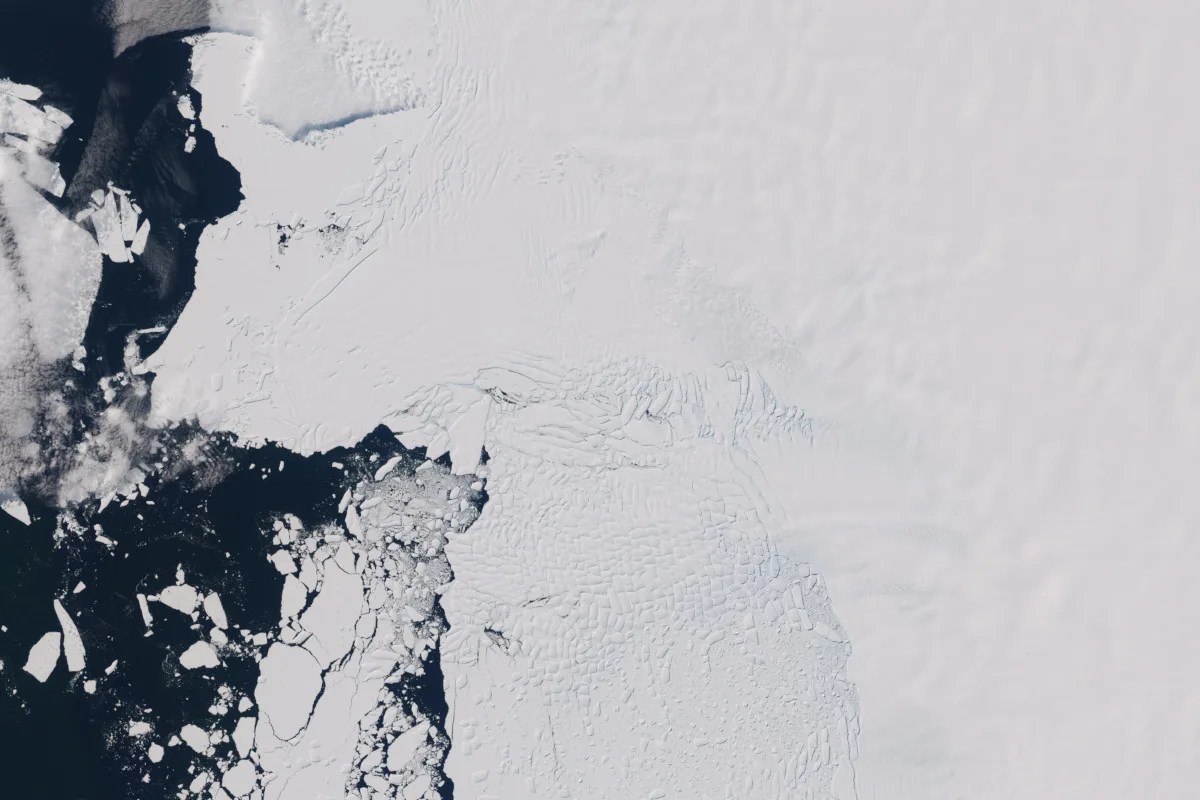
However, researchers from the University of California, Irvine, and NASA’s Jet Propulsion Laboratory have discovered that this boundary is actually a dynamic “grounding zone.” This zone, which can span several miles in width, allows seawater to flush in and out with the tides. This process, known as “tidal pumping,” allows relatively warm ocean water to penetrate deep underneath the massive ice shelf.
According to Mattia Poinelli, a project scientist at UCLA, this tidal action allows water to reach depths of up to 3.7 miles under the ice, causing “vigorous melting” from below. When scientists adjusted their ice sheet models to account for this wide, pulsing grounding zone rather than a single line, the projected contribution of Thwaites to global sea level rise by the year 2100 jumped to 1.2 inches—twice the previous estimates.
Why It Matters: The Scale of the Threat
Thwaites Glacier is a massive entity, roughly the size of Florida, and its stability is inextricably linked to the survival of coastal communities worldwide. While a 1.2-inch rise by the end of the century may seem incremental, researchers warn it serves as a precursor to much larger shifts.
Currently, the glacier is responsible for approximately 4% of the total global sea level rise. It is losing an estimated 50 billion tons of ice annually. The primary danger lies in Thwaites’ role as a “cork.” It acts as a structural bulwark holding back the vast West Antarctic ice sheet. If Thwaites were to collapse entirely, it would raise global sea levels by approximately 65 centimeters (roughly 2 feet). However, if the loss of Thwaites triggers a domino effect that destabilizes the entire West Antarctic ice sheet, the resulting sea level rise could reach a staggering 3.3 meters, or approximately 11 feet.
This scale of change would be catastrophic for the roughly 230 million people living on land less than 1 meter (3.3 feet) above high tide lines. Major global economic hubs and high-density population centers—including New York, Mumbai, Shanghai, Singapore, Bangkok, and Manila—face heightened risks of chronic flooding and permanent submersion. In the Netherlands and parts of the United Kingdom, existing infrastructure would face unprecedented stress.
The Mechanics of the “Unpinning”
One of the most critical components of the glacier’s stability is its interaction with the underlying seabed topography. The land on which Thwaites sits is not flat; it slopes downward toward the ocean, meaning that as the ice melts, more of the glacier’s surface area is exposed to warm water.
However, the retreat has been partially slowed by underwater ridges that act as “pins,” holding the ice in place. The study highlights the Mouginot Ridge as a key stabilizing feature. The new research suggests that the intense melting occurring within the grounding zone is accelerating the “unpinning” of the ice from this ridge.
Scientists have calculated a 60% chance that the glacier will lose its connection to the Mouginot Ridge by the end of this century. Once that anchor is lost, the glacier is expected to retreat rapidly down the sloping bedrock toward the next major ridge, potentially entering a period of irreversible, accelerated loss.
| Feature | Previous Model Assumption | New Research Finding |
|---|---|---|
| Boundary Type | Fixed “Grounding Line” | Dynamic “Grounding Zone” |
| Width of Contact | Relatively narrow/stable | Miles wide and pulsing |
| Water Interaction | Surface/edge melting | Deep tidal pumping (up to 3.7 miles) |
| 2100 Sea Level Contribution | ~0.6 inches | ~1.2 inches |
Stakeholders and the Geoengineering Debate
As the reality of the accelerating melt becomes clearer, a tension is growing within the scientific and political communities regarding how to respond. Because significant sea-level rise is already “committed” due to historical carbon emissions, the conversation has shifted from purely mitigation to include large-scale intervention.
The Case for Intervention
Some researchers are exploring the feasibility of geoengineering to protect the glacier. Two primary methods have been proposed:
Prof. Brent Minchew of MIT has noted that dealing with sea-level rise and the resulting mass human migration may be impossible without considering these intervention ideas. Proponents argue that even if these projects are expensive, the cost is lower than the global economic fallout of unmanaged coastal displacement.
The Skeptics and Risks
Other experts urge extreme caution. The logistical challenges of operating in the remote, harsh environment of West Antarctica are immense. Furthermore, there are significant environmental concerns regarding the unintended consequences of tampering with a massive, complex ecosystem.
Prof. Mathieu Morlighem of Dartmouth College has expressed a desire to remain neutral, noting that while these technologies may be investigated, they must be researched properly to ensure they do not cause more harm than good. There is also the concern that Thwaites is only one part of a larger problem; even if Thwaites is stabilized, Greenland and other Antarctic sectors continue to contribute to the rising tide.
What It Means for You
The accelerating Thwaites Glacier melting has practical implications that extend far beyond the scientific community.
Counterpoints and Open Questions
While the new research provides a clearer picture, it also introduces new layers of uncertainty. One major point of contention is the “domino theory”—the idea that the collapse of Thwaites will inevitably lead to a total collapse of the West Antarctic ice sheet. While some models suggest this is a high probability, others, like Prof. Mathieu Morlighem, suggest that the ice sheet’s stability may be more complex and less prone to a single, catastrophic chain reaction.
Additionally, there is a significant lack of direct observational data. Most of what scientists know comes from satellite imagery and hydraulic modeling. As Robert Larter, a marine geophysicist at the British Antarctic Survey, pointed out, the environment beneath the glacier is even more complex than current papers describe. The scientific community remains divided on whether we can truly predict the speed of the collapse without being able to physically place instruments directly under the ice.
What Happens Next
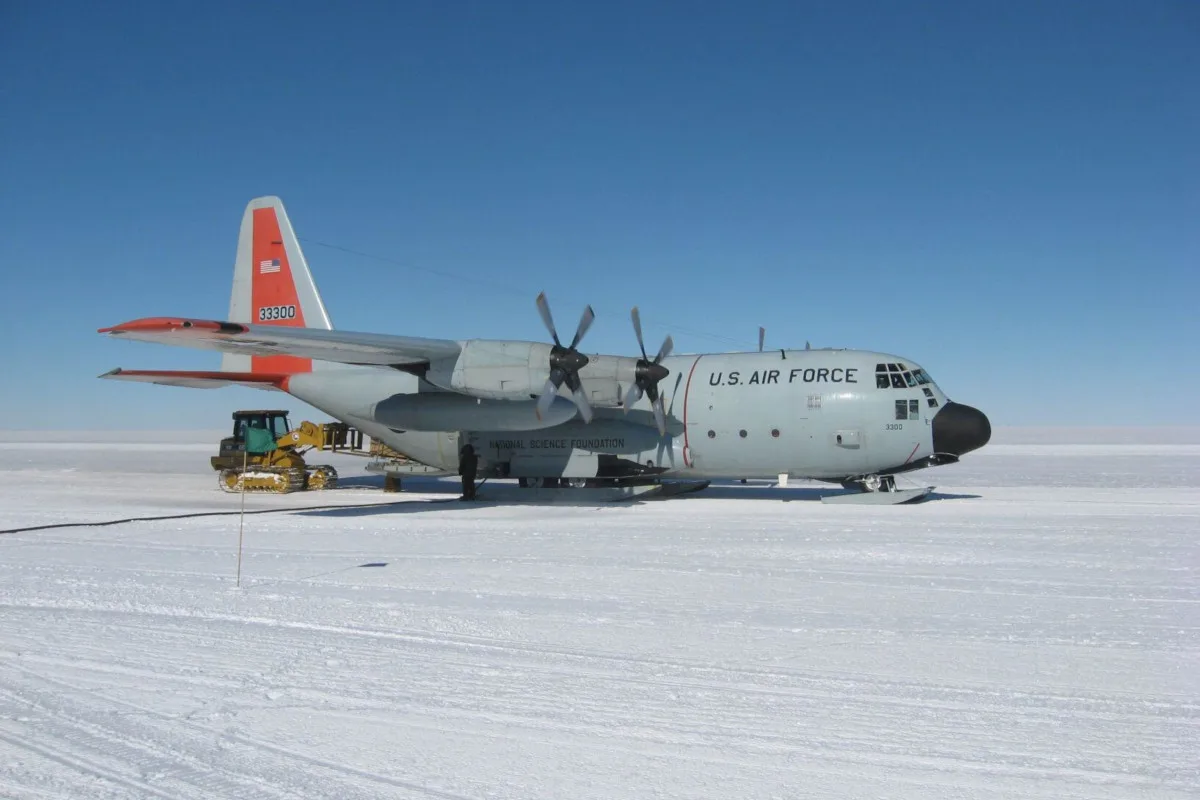
The next major milestone in this research will occur in 2028. A team of scientists, including Eric Rignot from the University of California, Irvine, plans to travel to the Thwaites region to deploy specialized instruments. These tools are designed to document the “flushing” action of seawater within the grounding zone, providing the first direct, real-time data on how tidal pumping operates in situ.
In the interim, the global community will be watching for signals of the “unpinning” event at the Mouginot Ridge. Any evidence that the glacier is losing its grip on this underwater ridge will serve as a critical indicator that the glacier has entered a phase of rapid, accelerated retreat.
Frequently Asked Questions
How much will sea levels rise if Thwaites Glacier melts?
The total melting of the Thwaites Glacier is estimated to raise global sea levels by approximately 65 centimeters (about 2 feet). However, because Thwaites acts as a stabilizer for the rest of the West Antarctic ice sheet, its collapse could trigger a much larger rise of up to 3.3 meters (approximately 11 feet).
What is the “grounding zone” and why is it important?
The grounding zone is the area where a glacier transitions from resting on the seabed to floating on the ocean. Previously, scientists thought this was a single, stable line. New research shows it is a wide, dynamic area where tides pull warm seawater deep under the ice, causing much faster melting than previously understood.
Can we stop the glacier from melting?
While the best way to slow ice loss is to reduce global greenhouse gas emissions, some scientists are researching “geoengineering” to help. This includes ideas like building seabed curtains to block warm water or using thermosyphons to freeze the ice bed. However, these methods are unproven, extremely expensive, and carry significant environmental risks.
Why is it called the “Doomsday Glacier”?
It earned this nickname because of the catastrophic impact its collapse would have on global coastal populations. Because it holds back a massive portion of the West Antarctic ice sheet, its disappearance could lead to a rapid and massive rise in sea levels that would threaten major cities worldwide.
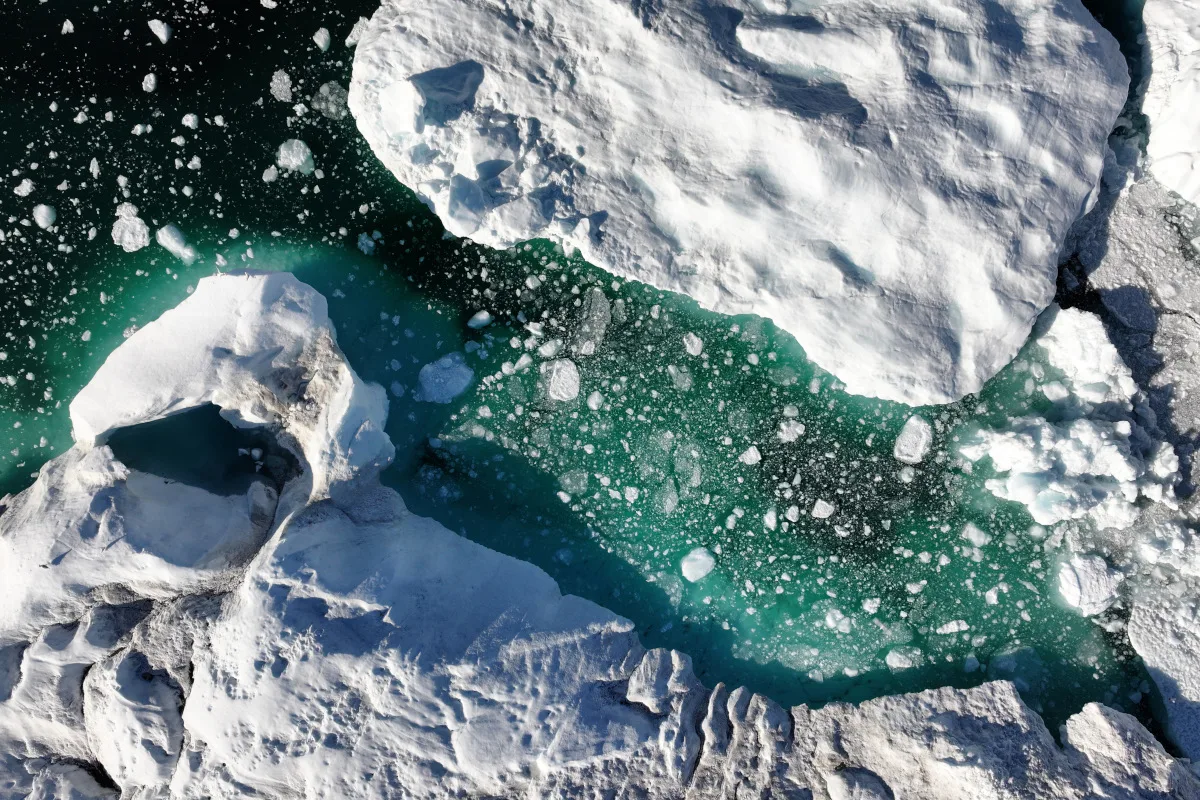
The reality of the Thwaites Glacier melting is a sobering reminder of the ocean’s power and the sensitivity of the Earth’s ice sheets. As the “grounding zone” reveals more of its secrets, the global community faces an increasingly urgent choice between massive investment in adaptation and the potential for a much more chaotic, unmanaged transition for the world’s coastal civilizations.
References
Featured image: credit: ESA/Our Media — via BBC Science Focus Magazine
One thought on “Thwaites Glacier Melting: Why Sea Levels May Rise Faster”