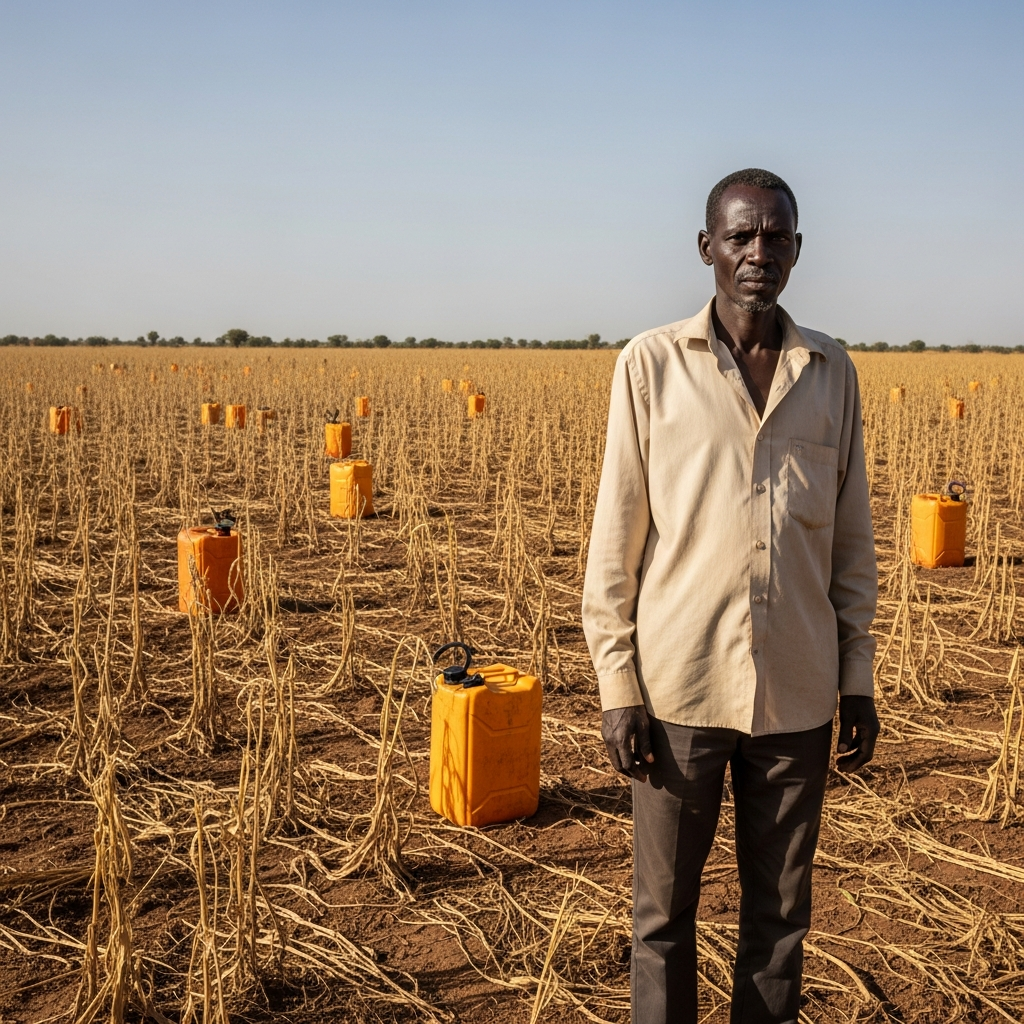
Sudan faces a catastrophic humanitarian emergency, where an already devastating internal war now collides with economic shockwaves from a new Middle East conflict. This dual crisis pushes millions into severe hunger, threatens the nation’s agricultural backbone, and complicates urgent humanitarian efforts. Farmers, grappling with the destruction of war at home, now confront soaring costs for essential supplies like fuel and fertilizer. The dire situation risks deepening an already profound food insecurity crisis across the country.
The Unfolding Catastrophe: Sudan’s Internal War
For over two years, Sudan has been consumed by a brutal internal conflict. The fighting erupted on April 15, 2023, between the Sudanese Armed Forces (SAF) and the paramilitary Rapid Support Forces (RSF), creating a man-made humanitarian disaster of staggering proportions. This relentless violence has led to tens of thousands of deaths and displaced an astonishing 12.4 million people, with over 3.3 million seeking refuge in neighboring countries.
A Nation on the Brink: Hunger and Displacement
The war has caused a near-total collapse of essential services and infrastructure. Half of Sudan’s population, an estimated 25 million people, currently faces extreme levels of hunger. This includes a critical 5 million children and mothers suffering from acute malnutrition. The World Food Programme (WFP) estimates 19 million people are acutely hungry, with many families teetering on the edge of famine. Tragically, Sudan is the only country globally where famine has been officially declared in at least 10 locations, including the Zamzam camp, which shelters 400,000 internally displaced persons. An additional 17 areas remain at high risk of famine in the coming months.
External Shockwaves: The Middle East Conflict’s Impact
As Sudan battles its internal demons, a new conflict in the Middle East delivers another crushing blow. This external instability significantly disrupts global shipping routes, particularly through critical waterways like the Strait of Hormuz and the Bab el-Mandeb Strait. Iranian-backed Houthi rebels in Yemen have threatened shipping in the Red Sea, causing vessels to reroute. This disruption has a direct and severe impact on Sudan’s fragile economy and its agricultural sector.
Soaring Costs Cripple Farmers
Farmers like Omer al-Hassan, who returned to his land in Omdurman after being displaced by Sudan’s internal war, now face a fresh wave of financial hardship. The new Middle East conflict has driven up the prices of vital agricultural inputs. Fuel costs, essential for powering farm machinery and irrigation pumps, have surged by approximately 30%. In some areas, tractor fuel has jumped from $2.50 to an alarming $8 per gallon.
Fertilizer prices have seen an even more dramatic increase. Sudan relies heavily on imported fertilizer, with over half of its supply arriving via sea from the Gulf region. A 50-kilogram bag of urea fertilizer now costs around $50, a five-fold increase from just $11 last year. These astronomical costs make it nearly impossible for farmers to afford the necessary resources for a productive planting season. Mohammed al-Badri, another farmer, could only afford to cultivate half of his farm due to these escalating expenses.
Supply Chain Chaos and Humanitarian Hurdles
The ripple effects of the shipping crisis extend far beyond individual farms. Staple crops crucial for Sudan’s food security—such as sorghum, millet, and sesame—are now at grave risk. Supply chain disruptions mean that even if farmers can afford supplies, they might not arrive in time for the critical planting season, which typically runs from June to November. Mubarak al-Nour, a farmer and former parliamentarian in Gedaref, warns that delays could lead to farmers missing the season entirely. This forces some to switch to cheaper crops that require less fertilizer, further reducing the diversity and quantity of vital rain-fed crops like corn and sesame.
Moreover, the humanitarian response is severely hampered. The UN World Food Programme (WFP) reports that Sudan-bound food assistance shipments are now traveling an additional 9,000 kilometers (5,500 miles). This detour dramatically increases both the cost and time required to deliver life-saving aid to a population on the brink of famine. Physical access within Sudan is also a major obstacle, with warring parties actively blocking essential supplies and bombing local fuel markets, as highlighted by Mathilde Vu of the Norwegian Refugee Council.
Voices from the Fields: Farmers’ Desperate Struggle
The human cost of this multi-layered crisis is immense. Farmers across Sudan are making agonizing choices. Omer al-Hassan and his ten workers in Omdurman, who cultivate potatoes, tomatoes, and onions, spent two months clearing weed-choked land, only to find themselves struggling financially. “The Iran war has affected everything related to agriculture,” al-Hassan stated, explaining that without government support, they are forced to reduce production and ration precious fertilizer.
Merghany Omar, a farmer in River Nile province, notes the additional peril for those who rely on bank loans. Poor crop yields, now an increasingly likely scenario, could lead to farmers being jailed for defaulting on repayments. Even growing local staples like onions no longer covers planting costs in some areas. Abdoun Berqawi, a farmer in Gezira—one of Sudan’s primary food-producing regions—describes the current rising costs as a “dangerous reality” without government intervention.
The Looming Planting Season
Melaku Yirga, Mercy Corps vice president for the Africa region, emphasizes that the external conflict has triggered a “dangerous chain reaction… at the wrong moment” as farmers prepare for the planting season. The consequences for ordinary Sudanese are stark. People are increasingly forced to:
Buy less food
Cut or skip meals
Sell valuable assets
Resort to consuming leaves or animal feed just to survive
Mothers, in particular, face the agonizing decision of who gets to eat the scarce food available. The agriculture ministry in Sudan has yet to respond to requests for details on how they plan to address this rapidly escalating crisis.
A Crisis of Multiple Dimensions
Beyond the direct impact on farming, the crisis reverberates throughout Sudanese society. Existing vulnerabilities, such as severe currency depreciation, exacerbate the situation, as noted by Samy Guessabi, country director for Action Against Hunger in Sudan. The most remote and poorly connected agricultural zones—including Kordofan, White Nile, Darfur, and Blue Nile—are suffering the most. Even in urban areas, the price of essential items like vegetables and dairy has surged by about 40% due to fuel cost spikes.
Beyond Food: Healthcare and Gendered Impacts
The internal conflict has obliterated Sudan’s healthcare system, leaving over 80% of hospitals in conflict zones non-operational. This has led to a sharp increase in maternal deaths, and countless individuals are deprived of critical medical care. UN Women highlights the extreme vulnerability of women and girls, with evidence pointing to the systematic use of conflict-related sexual violence as a weapon of war, though cases are massively underreported. Despite the extraordinary strength of Sudanese women, they cannot navigate this multifaceted crisis alone.
The Path Forward: Urgent Calls for Peace and Aid
Humanitarian organizations are making fragile gains despite the monumental challenges. WFP assistance has tripled since mid-2024 in some newly accessible areas, and UN Women has provided vital services to over 15,000 women. However, these efforts meet only a fraction of the immense needs. Shaun Hugues, Regional Emergency Coordinator at WFP, warns that the crisis threatens to overshadow many seen over previous decades.
The approaching rainy season will soon render many critical aid routes impassable, further complicating delivery efforts. There is an urgent call for unimpeded access to move humanitarian assistance swiftly across front lines, borders, and within contested areas, free from lengthy bureaucratic processes.
A critical funding gap also jeopardizes operations. WFP requires an additional $650 million to sustain its programs in Sudan for the next six months and another $150 million for Sudanese refugees in neighboring countries. Without these funds, rations are being cut by up to half, and fewer people are receiving assistance. Ultimately, UN humanitarians stress that the Sudanese people desperately need peace. A ceasefire and an immediate end to hostilities are paramount to allow people to begin rebuilding their lives. Moreover, women’s voices must be amplified at every peace negotiation table, ensuring they have the dignity to not only survive but also rebuild and thrive.
Frequently Asked Questions
What specific factors are driving Sudan’s worsening food crisis?
Sudan’s food crisis is fueled by a severe confluence of factors. Primarily, a two-year internal war between the Sudanese Armed Forces and the Rapid Support Forces has decimated infrastructure, displaced millions, and disrupted agriculture. Compounding this, a new Middle East conflict has dramatically driven up the costs of essential farming inputs like fuel (up 30%, to $8/gallon for tractors) and fertilizer (a 50kg bag of urea now $50, up from $11). These external pressures also create critical supply chain disruptions, delaying humanitarian aid and farming supplies, threatening the planting season for staple crops like sorghum, millet, and sesame.
Which regions in Sudan are most severely affected by food insecurity and conflict?
The impact of food insecurity and conflict is widespread across Sudan, but some regions are particularly devastated. Famine has been officially declared in at least 10 locations, including the Zamzam camp, which houses 400,000 displaced people. An additional 17 areas are at high risk of famine. The most remote and poorly connected agricultural zones, such as Kordofan, White Nile, Darfur, and Blue Nile, are experiencing the most severe hardship. Major food-producing regions like Gezira, Kassala, and Gedaref are also heavily impacted by soaring costs and supply chain issues.
What urgent actions are humanitarian organizations calling for to address the crisis in Sudan?
Humanitarian organizations, including the UN World Food Programme (WFP), Mercy Corps, and Action Against Hunger, are calling for several urgent actions. Foremost is an immediate ceasefire and an end to hostilities to allow people to rebuild their lives. They also demand unimpeded humanitarian access to deliver aid swiftly across front lines and borders, free from bureaucratic obstructions. Increased funding is critical; WFP alone needs $650 million for Sudan operations and $150 million for refugees in neighboring countries. Lastly, UN Women emphasizes the crucial need to include and amplify women’s voices in all peace negotiations to ensure a sustainable and equitable recovery.