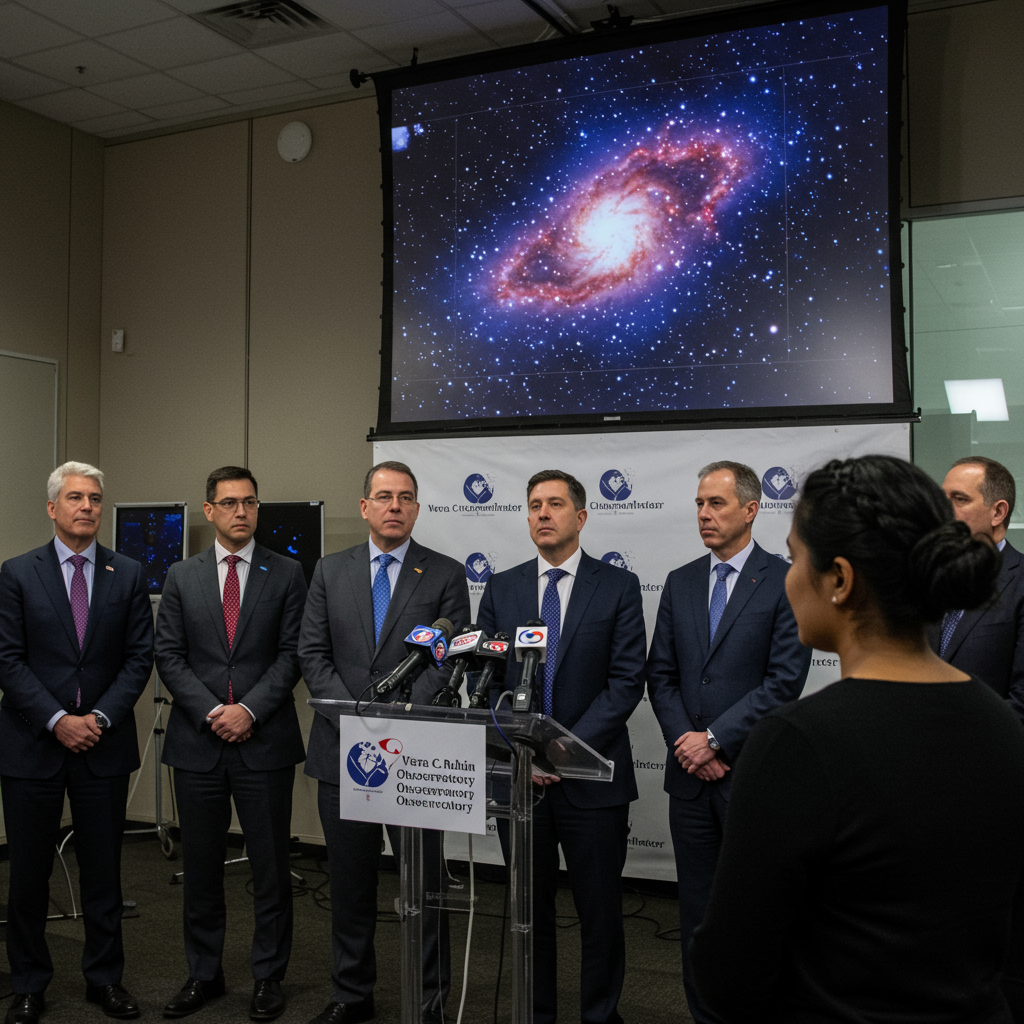
The world stands on the cusp of a groundbreaking space event as NASA prepares for the historic Artemis II mission. This crewed lunar flyby is set to mark the first time humans journey beyond low Earth orbit in over 50 years, reigniting humanity’s deep-space exploration ambitions. Slated for an early April launch, Artemis II will send four intrepid astronauts around the Moon, meticulously testing the Space Launch System (SLS) rocket and Orion capsule, and setting the stage for future lunar landings and a sustained human presence on our closest celestial neighbor.
The Countdown Begins: A Historic Launch Window Nears
Excitement is building at NASA’s Kennedy Space Center as the launch window for Artemis II approaches. The mission is currently targeted for Wednesday, April 1, with a two-hour launch opportunity opening at 6:24 p.m. ET. This momentous event will see the powerful SLS rocket propel the Orion capsule and its four-person crew into space from Launch Pad 39B, the very site where Apollo missions once embarked.
Spectrum News meteorologist Zach Covey provided an optimistic early forecast for the initial launch attempt. He anticipates “as good as it gets” weather conditions, with no rain expected and winds well below liftoff constraints. While some cumulus clouds and potential “thick cloud rule” violations could occur late evening, the overall outlook remains favorable. However, weather patterns are expected to shift later in the week, with increasing rain chances from Thursday onward, underscoring the narrowness of the initial launch window.
Launch Pad 39B & SLS Power
The colossal Space Launch System (SLS) rocket, standing at an impressive 322 feet (98.27 meters) tall, dominates the landscape at Launch Pad 39B. This super-heavy-lift vehicle, 17 feet taller than the Statue of Liberty, is engineered to generate over 8.8 million pounds of thrust. Its sheer power is essential to hurl the Orion capsule, measuring 10 feet, 11 inches tall and 16.5 feet in diameter, and its precious human cargo towards the Moon. The success of this launch is not just a scientific milestone but a validation of years of engineering and development by core contractors like Boeing (core stage), Northrop Grumman (twin rocket boosters), and Aerojet Rocketdyne (RS-25 engines).
Meet the Trailblazing Artemis II Crew
At the heart of the Artemis II mission are four pioneering astronauts, each set to achieve significant “firsts” in human spaceflight. Commander Reid Wiseman, a seasoned former NASA chief astronaut, will lead the mission. Pilot Victor Glover Jr. will become the first person of color to visit the Moon, building on his previous long-duration assignment on the International Space Station. Mission Specialist Christina Koch holds the record for the longest single spaceflight by a woman and participated in the first all-woman spacewalk; she will now be the first woman to journey to the Moon. Completing the quartet is Canadian Space Agency mission specialist Jeremy Hansen, making him the first Canadian, and notably, the first non-U.S. astronaut, to visit the lunar satellite, marking his inaugural spaceflight. Together, this diverse crew has christened their Orion spacecraft “Integrity.”
A Groundbreaking Lunar Flyby: Mission Objectives
Artemis II is a crucial 10-day mission designed to meticulously test the critical systems of the SLS rocket and the Orion crew capsule in a crewed environment. Its primary objective is to demonstrate that these systems can safely transport astronauts to the Moon and back, validating life support, communications, and navigation systems, alongside operational procedures. This flight is a vital precursor to future lunar landing missions like Artemis III and IV.
The mission profile includes a three-day journey to the Moon after a powerful translunar injection burn. Orion will perform system checks and a manual spacecraft flying demonstration. The spacecraft will then fly past the far side of the Moon, passing between 4,000 and 6,000 miles (6,437 to 9,656 kilometers) above its surface. From this unique vantage point, the crew will observe Earth nearly 250,000 miles in the background, with the Moon appearing “about the size of a basketball held at arm’s length.” During this period, communication with Earth will be temporarily lost for 30 to 50 minutes, a critical test of onboard autonomy. Upon its three-day return journey, Orion will re-enter Earth’s atmosphere at speeds of up to 25,000 mph, with its heat shield enduring temperatures up to 3,000 degrees Fahrenheit before splashing down in the Pacific Ocean.
Unprecedented Views of Earth and Moon
On day six of their mission, the Artemis II crew is set to achieve another remarkable milestone. They are projected to break the record for human deep space travel, surpassing the 1970 Apollo 13 mission’s record of 248,655 miles (400,171 kilometers) from Earth. This journey will offer breathtaking, never-before-seen perspectives of our home planet and its lunar neighbor from a vantage point far beyond any human has traveled in over half a century.
Overcoming Hurdles: The Road to Launch
The journey to Artemis II has been marked by a series of technical challenges and delays, highlighting the inherent complexities of deep space exploration. The broader U.S. ambition to return humans to the Moon has a long history, including the Constellation program initiated by President George W. Bush in 2004. That program envisioned lunar return but was ultimately canceled by President Barack Obama in 2010 due to budget overruns and schedule delays. However, the Orion crew module, a key component, continued development. In 2017, President Donald Trump authorized a renewed lunar exploration program, Space Policy Directive 1, which gave rise to the Artemis program, named after Apollo’s twin sister.
The Heat Shield Challenge: Lessons from Artemis I
Artemis II was initially slated for launch in 2019, then pushed to 2021, and subsequently to November 2024 and September 2025. A significant factor in these postponements was the performance of the Orion capsule’s heat shield during the uncrewed Artemis I test flight in 2022. During Artemis I’s fiery re-entry, the Avcoat material on the heat shield, designed to ablate smoothly, broke off in unexpected chunks instead of burning away as intended. This unanticipated behavior prompted extensive investigation by NASA engineers. They have since identified the root cause and implemented a new methodology for heat shield construction, adjusting bond lines and adding more instrumentation, with ground arc-jet runs and Orion spacecraft tests validating the updated design for stable ablation and predictable peak heating.
Resolving Technical Glitches
Further delays pushed Artemis II into early 2026, and then to its current April target, due to additional technical setbacks. These included two liquid hydrogen leaks and a helium flow anomaly within the propulsion system. Technicians addressed the helium issue by replacing seals and re-verifying lines, with recent integrated checks confirming nominal pressures and flow. These combined fixes, alongside final software loads and communications checks, were crucial for clearing the mission for its April 1st attempt. Despite these challenges, NASA officials, including John Honeycutt, chair of the Artemis II Mission Management Team, emphasize a rigorous focus on risk management, acknowledging the historical statistic that “only one out of two newly built rockets typically succeed.” This methodical approach ensures the highest safety standards for the crew.
The Teams Behind the Mission: Key Contractors
The monumental undertaking of Artemis II is a testament to the collaborative efforts of numerous aerospace giants and international partners. Key contractors for the Space Launch System (SLS) rocket include Boeing for the core stage, Northrop Grumman for the twin rocket boosters, and Aerojet Rocketdyne for the four powerful RS-25 engines. The Orion capsule, the crew’s home in deep space, is primarily developed by Lockheed Martin, in close partnership with the European Space Agency. A successful Artemis II launch will not only be a triumph for NASA but also a significant validation of the innovation and dedication of these industry leaders, impacting future milestone payments and program momentum.
Beyond Artemis II: A Vision for Lunar Exploration
Artemis II is far more than a single mission; it is a critical stepping stone in NASA’s ambitious, long-term vision for lunar exploration. The agency plans to invest approximately $20 billion over the next seven years, collaborating with commercial and international partners to establish a sustainable human presence on the Moon. This “deliberate and achievable plan” aims for a “semi-permanent crew presence” starting in 2032.
The Future: A Permanent Lunar Presence
The phased approach to lunar presence extends well beyond this flyby. Artemis III has been revised to be a crewed rendezvous mission in Earth’s orbit to test human landing systems currently under development by SpaceX and Blue Origin. Artemis IV, targeted for early 2028, will send astronauts to the lunar surface. Artemis V, planned for later in 2028, is designed to further accelerate the establishment of the lunar base. NASA is pivoting away from its initial Gateway Program, which envisioned an orbiting lunar outpost, to focus directly on the lunar surface. The envisioned moon base will be equipped with advanced infrastructure, including both shielded nuclear power and solar array towers, supporting pressurized rovers, advanced Lunar Terrain Vehicles (LTVs), drones, and various habitats, along with distinct landing sites for both human crews and cargo deliveries. This long-term initiative promises to generate significant economic benefits, particularly for Florida’s Space Coast, ensuring the U.S. remains a dominant force in space exploration for generations.
Frequently Asked Questions
What makes the Artemis II mission historic?
Artemis II is historic because it will be the first crewed mission to travel to the Moon in over 50 years, since Apollo 17 in 1972. It marks a critical step in humanity’s return to deep-space exploration. The mission also features groundbreaking “firsts,” including the first woman and first person of color to journey to the Moon, and the first Canadian astronaut to undertake such a voyage. It will also break the human record for deepest space travel.
What technical challenges did Artemis II overcome before launch?
The Artemis II mission faced several technical hurdles, primarily stemming from the uncrewed Artemis I flight. Engineers addressed concerns about the Orion capsule’s heat shield, which exhibited unexpected char loss during re-entry. They implemented design adjustments and enhanced testing to ensure its integrity. Additionally, technicians resolved a helium flow anomaly and two liquid hydrogen leaks in the Space Launch System (SLS) rocket, requiring meticulous repairs and re-verification before the current launch window was finalized.
How does Artemis II fit into NASA’s long-term moon base plans?
Artemis II is a crucial validation flight for the SLS rocket and Orion capsule, proving they can safely transport a crew to the Moon and back. This mission directly paves the way for future lunar landing missions, such as Artemis III and IV, which aim to put astronauts on the surface. NASA’s ultimate goal is to establish a sustainable, semi-permanent human presence on the Moon by 2032, with Artemis II providing the foundational crewed flight data essential for building and operating this future lunar base with advanced infrastructure.
Conclusion
The Artemis II mission represents a powerful statement of human ingenuity and our enduring drive to explore. This crewed lunar flyby is not merely a revisit to our celestial neighbor but a testament to decades of scientific advancement and a critical stepping stone towards a new era of space exploration. From testing the limits of human endurance and cutting-edge technology to breaking historical barriers for diversity in space, Artemis II sets the stage for a future where humanity lives and works on the Moon. As the launch window approaches, the world watches, ready to witness the next chapter in our extraordinary journey beyond Earth.