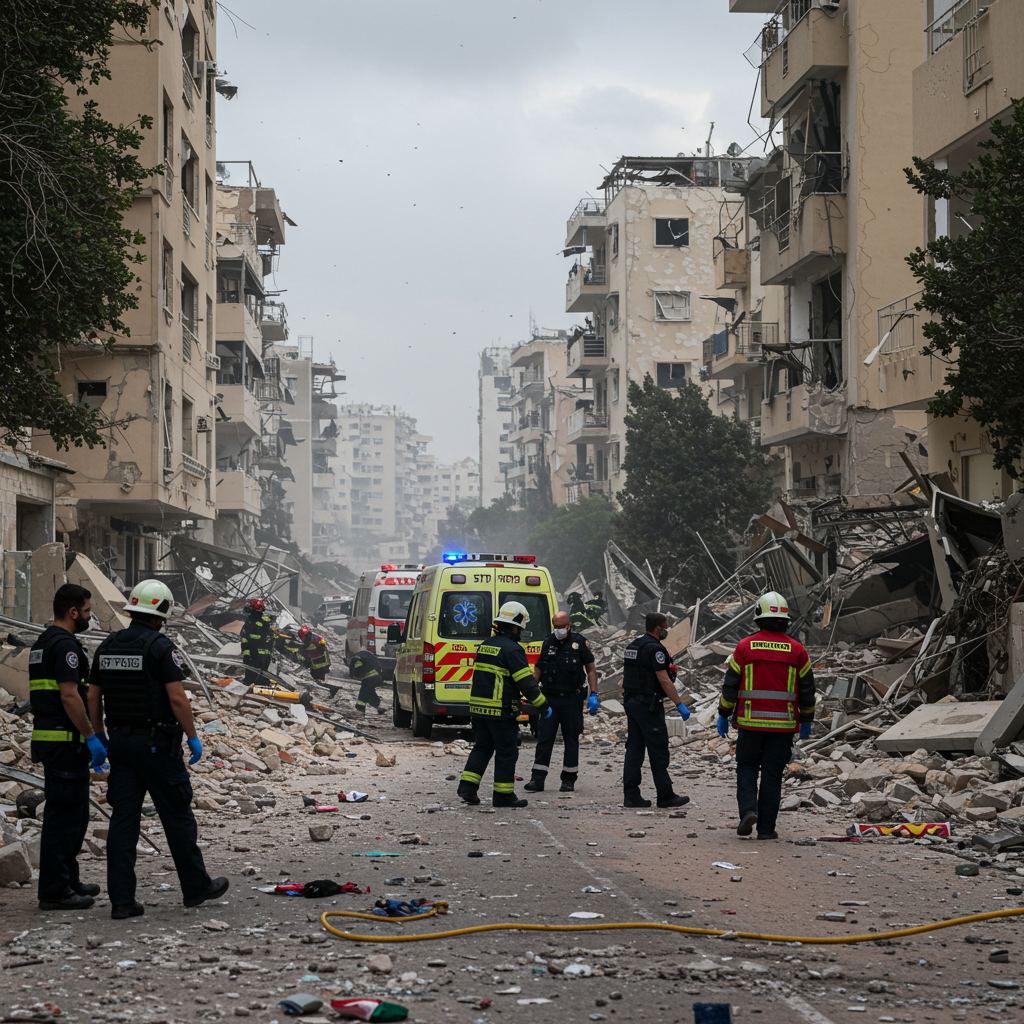
Day 26 of the escalating Iran US conflict sees Tehran unequivocally reject a 15-point peace proposal from the United States. This refusal intensifies an already volatile situation across the Middle East, characterized by military buildups, continued attacks, and a deepening humanitarian and economic crisis. As diplomatic efforts falter amid conflicting narratives, the region grapples with the fallout of widespread hostilities, impacting global energy markets and sparking calls for de-escalation from the international community.
The current Iran US conflict began on February 28 with pre-emptive US and Israeli strikes targeting Iranian leadership, military sites, and critical infrastructure. These initial attacks tragically killed Iran’s Supreme Leader, Ayatollah Ali Khamenei, alongside numerous senior IRGC and government officials. Iran retaliated swiftly with missile and drone attacks against Israel, US-allied Gulf states, and other targets, marking a dramatic escalation of long-standing tensions.
Diplomatic Chasm Deepens Amid Conflicting Claims
The core of the present diplomatic impasse revolves around a 15-point peace plan presented by the US, which Iran has dismissed as “extremely maximalist and unreasonable.” While the White House, through Press Secretary Karoline Leavitt, asserts that talks with Iran are “productive” and “proceeding apace,” Tehran offers a contrasting view.
Iranian Foreign Minister Abbas Araghchi acknowledged an “exchange of messages” facilitated by “friendly countries” but vehemently denied that these communications constituted formal negotiations. He interpreted Washington’s shift in tone from demanding “unconditional surrender” to seeking talks as an “admission of defeat” by the US. This highlights a fundamental disagreement over the nature and sincerity of potential peace efforts.
US President Donald Trump has offered mixed signals, claiming Iran “wants to make a deal so badly” but is “afraid to say it.” He also declared “this war has been won” and that his administration had achieved “regime change” in Iran following the death of its supreme leader. However, when pressed, the White House admitted it was “too soon to say” if they were satisfied with Iran’s new leadership. This conflicting rhetoric from Washington fuels skepticism in Tehran, with Iranian officials dismissing Trump’s peace talk claims as “fake news” intended to manipulate markets or buy time for further military deployment.
International Mediation Efforts Face Hurdles
Despite the public standoff, various international actors are actively engaged in mediation. Pakistan has offered to host direct talks, a move affirmed by Prime Minister Shehbaz Sharif after discussions with Iranian President Masoud Pezeshkian. Other nations, including China, France, Oman, Turkey, and Egypt, are reportedly relaying messages between Washington and Tehran, underscoring the global concern over the escalating Middle East peace plan discussions. However, the lack of direct communication and the deep distrust between the principal parties remain significant obstacles to any meaningful breakthrough.
Israeli Prime Minister Benjamin Netanyahu’s foreign policy adviser, Ophir Falk, expressed deep skepticism, stating, “Iran always lies.” He outlined Israel’s goals as either removing the current regime or severely weakening Iran’s military capabilities, with diplomacy as a third, non-exclusive path. This further complicates the already intricate diplomatic landscape.
Military Escalation Ignites New Fronts
Beyond the diplomatic rhetoric, military activities underscore the gravity of the Iran US conflict. Both sides are engaged in aggressive posturing and direct confrontation across several critical areas.
Kharg Island: A Strategic Flashpoint
A key focus of military tension is Kharg Island, a small coral outcrop vital to Iran’s economy. Intelligence reports suggest Iran is actively preparing for a potential US operation to seize control of the island, including laying traps and moving military personnel and air defenses. Kharg Island processes 90% of Iran’s crude exports, making it a crucial strategic target. Its destruction would, according to Israeli opposition leader Yair Lapid, “cripple Iran’s economy and topple the regime.” The initial US and Israeli strikes on February 28 specifically targeted critical oil and gas facilities, including Kharg Island and the South Pars natural gas field.
Gulf Nations Face Relentless Attacks
The conflict has spread extensively throughout the Gulf, shaking regional stability. The United Arab Emirates and Kuwait reported intercepting Iranian drones and missiles, while Bahrain issued public warnings and instructed residents to seek shelter. Saudi Arabia’s strategically important Eastern Province, home to major oil facilities, faced multiple drone attacks. Gulf Cooperation Council (GCC) countries are demanding representation in any peace talks, seeking guarantees for energy flow and an end to threats from Iranian missiles and regional proxies. This underscores a profound regional distrust of their Iranian neighbor, further complicated by a Moroccan civilian killed in Bahrain while working with UAE forces. Qatar’s major gas facility, Ras Laffan Industrial City, also sustained “significant damage” following Iranian attacks.
Looming Threats on Key Maritime Routes
The Strait of Hormuz crisis remains a critical concern, with Iran threatening to close the vital waterway if its territory is attacked. This strait is a crucial chokepoint for global trade, particularly for oil and natural gas shipments, accounting for roughly 20% of the world’s oil supply. Iran has also warned of opening a new front around the Bab el-Mandeb Strait, another crucial maritime chokepoint, if military action targets southern Iran or its islands. Such actions would severely disrupt global shipping, already evidenced by an estimated 20,000 seafarers and 2,000 vessels currently stranded in the Gulf region. France is actively planning talks to restore safe maritime navigation through these perilous waters.
Lebanon Front Intensifies
The conflict has also ignited a new front in Lebanon. Following the death of Iran’s Supreme Leader, the Iran-backed group Hezbollah initiated rocket attacks against Israeli positions. Israel retaliated with widespread strikes across southern and central Lebanon, impacting Beirut’s suburbs. Israel’s defense minister declared an intent to seize a 30km (19-mile) “security zone” in Lebanon, deploying ground troops to counter Hezbollah and even pursuing a “Rafah model” to create a buffer zone through demolition and depopulation. This aggressive Israeli stance, combined with mass evacuation orders in Beirut’s southern suburbs, has trapped civilians and hindered humanitarian aid for over a million displaced people. The Lebanese government, in response to escalating tensions, declared the Iranian ambassador “persona non grata” and recalled its own envoy, citing violations of diplomatic norms.
Widespread Humanitarian and Economic Fallout
The human and economic costs of the Iran US conflict are staggering, reverberating far beyond the immediate battlegrounds.
Mounting Casualties and Displacement
The death toll continues to climb across the Middle East. Human Rights Activists in Iran (HRANA) reported over 3,291 deaths in Iran by March 24, including 1,455 civilians (217 children) and 1,167 military personnel. Lebanon’s Health Ministry reported 1,072 deaths, including 121 children, since the offensive escalated on March 2. In Iraq, at least 96 people have been killed, while 17 Israelis have died from missile strikes. The US has lost 13 service members, with additional fatalities reported across other Gulf states. A particularly tragic incident involved an alleged US Tomahawk missile strike near an IRGC base in Iran that also hit a girls’ school, killing 168 people, including around 110 children. The UN Secretary-General has warned against Lebanon becoming “the next Gaza,” highlighting the severe humanitarian crisis.
Global Energy and Supply Chain Disruption
The conflict has severely disrupted global energy markets. Oil prices have surged, with average national prices for regular gasoline up by $1 to $3.98, and diesel by $1.61 to $5.37. In response, the US Postal Service (USPS) implemented an unprecedented 8% fuel surcharge on packages, adding to consumer and business costs.
To mitigate the fuel crisis, the US has relaxed sanctions on Russian oil for South Korea, allowing it to import certain energy products as long as payments are made in non-US dollar currencies. This move, however, has drawn criticism from economists who warn it could undermine the global sanctions regime. Countries like South Korea and Japan, heavily reliant on Middle Eastern oil, face significant domestic fallout. The Philippines declared a “national energy emergency” due to rising fuel prices and supply risks. The Strait of Hormuz blockade is not only impacting oil but also fertilizer shipments, with about 30% of the world’s raw materials passing through it, leading to higher food costs globally.
Domestic Pressures and International Calls for Calm
The prolonged conflict has also sparked significant domestic dissatisfaction within the United States and prompted widespread international appeals for peace.
US Public and Congressional Discontent
Public dissatisfaction with the Iran US conflict is high. Recent polls indicate that 59% of Americans believe the US made the wrong decision in using military force, with 61% disapproving of President Trump’s handling of the conflict. This public sentiment is mirrored in Congress, where members of the House Armed Services Committee expressed dissatisfaction with administration briefings, feeling “misled” and questioning the war’s objectives and timeline. Republicans like Rep. Nancy Mace stated she would not vote for additional funding, reflecting growing angst across the political spectrum over the war effort. Trump’s approval rating has dipped to 36 percent, its lowest since his second term, with public disapproval largely attributed to the rising cost of living and the unpopularity of the war.
Global Appeals for De-escalation
The international community is increasingly vocal in its calls for de-escalation. The UN Human Rights Council is set to hold an urgent meeting on Iran’s strikes in the Gulf. EU chief Ursula von der Leyen emphasized the “critical” situation for global energy supply chains. Even the Palestinian armed group Hamas, a key Iranian ally, urged Iran to cease attacks on Gulf states. Iranian President Masoud Pezeshkian had previously apologized to neighboring countries, pledging no attacks unless provoked, a sentiment that clashes with the ongoing military actions. Iraq, caught between US and Iranian influence, has granted Iran-backed paramilitary groups the right to respond to US actions, reflecting the complex loyalties and challenges in the region.
Frequently Asked Questions
What is the US’s 15-point plan for ending the Iran-US conflict, and why did Tehran reject it?
The US proposed a 15-point plan aimed at ending the ongoing Iran US conflict, though specific details of the plan have not been publicly disclosed by the White House. Tehran vehemently rejected this proposal, with Iranian Foreign Minister Abbas Araghchi labeling it “extremely maximalist and unreasonable.” Iran views Washington’s shift in tone from demanding “unconditional surrender” to offering a plan as an admission of failure rather than a genuine diplomatic overture, asserting that while messages have been exchanged via mediators, these do not constitute formal negotiations.
How has the ongoing Iran-US conflict specifically impacted global shipping and energy markets?
The Iran US conflict has severely disrupted global shipping and energy markets, particularly through the Strait of Hormuz crisis. Iran’s threats to close this vital strait, which handles approximately 20% of global oil supply and significant natural gas, have caused oil prices to surge. The conflict has also led to a humanitarian crisis for an estimated 20,000 seafarers and 2,000 vessels stranded in the region. Additionally, attacks on critical energy infrastructure in the Gulf, such as Qatar’s Ras Laffan, have further tightened global supply. These disruptions have prompted responses like the US easing sanctions on Russian oil for South Korea and a new 8% fuel surcharge by USPS, reflecting the widespread economic impact.
What are the key obstacles to achieving a diplomatic resolution in the current Iran-US conflict, and what are the potential next steps?
Key obstacles to a diplomatic resolution in the Iran US conflict include profound mutual distrust, conflicting claims about the nature of ongoing communications, and maximalist demands from both sides. Iran views US overtures as insincere and a sign of defeat, while Israeli officials express deep skepticism about Iran’s willingness to negotiate. The US has stated a preference for peace but maintains military options, while Iran warns of expanding fronts if provoked. Potential next steps involve continued mediation efforts by countries like Pakistan, China, and Oman, as well as addressing the humanitarian and economic fallout to create a more conducive environment for genuine, direct negotiations, possibly starting with confidence-building measures or de-escalation agreements.
Conclusion: A Volatile Standoff
As Day 26 of the Iran US conflict concludes, the rejection of the US peace plan by Tehran signals a hardening of positions rather than a move towards de-escalation. The diplomatic dance remains strained, marked by conflicting claims and deep-seated animosity. Meanwhile, the military landscape continues to intensify, from strategic flashpoints like Kharg Island and the Strait of Hormuz to new fronts in Lebanon and persistent attacks across the Gulf.
The human toll and economic ripple effects are undeniable, impacting global energy prices, supply chains, and domestic sentiment in the US. Without a genuine shift towards direct and sincere dialogue, the Iran US conflict risks further exacerbating instability across the Middle East, with far-reaching consequences for international security and the global economy. The path forward remains precarious, demanding sustained international pressure and a willingness from all parties to prioritize dialogue over escalation.