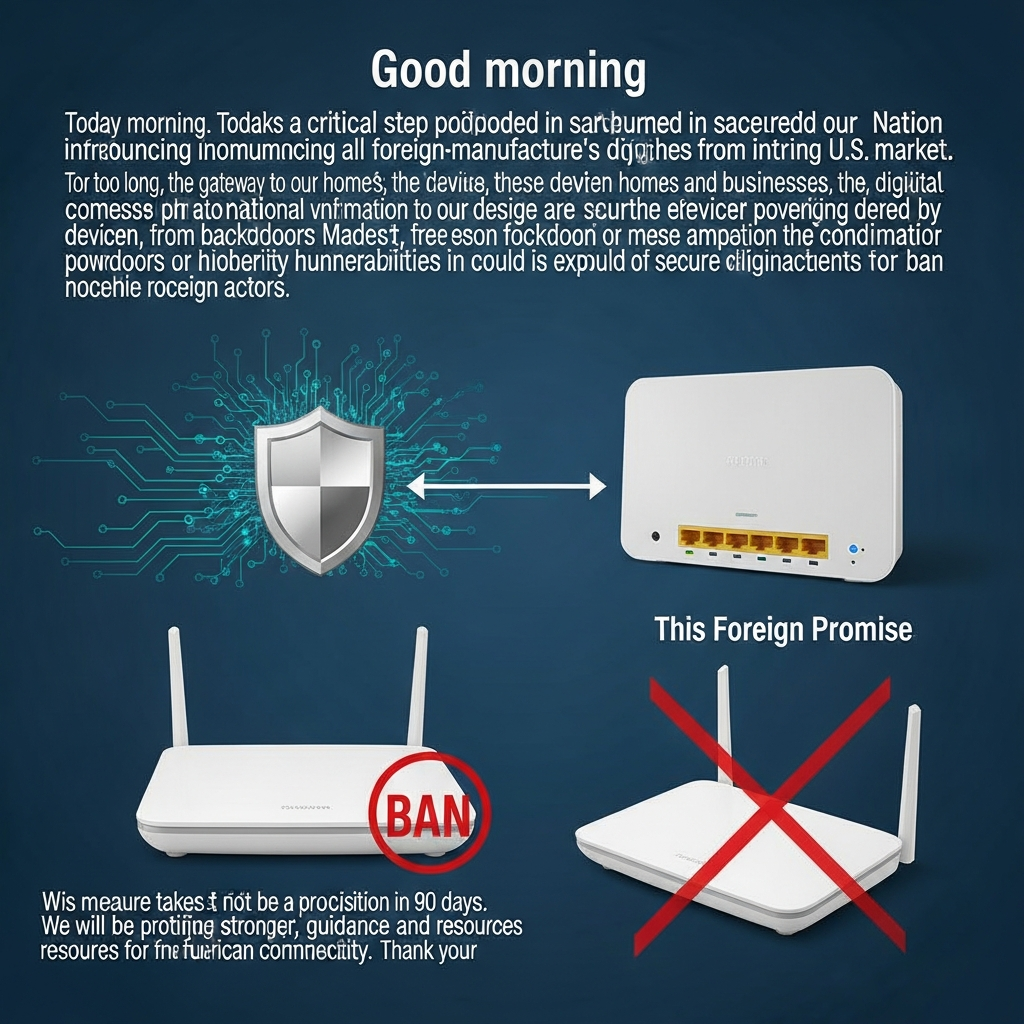
The digital landscape for American households just took a significant turn. On March 23, 2026, the Federal Communications Commission (FCC) announced a landmark policy effectively banning the importation of most new foreign-made consumer Wi-Fi routers. This bold move, driven by critical national security concerns, is set to redefine the future of home networking in the United States and has substantial implications for both manufacturers and everyday internet users.
This comprehensive FCC router ban signals a proactive approach to safeguarding America’s digital infrastructure. It addresses growing threats from malicious cyber attackers who exploit vulnerabilities in routers produced abroad. While the immediate impact on your existing home setup is minimal, understanding this new regulation is crucial for future purchases and overall cybersecurity awareness.
What Does the New FCC Router Ban Entail?
The FCC’s new directive primarily targets the sale of new consumer-grade Wi-Fi routers. This applies if “any major stage of the process through which the device is made, including manufacturing, assembly, design and development,” occurs in a foreign country. Essentially, if a router isn’t substantially made in the United States, it will no longer receive the necessary FCC authorization for sale.
This means that while your current foreign-made router remains fully functional and legal to use, acquiring a new foreign-manufactured model after this date will become increasingly difficult. The ban specifically does not require consumers to replace devices purchased and authorized prior to the new regulation. Retailers are also permitted to sell their existing inventory that was imported before the rule took effect. The focus is squarely on preventing future unauthorized foreign-made devices from entering the U.S. market.
Key Aspects of the Import Restriction
New Devices Only: The ban affects new router models seeking FCC authorization.
Broad Scope: It encompasses design, development, manufacturing, and assembly stages.
“Covered List” Update: Foreign-made consumer routers are now added to the FCC’s “Covered List,” designating them as an “unacceptable risk.”
No Retroactive Impact: Your existing router is safe and does not need to be replaced.
Consumer-Grade Focus: The ban targets “residential use and can be installed by the customer” routers, as defined by NIST.
The National Security Imperative Behind the Ban
The driving force behind the FCC’s stringent new policy is a robust “National Security Determination.” This determination highlights an escalating threat landscape where state and non-state sponsored cyber attackers are increasingly leveraging vulnerabilities in small and home office routers to launch direct attacks against American civilians. These attacks aim to provide “backdoor access” to critical U.S. telecommunications infrastructure.
Examples like the 2024 actions by the hacker group Salt Typhoon, along with the Volt and Flax cyberattacks, explicitly involved the exploitation of foreign-made routers. These incidents targeted vital American infrastructure across critical sectors such as communications, energy, transportation, and water. The FCC’s concern extends beyond direct cyberattacks to broader supply chain vulnerabilities that could disrupt the U.S. economy and national defense. FCC Chair Brendan Carr underscored the importance of this decision, acknowledging an Executive Branch national security determination and emphasizing the agency’s commitment to securing U.S. cyberspace and critical supply chains.
Impact on the Wi-Fi Router Market and Manufacturers
This FCC router ban marks a “monumental development” for the U.S. Wi-Fi router market. The reality is that nearly all consumer routers currently available, including those from major brands like TP-Link, Asus, Netgear, Google, Amazon’s Eero, Cisco, and Linksys, are manufactured, at least in part, outside the United States. This includes US-based companies producing their goods abroad.
Manufacturers now face a significant challenge: rapidly relocating manufacturing to the U.S. This is a substantial undertaking, given the current lack of clarity on whether any consumer routers are presently made domestically. The policy creates intense pressure for companies to establish American-based production facilities.
Navigating Conditional Approvals and Onshoring
The FCC has provided a pathway for manufacturers to potentially continue importing new products: “Conditional Approval.” To obtain this, companies must disclose their management structure, provide a detailed account of their supply chain, and, critically, present a concrete plan for onshoring manufacturing to the U.S. Experts anticipate this onshoring plan requirement to be the most “onerous part” for most companies seeking approval. While exemptions are possible, the FCC has not yet granted any conditional approvals.
Notably, Netgear’s stock saw a significant surge following the announcement, with a spokesperson publicly commending the administration’s actions towards a safer digital future. This suggests investor confidence in Netgear’s ability to adapt or potentially benefit from reduced competition if other foreign-reliant brands struggle to comply. TP-Link, a major player often under scrutiny due to its historical ties to China, is particularly affected. Although TP-Link has taken steps to distance itself by establishing a global headquarters in California and splitting from its Chinese entity, the ban still impacts its predominantly Vietnam-based manufacturing.
A Pattern of Security Measures: Historical Context
This recent FCC router ban isn’t an isolated incident; it’s part of a broader, consistent effort by the U.S. government to enhance national security in the technology sector. It builds upon previous legislative and regulatory actions aimed at limiting the influence of foreign technology deemed a risk.
In 2021, President Joe Biden signed the Secure Equipment Act into law, which prohibited the FCC from licensing electronics from companies identified as national security threats, particularly those with ties to China. This was followed in 2022 by specific bans on telecom equipment from Chinese giants Huawei and ZTE. Furthermore, the router ban mirrors a similar restriction placed on foreign-made drones just the previous year, notably impacting companies like China’s DJI. These actions demonstrate a growing trend towards securing critical supply chains and reducing reliance on foreign manufacturing for essential digital infrastructure.
Is Onshoring Manufacturing a Complete Solution for Security?
While the FCC’s ban directly addresses concerns about foreign manufacturing and supply chain vulnerabilities, some experts raise questions about whether simply moving production to the U.S. inherently solves all security issues. For instance, the Department of Justice attributed the Volt Typhoon hack primarily to Chinese state-sponsored hackers targeting Cisco and Netgear routers. Interestingly, these vulnerabilities often stemmed from US companies discontinuing security updates for specific targeted routers, rather than their foreign manufacturing origin alone.
This highlights a critical nuance: security vulnerabilities can arise at various stages, from design flaws to inadequate software updates, regardless of where the hardware is assembled. The new policy mandates a concrete onshoring plan, but the ongoing commitment to robust security practices, including consistent software patching and proactive vulnerability management by manufacturers, will remain paramount for truly securing American home networks.
The Future of Home Wi-Fi in the US
The FCC’s landmark router ban signals a fundamental shift in the U.S. consumer networking market. In the short term, consumers might see limited new model introductions or potentially higher prices as manufacturers scramble to re-establish U.S. production. Over time, however, the goal is a more secure, domestically controlled router supply chain, ostensibly leading to safer home networks for millions of Americans.
It’s a strong statement that the U.S. can no longer depend on foreign nations for router manufacturing due to their critical role in the nation’s economy and defense. As this policy unfolds, both consumers and businesses must remain vigilant about cybersecurity practices, ensuring their existing devices are updated and secure, and anticipating changes in the types and origins of new routers available on the market.
Frequently Asked Questions
What is the core reason behind the FCC’s ban on foreign-made routers?
The FCC enacted the ban primarily due to “unacceptable national security risks” posed by foreign-made routers. A National Security Determination highlighted that malicious state and non-state sponsored cyber attackers have exploited vulnerabilities in these devices to target American civilians and critical infrastructure. Specific cyberattacks like Volt, Flax, and Salt Typhoon, which impacted communications, energy, and transportation sectors, underscore the FCC’s concern over potential “backdoor access” and supply chain vulnerabilities.
How can manufacturers comply with the new FCC router ban or seek exemptions?
Manufacturers seeking to continue selling new routers in the U.S. must either establish manufacturing facilities domestically or apply for “Conditional Approval” from the FCC. This approval process is rigorous, requiring companies to disclose their management structure, provide a detailed account of their entire supply chain, and present a concrete, viable plan for onshoring their manufacturing operations to the United States. This onshoring requirement is expected to be the most challenging aspect for many international manufacturers.
Do I need to replace my existing foreign-made Wi-Fi router due to the FCC’s new policy?
No, the FCC’s ban does not require you to replace your existing foreign-made Wi-Fi router. The regulation specifically targets the future sale and importation of new* consumer-grade routers that lack prior FCC authorization due to their foreign manufacturing origins. Devices purchased and authorized before the new directive can continue to be used without issue, and retailers are permitted to sell their current inventory of imported routers.