Humanity stands on the precipice of a monumental return to the Moon. NASA’s Artemis II mission is poised to launch, marking the agency’s first human lunar venture in over half a century. As the final countdown intensifies, two critical milestones have been achieved this week: the colossal Space Launch System (SLS) rocket and Orion spacecraft are preparing for their slow, majestic journey to the launch pad, and the four pioneering astronauts have officially entered quarantine, safeguarding their health for this epic deep-space voyage.
Slated for an early April 2026 launch, Artemis II represents a pivotal step in NASA’s ambitious plan to establish a sustained human presence on the Moon. The world watches with bated breath as the groundwork for this historic mission is meticulously laid at Kennedy Space Center in Florida and astronaut training facilities in Houston.
The Colossus Rolls: Artemis II Rocket Prepares for Launch Pad
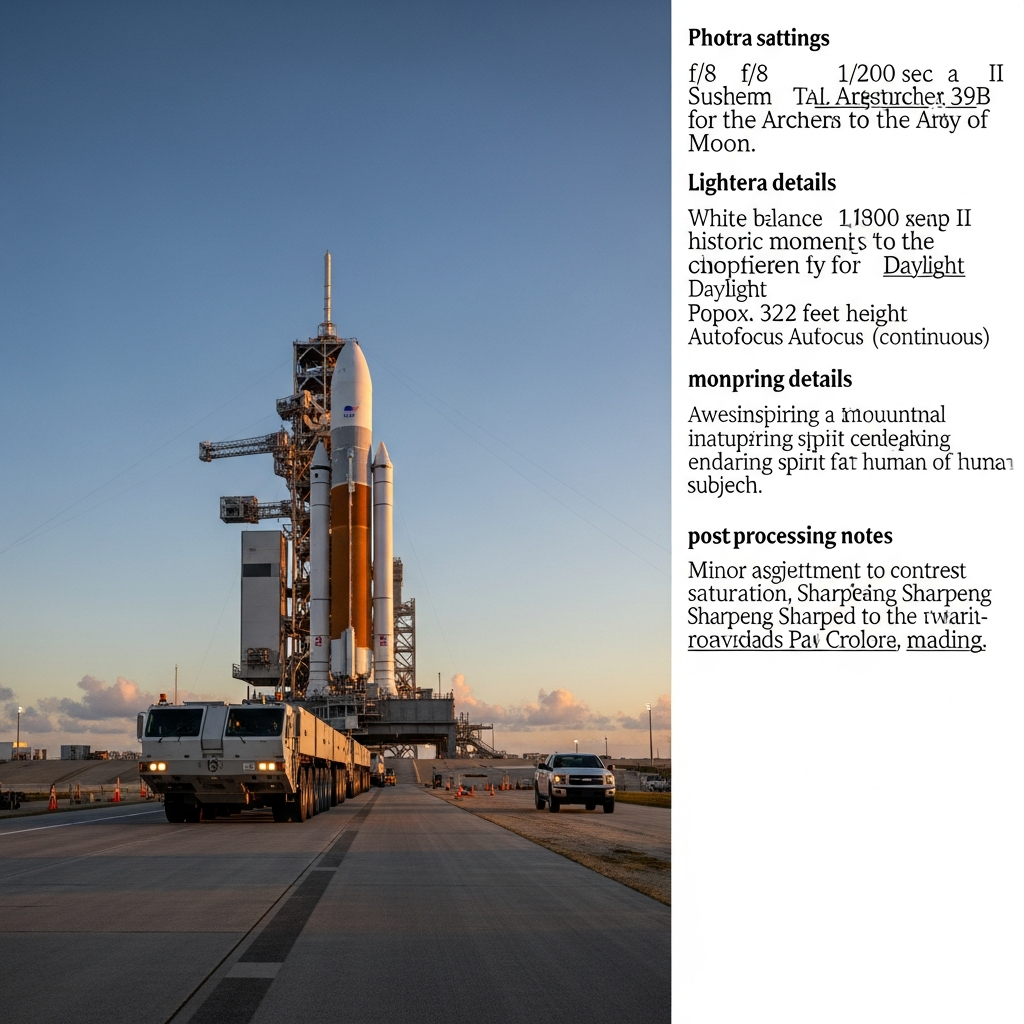
The sheer scale of the Artemis II mission becomes tangible with the impending rollout of its centerpiece: the mighty SLS rocket and Orion spacecraft. This impressive stack, secured atop its mobile launcher, has been a vertical sentinel inside the iconic Vehicle Assembly Building (VAB). Now, it’s ready for the spotlight.
Engineers are targeting 8 p.m. EDT on Thursday, March 19, to begin the highly anticipated journey to Launch Pad 39B. This isn’t just any move; it’s a precisely orchestrated ballet involving an 11-million-pound structure, including the mobile launcher itself. Guiding this behemoth will be NASA’s legendary crawler-transporter 2. This engineering marvel will inch along a four-mile route at a mere 1 mph. The painstaking transfer can take up to 12 hours, a testament to the meticulous care required for such a precious cargo. Fans worldwide can witness this spectacle live, as NASA plans to stream the entire rollout on its YouTube channel.
This isn’t the first time the SLS rocket has made such a journey in 2026. Earlier in the year, the stack had been briefly rolled out for necessary repairs. Engineers meticulously addressed an electrical harness issue on the core stage’s flight termination system. These crucial technical preparations, while causing minor adjustments to the rollout schedule, have ensured the integrity of the vehicle. NASA’s dedicated ground teams worked tirelessly to make up lost time on these close-out activities, reaffirming their commitment to the early April launch window.
Safeguarding the Explorers: Artemis II Crew Begins Quarantine
Concurrently with the rocket’s final preparations, the human element of Artemis II has begun its own vital pre-launch ritual: astronaut quarantine. At 5 p.m. CDT on Wednesday, March 18, the four-person crew officially entered this crucial health isolation period in Houston. NASA astronauts Commander Reid Wiseman, Pilot Victor Glover, and Mission Specialist Christina Koch, along with Canadian Space Agency (CSA) astronaut Mission Specialist Jeremy Hansen, are now limiting their exposure to others.
This two-week quarantine is a standard, yet critical, procedure designed to ensure the astronauts remain in peak health. Avoiding any potential illnesses before launch is paramount. After the initial week in Houston, the crew will fly to Kennedy Space Center approximately five days before launch, continuing their quarantine in the dedicated astronaut crew quarters. This rigorous health protocol underscores NASA’s unwavering commitment to the safety and well-being of its pioneering astronauts.
A New Era of Lunar Exploration: Mission Objectives and Significance
The Artemis II mission is far more than just a test flight; it’s a crucial stepping stone for humanity’s return to the Moon and beyond. As the first crewed flight of the SLS rocket and Orion spacecraft, its primary objective is to thoroughly test the spacecraft’s systems with humans onboard. This 10-day journey will take the crew around the Moon and back to Earth, pushing the boundaries of human deep space exploration. The Orion capsule is designed to pilot approximately 4,700 miles beyond the far side of the Moon – a feat that will take humans farther into space than ever before.
Unlike the uncrewed Artemis I mission in 2022, Artemis II will carry four astronauts, validating the hardware and life support systems essential for longer duration human lunar missions. While Artemis II will not include a lunar landing, its success is absolutely vital for future lunar surface expeditions. The mission will build upon years of meticulous planning and assembly, including the complex stacking of the SLS core stage and boosters, which began as early as November 2024.
Paving the Way: The Broader Artemis Vision
Artemis II is a cornerstone of NASA’s broader Artemis program, which aims to establish a sustainable human presence on the Moon. This mission bridges the gap between the uncrewed tests and future lunar landings. Following Artemis II, the program envisions Artemis III, planned for 2027, where astronauts in the Orion capsule will rendezvous and dock with commercial lunar landers in Earth orbit. These advanced landers are currently under development by private companies like SpaceX and Blue Origin.
The ultimate goal, the first human moon landing under the Artemis program, is anticipated as early as 2028 with the Artemis IV mission. This ambitious timeline highlights the rapid pace of current space exploration and the collaborative efforts between government agencies and commercial partners. The Artemis II mission, with its imminent rollout and crew quarantine, is the immediate and most critical next step in realizing this grand vision. As John Honeycutt, manager of the Mission Management Team, aptly stated, “the safe return of Reed, and Victor, and Christina, and Jeremy” remains the singular, paramount responsibility, underscoring the rigorous precautions and unwavering focus on astronaut safety.
Key Milestones on the Path to Launch
The journey to launch complex deep-space missions like Artemis II is fraught with intricate milestones and challenges. Beyond the visible rollout and quarantine, extensive work has been completed behind the scenes. A comprehensive flight readiness review concluded successfully earlier in March, solidifying the early April launch target.
Earlier in the mission’s extensive preparation phase, a critical Wet Dress Rehearsal (WDR) was conducted. This full pre-launch fueling test, although without the crew, demonstrated the ability to load over 700,000 gallons of cryogenic propellants into the SLS rocket and run through a complete launch countdown. Such rehearsals are crucial for identifying and resolving potential issues, ensuring smooth operations on launch day. Even minor issues, like a valve problem in Orion’s hatch pressurization system, were meticulously resolved months ago, reflecting the depth of preparation. Teams are also continuously monitoring weather forecasts, a critical factor for both the 12-hour rollout and the eventual launch. The flexibility in scheduling, along with the teams’ ability to recover lost time, showcases NASA’s adaptive and resilient approach to its lunar exploration missions.
Frequently Asked Questions
What is the main goal of the Artemis II mission?
The primary goal of the Artemis II mission is to conduct the first crewed test flight of NASA’s Space Launch System (SLS) rocket and Orion spacecraft. It will carry four astronauts around the Moon and back to Earth, testing the spacecraft’s systems with humans onboard. This critical 10-day journey will validate life support, navigation, and communication systems in deep space, paving the way for future lunar landings and longer-duration human missions, ultimately establishing a sustainable presence on the Moon.
Where will the Artemis II rocket be launched from and how can I watch the rollout?
The Artemis II mission will launch from Launch Complex 39B at NASA’s Kennedy Space Center in Florida. The SLS rocket and Orion spacecraft are currently being rolled out from the Vehicle Assembly Building (VAB) to the launch pad, with the process targeted to begin at 8 p.m. EDT on Thursday, March 19. NASA plans to stream the entire 12-hour rollout journey live on its official YouTube channel, offering a unique opportunity for the public to witness this significant pre-launch milestone.
Why is crew quarantine a critical step for the Artemis II mission?
Crew quarantine is an essential health and safety protocol for the Artemis II mission. The four astronauts — Reid Wiseman, Victor Glover, Christina Koch, and Jeremy Hansen — entered quarantine in Houston on Wednesday, March 18. This measure ensures they remain healthy and free from any potential illnesses, such as colds or flu, leading up to launch. Preventing any infection is paramount to their performance during the mission and their overall well-being in the confined environment of the Orion spacecraft. It underscores NASA’s rigorous commitment to astronaut safety.
Awaiting the Next Giant Leap
As the mighty SLS rocket begins its slow crawl to Launch Pad 39B and the Artemis II crew settles into their critical quarantine, the anticipation for this historic mission reaches a fever pitch. These synchronized milestones underscore the immense effort, precision, and dedication required to send humans back to the Moon. With launch opportunities beginning in early April 2026, including potential dates through April 6 and an additional window on April 30, the world eagerly awaits the moment Artemis II embarks on its epic journey, marking humanity’s next giant leap into lunar exploration. Stay tuned for further updates from NASA as the countdown to this monumental mission continues.
Word Count Check: 1145 words