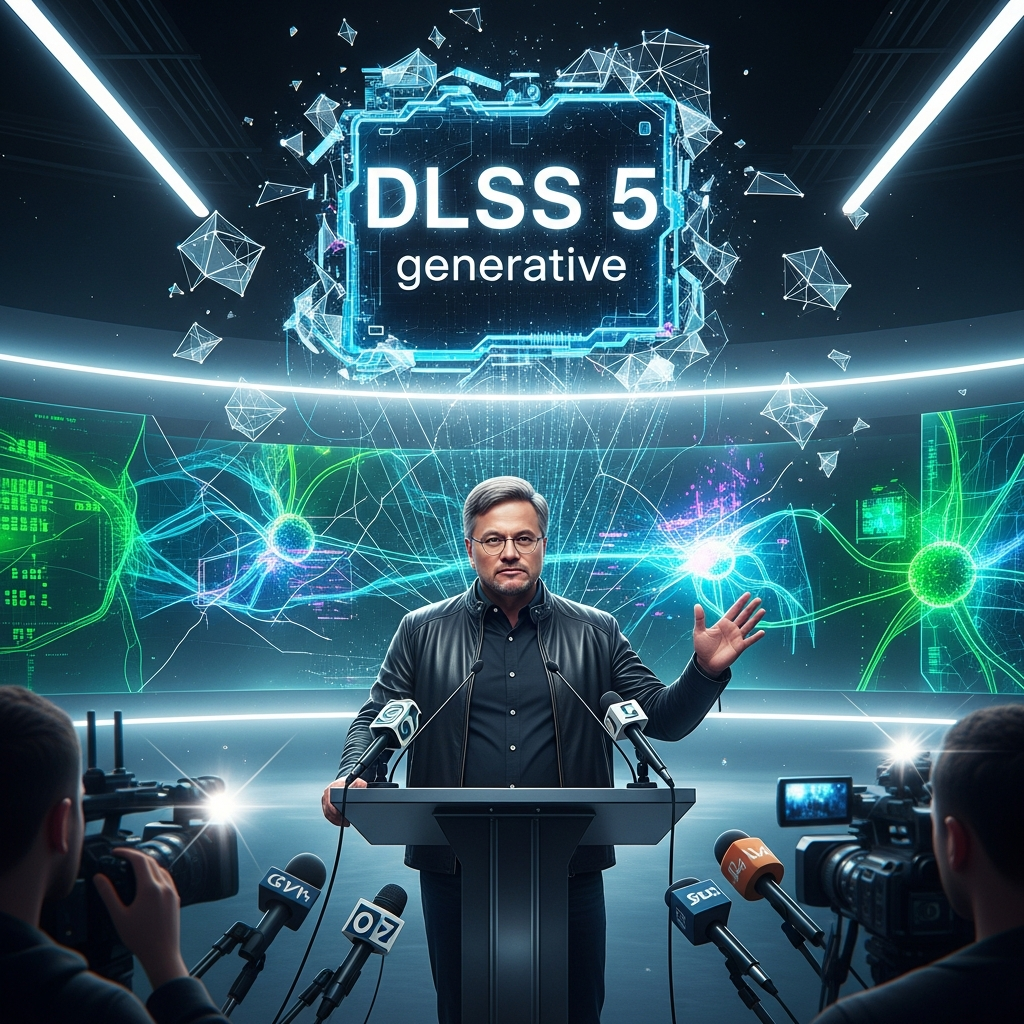
NVIDIA CEO Jensen Huang has strongly challenged widespread gamer criticism regarding the company’s new DLSS 5 technology. He asserted that those voicing concerns are “completely wrong” in their understanding. This bold statement came during a press Q&A at the GTC 2026 event. DLSS 5, an advanced generative AI model, promises to revolutionize game graphics. However, it has ignited a fierce debate within the gaming community over artistic control and visual fidelity. Huang’s comments aim to clarify the technology’s true nature and its significant implications for game development and player experience.
Unpacking Huang’s Defense of DLSS 5
Jensen Huang’s firm rebuttal directly addresses the core of the controversy. He emphasized that DLSS 5 is far more sophisticated than a simple post-processing filter. Instead, he described it as “generative control at the geometry level.” This distinction is crucial. Previous DLSS iterations primarily focused on upscaling graphics, enhancing resolution and frame rates. DLSS 5, however, uses generative AI to infer and create photorealistic lighting and materials. It anchors these new visual elements to the game’s existing 3D content.
Huang explained that DLSS 5 “fuses the controllability of geometry and textures… with generative AI.” This means developers retain substantial creative authority. They can “fine-tune the generative AI” to match their specific artistic vision. He stressed that the technology “doesn’t change the artistic control.” Developers can experiment with varied stylistic outcomes. Examples include crafting a distinct “toon shader” effect or making game elements appear as if “made of glass.” This level of direct control, Huang argued, defines it as “content-control generative AI” or “neural rendering.” This terminology differentiates DLSS 5 from less guided forms of artificial intelligence.
The Backlash: Why Gamers Are Skeptical
Despite Huang’s technical explanations, the initial showcase of DLSS 5 sparked considerable backlash. Gamers and critics pointed to demo videos where characters and environments exhibited a noticeable “AI sheen.” They described it as an “offputting element of Facetuning.” Characters like Grace Ashcroft from the upcoming Resident Evil Requiem appeared “yassified.” Some critics felt they had “trendily hollower cheeks and poutier lips” due to the AI’s influence. Terms like “AI slop” and “sloptracing” quickly emerged. These phrases suggest a perceived undermining of original artistic intent.
Many within the community argued that the technology imposed a generic, NVIDIA-specific aesthetic. They feared it would lead to visual homogeneity across games. Journalists and developers shared these concerns. Danny O’Dwyer of Noclip criticized the “yassified, looks-maxed freaks” produced by the technology. Concept artist Jeff Talbot lamented that “the art direction was taken away for the senseless addition of ‘details’.” He asserted that each DLSS 5 shot “looked worse and had less character than the original.” This stark contrast in perception highlights the deep skepticism the technology faces from its intended audience.
Developer Perspectives: Autonomy Versus Surprise
Adding another layer to the DLSS 5 narrative is the mixed reaction from game developers themselves. Bethesda, for instance, offered a measured response to early criticisms of DLSS 5’s lighting capabilities. Responding to DigitalFoundry on X, Bethesda clarified that the presented visuals were a “very early look.” They assured that their “art teams will be further adjusting the lighting and final effect.” This reaffirms that the technology will remain “under our artists’ control, and totally optional for players.” This statement aligns with Huang’s assertion of developer autonomy.
However, a surprising revelation from Insider Gaming paints a different picture regarding communication. Developers and artists from major studios, including CAPCOM and Ubisoft, reported being “left in the dark.” They apparently discovered the DLSS 5 technology at the same time as the general public. An unnamed Ubisoft developer stated, “We found out at the same time as the public.” For CAPCOM, this announcement was particularly startling. The publisher has a historical “anti-AI” stance, evident in projects like Resident Evil Requiem. Some CAPCOM employees fear that DLSS 5 could signal a broader shift in the publisher’s view on generative AI integration. This disconnect raises questions about NVIDIA’s rollout strategy and internal industry dialogue.
The Broader Context of NVIDIA’s AI Vision
Jensen Huang’s fervent advocacy for DLSS 5 is consistent with NVIDIA’s broader strategic pivot towards artificial intelligence. The multitrillion-dollar company is not just a gaming hardware giant; it’s a leading AI chipmaker. Huang previously hailed DLSS 5 as the “GPT moment for graphics.” This comparison underscores the perceived transformative potential of the technology. His consistent push for AI adoption extends beyond gaming. He has reportedly criticized managers who discouraged employees from using AI, calling it “insane” to neglect such tools.
NVIDIA’s official stance, detailed in its SDK information, further reinforces Huang’s argument. The company emphasizes that DLSS 5 is not an “AI filter” applied superficially. Instead, it utilizes direct game data, including color and motion vectors. This anchors the output firmly in the source 3D content. The SDK provides extensive controls for developers. These include intensity, color grading, and masking capabilities. Such tools enable precise management of effects, ensuring the preservation of a game’s unique aesthetic. This level of granular control is central to NVIDIA’s defense against claims of artistic override.
Looking Ahead: DLSS 5’s Impact on Gaming
DLSS 5 is projected to launch later in 2026, coinciding with the release of NVIDIA’s RTX 50-series graphics cards. The ongoing debate highlights a tension between technological innovation and artistic preservation. While NVIDIA positions DLSS 5 as a powerful, controllable creative tool, the skepticism from parts of the game development community and the public persists. The lack of prior consultation with some developers also complicates the narrative.
As more “fully baked” demos and real-world implementations become available, it will be interesting to see if gamer perceptions evolve. The success of DLSS 5 will likely depend on NVIDIA’s ability to clearly communicate its benefits. More importantly, it will hinge on developers’ practical application of its “content-control generative AI” features. The future of gaming graphics is undoubtedly moving towards AI integration. However, the exact form and acceptance of these technologies remain a subject of intense discussion and evolution.
Frequently Asked Questions
What is NVIDIA’s core argument about DLSS 5 and artistic control?
NVIDIA CEO Jensen Huang argues that DLSS 5 is not a simple post-processing filter but “generative control at the geometry level.” He stresses that the technology “fuses the controllability of geometry and textures… with generative AI,” allowing developers to “fine-tune” its effects. This ensures game creators retain direct artistic control. They can use DLSS 5 to achieve specific visual styles, such as “toon shader” effects or making objects appear “made of glass,” rather than being forced into a generic aesthetic.
Which game developers have expressed concerns or surprises about DLSS 5?
While Bethesda offered a nuanced response, confirming developer control and optionality for players, other studios showed surprise. Insider Gaming reported that developers from major players like CAPCOM and Ubisoft were “left in the dark,” learning about DLSS 5 at its public announcement. This was particularly shocking for CAPCOM, known for its “anti-AI” stance. Some within CAPCOM fear the DLSS 5 announcement might shift the publisher’s broader view on generative AI integration in future game projects.
When can gamers expect DLSS 5 to be widely available, and what are its potential impacts?
DLSS 5 is projected to launch later in 2026, aligning with the release of NVIDIA’s RTX 50-series graphics cards. Its potential impact is significant, promising to enhance game graphics with photorealistic lighting and materials using generative AI. However, there’s ongoing debate. Critics worry about an “AI sheen” and perceived undermining of artistic intent. The actual impact will depend on how developers integrate the technology and whether they can effectively leverage its “content-control generative AI” to maintain unique game aesthetics.