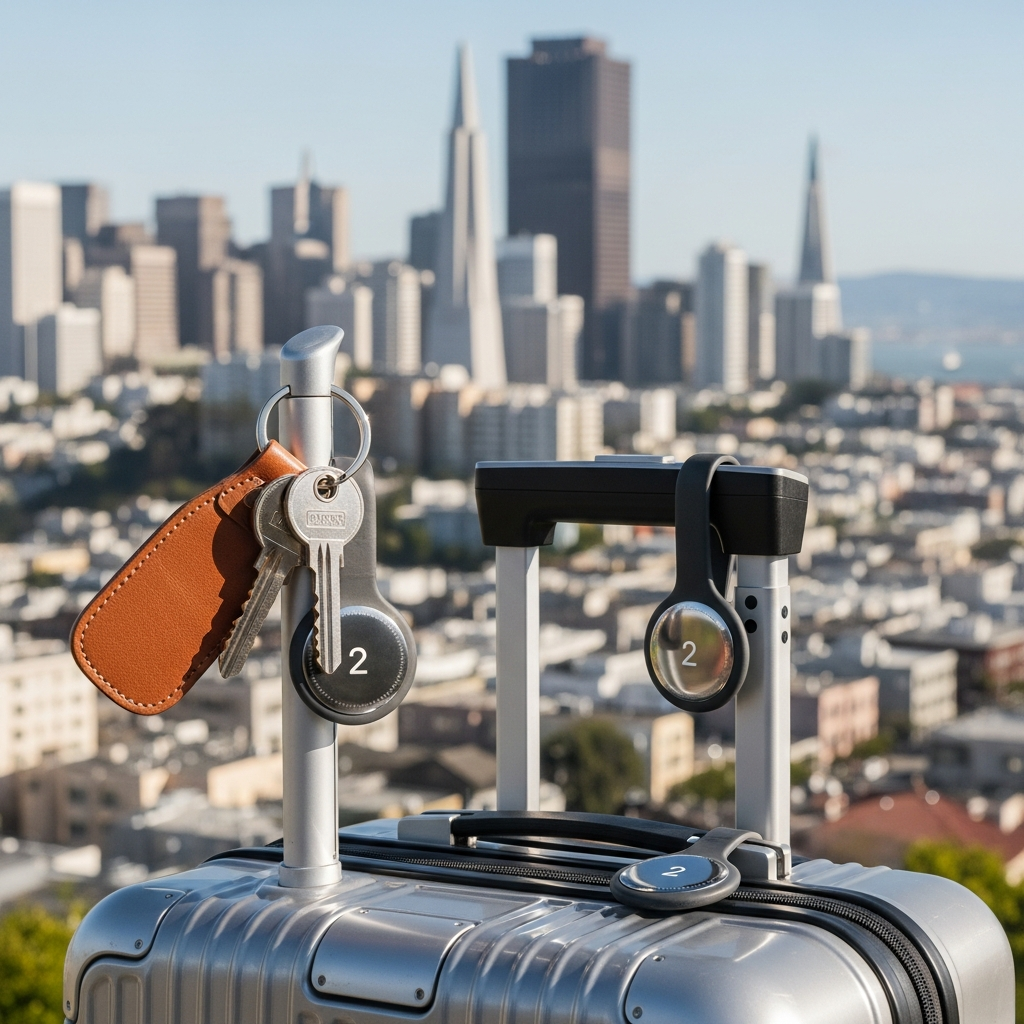
Apple’s AirTag has become an indispensable gadget for anyone prone to misplacing keys, luggage, or even their pet’s collar. While the original debuted to widespread acclaim in 2021, the second-generation Apple AirTag, informally dubbed “AirTag 2,” brings subtle yet impactful upgrades. Tested under sunny San Francisco skies, this refreshed Bluetooth tracker boasts significantly enhanced capabilities, making it even easier to locate your most cherished items. From a more than doubled Precision Finding range to a notably louder chime, the AirTag 2 is poised to deliver genuine value without a drastic redesign or price hike.
What’s New with AirTag 2? Core Enhancements Revealed
Apple rarely introduces “must-have” upgrades in every yearly cycle, and the AirTag 2 is no exception—it builds upon an already excellent foundation. However, internal improvements transform it into a noticeably more effective tracking device. These enhancements center around its ability to be found, offering users greater peace of mind.
Precision Finding: The Game Changer
The most compelling improvement in the new AirTag is its drastically improved Precision Finding range. Powered by an upgraded Bluetooth chip and a second-generation Ultra Wideband (UWB) chip, the AirTag 2 connects more effectively with nearby iPhones. This translates into a much wider search area when you’re trying to pinpoint an item.
During controlled outdoor tests, the latest AirTag was detected by the Find My app from an impressive 110 feet away. The visual “you’re going the right way” screen, complete with directional arrows, activated at 85 feet. In stark contrast, the first-generation AirTag was only picked up at 42 feet, with the proximity screen appearing at 37 feet. This means the AirTag 2 is findable at over twice the distance, offering a substantial advantage when items are truly lost or simply out of sight. While environmental factors like obstructions and population density can influence real-world performance, this boost is undeniable.
Louder, Clearer Chime
Ever struggled to hear that faint “ping” from your original AirTag tucked under a cushion? The AirTag 2 addresses this common frustration with a higher-pitched and significantly louder chime. When you activate the “Play Sound” feature in the Find My app, the new AirTag emits a more distinct tone.
Using an audio meter app during testing, the original AirTag’s chime peaked at 67.3 dBA. The second-gen model, however, registered at 77.5 dBA—more than twice as loud due to the logarithmic nature of decibels. This enhanced audibility makes locating items much quicker, especially in noisy environments or when hidden deep within bags or cluttered spaces. Some reports even describe the new tone as more “shrill,” further aiding pinpoint accuracy.
Apple Watch Integration: Wrist-Based Tracking
For the first time, Precision Finding extends to your wrist with the AirTag 2. Thanks to its second-generation UWB chip, compatible Apple Watch models (Series 9, Series 10, Series 11, Apple Watch Ultra 2, and Apple Watch Ultra 3, running WatchOS 26.2.1 or later) can now guide you directly to your misplaced items.
Setting this up isn’t as intuitive as on an iPhone. Users need to add a dedicated “Find AirTag” button to their Apple Watch Control Center. Once configured, this feature works impressively. Indoor tests showed the Apple Watch could locate an AirTag from 65 feet away. Performance is excellent on Wi-Fi and generally reliable outdoors when connected to your iPhone, though location updates might occasionally take a moment longer. This capability significantly enhances the AirTag’s utility for Apple Watch owners, offering swift, convenient tracking without needing to pull out your phone.
Design & Familiarity: A Nod to the Original
Apple maintains a consistent design philosophy, and the AirTag 2 is a testament to this. There are no major aesthetic overhauls, preserving compatibility with countless existing accessories.
Unchanged Aesthetic, Enhanced Materials
The AirTag 2 retains the familiar “bulbous Mento design” of its predecessor – a sleek, quarter-sized white and silver disc. This deliberate design choice ensures that all the cases, keychains, and mounts people already own remain perfectly compatible. While visually identical at first glance, there’s an eco-conscious upgrade: the white shell’s resin is now made from 85% recycled plastic. This move aligns with Apple’s broader sustainability initiatives.
For those keen on distinguishing between generations, a subtle detail lies in the fine print on the back. The AirTag 2 features text etched almost entirely in ALL CAPS, a minor but effective identifier for the updated model. The device also maintains an IP67 water and dust resistance rating, ensuring durability against everyday spills and splashes.
Still No Keyring Loop
One persistent minor drawback that carries over to the second generation is the lack of a built-in keyring hole. Attaching the AirTag to keys, bags, or other items still requires a separate holder or accessory. While many third-party options are available, a direct integration would undoubtedly enhance user convenience.
The Power Behind the Ping: Apple’s Find My Network
Beyond the individual device improvements, the true strength of any AirTag lies in its connection to Apple’s vast “Find My” network. This encrypted, invisible service transforms nearly a billion Apple devices worldwide into a global search party for your lost items.
A Billion-Device Advantage
When an AirTag is out of your direct Bluetooth range, it leverages this colossal network. Any nearby iPhone, iPad, or Mac anonymously and securely detects the AirTag’s Bluetooth signal, relaying its location information back to its owner. This crowdsourced system means that even if an item is lost far away, its location can often be pinpointed as long as another Apple device passes by. This is particularly effective in populated areas like cities and airports, where a high density of Apple devices ensures frequent location updates.
Privacy at Its Core
Apple has consistently prioritized user privacy with the AirTag. All communication through the Find My network is anonymous and end-to-end encrypted, meaning only the owner can view an AirTag’s location, and not even Apple can access its real-time data. Crucially, the AirTag incorporates robust anti-stalking measures. If an unknown AirTag is detected moving with an individual over time, both iPhone and Android users receive alerts. This feature provides the AirTag’s serial number and partial owner information, empowering users to disable it if necessary. Furthermore, AirTags employ MAC address rotation every 15 minutes, adding another layer of security against unwanted tracking.
Is It Time to Upgrade? AirTag 1 vs. AirTag 2
For many, the question isn’t whether the AirTag is useful, but rather if the second generation warrants an upgrade or a first-time purchase. The new AirTag is available for $29 for a single unit or $99 for a four-pack, matching the original’s pricing, with engraving options directly from Apple.
Who Should Consider the Upgrade?
If you frequently rely on Precision Finding for critical items like house keys, everyday bags, or travel luggage, the AirTag 2’s extended range offers a significant practical benefit. The ability to locate an item from twice the distance can save considerable time and stress. Similarly, Apple Watch owners with compatible models will find the new Precision Finding support a highly valuable addition, offering unparalleled convenience directly from their wrist. For these specific use cases, the incremental improvements justify the investment.
When the Original Still Shines
The first-generation AirTag remains an excellent device, performing nearly all the core functions of the new model. If your primary need is general item tracking, or if you don’t frequently use Precision Finding, there’s no compelling reason to discard your existing AirTags. Many retailers might offer discounted original AirTags, making them a sensible, cost-effective choice for most items. Apple has focused on refining its core offering rather than pushing a dramatic redesign, ensuring the original remains highly capable.
Real-World Performance: Our Extensive Testing
To put the AirTag 2’s claims to the test, a side-by-side comparison was conducted in a real-world setting. In San Francisco’s Salesforce Park, a green space atop a bus station, an original AirTag and a second-generation AirTag were used. The new AirTag, dubbed “New AirTag,” was hidden several hundred feet away.
Using a latest-gen iPhone, the “New AirTag” was successfully detected by the Find My app from 110 feet away, with the “getting close” green screen appearing at 85 feet. The test was then repeated with the first-generation AirTag. This older model was detected at 42 feet, and the green screen appeared at 37 feet. This simple, direct comparison unequivocally showed the second-gen AirTag was findable at over twice the distance.
It’s important to acknowledge that various factors influence range performance. The test was conducted outdoors during lunchtime, meaning numerous iPhones were passing by, actively contributing to the Find My network. The open outdoor environment also lacked walls, furniture, or other obstructions that could impede Ultra Wideband signals indoors. These conditions represent an ideal scenario for maximizing range, yet the comparative improvement between the two generations remains stark and impressive.
The Competitive Landscape: AirTag in Context
While the Apple AirTag is a top recommendation for iPhone users, it’s worth understanding its place in the broader market of Bluetooth trackers. Competitors like the Motorola Moto Tag (for Android users, leveraging Google’s Find Hub network) and various Tile models exist.
However, the sheer scale of Apple’s Find My network—with its billion-plus active devices—gives the AirTag an unparalleled advantage for locating items outside of direct Bluetooth range. This vast, anonymous network means an AirTag has a much higher chance of being “pinged” and located almost anywhere in the world where Apple devices are present. While other trackers may offer unique features or wider direct Bluetooth range (e.g., Samsung SmartTag2 at 387 feet), none can truly match the pervasive reach of Find My for out-of-range tracking. This ecosystem advantage, combined with robust privacy features, solidifies the AirTag’s position as a premium choice for Apple users.
Frequently Asked Questions
What are the main technical improvements in AirTag 2 compared to the original?
The AirTag 2 features two primary technical upgrades: a significantly extended Precision Finding range and a louder, higher-pitched chime. Its second-generation Ultra Wideband (UWB) chip allows for detection at over twice the distance (110 feet versus 42 feet in tests) compared to the original. The chime is also notably louder, measured at 77.5 dBA compared to the original’s 67.3 dBA, making it easier to locate items audibly.
Which Apple Watch models support Precision Finding with the AirTag 2, and how do you set it up?
Precision Finding with the AirTag 2 is supported on Apple Watch Series 9, Series 10, Series 11, Apple Watch Ultra 2, and Apple Watch Ultra 3, provided they are running WatchOS 26.2.1 or later. To set it up, you need to add a “Find AirTag” button to the Control Center on your Apple Watch, as this functionality isn’t directly available through the Find Items app.
Should I upgrade from my original AirTag to the new AirTag 2, or is the first generation still a good choice?
An upgrade to the AirTag 2 is most beneficial if you frequently rely on Precision Finding for critical items like keys or everyday bags, or if you want to utilize the new Apple Watch Precision Finding feature. For general tracking needs or if your original AirTag is performing well, the first generation remains a very capable and cost-effective choice. If a discounted original AirTag is available, it’s often a sensible purchase for items where maximum range isn’t paramount.
Final Thoughts: A Smarter, More Capable Tracker
The second-generation Apple AirTag doesn’t reinvent the wheel, but it certainly refines it. By focusing on core improvements like extended Precision Finding range, a louder chime, and Apple Watch integration, Apple has delivered a smarter, more capable Bluetooth tracker. It retains all the best aspects of the original—seamless integration with the expansive Find My network, robust privacy features, and a user-friendly design—while addressing key areas for enhancement.
For current AirTag owners, an upgrade is a compelling consideration if you frequently depend on pinpoint accuracy or desire wrist-based tracking. For new users, the AirTag 2 offers the most refined experience yet. While some might still hope for credit card-style trackers or different color options, Apple’s strategy of perfecting its core offering and letting third-party manufacturers fill niche form factors within the “Works with Apple Find My” program proves to be a winning one. The AirTag 2 is not just a modest update; it’s a testament to continuous improvement, ensuring your valuable items are found faster and more reliably than ever before.