The geopolitical landscape is shifting dramatically, with alarming implications for established global alliances and the future of international stability. A potential second Donald Trump presidency, marked by a confrontational approach towards NATO allies, notably Denmark and its territory Greenland, highlights an urgent crisis for the “western order” as we once knew it. This era of illiberal international disorder demands a robust, pragmatic response from liberal democracies, especially Europe. The core challenge is clear: acknowledging a fractured global stage and forging a new, assertive path forward.
The Shifting Sands of the “Post-Western” World
Recent years have revealed a profound erosion of international norms and alliances. Timothy Garton Ash, a prominent historian and political writer, along with co-authors Ivan Krastev and Mark Leonard, argues that we are now in a “post-western world.” This isn’t just a theoretical concept; it’s a lived reality shaped by evolving global power dynamics and a distinct decline in transatlantic solidarity.
Declining Trust in US Leadership
A comprehensive global public opinion poll, conducted in November for the European Council on Foreign Relations and the University of Oxford, offers stark evidence of this shift. As of January 2026, the findings reveal a critical deterioration of trust. Less than one in five continental Europeans surveyed (across 10 EU countries) now view the United States as an ally. Only one in four Britons share this view, and in Ukraine, the figure plummets to 18%. While Europeans still perceive the US as a “necessary partner,” its role as a trusted ally has significantly diminished. This contrasts sharply with 2022, when a united transatlantic West expressed outrage over Russia’s full-scale invasion of Ukraine.
A Fragmented Alliance Landscape
The poll also highlights a growing fragmentation within the concept of “the West.” Initially, in 2022, a united West was observed, albeit divided from other powers like China, India, and Turkey. These nations continued business as usual with Russia, allowing its economy to withstand sanctions. Fast forward to a potential Trump 2.0 era, and the situation is more acute. There is now “no coherent geopolitical west acting in it,” as Garton Ash and his colleagues conclude. Chinese respondents further underscore this, with only 43% now seeing American and European approaches as similar, down from 60% in earlier polls. A clear majority now perceives them as different. The message is unequivocal: the cohesive “West” is now largely a historical concept.
The Greenland Controversy: A Defining Moment
President Trump’s persistent threats to acquire Greenland, a self-governing territory within the Kingdom of Denmark and a NATO ally, represent a critical flashpoint in this evolving global disorder. These threats, articulated openly, including the possibility of military force, have triggered serious alarms across the international community.
Trump’s Stance and Strategic Justifications
Trump has publicly declared his intent to “do something on Greenland,” arguing it’s essential for U.S. national security. He fears that without U.S. action, “Russia or China will take over Greenland,” posing a direct threat to American interests. He prefers a “deal, the easy way,” but states he is prepared to proceed “the hard way.” This sentiment, echoed by his former aide Stephen Miller, suggests a worldview where international relations are “governed by strength… by force… by power.” Trump has also cited Greenland’s immense untapped mineral wealth and its increasing strategic importance due to Arctic ice melt as justifications. He believes acquiring Greenland would make “NATO far more formidable.”
Denmark and Greenland’s Unequivocal Rejection
Denmark and Greenland have unequivocally rejected any notion of acquisition. Danish Foreign Minister Lars Løkke Rasmussen firmly stated, “This is 2026. You trade with people, but you don’t trade people.” Greenland’s Prime Minister, Jens-Frederik Nielsen, reinforced this, declaring, “we choose Denmark… we choose the EU” if forced to choose between the USA and Denmark. Rasmus Jarlov, Chair of Denmark’s Parliamentary Defense Committee, established “solid red lines,” emphasizing that handing over 57,000 Danish citizens to become Americans is a fundamental rejection, not a matter of price. Danish military units are legally mandated to defend Danish territory, including Greenland, against armed attack, a point confirmed by the Danish Defense Command.
NATO’s Existential Challenge
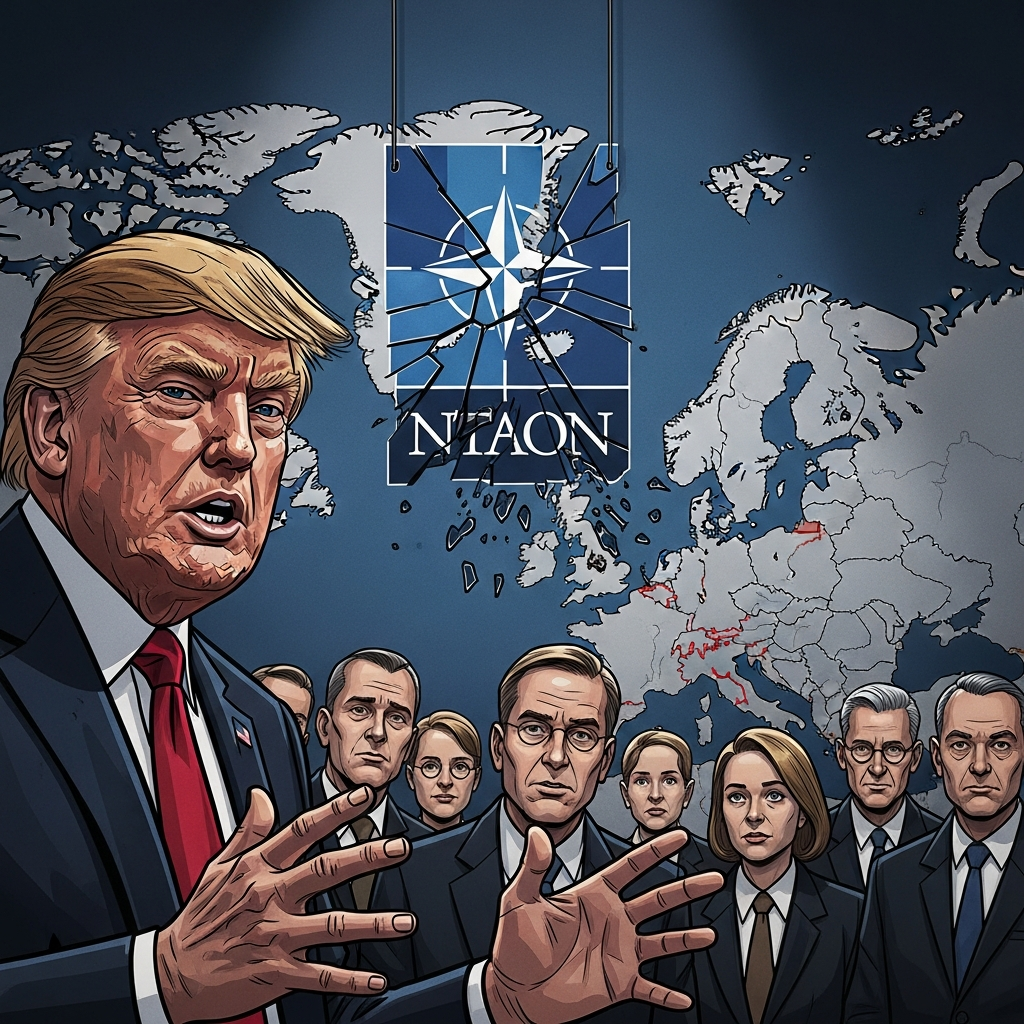
The prospect of a U.S. military action against Denmark, a founding NATO member, presents an “absolute existential question for NATO.” Associate Professor Tom Crosbie of the Royal Danish Defense College highlights the unprecedented nature of this challenge. NATO Secretary-General Mark Rutte affirmed the alliance’s consensus on the importance of Arctic security. Michael McFaul, former U.S. Ambassador, warns that invading Greenland would dismantle NATO, calling it the “most important security alliance for the U.S.” Such an act, he argues, would provide justification for other nations’ expansionist actions, notably Russia’s Putin and China’s Xi Jinping regarding Taiwan, severely damaging America’s moral authority.
Crafting a New European Internationalism
In this volatile environment, merely lamenting the loss of the “rules-based international system” or selectively invoking international law is counterproductive. Europe, along with other liberal democracies, must forge a “new internationalism”—one that is faster, more flexible, and harder-edged.
Embracing Pragmatic Power
This new approach requires rejecting the use of force while fully embracing the strategic use of power. It means moving beyond rigid existing structures and alliances, seeking a wider range of partners pragmatically, on an issue-by-issue basis. The emphasis must shift from process to progress, and from rules to tangible results. This constitutes a particular challenge for the institutional EU, often characterized as a slow-moving, rules-based entity. However, Europe has already demonstrated a capacity for speed, exemplified by its rapid response in supporting Ukraine.
Concrete Steps for European Resolve
Europe must project quiet strength, power, and resolve. This involves taking proactive and highly visible steps to demonstrate commitment to its allies and to the principles of sovereignty and self-determination. The goal is to counteract unpredictability with unwavering resolve and strategic foresight, especially concerning critical regions like the Arctic.
Proactive Diplomacy and Economic Safeguards
The ongoing high-level discussions between Danish/Greenlandic foreign ministers and U.S. officials, including Vice President J.D. Vance and Secretary of State Marco Rubio, indicate efforts to navigate this complex disagreement. However, fundamental differences remain unresolved. Proactive measures are essential.
High-Visibility Engagements
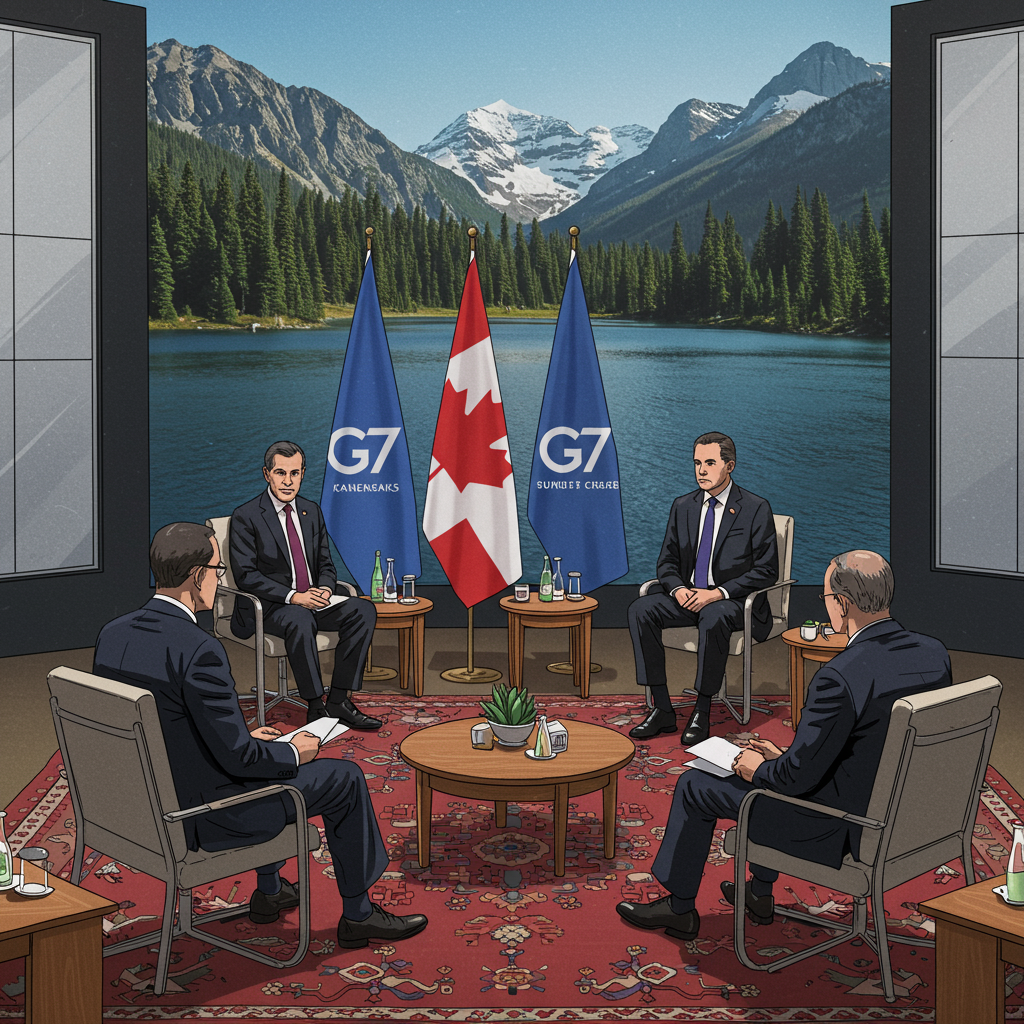
To underscore European commitment, high-level visits to Nuuk, Greenland’s capital, are crucial. German Chancellor Friedrich Merz, French President Emmanuel Macron, British Prime Minister Keir Starmer, and Canadian Prime Minister Mark Carney (as Greenland’s western neighbor) should visit alongside Danish Prime Minister Mette Frederiksen. Such visits, akin to those made to Kyiv, project European solidarity and send a clear message, especially given President Trump’s reliance on “television pictures” for communication. Additionally, stationing highly visible, uniformed European and Canadian liaison officers in Greenland for the foreseeable future would solidify this commitment.
Strengthening Greenland’s Ties with the EU
Following Prime Minister Nielsen’s declaration, “we choose Denmark… we choose the EU,” the European Union should rapidly increase its currently minimal financial support to Greenland. This support should begin immediately, not await the 2028 budget cycle. European Commission President Ursula von der Leyen and European Council President António Costa should also visit Nuuk to initiate strategic discussions about a future close relationship between an independent Greenland and the EU. This aligns with a vision for tomorrow’s EU, one with customized relationships with key neighbors, including the UK, Ukraine, and Canada.
Strategic Economic Contingency Planning
Europe, as the U.S.’s largest single economic partner, must privately review the full range of economic responses available in the still unlikely event of a Trump-ordered military takeover of Greenland. This could include significant actions, such as selling off U.S. Treasury bonds. The outlines of these contingency plans could then be discreetly conveyed to the White House through channels like U.S. Treasury Secretary Scott Bessent or presidential son-in-law Jared Kushner. These moves would signal that Europe is prepared to defend its interests and values with substantial economic power.
This moment is a critical test for Europe’s self-belief. Despite widespread pessimism among Europeans, who often doubt the EU’s capacity to engage equally with global powers like the U.S. and China, adopting this new, harder-nosed internationalism offers a path to regaining confidence and effectively navigating a complex, post-western world.
Frequently Asked Questions
How has trust in the United States as an ally changed among European nations?
Recent polls from November 2025, conducted by the European Council on Foreign Relations and the University of Oxford, indicate a significant decline in European trust. Less than one in five continental Europeans and only one in four Britons now view the U.S. as an ally. This figure drops to 18% in Ukraine. While the U.S. is still seen as a “necessary partner,” its standing as a trusted ally has diminished, marking a notable shift from just a few years ago.
What practical measures are Europe and its allies proposing to secure Greenland’s sovereignty?
European leaders are suggesting several concrete actions. These include high-profile visits by German, French, British, Canadian, and Danish prime ministers to Nuuk to demonstrate solidarity. Additionally, there are calls for increased, immediate financial support from the EU to Greenland, and a strategic discussion for a future close relationship between Greenland and the EU. Contingency planning for potential economic responses, such as selling U.S. Treasury bonds, is also advised in extreme scenarios.
What defines the “new internationalism” Europe is urged to adopt in a post-western world?
The “new internationalism” for Europe is characterized by a “faster, more flexible, harder-edged” approach. It advocates for rejecting the use of military force but embracing the strategic use of power. This strategy involves moving beyond traditional alliances to seek a wider range of pragmatic partners on an issue-by-issue basis, prioritizing results and progress over strict adherence to existing rules and processes, particularly challenging the EU’s historically process-heavy institutional style.